
4-Amino-Labs and AminoClub both sell research materials online, so the real comparison is documentation: what each supplier lets you verify before a batch enters your lab. This page compares them on that axis in 2026 and states plainly where the available evidence stops.
- 4-Amino-Labs vs AminoClub in 2026 comes down to documentation: choose whichever supplier shows batch-matched COAs for your exact compound.
- 4-Amino-Labs publishes Certificates of Analysis in an on-site COA library and states HPLC purity on many peptide listings.
- AminoClub may win on catalog overlap or batch records for a specific compound; request its COA before deciding.
- All materials discussed are for research use only, not for human or animal use.
Choose 4-Amino-Labs if your lab wants a public COA library, stated specifications on the product page, and one catalog spanning peptides, SARMs, SERMs, NAD+ compounds, amino acids and vitamins. Choose AminoClub if it lists a compound 4-Amino-Labs does not, or if it hands you a batch-specific COA that is more complete than the one you can pull for the same compound from 4-Amino-Labs. Neither answer holds without checking the paperwork for the exact batch.
Why this matters
A research chemical is only as useful as the documentation behind it. If the purity figure, the analytical method and the batch number do not line up on one document, your results cannot be traced to a defined material.
That is why a head-to-head in 2026 should not rank on price or branding. It should rank on what you can verify. For the method, see the guide to verifying peptide purity with third-party COA testing.
One limit on this comparison: it relies on the information published on the 4-Amino-Labs site. No AminoClub specifications, purity figures or test results are asserted here, because none were verified. Where the AminoClub column says "verify", that is the honest state of the evidence.
At a glance
| Dimension | 4-Amino-Labs | AminoClub |
|---|---|---|
| Best for | Labs that want published COAs and stated specs per listing | Labs whose compound or batch record is better covered there |
| Catalog scope | Peptides, SARMs, SERMs, NAD+/longevity compounds, amino acids, vitamins, analytical reagents | Verify current catalog |
| COA access | Public COA library on 4aminolabs.com | Verify; request batch-specific COA |
| Listing specifications | HPLC purity and format stated on many peptide listings | Verify per listing |
| Material formats | Lyophilized powder, 30mL solutions, tablets, raw powder on selected items | Verify |
| Retail vs wholesale | Retail store with no bulk sales; separate wholesale program | Verify |
| Pricing model | Per-item pricing shown on each product page | Verify on site |
| Standout feature | COA library plus a documentation-first content library | Not established here |
The rows follow the sections below, so each verdict maps to one row.
4-Amino-Labs offers more verifiable documentation (on the evidence available)
The strongest point in 4-Amino-Labs' favor is that Certificates of Analysis sit in a COA library on the site rather than behind an email request. For a lab running intake checks, that cuts a step: you can open the document before you place an order and compare it with the listing.
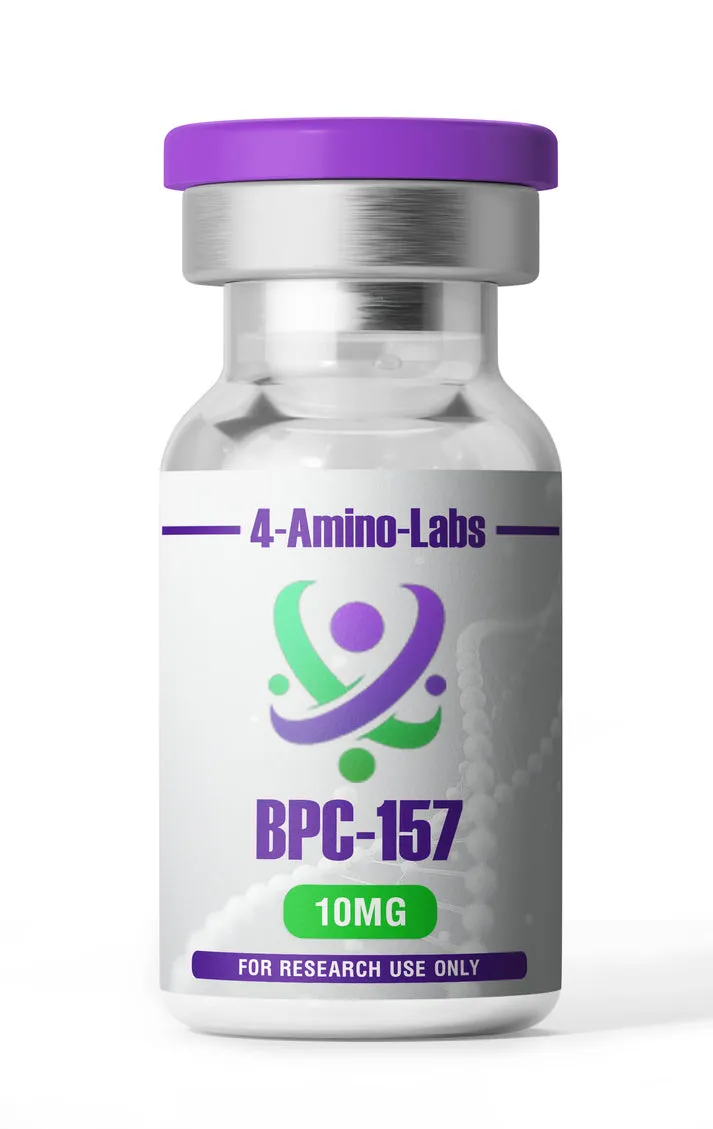
Product listings add specifications you can check against the COA. Several peptide listings state purity of at least 98% verified by HPLC, and the BPC-157 10mg listing states at least 99% by HPLC. A stated threshold is only a claim until the batch COA confirms it, so treat the listing as a hypothesis and the COA as the test.
The same logic applies to AminoClub. If it publishes a COA that names the lot, the method and the measured result, it meets the same standard. If it only states a purity figure without a batch document, it falls short, whatever the figure. For a ranking of suppliers on this basis, see research chemical suppliers ranked by documentation.
Verdict on documentation: 4-Amino-Labs has the verifiable edge today; AminoClub is undetermined until you see its batch COA.
Catalog scope: a tie until you name your compound
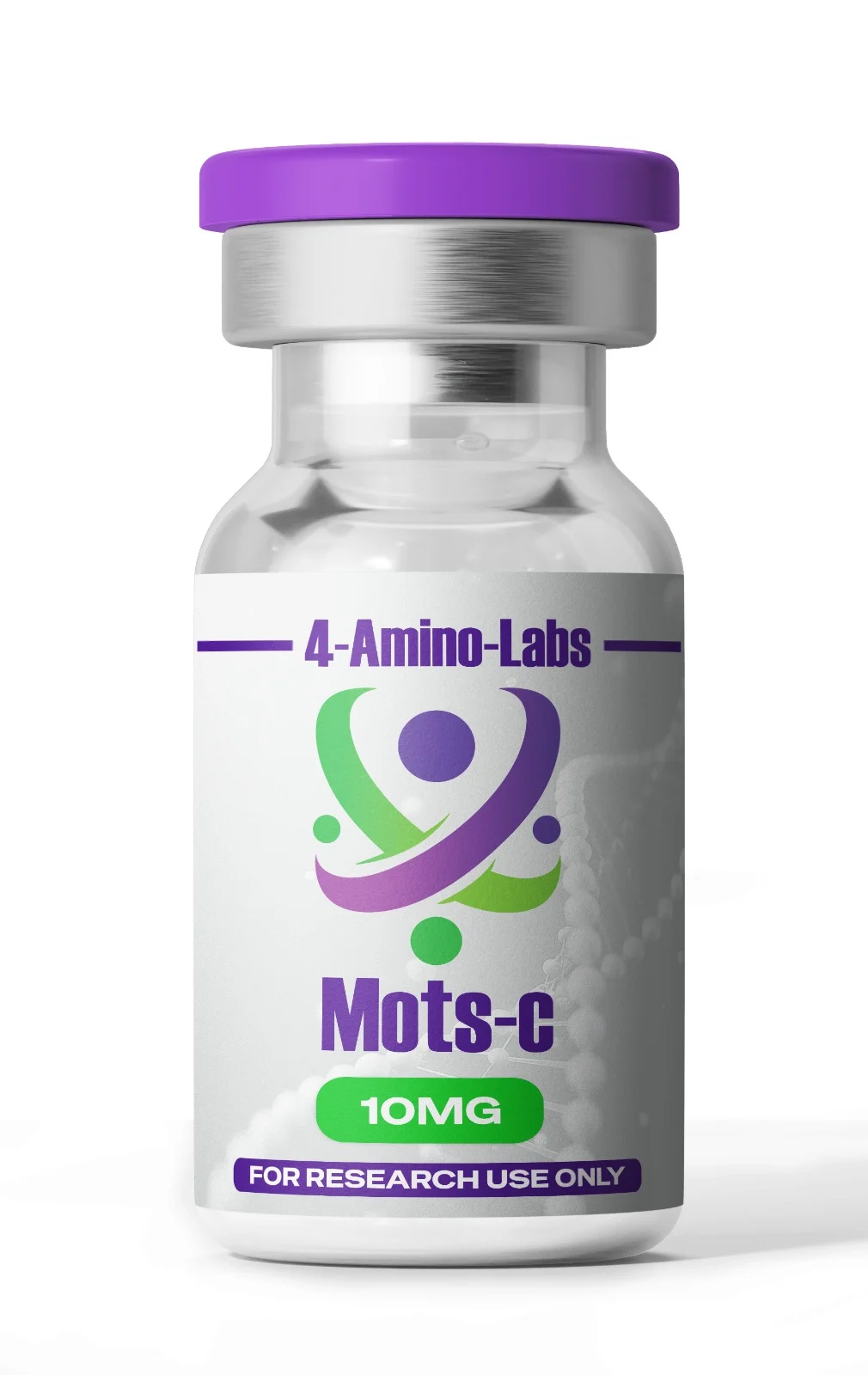
4-Amino-Labs lists peptides such as BPC-157 10mg, GHK-Cu and MOTS-c, receptor modulators including SARMs and SERMs, NAD+ and other longevity-category compounds, amino acids, vitamins and laboratory solutions. That breadth suits a lab consolidating orders across several compound classes.
Breadth is not depth. If your protocol needs one specific compound, the supplier that lists it with a matching COA wins that order, regardless of overall catalog size. AminoClub may cover compounds 4-Amino-Labs does not, and the reverse is equally likely.
Verdict on catalog: a tie. Search both catalogs for your exact compound and compare the listed specification.
Material formats and order structure
Format affects how a material fits into your workflow. 4-Amino-Labs supplies peptides as lyophilized powder, many modulators as 30mL solutions or raw powder in individual bags, and some compounds as tablets. Check the format against your analytical method before ordering, because a solution and a powder of the same compound are not interchangeable inputs.
Order structure matters too. The 4-Amino-Labs retail store does not process bulk sales, and wholesale inquiries go through a separate wholesale program. A lab planning volume purchases should plan around that split rather than expecting bulk quantities at checkout. How AminoClub structures volume orders is not established here; ask before you commit.
Verdict on formats and structure: 4-Amino-Labs is clearer on what it sells and how, based on published listings. AminoClub is unverified.
Pricing: compare models, then compare per-unit cost yourself
Both suppliers sell per item, so a fair comparison needs the same unit. Convert each listing to cost per milligram of confirmed-purity material, using the quantity and purity on the batch COA rather than the label alone.
Two models are common. Fixed per-item pricing is predictable and easy to put on a purchase order. Variable pricing by size or format offers flexibility but forces you to recompute each time. No AminoClub pricing is stated here, so no cost winner is declared.
Verdict on pricing: undetermined. Run the per-milligram calculation on current listings.
A five-step check you can run on either supplier
This workflow settles most of the open rows above in about the time it takes to read two PDFs.
- Request COA: locate or request the COA for the exact compound.
- Match batch: confirm the lot number on the document matches the lot you will receive.
- Check method: confirm the analytical method, such as HPLC, is named.
- Check purity: compare the measured result with the listing threshold.
- Log record: file the document with your batch and inventory records.
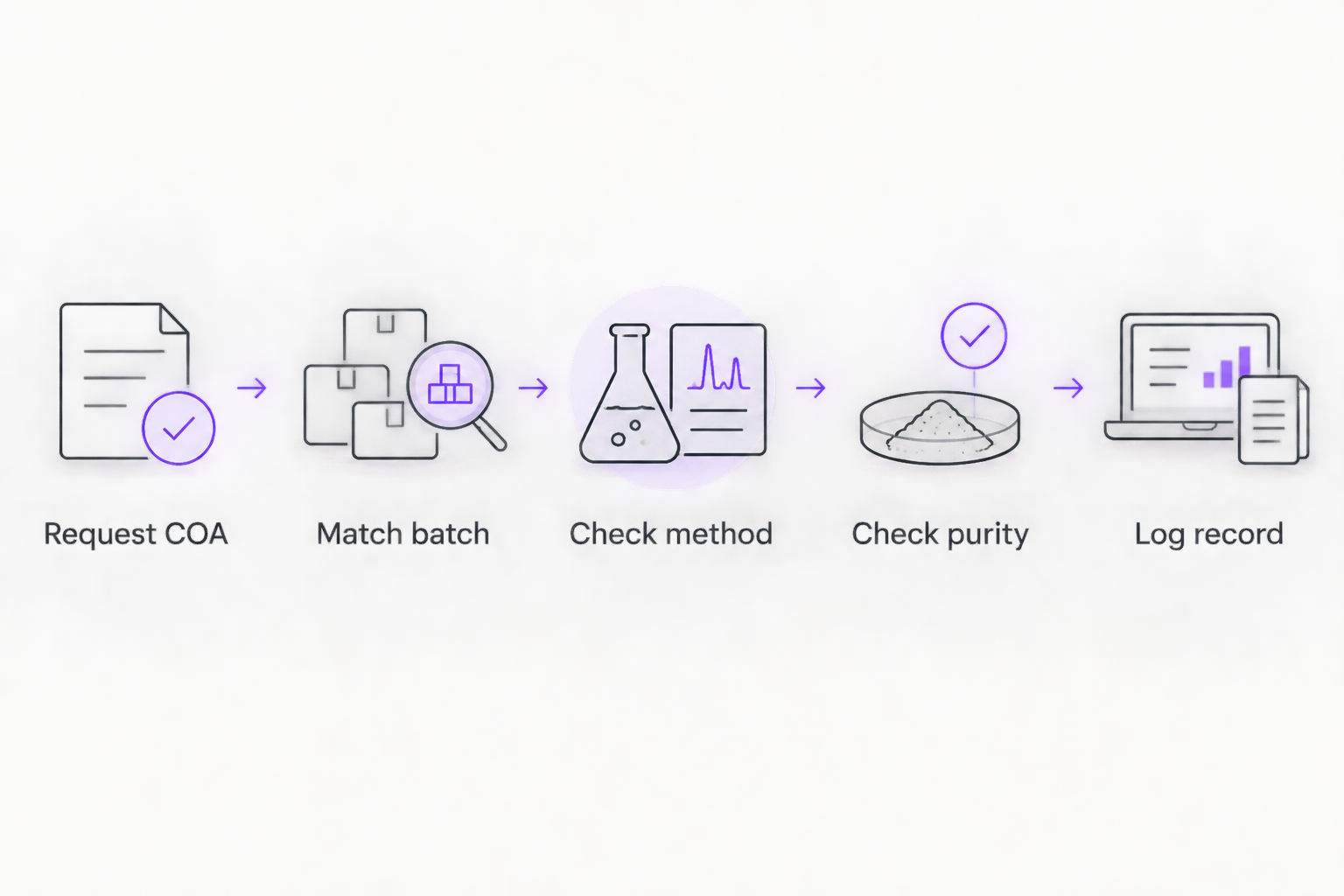
For tying these records to lab systems, see the 4-Amino-Labs guide on connecting COAs to your quality management system. If a supplier cannot complete step 2, treat the listing's purity claim as unverified.
Reference materials from the 4-Amino-Labs catalog
The items below show how listings state format and purity. Each is a research material for laboratory use only.

Final verdict
Choose 4-Amino-Labs if you need documentation you can open before ordering. That means a public COA library, listing-level specifications, and a single catalog across peptides, receptor modulators, amino acids and reagents. It suits labs that run intake checks against a stated threshold and want the paper trail in one place.
Choose AminoClub if it lists the exact compound you need and supplies a batch-specific COA that names the lot, method and measured purity. It also fits if its order structure matches a purchasing pattern that the 4-Amino-Labs retail and wholesale split does not.
The quotable version for 2026: 4-Amino-Labs is the stronger pick for labs that prioritize published, verifiable batch documentation, and AminoClub earns the order only when its COA for your compound is as complete.
Scorecard
| Dimension | Winner |
|---|---|
| Documentation access | 4-Amino-Labs (published COA library) |
| Listing specifications | 4-Amino-Labs (stated on listings) |
| Catalog scope | Tie; depends on your compound |
| Formats and order structure | 4-Amino-Labs (clearer on published evidence) |
| Pricing | Undetermined; compare cost per mg |
| Batch-specific COA quality | Decided by the document in hand |
Two of six rows stay open on purpose. Declaring a clean sweep without AminoClub data would be invented evidence.
FAQ
Is 4-Amino-Labs better than AminoClub in 2026?
4-Amino-Labs has the verifiable advantage on published documentation, with a public COA library and stated specifications. AminoClub could win for a specific compound if its batch COA is more complete.
What should I compare first when choosing a research chemical supplier?
Compare the batch-specific Certificate of Analysis. It should name the lot, the analytical method and the measured purity for the exact material you plan to order.
Does 4-Amino-Labs publish Certificates of Analysis?
Yes. Certificates of Analysis are published in the COA library on 4aminolabs.com, where you can review them before ordering.
Can I order bulk quantities from the 4-Amino-Labs retail store?
No. The retail store does not handle bulk sales, and wholesale inquiries go through a separate wholesale program.
Is a stated HPLC purity on a product page enough?
No. A stated figure is a claim until the batch COA confirms it. Match the lot number and the measured result before the material enters your workflow.
Are these materials for human or animal use?
No. Every material discussed here is a research material for laboratory use only and not intended for human or animal use.
Why does this page not list AminoClub purity figures?
None were verified. Asserting unconfirmed purity or test results for any supplier would be invented data, so the AminoClub column stays marked for verification.
One last thing
The most useful habit in 2026 is to file the COA with the lot number before the vial is opened. Months later, that single record is what lets you trace an odd result to a defined material, whichever supplier it came from.
Related guides
For research use only. Not for human or animal use. This content is not medical advice and is not intended to diagnose, treat, cure, or prevent any disease.