
Best overall: a supplier with a lot-linked analytical dossier. Best for routine receiving review: a supplier with a complete, lot-specific certificate of analysis. Best for initial screening: product specifications, including the HPLC purity statements in selected 4-Amino-Labs listings. This 2026 guide ranks documentation packages—not unsupported vendor claims—and covers laboratory research materials only.
- For research chemical suppliers batch documentation, rank lot-linked analytical evidence above catalog purity statements.
- Selected 4-Amino-Labs listings state HPLC purity thresholds; those specifications do not replace lot-specific analytical records.
- Match the container lot, certificate, analytical method, and laboratory inventory record before accepting material.
- A certificate of analysis, chromatogram, and safety data sheet answer different questions; none replaces the others.
Why documentation determines the ranking
A supplier name is not a batch record. Your laboratory needs evidence that connects the material received to the identity, specification, and analytical results under review.
For research chemical suppliers, batch documentation should support a traceable acceptance decision. A purity statement describes a specification; a lot-specific result documents what was measured for an identified batch. The distinction matters throughout this 2026 comparison.
The guide to verifying peptide purity with third-party COA testing addresses the analytical review behind that decision. Start with the evidence package, then assess whether the supplier can support your laboratory’s requirements.
What makes useful supplier batch documentation
Rank suppliers against these criteria before comparing individual compounds:
- Lot linkage: The identifier on the container matches the certificate and associated analytical records.
- Chemical identity: The record specifies the intended compound, including relevant sequence, salt, counterion, or chemical form.
- Method transparency: Results identify the analytical technique and enough method context to interpret the measurement.
- Result specificity: The certificate distinguishes measured results from acceptance limits or catalog specifications.
- Document control: Dates, report identifiers, issuing laboratory, and revisions make the record traceable.
- Application fit: The evidence addresses the properties your laboratory actually needs to evaluate.
Rank the documentation package for the compound and lot you intend to obtain—not the strongest document elsewhere in the catalog. A supplier’s record for one peptide does not establish the documentation quality of another material.
Documentation packages at a glance
The ranking below compares evidence packages rather than assigning unverified scores to named suppliers. Each position serves a different procurement stage.
| Rank and documentation package | Best for | Standout evidence | Key limitation |
|---|---|---|---|
| 1. Lot-linked analytical dossier | Detailed analytical qualification | Certificate connected to supporting analytical records | Still requires application-specific interpretation |
| 2. Lot-specific certificate of analysis | Routine receiving review | Identified batch with methods, specifications, and results | Summary results do not expose every analytical detail |
| 3. Product-level specifications | Initial compound screening | Stated identity, format, content, and purity specification | Does not establish the result for the received lot |
| 4. Generic certificate or unlinked report | Preliminary document triage | A document to investigate further | Cannot establish traceability to the received material |
A lower-ranked package is not proof that the material is unsuitable. It means the documentation supports a narrower decision. Keep that distinction explicit in your 2026 supplier qualification record.
1. Lot-linked dossier: best for analytical qualification
A lot-linked analytical dossier connects the certificate of analysis to supporting records for the same identified material. Depending on the compound and specification, those records can include chromatograms, mass spectra, identity assessments, and other relevant analytical reports.
The dossier earns the highest position because reviewers can examine the relationship between the reported result and its supporting evidence. More pages alone do not improve the package; traceability and interpretable methods do.
Lot-linked dossier pros
- Connects summary results to supporting analytical evidence.
- Supports review of method suitability and reported identity.
- Helps reviewers investigate inconsistencies between documents.
- Provides a clearer basis for recording acceptance decisions.
Lot-linked dossier cons
- Requires technical review rather than simple document collection.
- Does not automatically address every impurity or application requirement.
- Can contain internally consistent records that still need independent confirmation.
Best for: Laboratories conducting detailed analytical qualification or investigating a material discrepancy.
Ask whether every supporting record belongs to the identified lot. A mass spectrum without a matching sample identifier does not complete the chain simply because the compound name matches.
Verdict: Hold acceptance until lot linkage and analytical scope are confirmed.
2. Lot-specific CoA: best for routine receiving review
A lot-specific certificate of analysis summarizes the identified batch, its specifications, analytical methods, and reported results. It gives receiving staff a structured document to compare against the laboratory’s acceptance requirements.
A useful certificate separates the acceptance criterion from the actual result. A line containing only a purity threshold is less informative than a clearly identified result assessed against that threshold.
Lot-specific CoA pros
- Gives receiving staff a concise review document.
- Connects the material to a specific batch identifier.
- Supports consistent acceptance checks across incoming lots.
- Can be archived alongside the purchase and inventory records.
Lot-specific CoA cons
- Summarizes results without necessarily including supporting analytical files.
- Requires scrutiny of methods, report provenance, and result wording.
- Does not establish suitability for an application outside its stated scope.
Best for: Routine receiving review where the laboratory has defined acceptance criteria.
In 2026, keep the received certificate as a controlled record rather than relying on a supplier webpage remaining unchanged. Preserve the report version associated with the material received.
Verdict: Hold acceptance if the lot, method, or result cannot be reconciled.
3. Product specifications: best for initial screening
Product specifications describe what a supplier lists: compound identity, material format, nominal content, and stated analytical thresholds. They help you decide which documentation to request, but they are not a substitute for reviewing the supplied lot.
Selected 4-Amino-Labs research chemical listings illustrate this distinction. BPC-157 10mg lists 10 mg peptide content and purity ≥99% verified by HPLC; KPV (10mg) lists a 10 mg lyophilized research peptide with purity ≥98% verified by HPLC. These are product-level statements, not a side-by-side assessment of batch dossiers.
Product specification pros
- Establishes the supplier’s stated material identity and format.
- Provides a starting point for analytical questions.
- Helps identify differences between nominal content and purity claims.
- Supports an initial comparison without implying lot qualification.
Product specification cons
- Does not establish the measured result for the received batch.
- Does not by itself establish independent laboratory verification.
- Cannot establish whether different compounds were assessed using comparable methods.
Best for: Initial screening of candidate research materials before document review.
For 4-Amino-Labs research chemical sourcing, request the relevant lot documentation and compare it with the listing’s stated specification. Do not infer an unlisted identity test, impurity profile, or stability assessment from an HPLC purity statement.
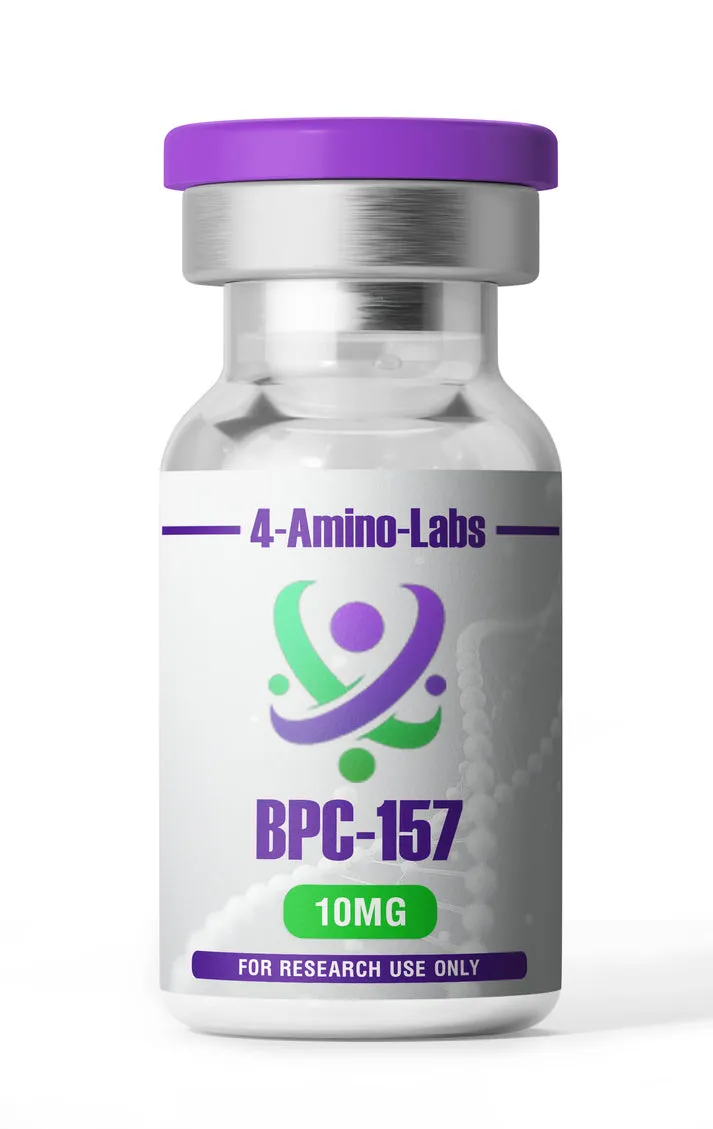
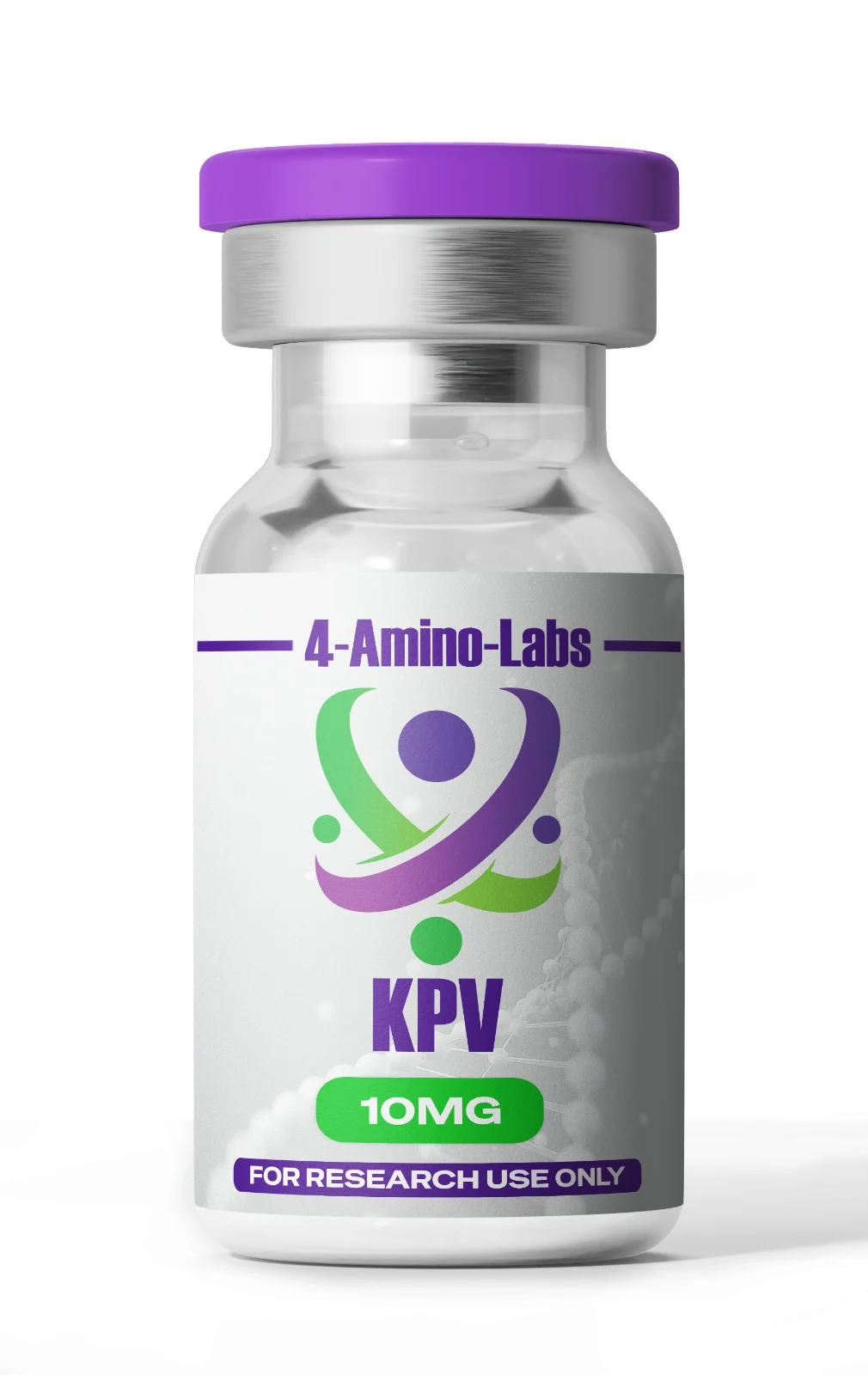
The different purity thresholds do not establish that one compound is preferable for your research question. Compound identity and application requirements remain separate from the documentation comparison.
Verdict: Hold batch acceptance; use product specifications for screening only.
4. Unlinked reports: best for preliminary document triage
A generic certificate, sample report, or analytical image without an identifiable connection to the received material cannot establish batch traceability. It can show the type of documentation to request, but it cannot qualify an unrelated lot.
Treat an unlinked report as a question to resolve, not as evidence to transfer. The same compound name is insufficient when the batch identifier or sample relationship is absent.
Unlinked report pros
- Provides a starting point for specific documentation questions.
- Helps identify which fields need clarification.
- Can illustrate a reporting format without qualifying material.
Unlinked report cons
- Does not establish a connection to the received batch.
- Cannot support a lot-specific acceptance decision by itself.
- Risks mixing evidence from different samples or reporting periods.
Best for: Preliminary document triage before requesting a traceable record.
Verdict: Skip unlinked reports as a basis for batch acceptance.
What the analytical documents actually establish
Different documents answer different questions. Combining them improves the review only when their scope and identifiers remain clear.
| Document or measurement | Question it addresses | What it does not establish alone |
|---|---|---|
| HPLC chromatogram | How components separate under the stated chromatographic conditions | Complete chemical identity or total material content |
| Mass spectrum | Whether observed mass-related signals support the assigned identity | Complete purity across all possible contaminants |
| Certificate of analysis | Which results were reported against identified specifications | Every detail of the underlying analytical work |
| Safety data sheet | What hazard and handling information is provided | Lot-specific analytical quality |
| Stability report | What changes were assessed under defined conditions | Stability under unrelated conditions |
Purity is not nominal content
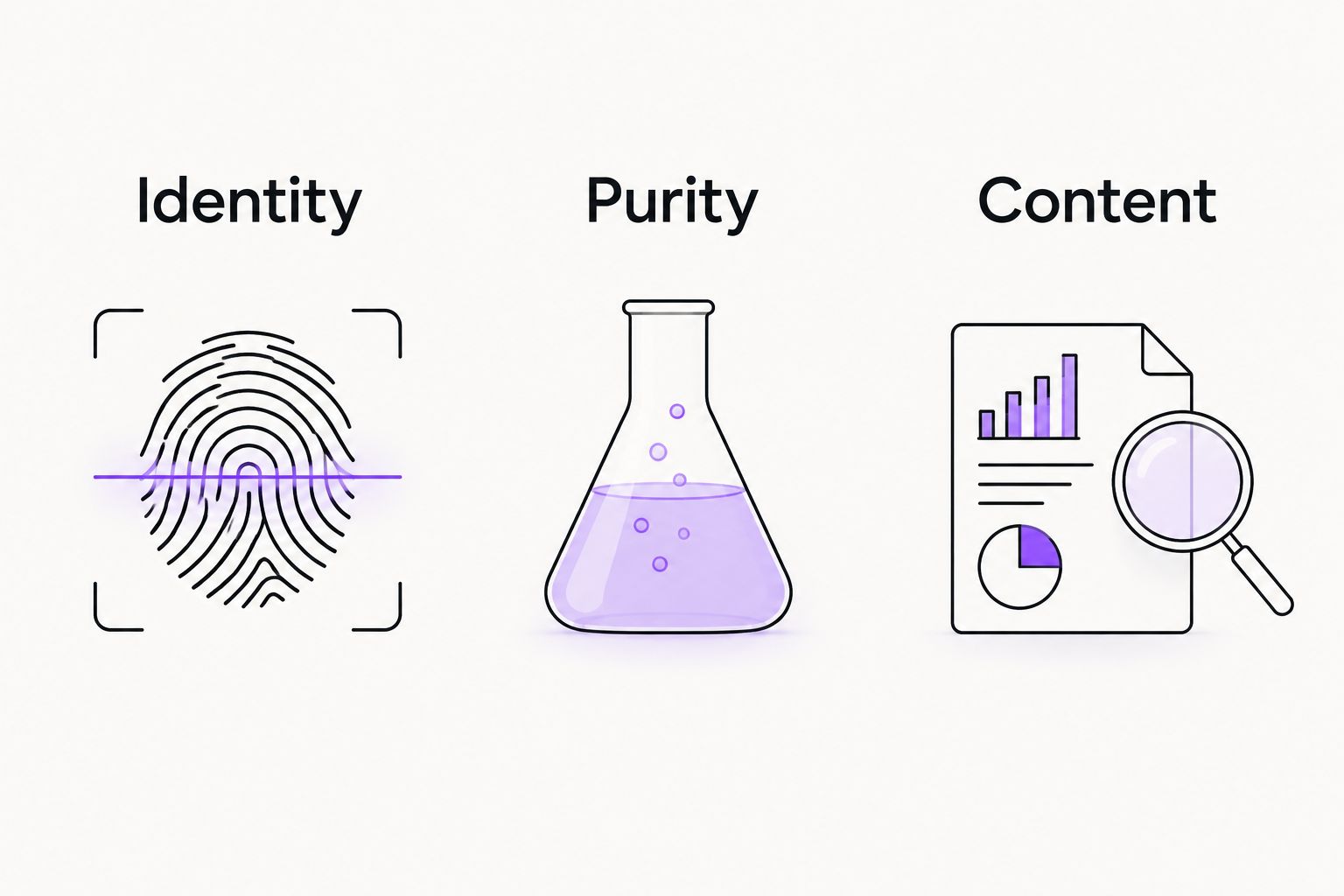
A stated vial content and an HPLC purity threshold describe different properties. Neither automatically establishes the other.
An HPLC area-based purity result describes the relative detected response under the method’s conditions. It is not automatically a measurement of total peptide mass, water content, counterion content, or substances outside the method’s detection scope. Read the method before treating the percentage as a complete material assessment.
Independent testing needs identifiable provenance
The phrase third-party tested is not a complete analytical record. Ask which laboratory issued the report, which sample it examined, and how that sample connects to the supplied lot.
Independence and analytical suitability are separate questions. A report can come from an external laboratory while still requiring scrutiny of its methods, identifiers, and conclusions.
Connect the evidence to your laboratory records
A supplier’s documentation becomes useful when your laboratory can retrieve it from the material’s inventory entry. Preserve the relationship between the container, certificate, supporting files, and acceptance decision.
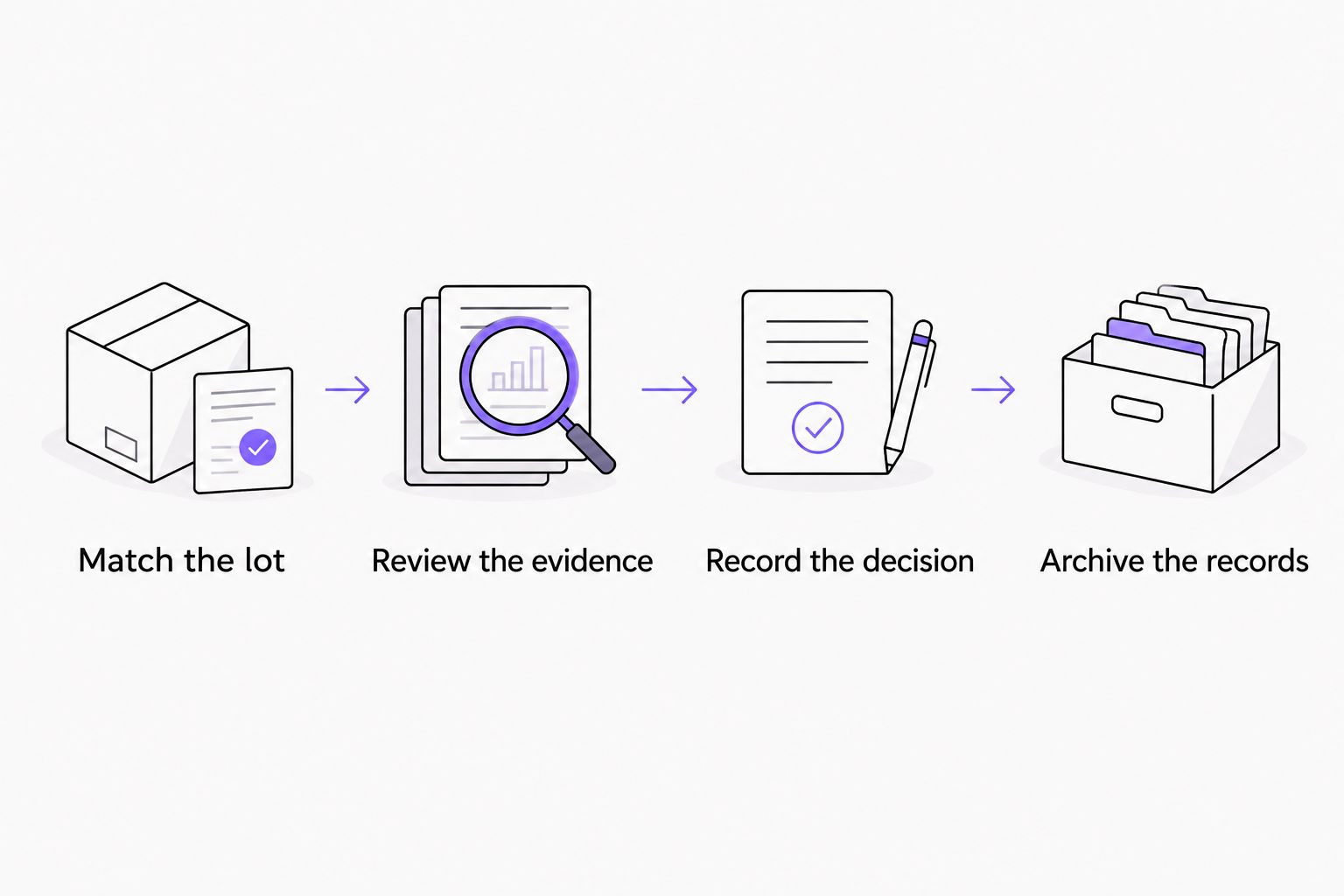
Use the following sequence for a 2026 receiving review:
- Match the lot. Compare the container identifier with the certificate and supporting reports.
- Review the evidence. Check identity, analytical scope, specifications, results, and document provenance.
- Record the decision. Preserve the acceptance status, reviewer, and unresolved discrepancies.
- Archive the records. Connect the retained documents to the inventory entry and laboratory work record.
Keep original analytical files separate from internal annotations. If a supplier issues a revised certificate, retain the earlier version and document why the revision changed—or did not change—the acceptance decision.
How the documentation ranking works
The ranking prioritizes lot linkage, chemical identity, method transparency, result specificity, document control, and application fit. A complete lot-linked dossier ranks above a summary certificate because it supports a deeper review of the reported evidence.
This is not a claim that any named supplier consistently provides a particular package. Selected 4-Amino-Labs listings establish the product specifications described here; supplier-wide analytical performance requires a separate, lot-specific assessment.
Which supplier documentation should you choose?
Choose the supplier that can provide a traceable evidence package suited to your laboratory’s acceptance criteria. Use a complete dossier for detailed qualification, a lot-specific CoA for defined receiving checks, and product specifications for initial screening.
Do not reward a supplier for document volume, an isolated purity percentage, or a familiar name. Reward a package that lets your laboratory explain exactly which material was assessed and why it was accepted.
Limitations of this comparison
Documentation completeness is not proof of suitability for every analytical application. This 2026 ranking does not establish supplier accreditation, manufacturing controls, independent testing across a catalog, or performance of any individual batch.
Product-level claims remain limited to their stated scope. Evidence for one compound must not be transferred to another, and documentation review does not replace the laboratory’s own material qualification requirements.
FAQ
What batch documentation should research chemical suppliers provide?
Request a lot-specific certificate of analysis and supporting analytical records relevant to your acceptance criteria. Check that the material identifier, methods, results, and issuing laboratory are traceable.
Is a certificate of analysis the same as an HPLC report?
No. A certificate of analysis summarizes reported results against specifications; an HPLC report addresses a particular chromatographic analysis. Their identifiers should connect when the chromatogram supports the certificate.
Does a high purity percentage establish chemical identity?
No. A purity percentage alone does not establish chemical identity. Review identity evidence separately and confirm what the purity method actually measures.
Are product specifications enough to accept a research chemical batch?
Product specifications alone do not establish the analytical results for a received batch. Use them to define questions, then review lot-specific evidence against your laboratory’s acceptance criteria.
What do selected 4-Amino-Labs peptide listings state?
The BPC-157 10mg listing states purity ≥99% verified by HPLC, while the KPV (10mg) listing states purity ≥98% verified by HPLC. These product specifications do not replace review of the relevant lot documentation.
Does third-party testing automatically qualify a supplier?
No. Third-party testing still requires review of the issuing laboratory, sample identity, analytical scope, and connection to the supplied lot. A single report does not qualify an entire catalog.
Should a safety data sheet replace a certificate of analysis?
No. A safety data sheet provides hazard and handling information, while a certificate of analysis reports analytical results against specifications. Retain both where required by your laboratory’s documentation system.
One last thing
The most useful document is the one your laboratory can connect to the material in front of it. Before accepting another analytical percentage, confirm that the container and report identify the same lot.
Related guides
- Connecting batch numbers to lab inventory tracking
- Connecting research chemical purchases to a lab notebook
- Research peptide storage and cold-chain workflow
Research use only. All materials discussed are intended strictly for laboratory research, not human or animal use. This content is not medical advice and is not intended to diagnose, treat, cure, or prevent disease.