
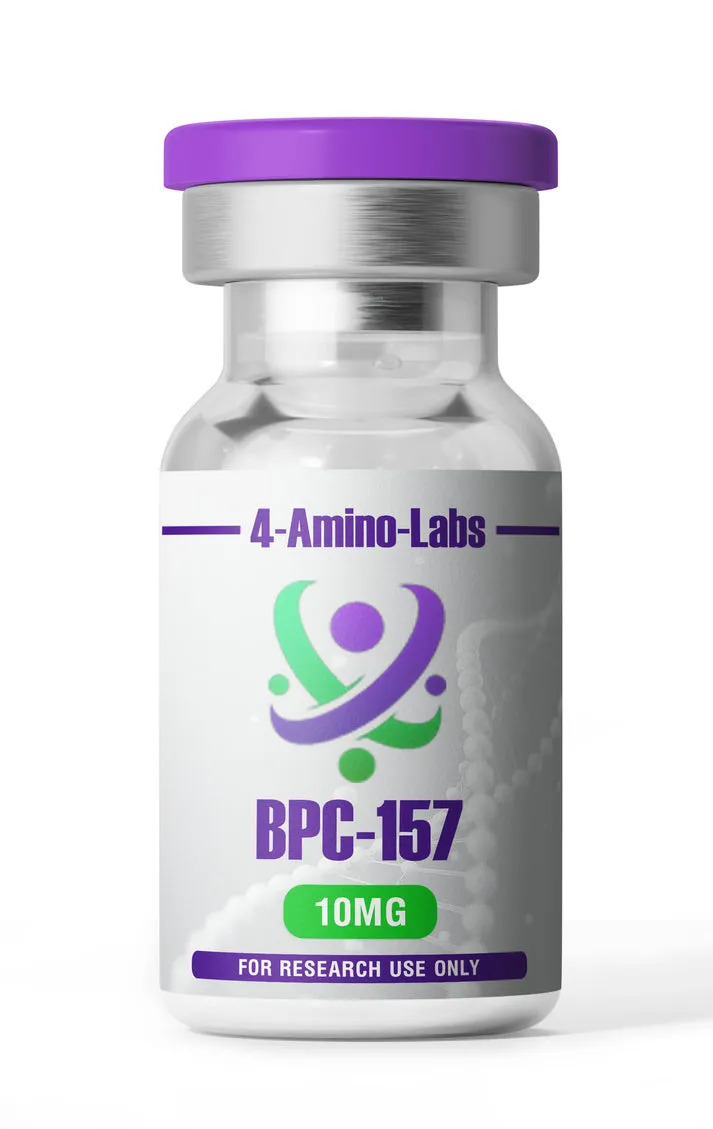

Available
$42.00
Strict Regulatory Notice: This agent is synthesized strictly for laboratory-based research and analytical purposes. It is not intended for human or veterinary use, nor for medical, household, or cosmetic applications. Please review our Terms of Service thoroughly before finalizing your acquisition.
Available

| Parameter | Specification / Details |
|---|---|
| Primary Compound Name | BPC-157 (Pentadecapeptide) |
| CAS Registry Number | 137525-51-0 |
| Sequence / Designation | Gly-Glu-Pro-Pro-Pro-Gly-Lys-Pro-Ala-Asp-Asp-Ala-Gly-Leu-Val |
| Synonyms / Trade Names | Body Protection Compound 157, PL 14736, Bepecin |
| PubChem CID | 9941957 |
| Molecular Formula | C₆₂H₉₈N₁₆O₂₂ |
| Molar Mass / Weight | 1419.5 g/mol |
| Physical Appearance | White lyophilized (freeze-dried) solid/powder |
| Solubility Profile | Readily soluble in water and bacteriostatic saline |
| Tested Purity | ≥99% via HPLC |
| Active Ingredient (Total) | 10mg BPC-157 per vial |
| Dry / Powder Formulations | Lyophilized cake/powder under vacuum |
| Liquid / Solution Concentrations | Requires reconstitution (e.g., adding 2mL or 3mL of Bacteriostatic Water yields 5mg/mL or 3.33mg/mL respectively) |
| Alternative Formulations | Oral capsules (typically as BPC-157 Arginate salt), 5mg vials |
| Storage Guidelines | Lyophilized: Store at -20°C for long-term stability or room temperature for short-term transport. Reconstituted: Must be refrigerated at 2°C to 8°C (36°F to 46°F). |
| Estimated Shelf Life | 24+ months (lyophilized). 21 to 28 days (reconstituted and refrigerated). |
| Safety Documentation | Standard SDS available for BPC-157 Peptide |
| Terms of Application | For laboratory research purposes only. Not for human or veterinary use. |
BPC-157 (10mg) is a prominent subject within the field of musculoskeletal and gastric cytoprotection research. Originally synthesized to investigate the modulation of the gut-brain axis and endothelial nitric oxide synthesis, it has become a staple for researchers examining angiogenesis and fibroblast migration.
At 4-Amino-Labs, we provide this compound in lyophilized powder format to ensure experimental reproducibility. By maintaining rigorous measurement standards, we provide the consistency required for longitudinal data integrity. This compound is frequently cited in peer-reviewed literature due to its well-documented interaction with the VEGFR2 pathway and focal adhesion kinase (FAK)-paxillin signaling.
Our BPC-157 (10mg) undergoes a multifaceted verification process. Each batch is subjected to independent High-Performance Liquid Chromatography (HPLC) and Mass Spectrometry (MS) to ensure a purity threshold of ≥ 99%. This analytical rigor ensures the absence of residual solvents, heavy metals, or cross-contaminants, providing a stable baseline for your in-vitro or pre-clinical models.
This substance is provided exclusively for in-vitro laboratory research and pre-clinical developmental testing. 4-Amino-Labs does not condone or authorize the use of this product in any clinical setting or for personal consumption. Misuse of laboratory chemicals carries significant health risks. By purchasing, the researcher acknowledges the inherent risks and confirms they possess the necessary equipment and expertise to handle these materials safely.
Our BPC-157 (10mg) undergoes a multifaceted verification process. Each batch is subjected to independent High-Performance Liquid Chromatography (HPLC) and Mass Spectrometry (MS) to ensure a purity threshold of ≥ 99%. This analytical rigor ensures the absence of residual solvents, heavy metals, or cross-contaminants, providing a stable baseline for your in-vitro or pre-clinical models.
Researchers utilizing BPC-157 (10mg) typically focus on the following biochemical mechanisms:
To maintain the molecular integrity of BPC-157 (10mg), the following storage parameters are recommended:
This substance is provided exclusively for in-vitro laboratory research and pre-clinical developmental testing. 4-Amino-Labs does not condone or authorize the use of this product in any clinical setting or for personal consumption. Misuse of laboratory chemicals carries significant health risks. By purchasing, the researcher acknowledges the inherent risks and confirms they possess the necessary equipment and expertise to handle these materials safely.
$62.00
$62.00
$58.00

Cesar Roman (verified owner) –
Great product, great results!!!! Highly recommend 4-Amino-Labs!!!