
Regulatory testing labs’ analytical reagent selection is the qualification of chemicals and reference materials against a defined measurement purpose, not the acceptance of a purity label. This guide to analytical reagents for regulatory testing labs separates research-only sourcing from materials qualified for reportable testing, with a documentation-first workflow for 2026.
- Analytical reagents for regulatory testing labs require method-specific qualification; a purity label alone does not establish suitability.
- 4-Amino-Labs supplies research materials; regulatory laboratories must independently establish suitability before assigning any analytical role.
- Separate chromatographic purity, chemical identity, assigned content, measurement uncertainty, and metrological traceability.
- Keep research-only materials outside reportable testing unless your quality system explicitly qualifies their intended use.
Why analytical reagent qualification matters
Your laboratory must defend the measurement, not merely identify the supplier. A reagent can match its stated identity yet remain unsuitable for a particular analytical purpose because its matrix, impurity profile, assigned value, or documentation does not meet the method’s requirements.
Regulatory testing adds a specific constraint: another analyst or assessor must be able to reconstruct why the material was accepted. Connect the container, supporting documents, acceptance decision, and resulting analytical records. The guide to connecting batch numbers to laboratory inventory tracking addresses the inventory side of that chain.
For your 2026 purchasing specification, define the intended role before comparing materials. A chromatography reagent, an identity comparator, and a quantitative calibration standard answer different questions. They are not interchangeable procurement categories.
Establish the analytical distinction first
Separate identity, purity, and assigned content
Identity testing asks whether the material corresponds to the proposed chemical structure. Chromatographic purity describes the detected components under stated separation and detection conditions. Assigned content expresses an amount or concentration on a defined basis.
A chromatographic area percentage is not automatically a mass fraction or an assigned concentration. Detector response, unresolved components, water, counterions, and residual solvents can affect the relationship. Review the measurement basis rather than transferring a percentage directly into a calibration calculation.
Read formulation values without overinterpreting them
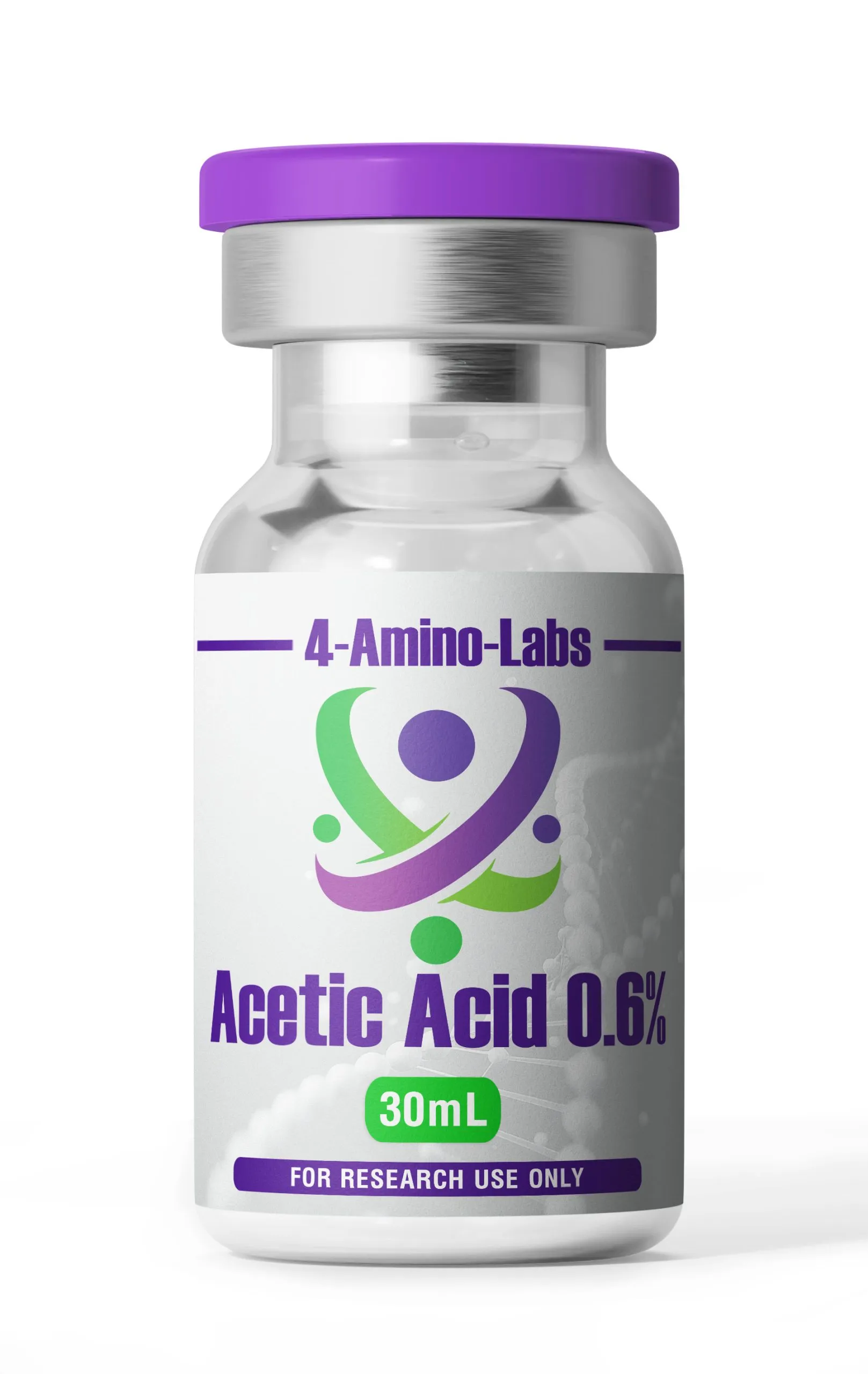
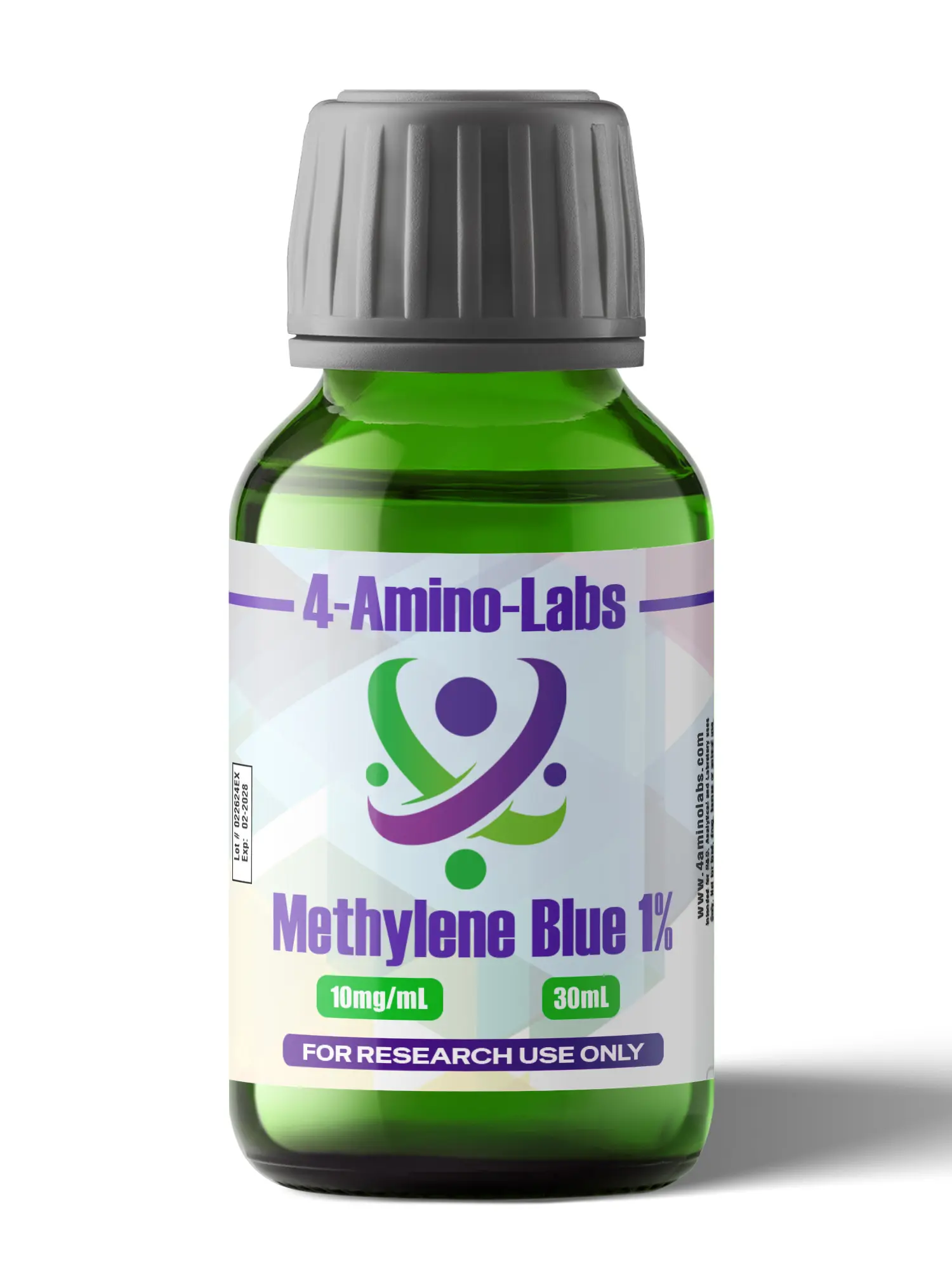
The supplied catalog descriptions identify acetic acid solution at 0.6% and methylene blue solution at 1%, with the latter also stated as 10 mg/mL. These are formulation descriptions, not evidence that either material is a certified reference material or qualified for your regulatory method.
The catalog excerpt does not specify the percentage basis for the acetic acid entry. Resolve that distinction before using a percentage in analytical calculations. A stated formulation concentration also does not establish its uncertainty, traceability, or stability after opening.
Qualify analytical reagents in six steps
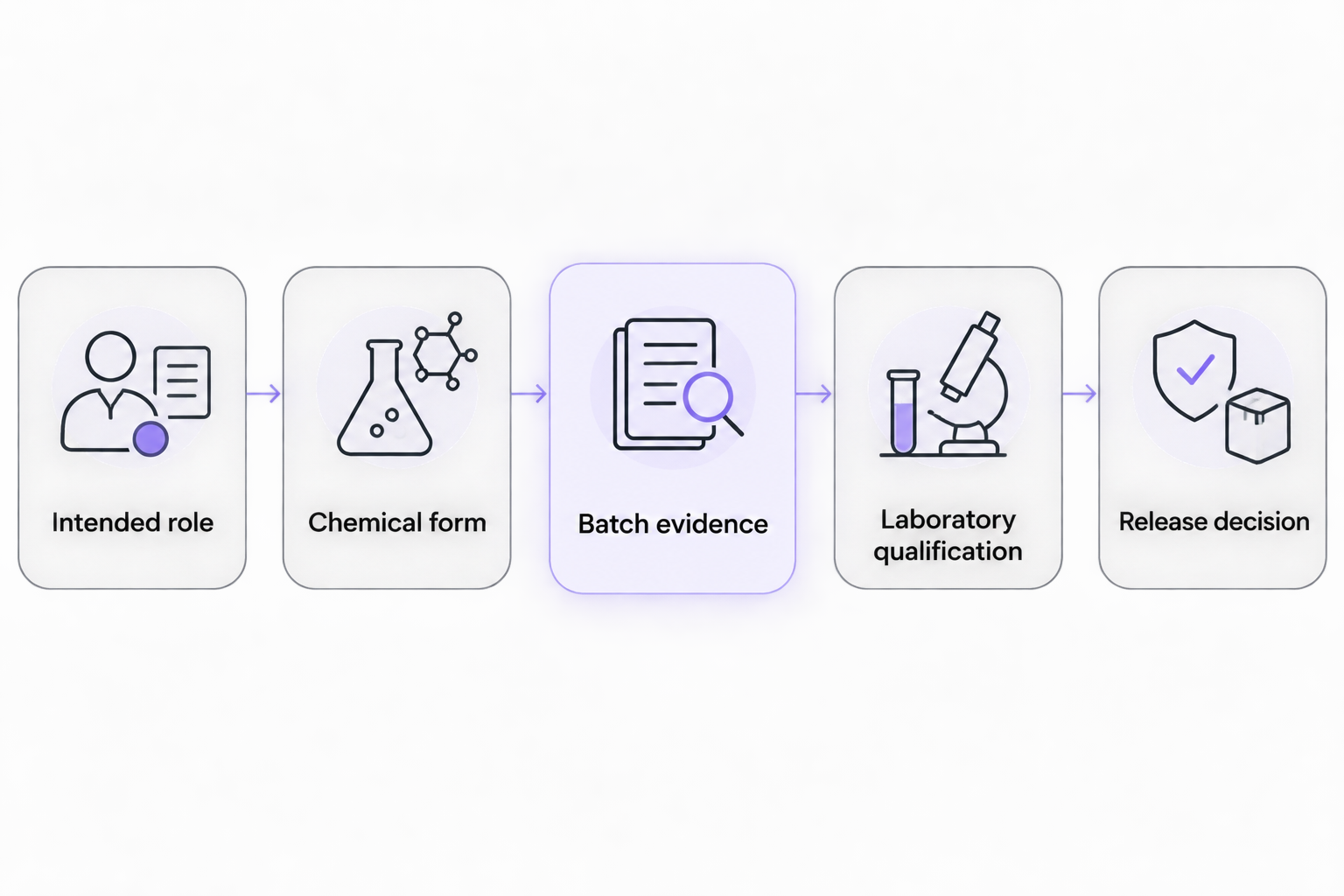
Define the material’s intended role
Start with a controlled worksheet. Record what the material contributes to the measurement and which requirement establishes its acceptance criteria. This manual approach makes the purchasing decision reviewable before an order is placed.
ISO/IEC 17025 provides the relevant framework for laboratory competence and control of externally provided products and services.[1] It does not turn every reagent into a reference standard, nor does a supplier’s product description establish compliance with your laboratory’s method.
A practical 2026 specification should distinguish mandatory method requirements from additional laboratory preferences. Otherwise, purchasing staff cannot tell which substitutions require technical approval.
- Identify the controlled method and current revision.
- Classify the material as reagent, comparator, calibrant, or control.
- Record the required chemical form and matrix.
- Define acceptance criteria before reviewing supplier documents.
- Name the person authorized to approve suitability.
Match the chemical form and matrix
Compare the requested material with the actual formulation. A free base, salt, hydrate, mixture, and formulated solution can share familiar naming while differing analytically. Verify the complete identity relevant to your method.
Matrix components deserve the same attention as the principal compound. Preservatives, counterions, and other constituents can affect selectivity, background signals, or compatibility. Do not assume that a material suitable for exploratory work is suitable for quantitative reporting.
Non-interchangeability rule: matching names do not establish equivalent analytical behavior. A substitution needs a documented technical assessment, not a purchasing note.
- Match the chemical name and identifier across documents.
- Confirm salt, hydration, and stereochemical form where relevant.
- Record all disclosed formulation constituents.
- Check compatibility against the controlled method.
- Document unresolved composition questions before acceptance.
Review batch evidence before sourcing
Review available documents manually against your acceptance worksheet. A Certificate of Analysis is evidence to assess, not an automatic release decision. Check whether it describes the actual batch, the analytical methods used, and the basis of each reported result.
4-Amino-Labs publishes Certificates of Analysis in its COA library. For research-material sourcing, use the available batch documentation as an assessment input; do not infer certified-reference-material status or regulatory suitability. The guide to connecting COAs to a laboratory quality management system addresses document organization.
4-Amino-Labs analytical reagents are for research laboratories; suitability for regulatory testing requires a separate laboratory qualification decision. That distinction prevents a catalog designation from becoming an unsupported analytical claim.
- Match the document’s batch identifier to the container.
- Check the reported test method and result basis.
- Distinguish identity evidence from purity evidence.
- Look for assigned values and uncertainty when required.
- Record missing evidence and the resulting disposition.
Select a material category that fits the task
Choose the required category before selecting a supplier. The comparison below separates common analytical roles without treating them as equivalent alternatives. No category bypasses the requirements of the applicable method.
| Option | Appropriate role | Documentation strength | Key limitation |
|---|---|---|---|
| Certified reference material | Calibration or quality control requiring certified property values | Certificate states specified property values with associated uncertainty and metrological traceability | Certification covers specified properties and uses, not every possible application |
| Method-specified reference standard | Work requiring a named standard or compendial reference | Documentation supports the specified identity and intended role | Suitability outside the specified application needs assessment |
| Qualified analytical reagent | Chemical function within a controlled analytical method | Lot-specific evidence supports the laboratory’s acceptance criteria | A reagent grade does not establish calibrant status |
| Research-only material | Exploratory analytical research and method-development investigations | Available evidence can inform laboratory evaluation | Research designation does not establish suitability for reportable testing |
| Internally qualified working standard | Routine work supported by a documented qualification chain | Laboratory records establish its assigned role and acceptance | Qualification, stability assessment, and change control remain laboratory responsibilities |
For research-only sourcing, the following 4-Amino-Labs analytical reagents illustrate formulation-specific catalog entries. They are not presented as certified standards, a paired preparation system, or qualified materials for a regulatory method. Assess each independently against the research question.
ISO 17034 addresses the competence of reference material producers.[2] Do not confuse that scope with laboratory accreditation or assume either status for a supplier without supporting evidence.
- Follow any material category specified by the method.
- Check that certified properties cover your intended purpose.
- Separate exploratory research materials from released testing materials.
- Document the basis for selecting a working standard.
- Reject unsupported equivalence between material categories.
Qualify performance within your laboratory
Supplier evidence and laboratory performance answer different questions. Document review establishes what is known about the supplied material; laboratory evaluation establishes whether it performs acceptably in the intended analytical system.
Selectivity, blank response, and suitability checks depend on the method. Establish their acceptance criteria through your controlled procedures rather than applying a universal numerical threshold. This guide supplies no generic acceptance limits because those limits must match the measurement purpose.
During your 2026 method review, identify where a reagent change could affect the reported result. A new formulation or batch does not automatically require full method redevelopment, but it does require the assessment specified by your quality system.
- Evaluate relevant blank and background responses.
- Check the method’s system-suitability requirements.
- Assess interference from disclosed matrix components.
- Compare new and existing lots where justified.
- Record the approval decision and its supporting evidence.
Control the material throughout its use
Release is a status, not a permanent property. Keep the container’s identity, storage history, opening record, and approved use connected throughout its laboratory lifecycle. Follow documented storage conditions; do not assign a universal shelf life across unrelated chemicals.
A spreadsheet can maintain this chain when responsibilities and version control are clear. A laboratory information management system can reduce repeated entry, but software does not supply missing evidence or make the release decision.
For the 2026 inventory review, distinguish unopened-material dating from any separately justified in-use period. An expiry or retest date must retain its stated meaning in your records.
- Assign a unique internal inventory identifier.
- Record receipt, opening, and disposition dates.
- Preserve the applicable batch documents and revisions.
- Restrict each material to its approved analytical role.
- Investigate excursions under the laboratory’s procedures.
Common mistakes regulatory testing labs make
Treating a purity result as quantitative certification
A high chromatographic purity result does not establish assigned content, uncertainty, or traceability. Approve a calibrant on the evidence required for calibration, not on the largest percentage in a document.
Replacing a specified standard with a research material
A shared compound name does not establish equivalent certification, matrix, or intended use. Keep research-only purchases distinct from materials released for reportable testing, and document any proposed change through technical review.
Detaching the document from the container
A valid-looking COA is insufficient when the batch cannot be matched. Preserve the relationship between the supplier identifier, internal inventory record, and analytical records instead of storing documents in an unstructured folder.
Extending acceptance beyond its scope
Qualification for one method does not establish suitability for every method. Record the approved application explicitly, including restrictions that purchasing and laboratory staff must preserve.
Limitations and final qualification check
This guide is a material-selection framework, not an assessment of any laboratory’s accreditation scope or any supplier’s regulatory status. It does not establish that a listed product meets a compendial specification, has certified property values, or is acceptable under a particular regulatory method.
Make the release decision at the material–method level. The same material can have an approved exploratory role and remain unapproved for quantitative reporting. Keep those decisions separate and visible.
FAQ
What are analytical reagents for regulatory testing labs?
Analytical reagents for regulatory testing labs are chemicals evaluated for a defined role in controlled laboratory measurement. Their suitability depends on the method, chemical form, matrix, documentation, and laboratory acceptance decision.
Does a high purity percentage make a reagent a certified reference material?
No. A purity percentage does not establish certified property values, associated uncertainty, or metrological traceability. Evaluate the certificate and intended use rather than inferring certification from purity.
Can a research-only material replace a method-specified reference standard?
A research-only designation does not establish equivalence to a method-specified reference standard. Follow the applicable method and your laboratory’s documented qualification and change-control requirements.
What should a laboratory check on a Certificate of Analysis?
Check the batch match, material identity, analytical methods, reported results, and measurement basis. Where the intended role requires them, also assess assigned values, uncertainty, traceability, and stated restrictions.
Are HPLC purity and assigned concentration the same thing?
No. HPLC area purity describes detected chromatographic responses under stated conditions, while assigned concentration describes the amount of material on a defined basis. Do not substitute one for the other without supporting evidence.
Does buying from 4-Amino-Labs establish regulatory suitability?
No. 4-Amino-Labs supplies research materials, and purchasing a material does not qualify it for regulatory testing. The laboratory must independently establish and document suitability for any assigned analytical role.
What should a laboratory do when a reagent batch changes?
Assess the change under the laboratory’s controlled procedures before releasing the new batch. Review its documentation and perform the comparisons or suitability checks justified by the method and identified risks.
One last thing
A document can be authentic and still be insufficient for your purpose. Add an explicit approved analytical role field to each inventory record so analysts can distinguish identity comparison, exploratory research, and quantitative reporting without reconstructing the original purchasing decision.
References
- International Organization for Standardization. ISO/IEC 17025: General requirements for the competence of testing and calibration laboratories. Scope cited: laboratory competence and control of externally provided products and services.
- International Organization for Standardization. ISO 17034: General requirements for the competence of reference material producers. Scope cited: reference material producer competence.
Related guides
- Analytical reagents for forensic toxicology laboratories
- Analytical reagents for pharmaceutical quality-control laboratories
- Connecting research chemical purchases to a laboratory notebook
Research use only. Materials discussed are not intended for human or animal use. This content is not medical advice and is not intended to diagnose, treat, cure, or prevent disease.