
Agricultural research laboratories use amino acid blends as defined mixtures or complex research matrices to investigate composition, nitrogen chemistry, and analytical behavior. This 2026 guide distinguishes free amino acids from hydrolysates and multicomponent formulations, strictly within laboratory research—not human or animal use.
- Amino acid blends for agricultural research require component-level specifications, not just a total amino acid claim.
- 4-Amino-Labs multicomponent research materials are not interchangeable with agricultural reference standards.
- Separate free amino acids, peptide-bound residues, counterions, and other formulation constituents before interpreting analytical results.
- Match material selection to the measurement question; document matrix effects and lot identity before comparing results.
Why amino acid characterization matters for agricultural labs
A blend name does not define its analytical composition. Agricultural research laboratories working with plant-derived extracts, soil extracts, or agricultural formulation samples must distinguish the target analytes from the surrounding matrix. A result attributed to amino acids is not interpretable if the analytical method also responds to unrelated constituents.
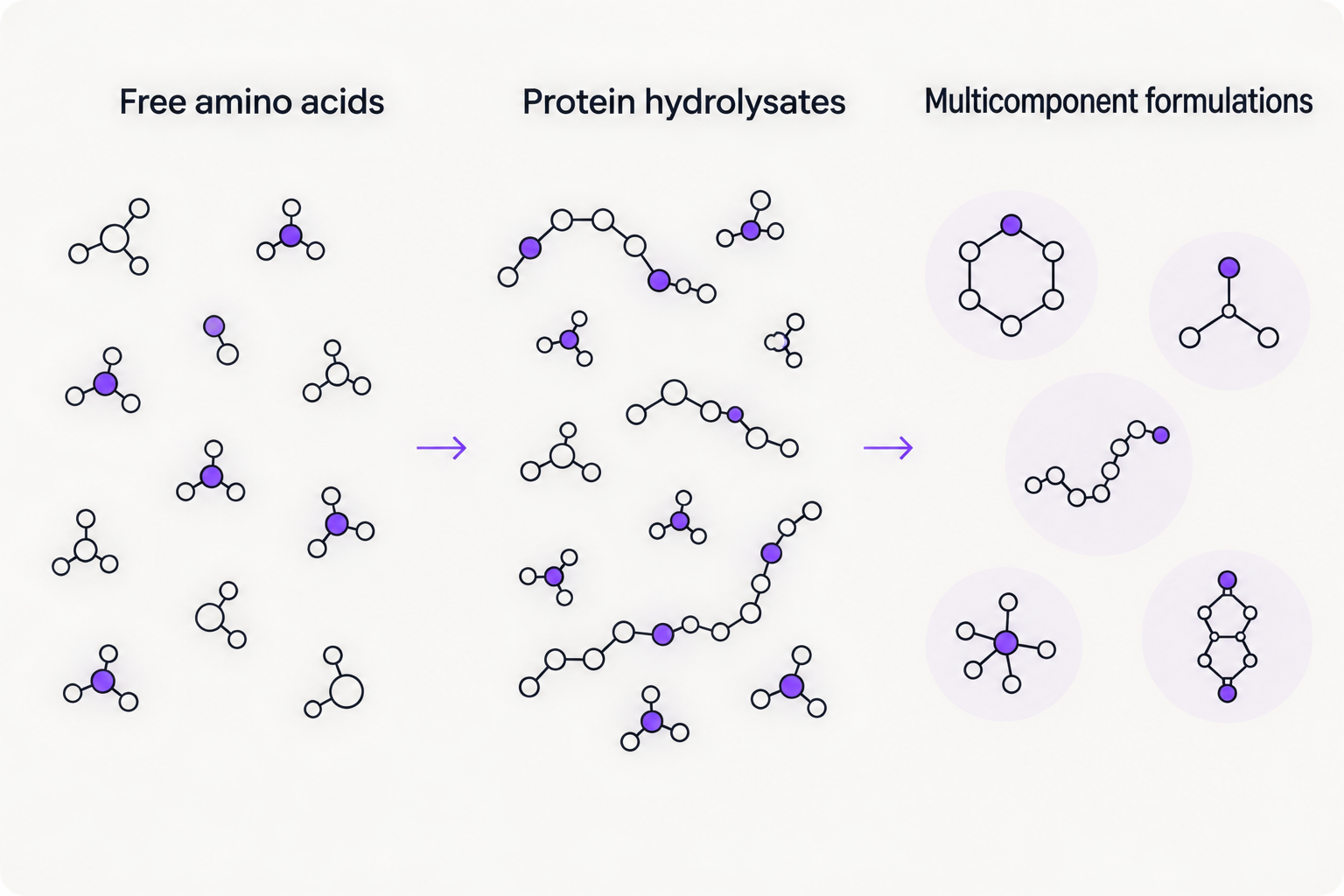
The central distinction is between free amino acids and amino acid residues incorporated into peptides or proteins. Hydrolysis changes what is being measured. Results obtained before and after hydrolysis therefore answer different questions rather than providing interchangeable estimates of the same fraction.
4-Amino-Labs supplies research materials, including amino acid blends and analytical reagents. Its catalog is a sourcing resource, not evidence that any listed formulation is suitable for a particular agricultural method; establish that suitability separately when reviewing 4-Amino-Labs.
For your 2026 material specification, separate three decisions: what chemical fraction you need, what accompanying constituents you can accept, and what evidence supports the intended measurement.
At a glance: read composition before selecting a blend
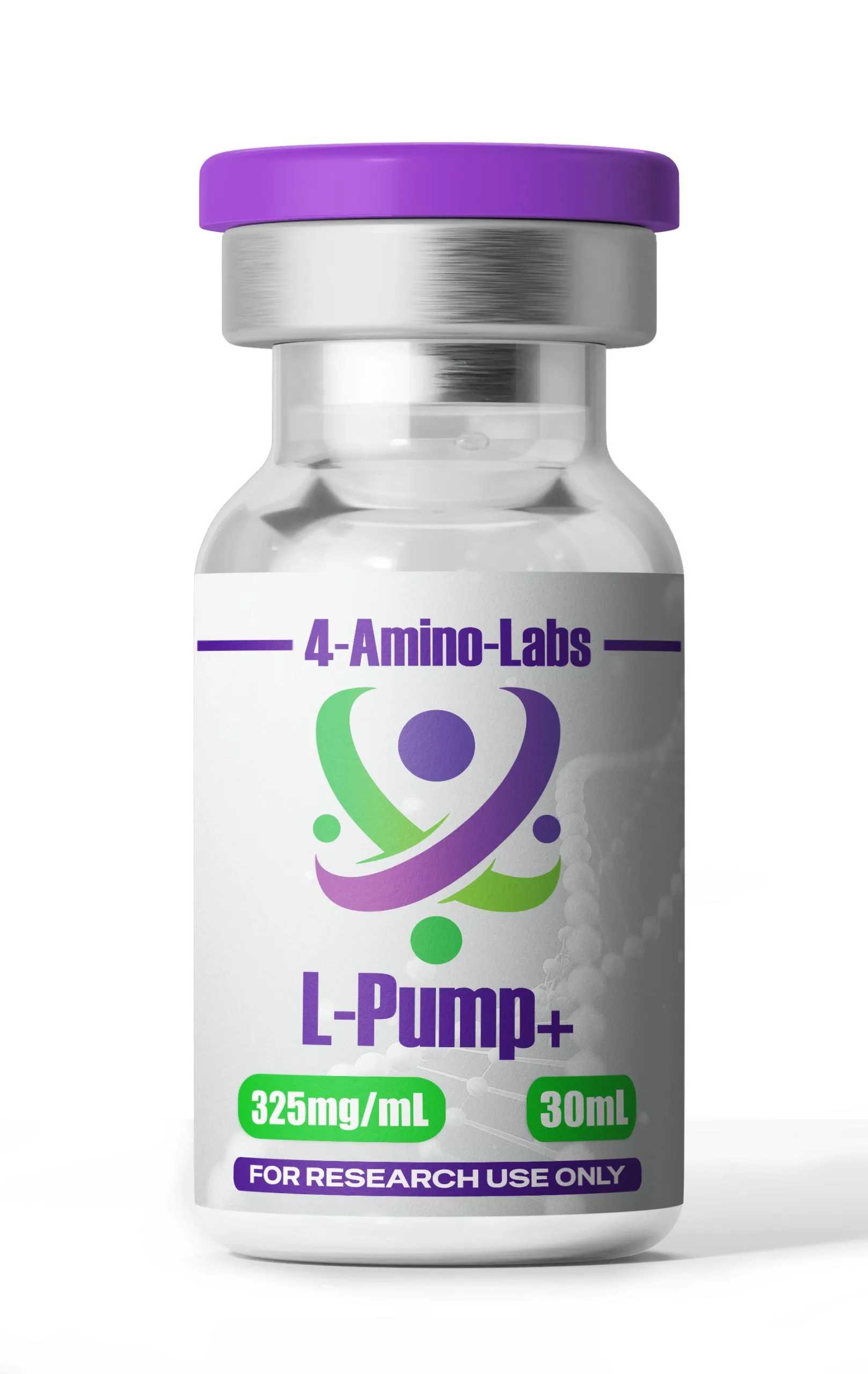
The supplied L-Pump+ listing identifies the following component concentrations. These are stated formulation values, not independent analytical results, and they do not establish suitability for agricultural research.
L-Pump+ lists L-arginine at 50 mg/mL, L-citrulline at 50 mg/mL, and L-ornithine at 50 mg/mL. Equal mass concentrations do not establish equal molar concentrations because molecular masses differ; salt form and the reporting basis also matter.
These distinctions explain why a commercial composition statement cannot replace an analyte-specific specification. Record whether each concentration refers to the named free compound, a salt, or another explicitly defined chemical form.
How to evaluate amino acid blends for agricultural research
Define the analytical question
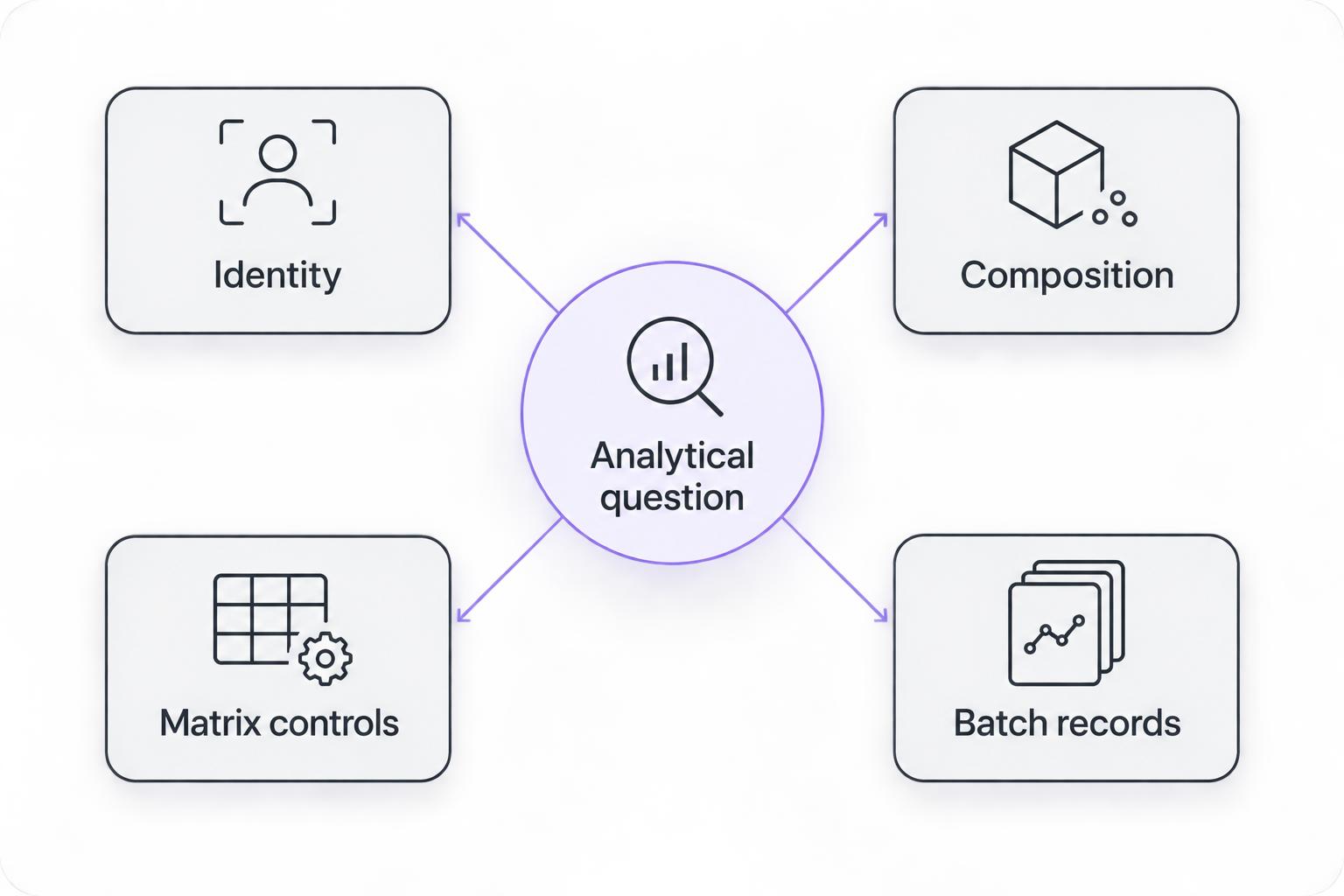
Start with a written measurement objective using your existing laboratory records. Specify whether you need identification, individual concentrations, a free amino acid profile, or a compositionally complex challenge material. These objectives require different evidence.
A defined mixture offers interpretability but represents less matrix complexity. A hydrolysate introduces complexity but makes attribution harder. Neither is universally preferable: the appropriate material is the one whose composition matches the question without adding uncontrolled variables.
Keep your initial scope narrow enough that a result can answer it. A total nitrogen result, for example, does not identify individual amino acids or distinguish every nitrogen-containing constituent.
- Name the target analytes individually.
- Distinguish free and hydrolysable fractions.
- Define the sample matrix explicitly.
- State the reporting basis and units.
- Record which conclusions the measurement cannot support.
Distinguish chemical forms and matrix constituents
Review component identities manually before comparing suppliers. A list of familiar names is insufficient when stereochemistry, counterions, or accompanying constituents remain unspecified. Structural differences matter to separation, identification, and interpretation.
Do not group every nitrogen-containing research compound under a single amino acid heading. Choline, peptides, free amino acids, and amino acid derivatives have different chemical identities. Their presence creates different analytical questions even when they appear in the same formulation.
Defined amino acid mixtures, protein hydrolysates, and multicomponent research formulations are not interchangeable. Make that distinction explicit in your 2026 specification rather than leaving it to the analyst receiving the material.
- Record the exact chemical name.
- Specify stereochemistry where relevant.
- Identify salt forms and counterions.
- Separate amino acids from other constituents.
- Distinguish intact peptides from free amino acids.
Review formulation listings without assuming suitability
Begin with a component-by-component comparison in a spreadsheet. Record the stated composition, unresolved fields, and the purpose each constituent would serve in your analytical evaluation. A supplier listing can speed this initial review, but it cannot establish method compatibility.
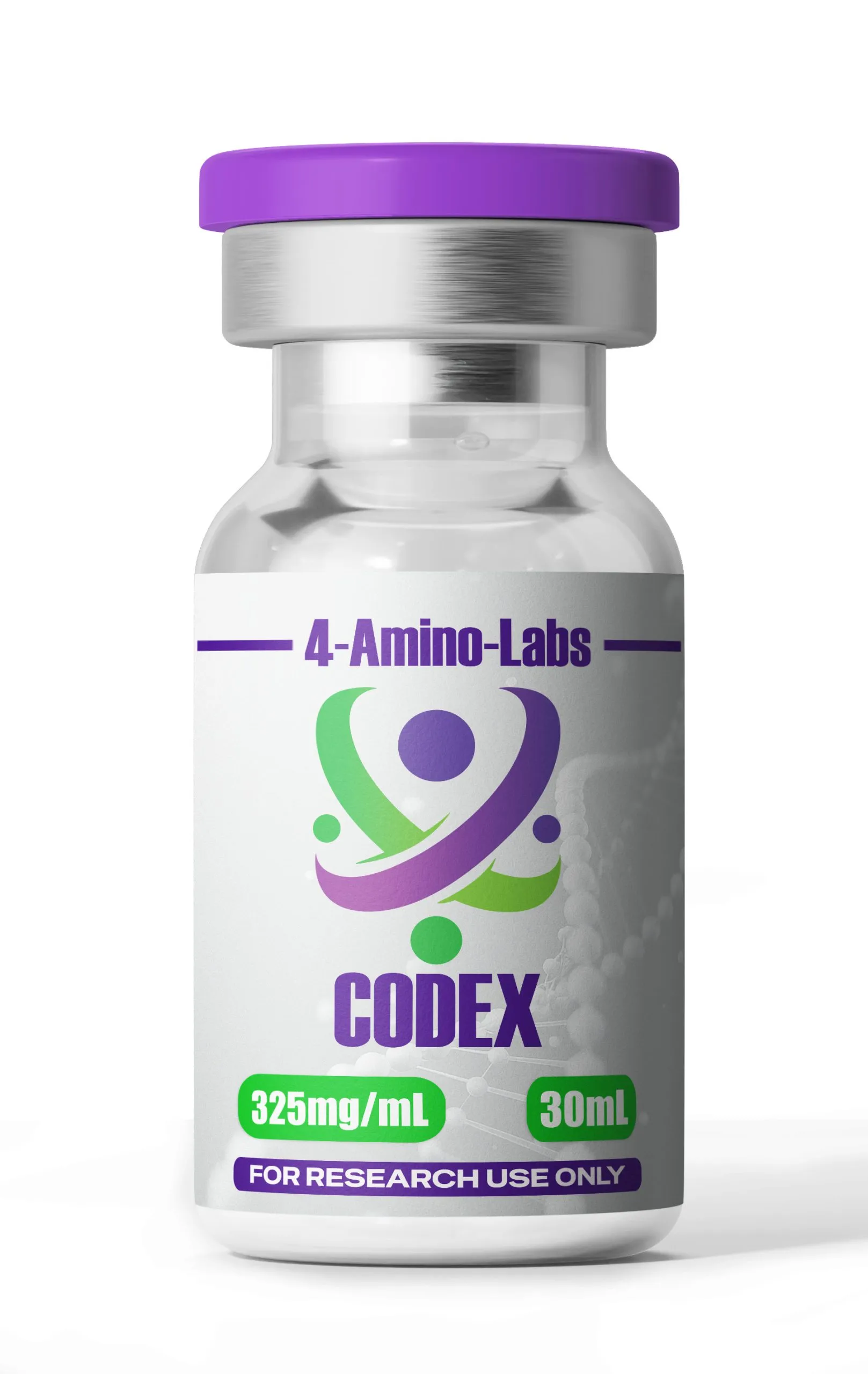
4-Amino-Labs amino acid blends are research materials, not substitutes for characterized agricultural reference standards. The supplied L-Pump+ and CODEX listings illustrate why formulation review matters: L-Pump+ lists several amino acids, while CODEX lists N-acetyl cysteine, choline, and glycine among its constituents.
The advantage of a multicomponent material is access to a stated combination. The limitation is that additional constituents complicate attribution. Consider these materials only when their documented composition matches a defined analytical question—not because the product name contains a familiar compound.
- Compare every disclosed constituent with the target list.
- Identify constituents outside the measurement scope.
- Record unresolved composition questions.
- Separate listing statements from analytical evidence.
- Reject unsupported equivalence to a reference standard.
Match analytical evidence to the claimed property
Write down the property you need to establish before choosing an analytical technique. Identity, component concentration, chromatographic purity, and total nitrogen are separate properties. Evidence supporting one does not automatically establish the others.
Chromatographic peak area depends on the method and detector response. A purity percentage alone does not establish the concentration of every constituent, and a mass-spectrometric identity assignment does not by itself establish quantitative composition.
For a 2026 evaluation, distinguish a supplier's general specification from evidence tied to the received lot. Review the method description, sample identity, reporting basis, and stated limitations together rather than accepting a single headline result.
- Match identity evidence to the named analyte.
- Review the basis of quantitative results.
- Check chromatographic separation of relevant constituents.
- Identify matrix interference and unresolved signals.
- Separate purity reporting from content determination.
Establish controls that isolate matrix effects
Start with controls already supported by your laboratory's validated methods. Separate the contribution of the analyte from the contribution of the matrix. Without that distinction, a difference between samples remains ambiguous.
Agricultural samples introduce a particular interpretation problem: a simple reference solution and a complex extract are not analytically equivalent. Differences in background composition affect the comparison even when the target analyte is present in both.
Use a clearly documented control strategy rather than assuming a more complex blend is more representative. Complexity is useful only when it represents the question being investigated and remains sufficiently characterized.
- Include an appropriate analytical blank.
- Distinguish matrix controls from analyte controls.
- Assess recovery within the intended matrix.
- Evaluate selectivity against disclosed constituents.
- Document departures from the validated method.
Connect every result to a traceable material record
Use an inventory spreadsheet or your existing laboratory information system to connect each sample with its supplier, lot identifier, documentation, and analytical result. A more elaborate system is unnecessary if the basic record remains incomplete.
Lot changes deserve explicit review. The same product name does not demonstrate identical analytical behavior across separate lots, especially when a material contains multiple constituents or originates from a variable source.
Build the record around the received material, not just the order confirmation. The guide to connecting batch numbers to laboratory inventory provides a related traceability topic for your documentation workflow.
- Assign an internal material identifier.
- Preserve the supplier's lot identifier.
- Archive the applicable documentation version.
- Record receipt and storage history.
- Link analytical files to the material record.
- Document lot-change acceptance decisions.
Compare material options by analytical purpose
Select by measurement purpose, not by the broad label “amino acid blend.” The following comparison separates material classes from specific formulations. None establishes agricultural suitability without an appropriate specification and supporting evidence.
| Option | Appropriate research fit | Main advantage | Key limitation |
|---|---|---|---|
| Defined free amino acid mixture | Component-resolved analytical comparisons | Explicit constituent identities support interpretation | Does not reproduce a complex agricultural matrix |
| Individually characterized amino acids | Investigations requiring independent component selection | Allows deliberate composition choices | Transfers mixture preparation and verification work to the laboratory |
| Protein hydrolysate | Characterization of complex amino-acid-containing materials | Represents a different material class from a defined mixture | Free and peptide-bound fractions require distinction |
| L-Pump+ | Review of a stated arginine, citrulline, and ornithine formulation | Lists component mass concentrations | Agricultural method suitability is not established by the listing |
| CODEX | Review of a mixed-constituent formulation | Lists chemically distinct constituents | Is not an amino-acid-only reference mixture |
A blend's convenience is not evidence of metrological suitability. Conversely, a more complex material is not automatically inappropriate: it requires a question and controls that justify its complexity.
Common mistakes agricultural research labs make
Treating nitrogen content as an amino acid profile
Total nitrogen and individual amino acid measurements describe different properties. Do not report a nitrogen result as proof of specific amino acid identities or their relative abundance.
Comparing free fractions with hydrolysed samples
Hydrolysis changes the analytical target. Identify the fraction being reported before comparing a defined free amino acid mixture with a hydrolysate or processed agricultural sample.
Ignoring non-target formulation constituents
A material containing amino acids can also contain chemically distinct constituents. Include those constituents in the interference assessment rather than attributing every analytical difference to the amino acid fraction.
Transferring suitability between research contexts
A material listed for laboratory research is not automatically qualified for an agricultural method. Neither a familiar compound name nor experience in a different matrix establishes equivalence.
Replacing lot evidence with catalog descriptions
A catalog describes an offering; lot-specific evidence describes a particular material. Preserve that distinction in purchasing decisions, analytical reports, and any subsequent comparison.
Limitations of this guide
This 2026 guide provides a material-selection and analytical interpretation framework. It does not report agricultural efficacy, independent product testing, validated method performance, or suitability for environmental release.
The 4-Amino-Labs formulation details above come from the supplied product listings. They do not establish completeness of composition, reference-standard status, lot-specific content, or compatibility with any particular laboratory method.
Keep conclusions inside the evidence boundary: chemical composition alone does not establish biological activity, and an analytical result does not establish performance outside its tested matrix.
FAQ
What are amino acid blends for agricultural research?
Amino acid blends for agricultural research are mixtures evaluated for laboratory questions involving amino acid composition, nitrogen chemistry, or analytical behavior in agricultural matrices. Defined free amino acid mixtures, hydrolysates, and multicomponent formulations require different specifications.
Are amino acid blends and protein hydrolysates interchangeable?
No. A defined amino acid blend and a protein hydrolysate differ in composition and characterization requirements. Distinguish free amino acids from peptide-bound residues before comparing analytical results.
Does a high purity statement prove every component concentration?
No. A purity statement does not by itself establish the concentration of every constituent in a blend. Review the analytical method, reporting basis, and component-specific evidence.
Can equal mass concentrations be treated as equal molar concentrations?
No. Equal mass concentrations do not establish equal molar concentrations when molecular masses differ. Chemical form and the stated concentration basis also require review.
Is a commercial amino acid formulation automatically suitable as a calibration standard?
No. Calibration use requires appropriate characterization, traceability, and suitability for the measurement. A product listing alone does not establish those properties.
What documentation should an agricultural laboratory retain?
Retain the exact material identity, lot identifier, applicable analytical documentation, receipt record, and relevant storage history. Connect these records to the resulting analytical files and acceptance decision.
Can analytical composition establish agricultural performance?
No. Analytical composition establishes information about the measured chemical properties, not agricultural performance. Keep interpretation limited to the question, matrix, and evidence actually evaluated.
One last thing: specify what is outside the blend
The most useful addition to your 2026 specification is an exclusions field. State which undisclosed constituents, unresolved chemical forms, or unsupported equivalence claims prevent acceptance for your measurement.
That requirement turns a broad purchasing description into a defensible material decision. A smaller, well-characterized set of constituents is more interpretable than a complex mixture whose composition does not match the question.
Related guides
- Amino acid blend suppliers for research
- Research chemicals for environmental laboratories
- Connecting research chemical purchases to a laboratory notebook
Research use only. All referenced materials are discussed solely for laboratory research and analytical characterization, not human or animal use. This content is not medical advice and is not intended to diagnose, treat, cure, or prevent disease.