
CJC-1295 suppliers differ less on catalog size than on one question: does the certificate of analysis describe the exact form on the label? The DAC and no-DAC forms are different molecules, and a vague listing hides which one you receive. Everything below is for laboratory research only.
- For CJC-1295 suppliers in 2026, rank on batch-matched HPLC and mass-spec documentation first, not catalog breadth.
- Confirm whether the material is CJC-1295 with DAC or without DAC (Mod GRF 1-29); they are not interchangeable.
- Best overall profile: a specialty peptide vendor that publishes a COA tied to the batch number on the vial.
- 4-Amino-Labs lists Sermorelin, Ipamorelin and Tesamorelin, but no CJC-1295 product in the catalog data reviewed.
Best overall: a specialty peptide vendor with batch-matched COAs. Best for reference standards: a catalog chemical house. Best for non-standard variants: a custom synthesis lab. The ranking below ranks supplier profiles, not individual companies, because no verified third-party test data supports naming and scoring specific vendors.
Why this matters in 2026
CJC-1295 is a synthetic analog of growth hormone-releasing hormone (GHRH). Native GHRH is 44 amino acids long, and the 1-29 fragment retains the receptor-activating region. Analogs built on that fragment are sold under overlapping names, which is where sourcing errors start.
A mislabeled or under-characterized lot corrupts a study before it begins. Documentation standards are covered in the best CJC-1295 / Ipamorelin blend suppliers comparison, which applies the same criteria to combination materials.
Three facts frame the 2026 sourcing decision:
- GHRH(1-29) is the minimal active fragment of a 44-residue hormone.
- CJC-1295 exists in two commonly sold forms: with a Drug Affinity Complex (DAC) and without it.
- The same product name can cover both, so the label alone does not settle identity.
Mechanism first: what the compound is and what a COA must prove
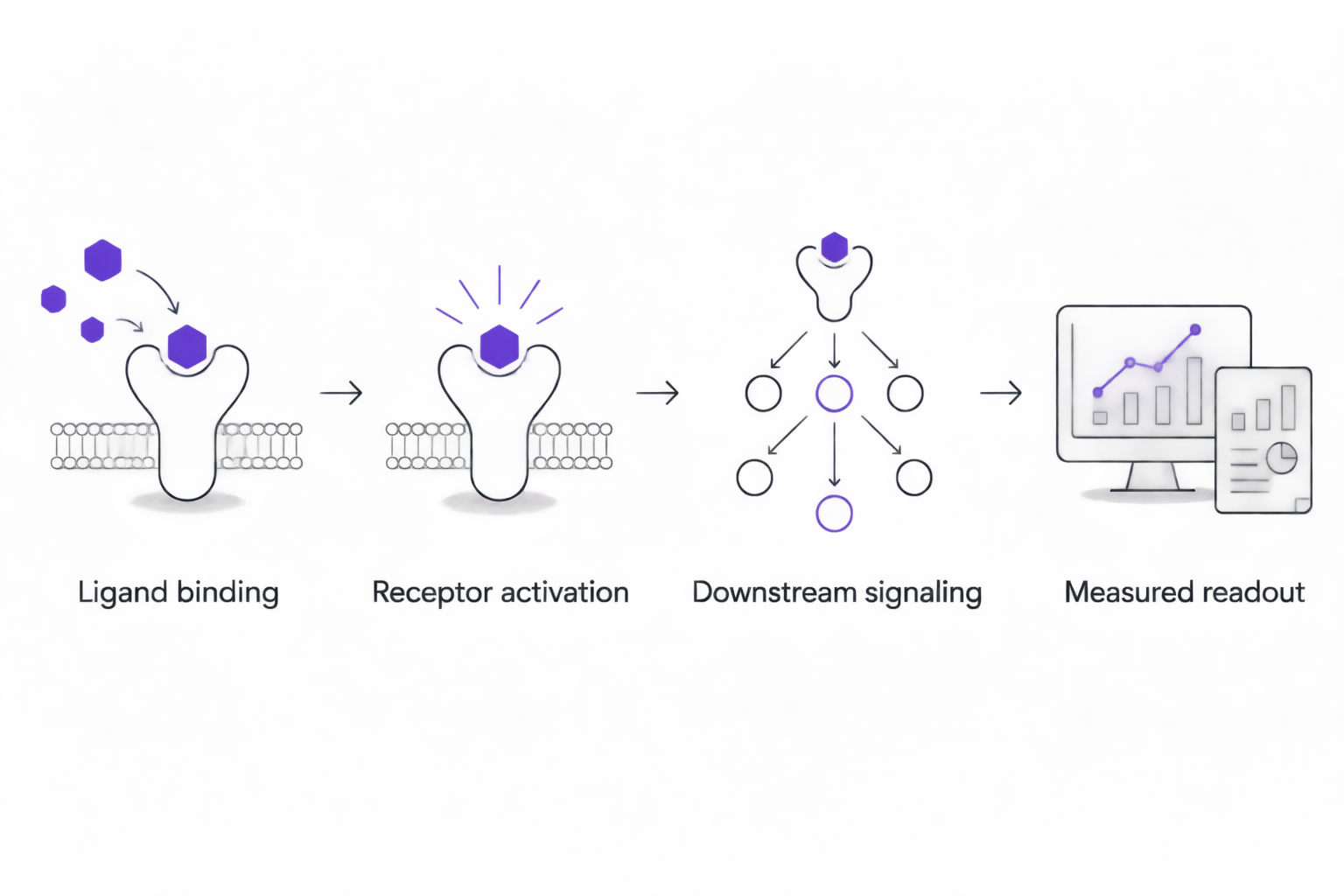
CJC-1295 acts as an agonist at the GHRH receptor, a G protein-coupled receptor expressed on pituitary somatotroph cells. Receptor engagement couples to Gs signaling and cyclic AMP production, which is the measurable readout in in vitro receptor assays.
The pathway, as a research readout sequence:
- Ligand binding: the analog occupies the GHRH receptor.
- Receptor activation: the receptor shifts conformation and engages Gs.
- Downstream signaling: adenylyl cyclase raises intracellular cAMP.
- Measured readout: a reporter or cAMP assay quantifies the response.
DAC versus no-DAC: why identity documentation matters
The DAC form adds a maleimido-based linker designed to bind serum albumin, which changes persistence in biological matrices. The no-DAC form, often called Mod GRF 1-29, lacks that moiety. They have different molecular weights, so a mass-spectrometry result separates them cleanly. An HPLC purity figure alone does not.
Non-interchangeability callout: results from one form cannot be transferred to the other. CJC-1295 is also not the same compound as Sermorelin (the unmodified GHRH 1-29 sequence), Tesamorelin (a 44-residue analog carrying a trans-3-hexenoyl modification) or Ipamorelin (a five-residue peptide acting at the ghrelin receptor GHS-R1a, a different target).
What makes the best CJC-1295 supplier
These criteria are applied before the table so you can audit the ranking:
- Batch-matched COA: the lot number on the vial appears on the certificate.
- Identity by mass spectrometry: observed molecular weight stated, so DAC and no-DAC are distinguishable.
- Purity by HPLC: a chromatogram or stated percentage with method context.
- Named form: the listing states DAC or no-DAC explicitly.
- Storage and format disclosure: lyophilized state and storage conditions stated on the listing.
- Research-use-only framing: no human-use language anywhere on the page.
Purity thresholds are only meaningful with method context. A published COA library is the stronger signal, and the method for reading one is in the guide to verifying peptide purity with third-party COA testing.
CJC-1295 supplier profiles at a glance
| Rank | Supplier profile | Best for | Standout feature | Key limitation |
|---|---|---|---|---|
| 1 | Specialty peptide vendor with published COAs | Routine research lots | Batch-matched HPLC and MS documents | Documentation quality varies by vendor |
| 2 | Catalog chemical house | Reference-standard work | Formal quality systems | Narrow peptide range; variant may be missing |
| 3 | Custom synthesis lab | DAC or modified variants | Defined sequence and modification | Longer lead time, lot-by-lot cost |
| 4 | Blend and combination supplier | Co-formulated materials | Pre-combined constituents | Per-constituent verification is harder |
| 5 | Adjacent-compound catalog (4-Amino-Labs) | Related GHRH-axis reference compounds | Sermorelin, Tesamorelin, Ipamorelin listed | No CJC-1295 in the catalog data reviewed |
1. Specialty peptide vendors: best CJC-1295 source for routine research lots
This profile wins because it matches the most common need: a lyophilized lot with documentation attached to it. The vendor synthesizes or sources peptides in bulk and publishes analytical results per batch.
Specialty vendor pros:
- Batch-level COAs are the norm for the better operators.
- Listings usually state form and lyophilized format.
- Lot-to-lot comparison is possible when archives are public.
Specialty vendor cons:
- Quality varies sharply; some publish a single generic certificate reused across lots.
- Some listings do not say DAC or no-DAC.
- Third-party testing is not guaranteed unless stated.
Best for: labs running screening or assay work who can check a COA against the vial.
Verdict: Shortlist first. Reject any vendor whose certificate lacks a batch number.
2. Catalog chemical houses: best for reference-standard work
Large catalog suppliers carry formal quality management and traceable documentation. If your assay needs a reference standard with a defined certificate, this profile is the conservative choice. The trade-off is range: specialty variants such as DAC forms are often absent. The comparison pages for Sigma-Aldrich cover how documentation compares in practice.
Catalog house pros:
- Established documentation workflows.
- Consistent identity statements.
- Suited to analytical method validation.
Catalog house cons:
- May not stock the exact CJC-1295 form you need.
- Smaller pack sizes and procurement overhead can slow ordering.
Best for: analytical reference work where a formal certificate is mandatory.
Verdict: Use when the protocol demands a formal reference standard.
3. Custom synthesis labs: best for DAC and modified variants
When the exact variant is not stocked, custom synthesis defines the sequence, the modification and the purity specification up front. You get a lot made to your specification, with analytical results you can request in advance.
Custom synthesis pros:
- You specify sequence, modification and purity target.
- Mass-spectrometry confirmation can be a contract term.
Custom synthesis cons:
- Lead time is longer than for stocked material.
- Per-lot cost is higher, and small orders carry overhead.
- You carry the burden of reviewing the synthesis report.
Best for: studies that depend on one precisely defined molecule.
Verdict: Use when stocked material cannot match your specification.
4. Blend suppliers: best for pre-combined research materials
Some suppliers sell CJC-1295 combined with a second peptide, commonly Ipamorelin. A blend saves a preparation step, but you inherit a verification problem: each constituent needs its own identity and purity evidence, and the ratio needs documentation.
Blend pros:
- One vial instead of two separate materials.
- Ratio is fixed by the supplier.
Blend cons:
- A single HPLC result can mask a constituent mismatch.
- You cannot attribute a result to one constituent without separate controls.
- The DAC question applies to the CJC-1295 half, and listings often omit it.
Best for: protocols that explicitly study the combination.
Verdict: Hold until each constituent has separate documentation.
5. Adjacent-compound catalogs: 4-Amino-Labs
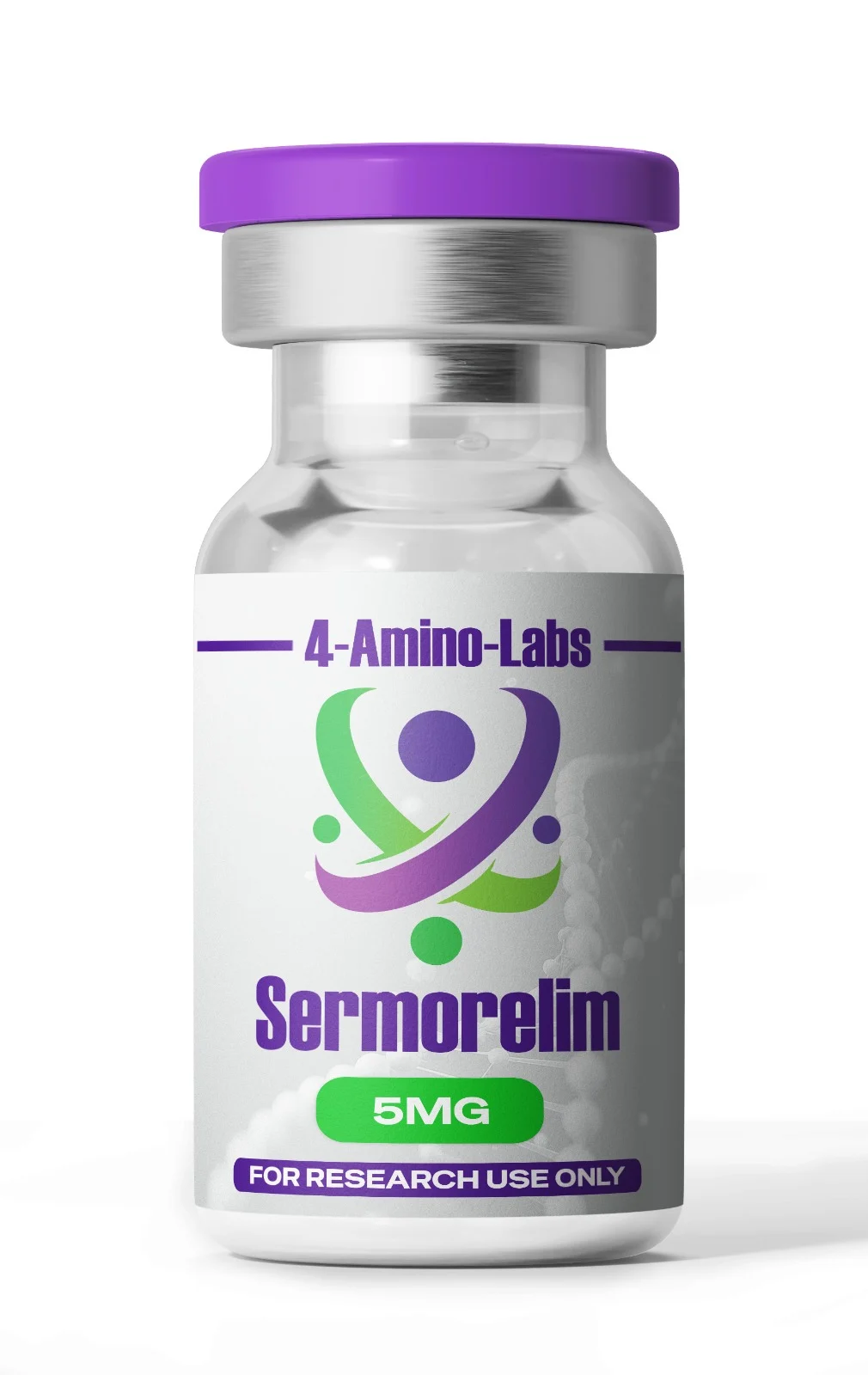
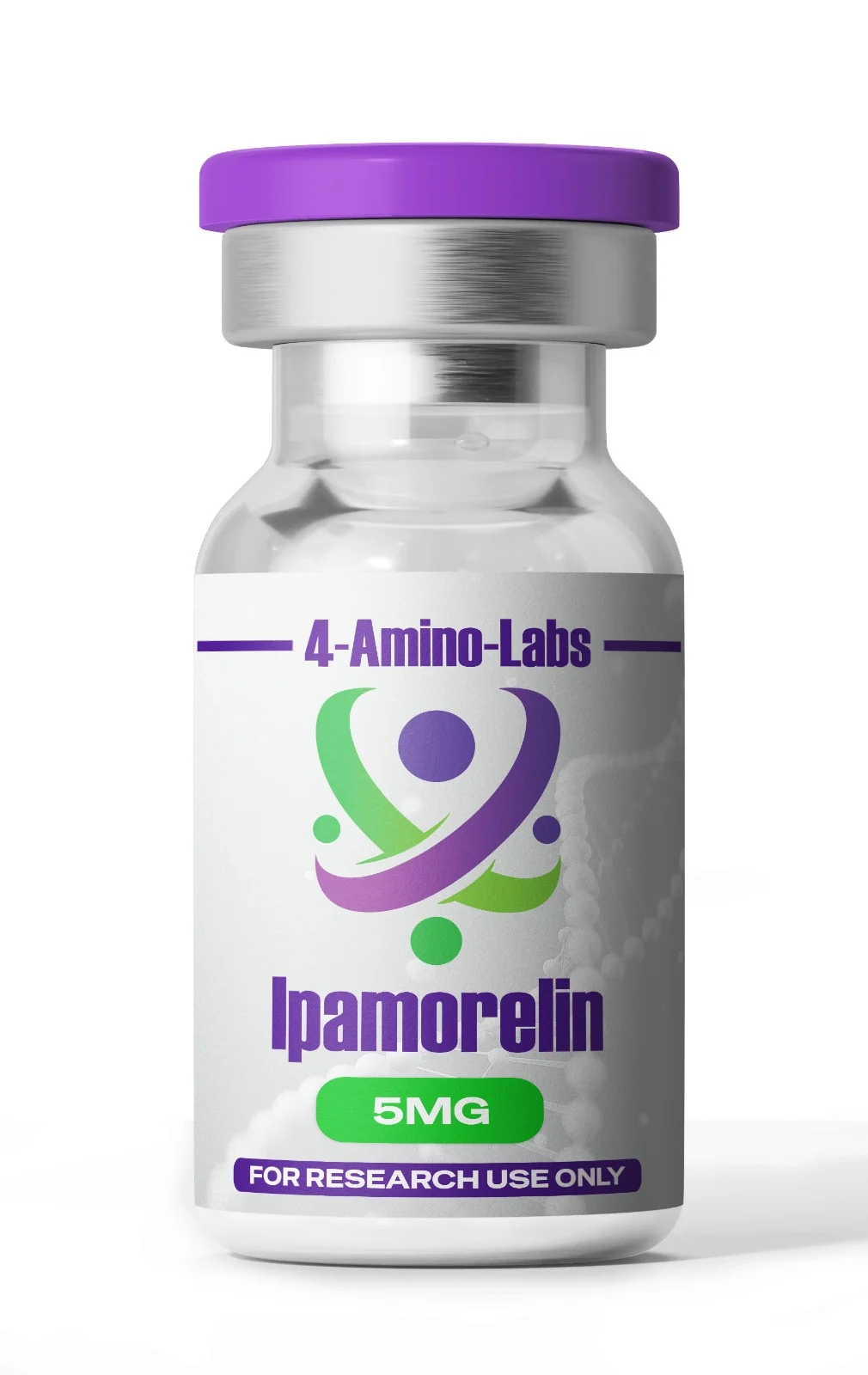
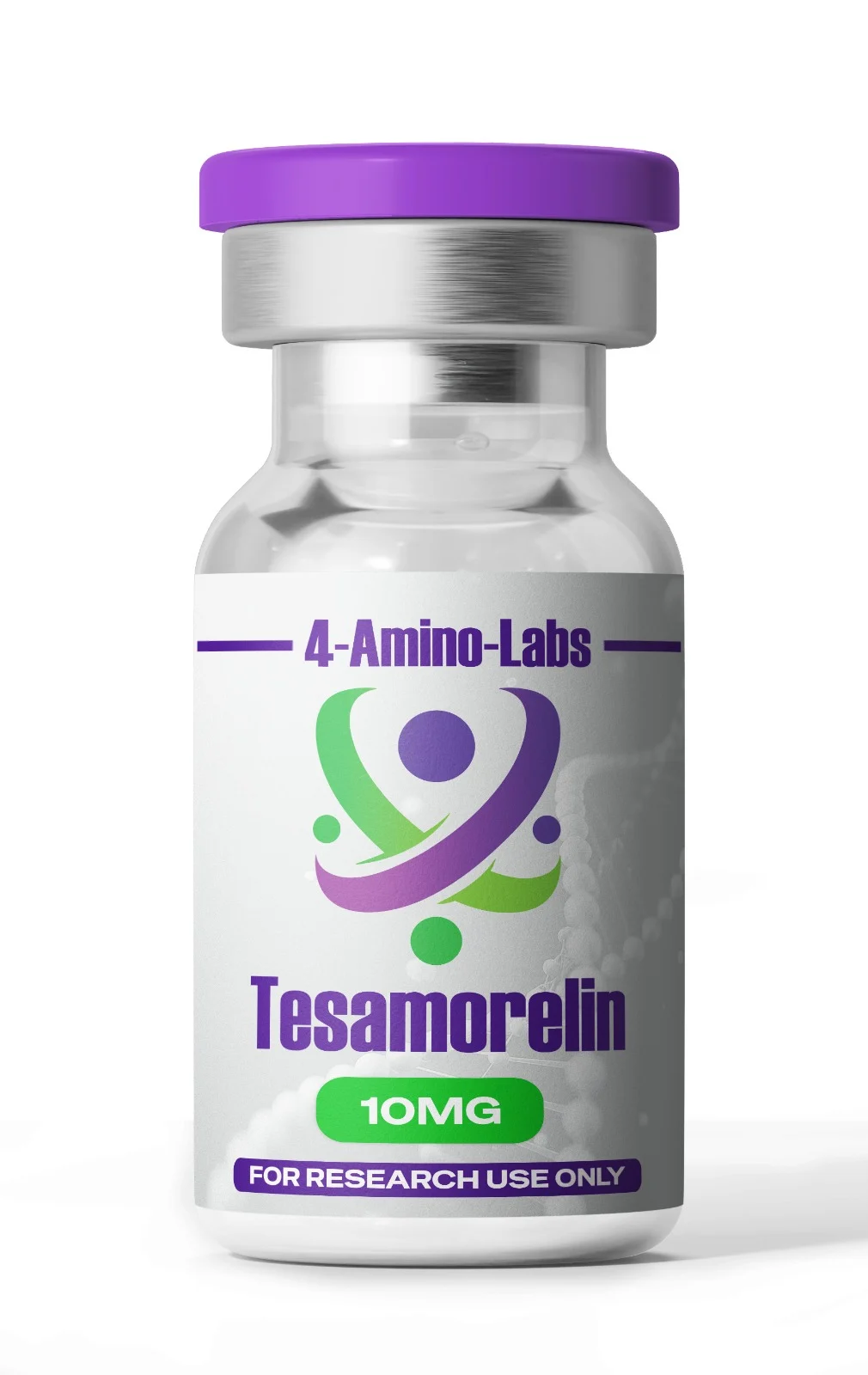
4-Amino-Labs is a US research-material supplier whose COAs are published in a COA library on the site. In the catalog data reviewed for this guide, no CJC-1295 product is listed. The catalog does include GHRH-axis reference compounds that are often studied alongside it: Ipamorelin (5mg), Sermorelin (5mg) and Tesamorelin (10mg). The listings for Sermorelin, Ipamorelin and Tesamorelin each describe lyophilized material with purity of at least 98% verified by HPLC.
4-Amino-Labs pros:
- Published COA library for batch documentation.
- Related GHRH-axis reference compounds in one catalog.
- Research-use-only positioning throughout.
4-Amino-Labs cons:
- CJC-1295 itself is not listed in the data reviewed.
- Retail only; wholesale inquiries go through a separate program.
Best for: comparative receptor work using the structurally related compounds, with the identity of each stated separately.
Verdict: Shortlist for adjacent compounds, not for CJC-1295 itself.
How we ranked
Profiles were ordered by how directly each satisfies the six criteria above. Documentation tied to the lot and a stated form carried the most weight; range and convenience carried the least. No individual vendor received a score, because no verified third-party test results for named CJC-1295 vendors are available here.
Which CJC-1295 supplier should you choose?
Start with a specialty peptide vendor and demand a batch-matched COA that states the form and shows mass-spectrometry identity. Move to a catalog house when a formal reference standard is required, and to custom synthesis when the variant is not stocked. Treat blends as a last resort until each constituent is documented.
If your study compares receptor behavior across the GHRH axis, the Tesamorelin versus Sermorelin comparison covers how those two differ at the receptor.
Limitations
This guide describes supplier profiles, not tested lots. It does not report independent assay results for any vendor, and it does not transfer findings between CJC-1295 forms or between related compounds. Confirm every claim against the certificate you receive.
FAQ
What should a CJC-1295 certificate of analysis include?
It should show the batch number matching the vial, HPLC purity, and mass-spectrometry identity. Without observed molecular weight, DAC and no-DAC forms cannot be told apart.
What is the difference between CJC-1295 with DAC and without DAC?
The DAC form carries an albumin-binding linker; the no-DAC form (Mod GRF 1-29) does not. They have different molecular weights and results do not transfer between them.
Is CJC-1295 the same as Sermorelin?
No. Sermorelin is the unmodified GHRH 1-29 sequence, while CJC-1295 is a modified analog. They act at the same receptor but are distinct compounds.
Is Ipamorelin the same as CJC-1295?
No. Ipamorelin is a five-residue peptide acting at the ghrelin receptor GHS-R1a, a different target from the GHRH receptor that CJC-1295 engages.
Does 4-Amino-Labs list CJC-1295?
No CJC-1295 product appears in the catalog data reviewed for this guide. The catalog does list Sermorelin, Ipamorelin and Tesamorelin as research materials.
Where are 4-Amino-Labs certificates of analysis published?
Certificates of analysis are published in the COA library on 4aminolabs.com, organized so batch documentation can be checked against the material received.
One last thing
A high purity percentage does not prove identity. A DAC lot and a no-DAC lot can both read as highly pure by HPLC. Only the mass-spectrometry result tells you which molecule is in the vial, so ask for it before you compare anything else in 2026.
Related guides
For research use only. Not for human or animal use. This content is not medical advice and is not intended to diagnose, treat, cure, or prevent any disease. 4-Amino-Labs is operated by Helix Capital Group LLC.