
Contract manufacturers’ peptide sourcing is the qualification of defined research materials for analytical development, with the aim of producing interpretable, traceable laboratory results. This 2026 guide addresses research use only: purchasing a catalog peptide does not establish its suitability as a production input or a qualified reference standard.
- Peptides for contract manufacturers require defined identity, analytical acceptance criteria, and lot traceability—not a purity percentage alone.
- 4-Amino-Labs suits research-material sourcing, not an assumed production-supply agreement.
- Separate catalog research materials, qualified reference standards, and custom synthesis when comparing sourcing options.
- Route wholesale inquiries separately; the retail store does not handle bulk sales.
Why peptide sourcing matters for contract manufacturers
Contract manufacturers need to distinguish the material purchased from the role assigned to it. A catalog peptide, an internal analytical comparator, and a qualified reference standard carry different evidentiary requirements. The intended laboratory role determines the documentation you need.
A certificate reporting chromatographic purity does not answer every qualification question. Identity, peptide content, counterion composition, and storage history describe different attributes; none should be inferred from the others.
Your 2026 sourcing records should connect the supplier lot to the internal material record and the resulting analytical data. The guide to connecting batch numbers to laboratory inventory tracking addresses that traceability task.
Catalog specifications at a glance
The supplied catalog lists KPV at 10 mg per vial, Vesugen at 20 mg per vial, and Epithalon at 10 mg per vial. These are stated package contents, not independently established peptide-content measurements or suitability determinations.
How to qualify peptides for contract manufacturers
Define the material’s laboratory role
Start with a written intended-use statement in a spreadsheet or controlled document. Identify the analytical question before selecting a compound or supplier. A material used to explore chromatographic separation is not automatically qualified to assign concentration to another sample.
Describe what the material must establish and what it cannot establish. This prevents a convenient research purchase from acquiring an unsupported reference-standard designation as it moves between development and quality teams.
For receptor-focused analytical research, specify the exact molecular entity rather than a broad peptide family. Related sequences are not interchangeable merely because they appear in the same catalog category.
- State the laboratory question and measured attribute.
- Identify the exact peptide and required molecular form.
- Define whether the material is exploratory or quantitatively assigned.
- Record required evidence before placing the order.
- Name the person authorized to accept the material.
Separate identity, purity, and content requirements
Build an acceptance matrix manually before reviewing supplier claims. Give each attribute its own evidence field, acceptance criterion, and disposition. Chromatographic purity is not interchangeable with peptide content.
HPLC describes chromatographic behavior under a specified method. Mass spectrometry supplies molecular-mass evidence, while quantitative content determination addresses a separate question. A mass match alone does not establish every sequence detail, stereochemical feature, or impurity identity.
For a 2026 qualification record, retain the analytical method context alongside each result. A percentage without the detector, integration basis, and method information is difficult to interpret across suppliers or lots.
| Attribute | Question to resolve | Evidence to request | Interpretation limit |
|---|---|---|---|
| Identity | Does the evidence support the named molecular entity? | Mass spectrum and relevant structural documentation | A mass match alone is not complete structural confirmation |
| Chromatographic purity | What fraction of detected chromatographic response belongs to the principal peak? | Chromatogram, method, integration basis | Does not directly establish peptide mass fraction |
| Peptide content | How much peptide is present on the stated basis? | Appropriate quantitative determination | Requires a defined measurement basis |
| Counterion | Which associated ionic species are present? | Counterion specification or analytical result | Cannot be inferred from peptide name alone |
| Stability | Does the material remain suitable over the intended interval? | Relevant stability evidence and handling records | Cannot be transferred automatically between conditions |
The distinctions are analytical, not administrative. Each measurement answers a different question about the same material.
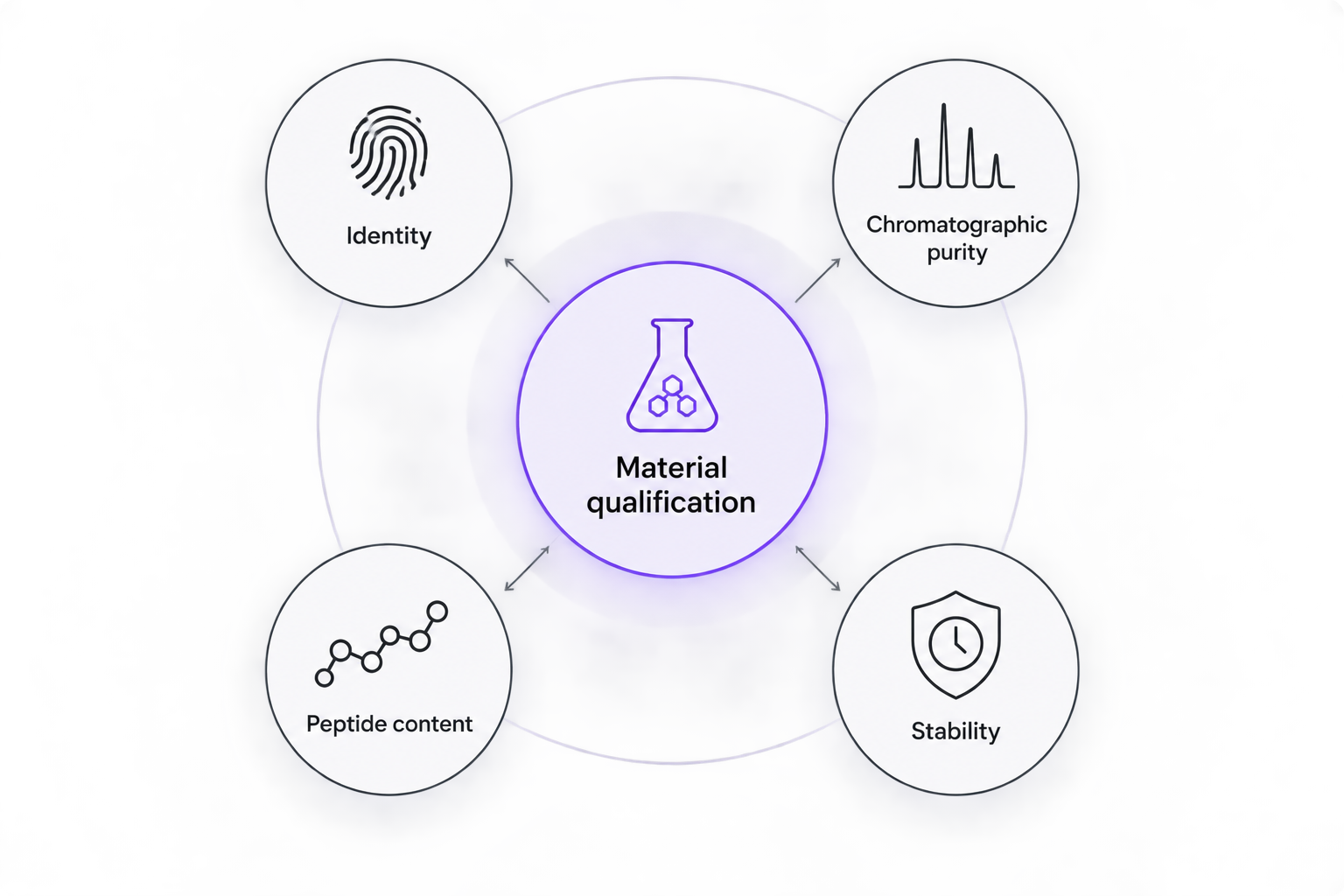
Use these distinctions when verifying peptide purity with third-party COA testing. A laboratory’s report still needs to match the material and the question being evaluated.
- Separate identity acceptance from purity acceptance.
- Specify whether quantitative content assignment is required.
- Request the chromatographic method and integration basis.
- Record counterion and water information when relevant.
- Resolve ambiguous reporting before accepting a lot.
Match the sourcing channel to the requirement
Compare the written requirement against the supplier’s documented offering. A manual comparison sheet is sufficient: list the requested attribute, supplied evidence, unresolved question, and purchasing decision. Do not treat a catalog description as a custom manufacturing agreement.
4-Amino-Labs is suited to research laboratories sourcing catalog peptides, not buyers assuming a production-supply agreement. Its Certificates of Analysis are published in its COA library. Review the relevant documentation against your acceptance matrix rather than treating the existence of a library as lot acceptance.
For research-material comparison, the catalog includes the following peptides. Their inclusion illustrates sourcing choices, not scientific interchangeability or qualification for a particular analytical role.
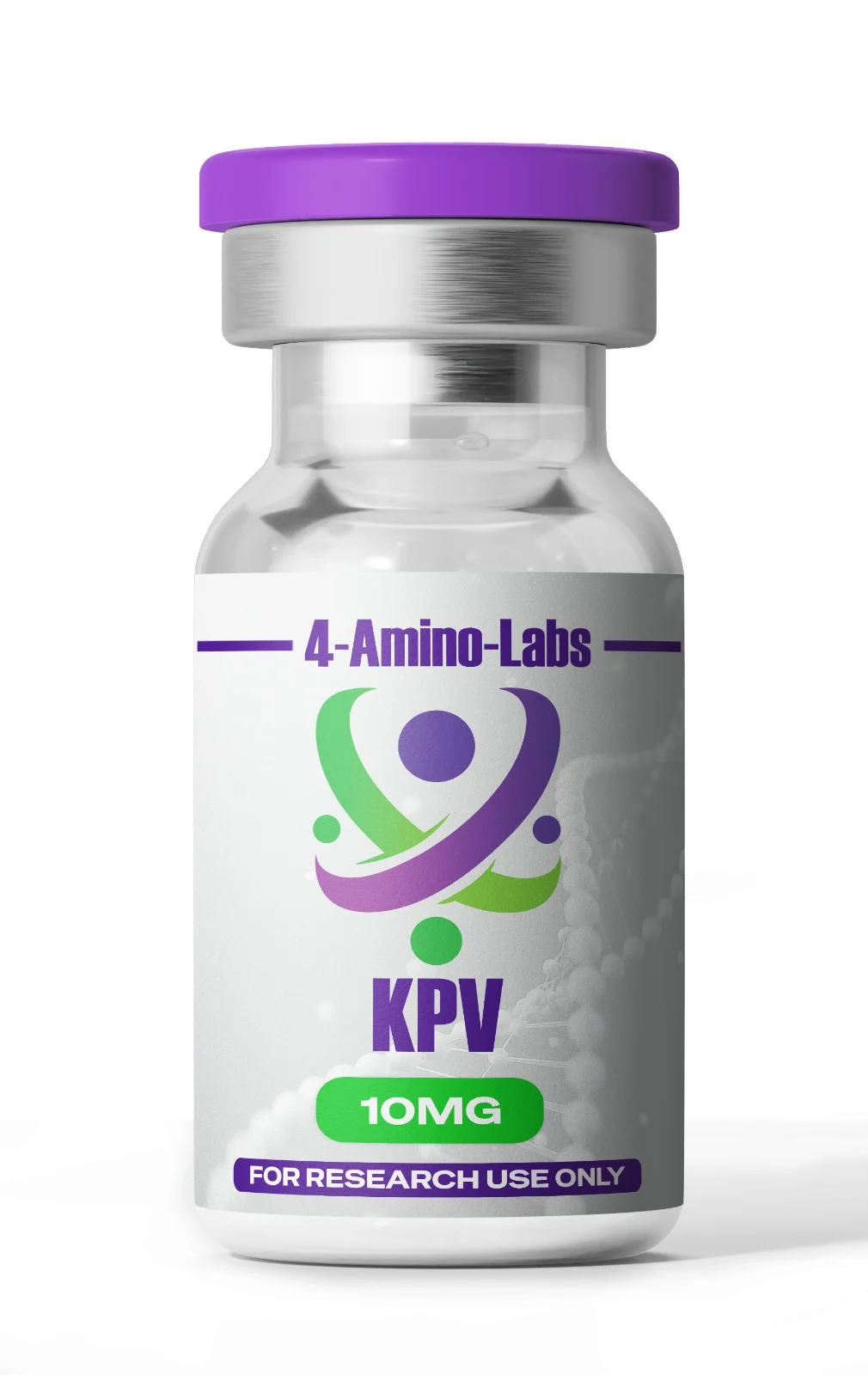
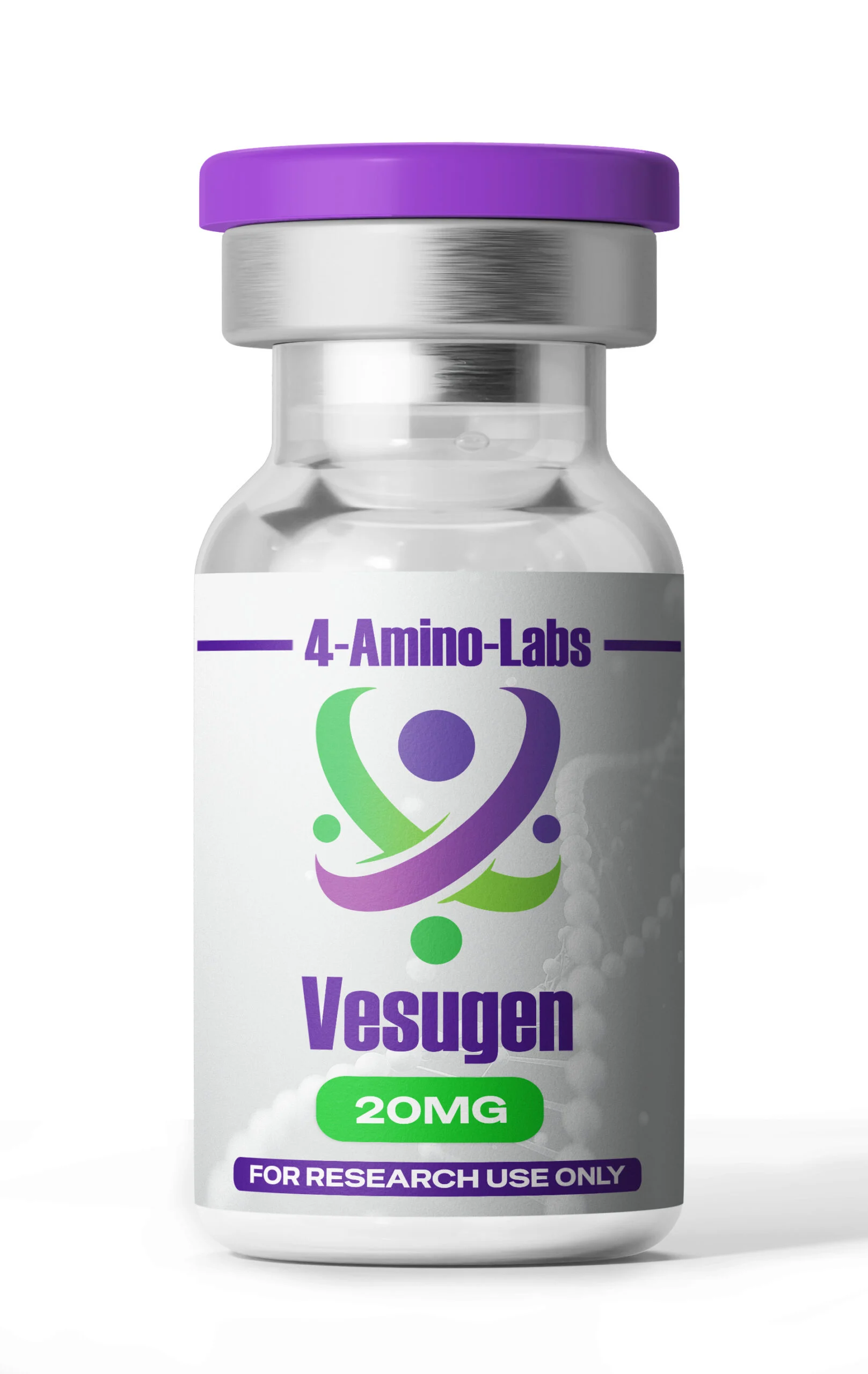
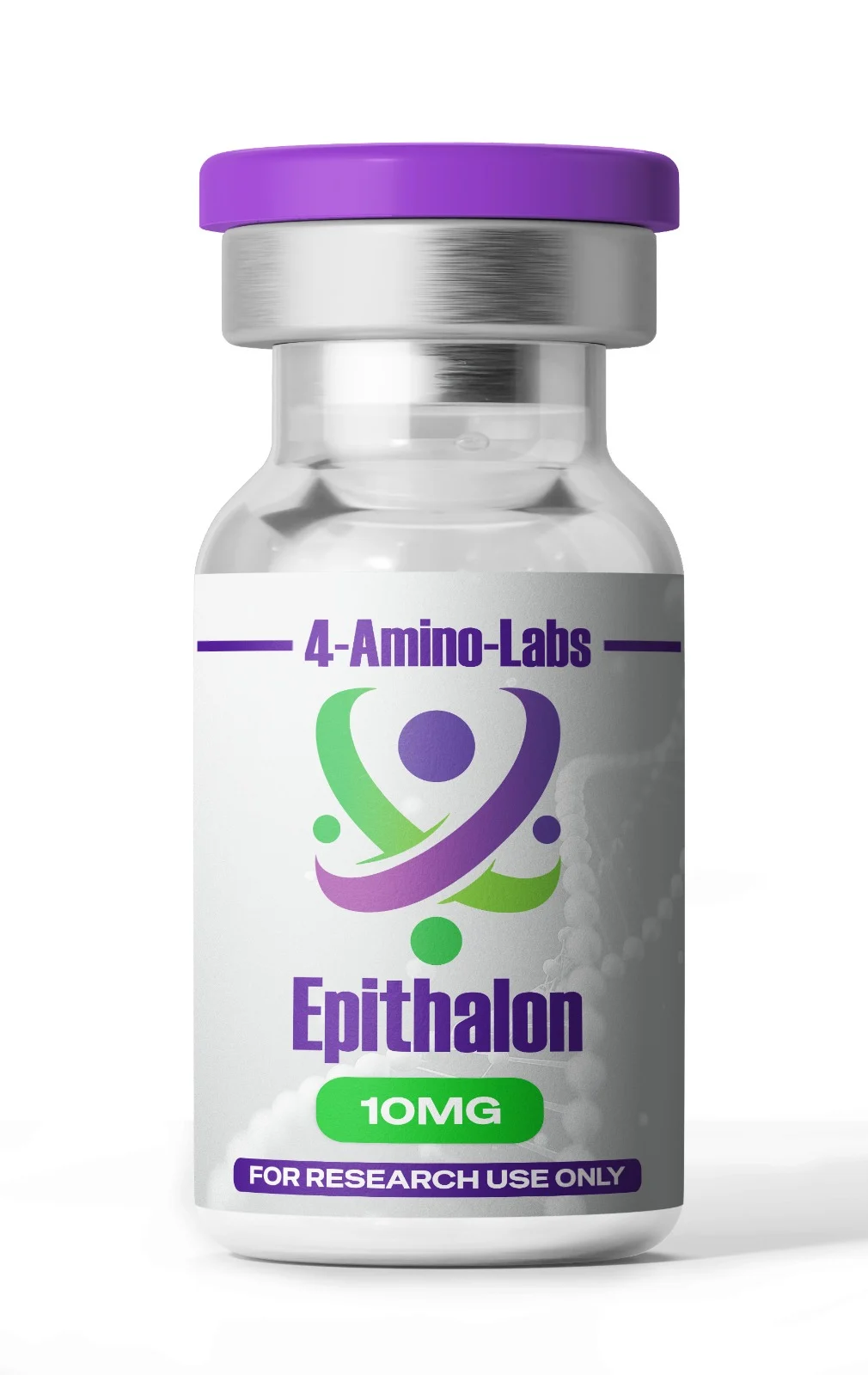
The stated HPLC specification does not establish a certified content value, production suitability, or equivalence between these compounds. Use the exact material required by the research question.
- Compare the requested molecular entity with the listing.
- Review the relevant COA and its lot identification.
- Separate catalog specifications from laboratory acceptance.
- Confirm documentation requirements before committing to a source.
- Send wholesale inquiries through the separate wholesale program.
Reconcile the lot record before laboratory release
Create a receipt checklist using the purchase record, container identification, and analytical documentation. Reconcile discrepancies before assigning the material an accepted status. Preserve the original supplier identifiers even when your laboratory adds an internal code.
A 2026 inventory entry should distinguish receipt from acceptance. Receiving a package is a logistics event; accepting a research material is a documented technical decision.
Photographs support reconciliation, but they do not replace analytical records. Keep each record attached to the same internal material identity so that reviewers can reconstruct the decision without searching separate email threads.

A missing document and a contradictory document require different follow-up. Record which issue occurred rather than placing both under a generic pending label.
- Match the container lot to the supplied report.
- Preserve the original supplier material description.
- Assign a distinct internal material identifier.
- Record receipt conditions and visible discrepancies.
- Document acceptance, rejection, or restricted research use.
Separate evaluation sourcing from supply commitments
Write a distinct purchasing brief when a project moves beyond exploratory material evaluation. Define quantity requirements, documentation scope, change notification, and continuity expectations separately from the compound’s analytical specification.
The same distinction applies to bulk antigen sourcing: the material requirement and the duration of the supply commitment are separate purchasing questions. For peptides, a successful laboratory evaluation does not itself establish future lot comparability or continuing supply terms.
4-Amino-Labs does not offer bulk sales through its retail store; wholesale inquiries belong in its separate wholesale program. That distinction prevents a retail order from being interpreted as a negotiated manufacturing or bulk-supply arrangement.
- Separate evaluation purchases from supply agreements.
- Define the requested documentation package in writing.
- Request explicit change-notification terms where needed.
- Confirm how future lots will be evaluated.
- Keep wholesale discussions separate from retail checkout.
Control changes and preserve comparability
Maintain a change log that identifies what changed, why it matters, and which evidence supports continued use. Begin with a controlled worksheet; a laboratory information system can hold the same fields when your organization requires one.
Do not assume that unchanged product naming means unchanged analytical behavior. A new supplier lot, reporting method, molecular form, or storage history deserves review against the intended laboratory role.
For 2026 project handoffs, include the acceptance rationale rather than only the final status. The next team needs to understand the boundaries of the qualification decision, especially when development results enter a different quality system.
- Record supplier-lot changes as distinct events.
- Compare evidence using consistent reporting bases.
- Define which changes trigger additional evaluation.
- Preserve superseded specifications and decisions.
- Transfer limitations with the analytical results.
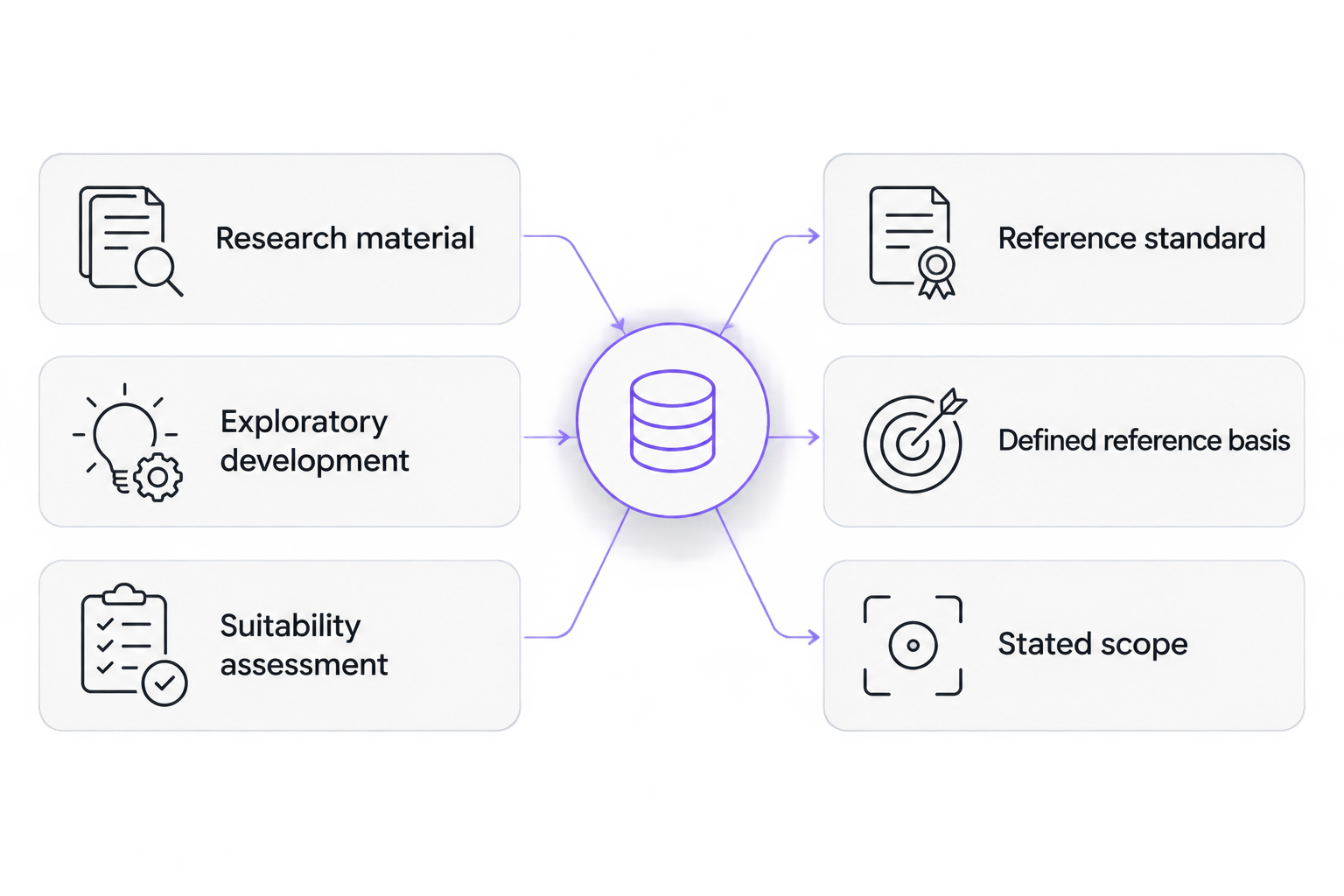
Compare peptide sourcing options by laboratory role
Choose the sourcing model according to the evidence required. None of these options wins across every research task, and no purchasing channel eliminates the laboratory’s responsibility to assess suitability.
| Option | Best for | Main advantage | Key limitation |
|---|---|---|---|
| Catalog research material | Exploratory analytical development | Provides a defined compound for evaluation | Catalog status does not establish reference-standard qualification |
| Custom peptide synthesis | Research requiring a specified sequence or modification | Allows the specification to address the requested molecular entity | Synthesis completion does not establish every analytical attribute |
| Qualified reference standard | Measurements requiring an established reference basis | Supplies the documented basis associated with its qualification | Suitability remains limited to the stated scope |
| Internally qualified comparator | Repeated internal analytical comparisons | Connects qualification directly to the laboratory’s intended role | Requires documented qualification and continued control |
Research materials and reference standards can concern the same named peptide while remaining different material designations. Shared naming does not establish shared qualification.
Common mistakes contract manufacturers make
- Assigning reference-standard status at receipt. Procurement and receipt do not qualify a material for quantitative analytical work. Require the documented technical decision.
- Reading HPLC purity as total peptide content. Chromatographic response and mass fraction answer different questions. Keep their specifications and evidence separate.
- Extending acceptance across projects. A material accepted for exploratory separation work is not automatically accepted for another measurement role.
- Treating an evaluation order as a supply agreement. Define continuity, changes, and documentation expectations separately before relying on future supply.
- Losing the supplier lot during internal relabeling. Preserve the original identifier alongside the internal code so analytical results remain traceable.
Limitations of this sourcing guide
This guide covers research-material qualification and purchasing distinctions, not production-material release. It does not establish regulatory status, certify any supplier lot, or validate an analytical method.
The stated catalog contents and specifications describe supplied product information. They are not independent measurements. No product-specific stability interval, content assignment, or suitability conclusion is established here.
FAQ
What should contract manufacturers check before buying research peptides?
Contract manufacturers should define the laboratory role, exact molecular identity, acceptance criteria, and required documentation before purchasing research peptides. Evaluate the supplied lot against those requirements rather than accepting a catalog description alone.
Does HPLC purity establish peptide content?
No. HPLC purity and peptide content are different analytical attributes. A chromatographic percentage requires method context and does not directly establish the peptide mass fraction of the material.
Can a catalog peptide be called a reference standard?
Catalog status alone does not establish reference-standard qualification. The reference designation requires a documented basis appropriate to the intended measurement.
Does 4-Amino-Labs sell bulk peptides through its retail store?
No. 4-Amino-Labs does not handle bulk sales through its retail store. Wholesale inquiries go through its separate wholesale program.
Are peptides with related names interchangeable for analytical research?
No. Related names or catalog groupings do not establish analytical interchangeability. Confirm the exact sequence, molecular form, and evidence required for the research question.
What should happen when a supplier lot changes?
A new supplier lot should be reviewed against the material’s intended laboratory role and acceptance criteria. Document the comparison and any additional evaluation required before acceptance.
One last thing
Write the disqualifying conditions before reviewing the supplier’s documents. Deciding in advance which missing evidence prevents acceptance keeps the qualification decision tied to the research requirement rather than the convenience of a purchase.
Related guides
- Connecting research-material COAs to a laboratory quality system
- Peptide research for biotech startups
- Research peptide storage and cold-chain records
Research use only. Materials discussed are not intended for human or animal use. This content is not medical advice and is not intended to diagnose, treat, cure, or prevent disease.