
Biotech startup peptide research is the laboratory study of peptide identity, molecular interactions, and biological activity to support experimental decisions. Selecting peptides for biotech research requires separating molecular identity from purity, then preserving the material’s condition and lot history; this guide addresses research-only sourcing, storage, and records, not human use.
- Peptides for biotech research require separate checks for identity, purity, and suitability for the intended assay.
- 4-Amino-Labs serves US research laboratories sourcing research-grade peptides and analytical reagents.
- Storage decisions must follow peptide-specific documentation rather than a universal temperature or shelf-life assumption.
- Connect each experimental result to its peptide lot, analytical documentation, and handling history.
Why peptide research matters for biotech startups
A peptide is an experimental input, not merely a catalog name. Its sequence, terminal modifications, chemical form, and condition determine what material enters your research system. A familiar compound name does not establish that two preparations are interchangeable.
For a startup, the practical constraint is continuity: another researcher must be able to reconstruct a material decision without relying on the person who placed the order. Your 2026 sourcing standard should connect the experimental question to a defined material specification.
4-Amino-Labs supplies research-grade chemicals, peptides, and analytical reagents to US research laboratories. Supplier selection remains a separate decision from material acceptance: accept a particular lot against your requirements, not against the supplier’s name alone.
Define the scientific question before selecting material
Peptide research spans receptor interactions, enzyme substrates, molecular recognition, and analytical measurement. These contexts do not share a universal acceptance standard. Define what your experiment measures before deciding which documentation is sufficient.
Separate molecular identity from experimental function
Sequence identity answers which peptide you have. Functional characterization addresses what that preparation does in a specified experimental system. Neither question replaces the other.
For receptor-directed research, distinguish binding from activation and downstream readouts. A binding measurement does not, by itself, establish signaling activity. Likewise, a downstream response does not independently confirm the identity of the material producing it.
Record the relevant receptor or biological system, the measured endpoint, and the evidence supporting that connection. Keep evidence for the exact peptide separate from evidence about related sequences or analogues.
Treat related peptides as distinct materials
Changes in sequence, stereochemistry, terminal groups, or chemical modification create distinct material specifications. Their effects on activity, stability, or analytical behavior require compound-specific evidence.
Do not transfer storage instructions or functional conclusions between related peptides without supporting documentation. This non-interchangeability rule also applies when a supplier changes the stated chemical form while retaining a familiar catalog description.
Build a traceable peptide workflow
The following steps connect scientific requirements to purchasing, receipt, storage, and experimental records. Establish the decision rules first; supplier catalogs and inventory systems then support the workflow rather than define it.
Define the material specification
Start with a written specification in your existing laboratory notebook or shared document system. Name the required sequence, modifications, chemical form, and intended analytical or biological role. This manual record prevents a purchasing shortcut from becoming an undocumented scientific assumption.
Separate mandatory requirements from information that is useful but not essential. A specification that rejects material must state the reason clearly enough for another researcher to apply the same decision.
For your 2026 specification, use these 4 identity fields as a starting checklist, expanding them when the experimental question requires more detail:
- Record the complete sequence, including nonstandard residues when applicable.
- Specify terminal modifications and other stated structural modifications.
- Identify the required chemical form, including counterion information where relevant.
- Define the intended research application and its acceptance criteria.
Request lot-specific analytical documentation
Collect the available documents manually before accepting the material. A catalog description establishes what is offered; lot-specific records describe the particular material supplied. Keep those roles separate.
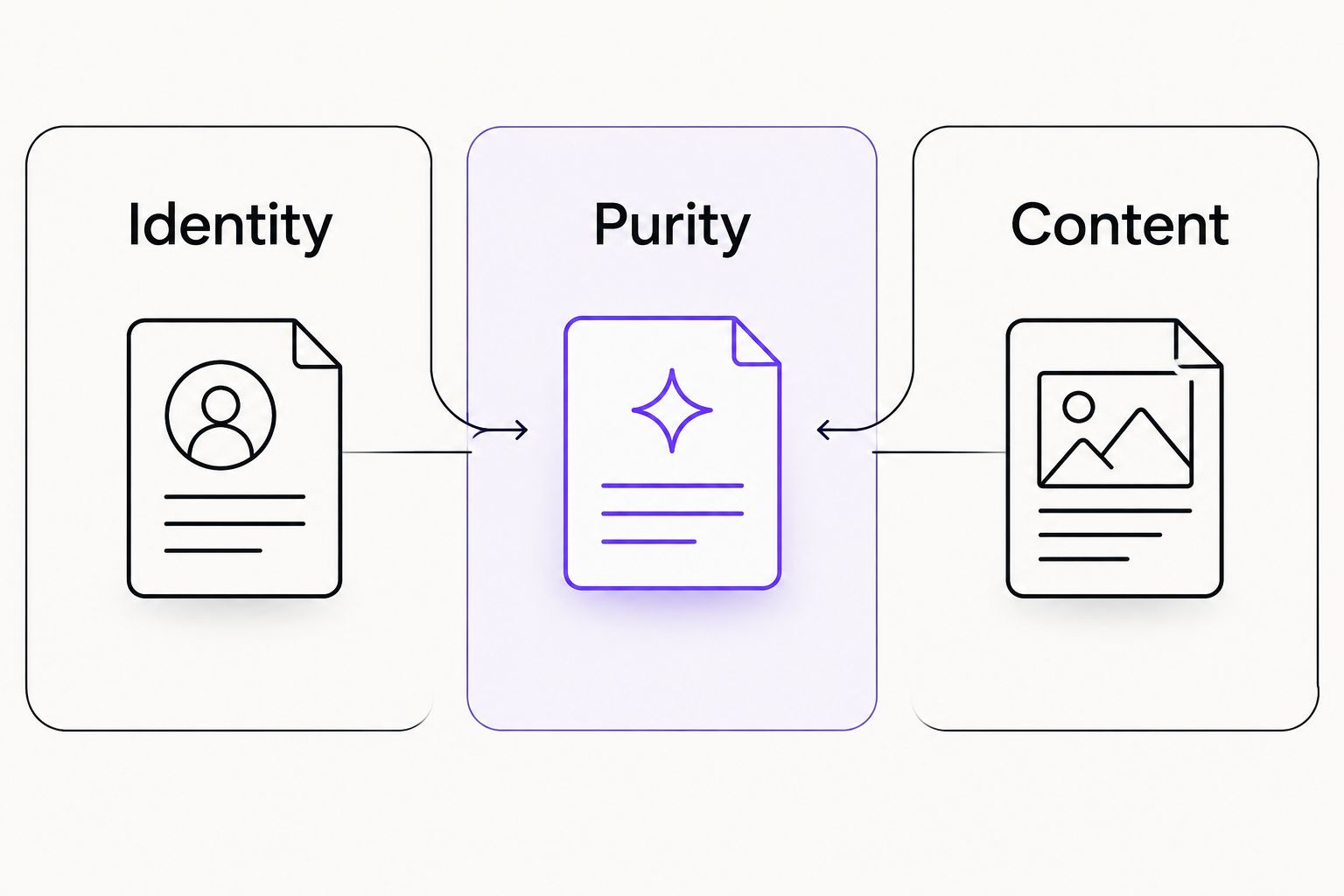
Chromatographic purity and molecular identity answer different analytical questions. A chromatographic result depends on its method, separation, detection, and reporting basis. An identity result must be interpreted against the expected molecule and the technique used.
Use supplier resources to narrow your sourcing review, including the research peptide supplier comparison. For 4-Amino-Labs peptide sourcing, apply the same lot-level requirements you apply to every other supplier; a supplier relationship does not replace analytical acceptance.
- Request documentation tied to the supplied lot identifier.
- Identify the analytical methods supporting identity and purity claims.
- Check whether results include enough method context to interpret them.
- Distinguish measured results from catalog specifications or release limits.
- Record unresolved discrepancies before releasing material for research.
Evaluate purity without confusing it with content
Read the reported purity value together with its measurement basis. Chromatographic area percentage describes detected chromatographic signals under stated conditions; it is not automatically the fraction of total vial mass represented by the target peptide.
Water, counterions, residual solvents, and other components raise separate questions about composition. Whether those questions matter depends on the experimental use and how the material quantity will be interpreted.
A purity percentage is an analytical result, not a complete material specification. Do not convert it into a claim about peptide content unless the documentation supports that interpretation. Your 2026 review should preserve the original terminology rather than replacing different measurements with one generic purity field.
- Record whether purity refers to chromatographic area or another defined measure.
- Keep identity evidence separate from purity evidence.
- Distinguish nominal vial quantity from documented peptide content.
- Review relevant water, solvent, and counterion information when supplied.
- Flag results that lack a stated measurement basis.
Establish storage requirements before receipt
Use the supplier’s material-specific instructions as the starting point, then assess whether they address the form you will store. Dry material and material in solution are different storage contexts. Do not assume instructions for one apply to the other.
Peptide stability depends on molecular structure and environmental conditions. Temperature, light exposure, moisture, solvent composition, and handling history are relevant variables, but their importance must be evaluated for the exact material.
Avoid assigning a universal freezer temperature or shelf life to all peptides. Instead, document the stated conditions, their scope, and the action required when handling departs from them. An unexplained storage excursion should become a recorded assessment, not an invisible exception.
- Capture the supplied storage instructions and their document version.
- Distinguish instructions for dry material from instructions for solutions.
- Record relevant environmental and container requirements.
- Define how to document handling changes and storage excursions.
- Establish who assesses material suitability after a deviation.
Record receipt and maintain lot separation
Create a receipt entry when material arrives, using a notebook or spreadsheet if that is your current system. Link the physical container to its documentation before it becomes part of routine laboratory inventory.
Use 2 identifiers in the receipt record: the supplier lot identifier and your internal inventory identifier. Their purpose differs. One connects the material to external documentation; the other connects it to your laboratory’s records and location.
Preserve lot separation through labeling and recordkeeping. If material is transferred to another container, retain the source-lot relationship. A new container label must not erase the distinction between material identity, handling history, and remaining inventory.
- Record the received material name, lot identifier, and internal identifier.
- Compare the container label with the purchase and analytical records.
- Document visible packaging discrepancies without inferring chemical damage.
- Record the assigned storage location and receipt status.
- Preserve source-lot traceability for subsequent container transfers.
Connect experimental results to material history
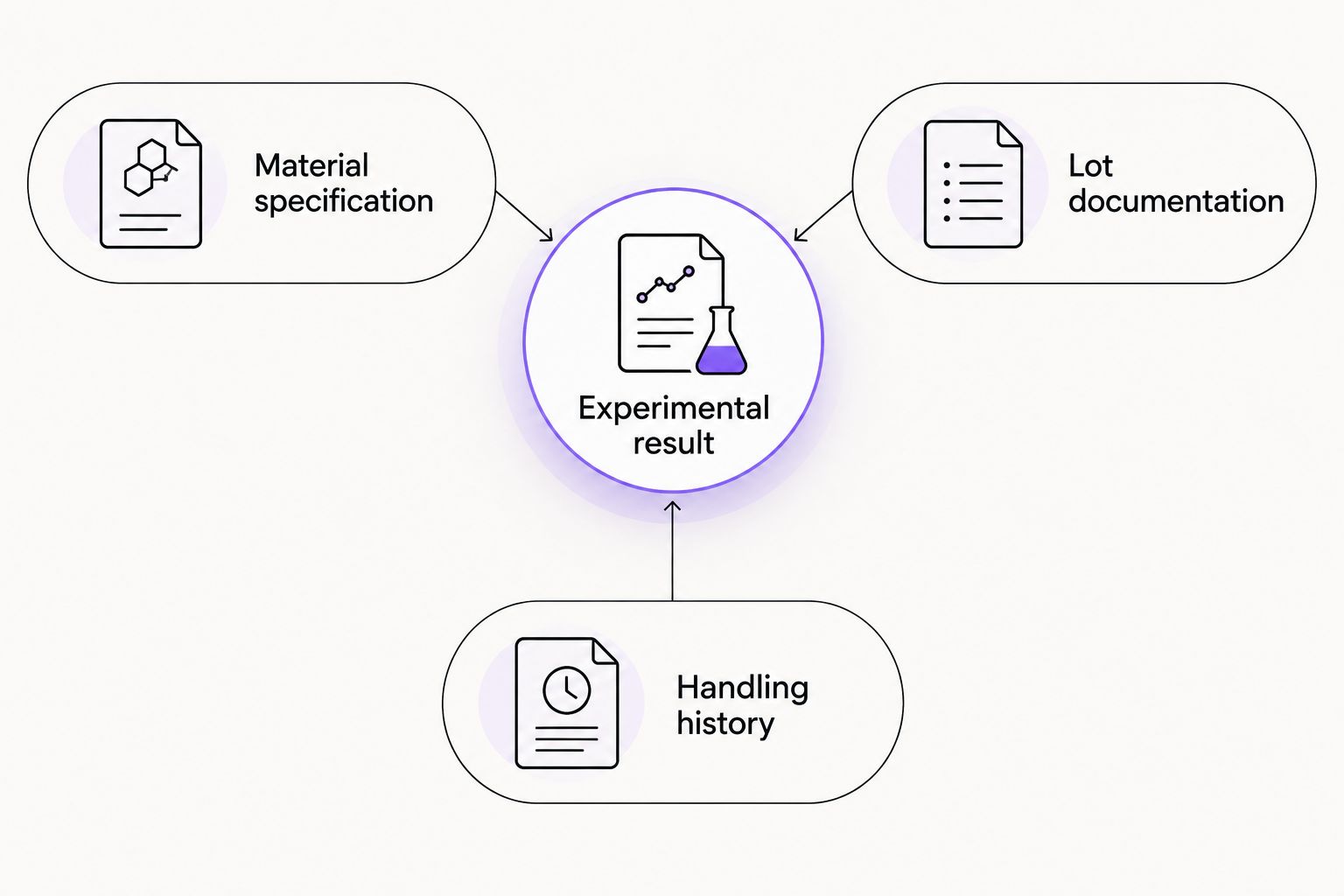
Link each result to the material actually used, not merely to a compound name in the methods section. Start with manual cross-references between the inventory record and experiment entry. Add an inventory platform when it solves a defined traceability problem.
Maintain 3 linked records: the material specification, the lot documentation, and the handling history. Together, they explain what you intended to use, what was supplied, and what happened to it before measurement.
Your 2026 experimental record should distinguish scientific observations from material assumptions. A change in a biological readout does not prove degradation, contamination, or incorrect identity; it establishes a result that requires investigation.
- Link the experiment entry to the exact internal inventory identifier.
- Preserve the analytical documents used for acceptance.
- Record relevant handling events before experimental use.
- Identify deviations from the approved material specification.
- Keep interpretations separate from directly observed results.
Compare sourcing and recordkeeping options
Select an option according to the problem it resolves. Procurement, synthesis, and recordkeeping are different functions; one service does not automatically cover the others. The table compares their roles rather than ranking suppliers without comparable evidence.
| Option | Best for | Useful capability | Key limitation |
|---|---|---|---|
| Catalog peptide sourcing | Research with an already defined catalog specification | Lets you evaluate a listed material against your requirements | Catalog information alone does not establish lot suitability |
| Custom peptide synthesis | Research requiring a specified sequence or modification | Makes the requested molecular specification explicit | The request still needs acceptance criteria and analytical review |
| Notebook and spreadsheet records | Laboratories establishing a controlled material register | Supports direct links between inventory, documents, and experiments | Requires consistent entry, access control, and reconciliation |
| Dedicated laboratory inventory system | Laboratories needing structured material relationships | Organizes identifiers, locations, and document associations | Software cannot correct incomplete or inaccurate source records |
The right option is the one that resolves your documented requirement. Do not commission a new sequence to solve a recordkeeping problem, or adopt software to avoid defining material acceptance criteria.
Avoid common startup sourcing mistakes
Accepting a purity headline as complete evidence
A prominent percentage does not answer every identity, composition, or suitability question. Review what was measured and how the result relates to your experimental requirements. Preserve the method context alongside the value.
Substituting a related peptide without review
A similar name or shared receptor context does not establish interchangeability. Compare the exact sequence, modifications, chemical form, and supporting evidence before changing materials. Record the scientific reason for the substitution.
Setting universal storage rules
One storage instruction is easier to administer but does not establish suitability for every peptide. Keep material-specific requirements accessible at the point of handling. Record deviations against those requirements.
Losing traceability during container transfers
An internal label that contains only the compound name cannot identify the source lot. Retain the internal identifier and its source relationship whenever material changes containers. Make that relationship searchable in the inventory record.
Limitations of peptide documentation
A certificate or analytical report describes the tests it contains. It does not establish suitability for every assay, characterize every possible impurity, or document conditions after the material leaves the supplier’s control.
Likewise, a research-use-only designation defines the intended scope; it does not replace identity testing, method interpretation, or laboratory acceptance. Apply your own documented criteria to 4-Amino-Labs research peptides and other sourced materials.
For your 2026 review, distinguish confirmed measurements, supplier statements, and internal assessments. Keeping those evidence categories separate makes later investigations more precise.
FAQ
What should a biotech startup check before sourcing research peptides?
Check the exact molecular specification, lot-specific analytical documentation, and storage requirements. Define acceptance criteria around the intended research application before selecting a supplier.
Does high chromatographic purity confirm peptide identity?
High chromatographic purity does not independently confirm peptide identity. Identity and purity require separate analytical interpretation, including the method and measurement basis.
Are peptide purity and peptide content the same thing?
Peptide purity and peptide content are different measurements. A chromatographic area percentage does not automatically establish how much of the total material mass is the target peptide.
What storage temperature should a startup use for research peptides?
Use the material-specific storage conditions supported by the supplied documentation. Do not apply a universal temperature or transfer instructions between dry material and solutions without supporting evidence.
Can related peptides be substituted in the same research project?
Related peptides are not automatically interchangeable. Review sequence, modifications, chemical form, and compound-specific evidence before making a substitution.
What records should connect a peptide lot to an experiment?
Connect the material specification, lot documentation, and handling history to the experiment. Preserve both the supplier lot identifier and your internal inventory identifier.
Is research-use-only peptide documentation sufficient for human use?
Research-use-only documentation does not establish suitability for human use. This guide addresses laboratory research materials and does not provide clinical or personal-use guidance.
One last thing
Archive the documents used to accept a lot, not just the current catalog page. A later catalog revision cannot reconstruct the evidence behind an earlier material decision. Preserve the original files and their connection to your experiment.
Related guides
- Peptide sourcing for university research laboratories
- MOTS-c supplier analytical documentation
- Analytical reagent supplier comparisons
Research use only. This content is not medical advice and is not intended to diagnose, treat, cure, or prevent disease. It provides no guidance for human administration or personal use.
