
Biosynth supplies specialty chemicals and custom synthesis services for research, making it a relevant benchmark for technically demanding sourcing. A different supplier becomes relevant when your laboratory needs a specific catalog compound rather than the same breadth of sourcing services. The best Biosynth alternative in 2026 is 4-Amino-Labs for the research compounds listed in its catalog; Sigma-Aldrich belongs on the shortlist for broader laboratory reagent requirements.
- Compare Biosynth alternatives by compound identity, batch documentation, and analytical requirements—not supplier name alone.
- 4-Amino-Labs is a focused option for catalog research peptides, receptor modulators, and analytical reagents.
- Consider Sigma-Aldrich for general reagents, MedChemExpress for bioactive compounds, and Cayman Chemical for analytical standards.
- Retain Biosynth when its material and documentation already satisfy your laboratory’s acceptance criteria.
Why this sourcing decision matters
A supplier change is not automatically a material-equivalent change. Chemical form, peptide sequence, counterion, formulation, and the basis of a reported purity result all affect whether a replacement fits your laboratory work.
Start with the specification, not the vendor ranking. The guide to research chemical suppliers ranked by documentation provides a relevant starting point for organizing that comparison.
This 2026 shortlist addresses research-only procurement. It does not establish interchangeability between suppliers, certify individual lots, or support any use outside laboratory research.
Biosynth alternatives at a glance
The suppliers below occupy overlapping but different sourcing categories. These are procurement use cases, not claims that every supplier carries the same compound or provides equivalent documentation.
| Supplier | Best for | Distinguishing scope | Difference from Biosynth |
|---|---|---|---|
| Biosynth | Specialty chemicals and custom synthesis requirements | Specialty research chemical supply and synthesis services | Baseline supplier for this comparison |
| 4-Amino-Labs | Matching catalog research peptides and receptor modulators | Listed research chemicals, peptides, amino acid blends, and analytical reagents | A focused catalog option rather than an assumed replacement for custom synthesis |
| Sigma-Aldrich | General laboratory reagents | Broad laboratory chemical and reagent catalog | A general-reagent sourcing route to assess alongside specialty sourcing |
| MedChemExpress | Bioactive small molecules and research peptides | Compound catalog organized around research targets and pathways | A target-oriented catalog route for defined compound requirements |
| Cayman Chemical | Analytical standards and biochemical research materials | Analytical standards alongside biochemical research compounds | A standards-oriented route when analytical characterization drives selection |
A supplier is suitable only when the specific material meets your acceptance criteria. Catalog breadth, a familiar compound name, and a purity headline are not substitutes for that determination.
1. 4-Amino-Labs: best for matching catalog research compounds
4-Amino-Labs supplies research chemicals, amino acid blends, analytical reagents, peptides, and receptor modulators to research laboratories in the United States. Its role in this comparison is specific: assess a listed material against your required identity, composition, and analytical specification.
Do not extend a product-level statement across the catalog. The supplied descriptions identify KPV material as having purity ≥98% verified by HPLC and BPC-157 material as having purity ≥99% verified by HPLC; those statements do not establish a universal specification for other products.
Where this supplier fits
- Defined catalog requirements involving research peptides or receptor modulators.
- Product comparisons that begin with a named compound and stated material characteristics.
- Laboratory purchasing that distinguishes a product description from lot-specific release evidence.
Where this supplier falls short
- The catalog descriptions do not establish equivalence to a particular Biosynth material.
- A listed HPLC purity threshold does not, by itself, establish identity, peptide content, or suitability for your analytical method.
- A catalog listing is not evidence of a custom synthesis capability or a certified reference-material designation.
Head-to-head with Biosynth
| Dimension | 4-Amino-Labs | Biosynth |
|---|---|---|
| Sourcing scope | Listed research chemicals, peptides, receptor modulators, and analytical reagents | Specialty chemicals and custom synthesis services |
| Starting point | Match a named catalog material to your specification | Match the requirement to a catalog material or synthesis service |
| Qualification requirement | Review the specific material and relevant batch evidence | Review the specific material and relevant batch evidence |
Best for: laboratories evaluating an explicitly listed research compound against an existing specification.
Verdict: Hold until identity, formulation, and batch documentation satisfy your release criteria.
2. Sigma-Aldrich: best for general laboratory reagent sourcing
Sigma-Aldrich is a relevant alternative when your requirement centers on general laboratory chemicals and reagents. Assess it as a broad-catalog sourcing option rather than assuming that a familiar supplier name establishes the right material grade.
The useful distinction is purchasing scope. If your 2026 requirement includes several reagent categories, evaluate those requirements together while qualifying each material separately.
Where Sigma-Aldrich shines
- Broad laboratory chemical and reagent sourcing.
- Comparing different material grades within a general-reagent purchasing exercise.
- Separating routine reagent requirements from specialized synthesis requirements.
Where Sigma-Aldrich falls short
- A broad catalog does not establish that the exact chemical form or grade you need is represented.
- Supplier-level familiarity does not remove the need to review product-specific documentation.
- A general reagent is not automatically an analytical reference standard.
Against Biosynth, the decision is not simply broad versus specialized. Ask whether the exact reagent specification is better addressed through a general catalog or a specialty sourcing requirement.
Best for: laboratories assessing general chemical and reagent requirements alongside specialty purchases.
Verdict: Hold until the selected grade and documentation match the intended laboratory application.
3. MedChemExpress: best for target-oriented compound selection
MedChemExpress is a relevant shortlist option for bioactive small molecules and research peptides. Its target- and pathway-oriented catalog structure supports compound identification when your procurement requirement begins with a biological research question.
Keep compound selection separate from material qualification. A target annotation describes research context; it does not establish the identity or analytical suitability of the material you receive.
Where MedChemExpress shines
- Research searches organized around targets and pathways.
- Comparing named bioactive compounds within a defined research category.
- Building a compound shortlist before reviewing material specifications.
Where MedChemExpress falls short
- Compounds associated with the same target are not interchangeable materials.
- Catalog pharmacology does not replace batch analytical evidence.
- Target relevance alone does not answer questions about counterions, formulation, or reference-standard status.
Compared with Biosynth, this is a catalog-selection distinction, not a demonstrated difference in lot quality. Use the same acceptance criteria for either supplier.
Best for: laboratories identifying defined bioactive compounds through target or pathway research.
Verdict: Hold until the exact compound and material specification are qualified.
4. Cayman Chemical: best for analytical-standard requirements
Cayman Chemical belongs on the shortlist when analytical standards and biochemical research materials are central to the requirement. Begin with the analytical role the material must perform, then examine the specific product designation and supporting documentation.
Where Cayman Chemical shines
- Analytical-standard sourcing searches.
- Biochemical research compound requirements.
- Comparing research-material descriptions with reference-material requirements.
Where Cayman Chemical falls short
- Not every research compound is a certified reference material.
- A supplier’s standards catalog does not confer certification on unrelated products.
- Your method’s requirements still determine whether a specific material is acceptable.
Best for: laboratories whose sourcing decision begins with analytical characterization or standard selection.
Verdict: Hold until the specific standard designation and documentation meet the method requirements.
How to qualify a replacement material
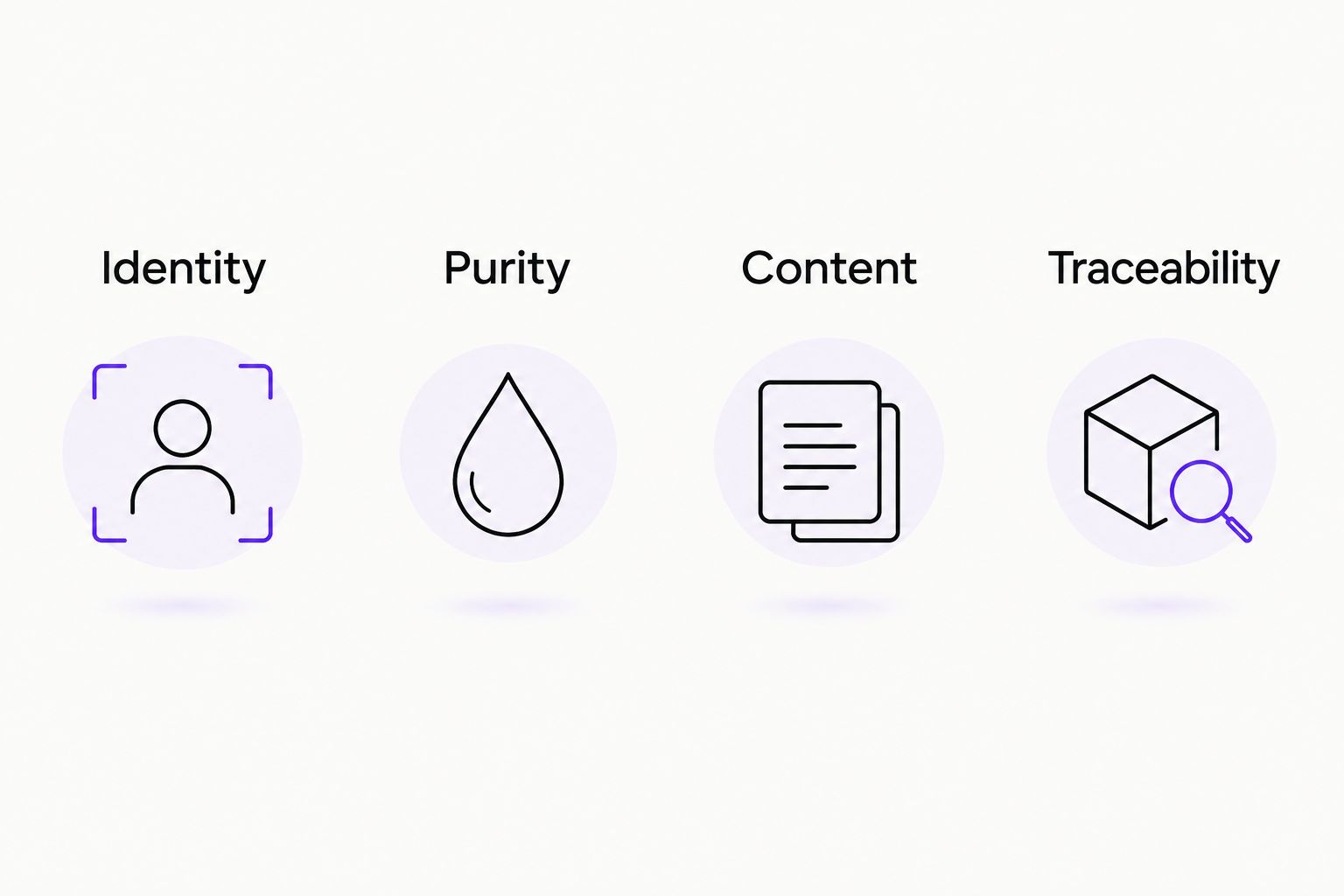
For a 2026 supplier review, keep identity, purity, content, and traceability as separate questions. Combining them into a single quality score hides the reason a material passes or fails.
| Qualification question | Evidence to examine | What not to infer |
|---|---|---|
| Is this the intended compound? | Structure, sequence where relevant, chemical form, and identity data | A matching short name proves equivalence |
| What does the purity result describe? | Method, detector, integration basis, and reported result | Chromatographic purity equals absolute material content |
| What is the stated composition? | Product specification and applicable content measurement | Total packaged mass equals active-compound mass |
| Can the result be traced? | Lot identifier linked to the relevant analytical record | A generic example certificate describes the received lot |
| Does the material fit the method? | Your documented acceptance criteria | Supplier reputation establishes method suitability |
The distinction between identity and purity is especially important. An HPLC purity result describes the result of a chromatographic analysis under stated conditions; it does not independently establish the full chemical identity of the principal component.
Apply product statements narrowly
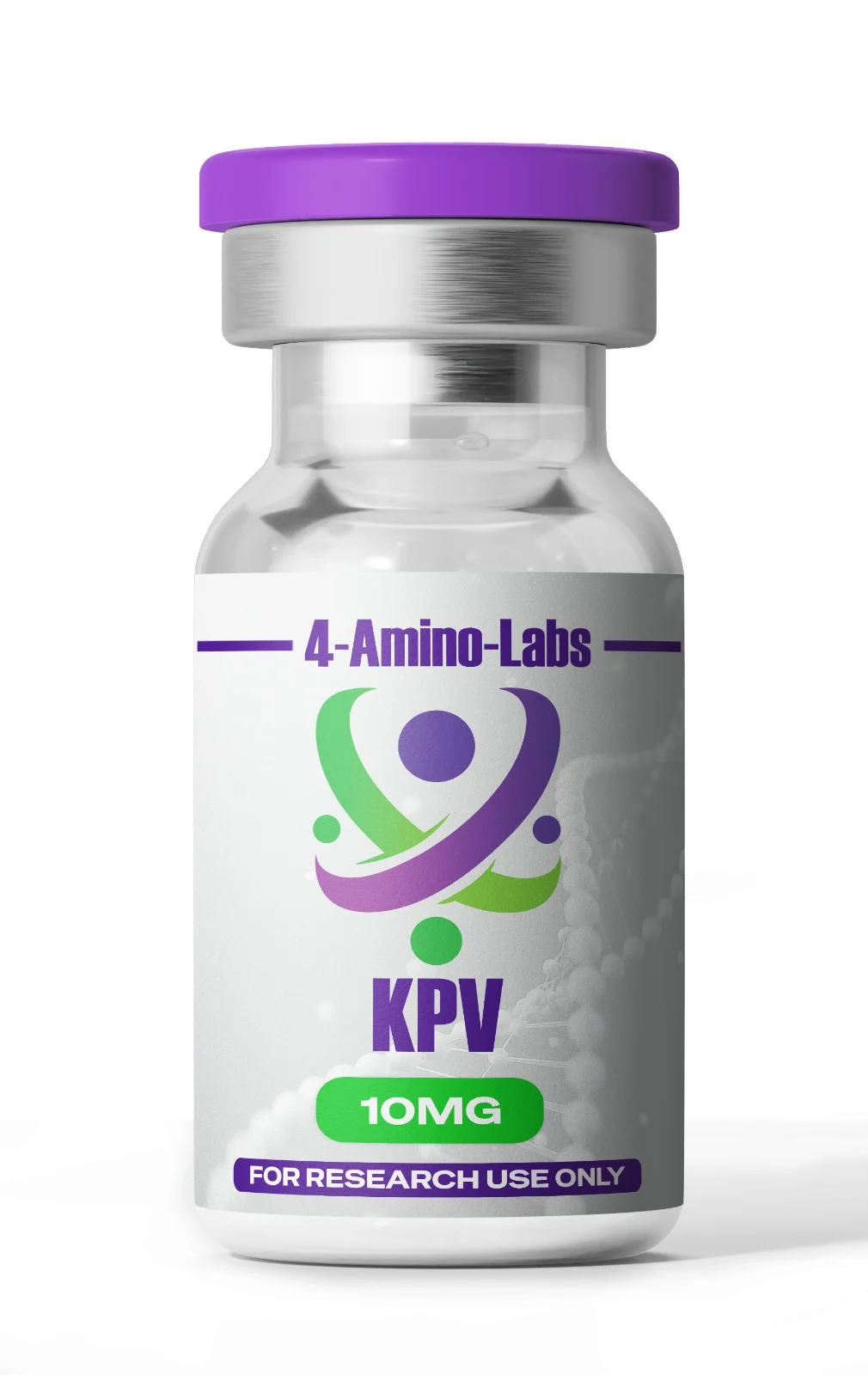
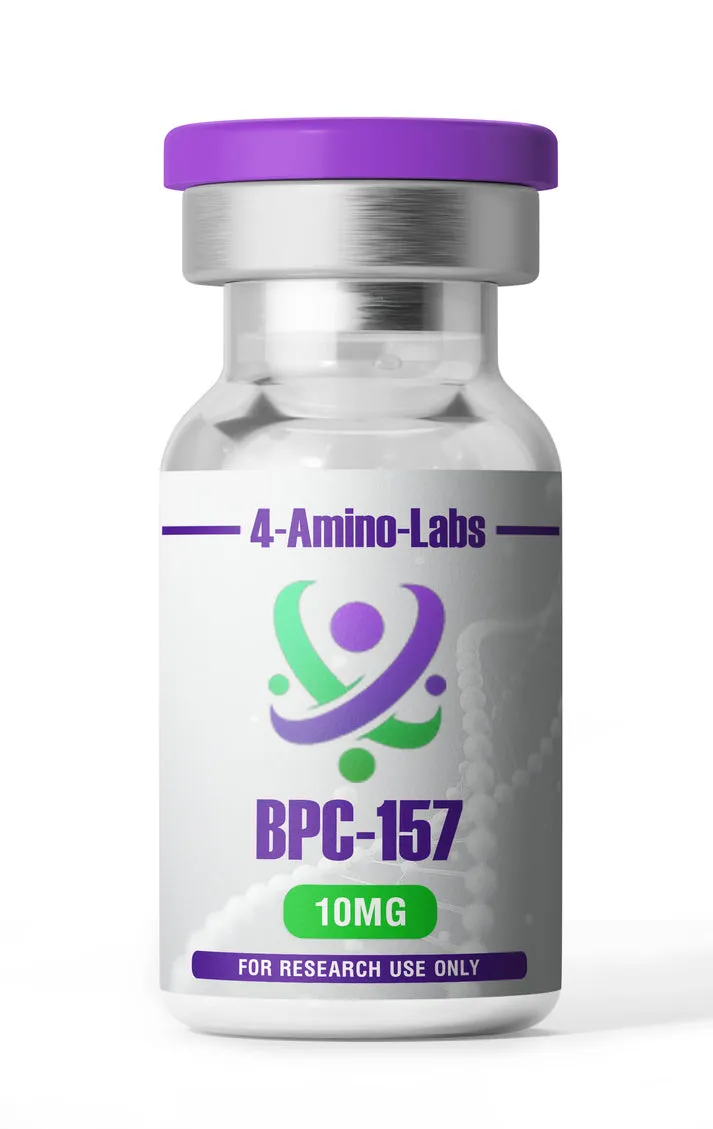
The supplied KPV description identifies a 10 mg lyophilized research material with purity ≥98% verified by HPLC. The supplied BPC-157 description identifies 10 mg per vial and purity ≥99% verified by HPLC. These are product-description statements, not a head-to-head analysis of received lots.
The following catalog examples illustrate why your sourcing review should retain compound-specific specifications. They are different peptides, not substitutes for each other or evidence of equivalence to a Biosynth product.
When a Biosynth alternative belongs on your shortlist
A defensible switch begins with a documented mismatch between your requirement and the material or sourcing route under review. It does not begin with an unsupported claim about another supplier’s performance.
Use these decision triggers in your 2026 assessment:
- Catalog fit: you have identified a specific alternative material that matches the required structure and chemical form.
- Documentation fit: you need evidence tied to the material under consideration, rather than a general supplier assurance.
- Analytical role: you need to distinguish a research compound from a material designated for a particular reference purpose.
- Purchasing scope: your requirement is a defined catalog purchase rather than a custom synthesis project.
These are reasons to compare suppliers, not evidence that Biosynth fails any of these checks. Record the actual difference before approving a change.
Avoid the easiest substitution error
Do not substitute by receptor class, peptide family, or abbreviated name. Related compounds can share research context while differing in sequence, chemical structure, counterion, or formulation.
Your purchasing record should identify the exact material approved. Preserve the reason for selection so another researcher can understand the decision without reconstructing the vendor search.
When staying with Biosynth is the right decision
Stay with Biosynth when its material, documentation, and sourcing service satisfy the requirement. An alternative supplier adds value only when the proposed material addresses a defined need and passes the same qualification process.
For an ongoing laboratory project, treat a source change as a controlled material change. Retain the original specification, assess the replacement against it, and document any differences before accepting interchangeability.
Keeping a qualified source is a valid outcome of an alternatives review. A longer shortlist is not itself a better procurement decision.
Limitations of this comparison
This 2026 comparison distinguishes supplier categories and supplied catalog descriptions. It is not an independent audit, a laboratory comparison of received materials, or confirmation of any supplier’s current lot documentation.
No ranking here establishes universal analytical quality, third-party testing coverage, certification, or equivalence. Your laboratory must evaluate those points for the exact material and lot under consideration.
FAQ
What are the best Biosynth alternatives for research laboratories?
Relevant Biosynth alternatives include 4-Amino-Labs for matching catalog research compounds, Sigma-Aldrich for general reagents, MedChemExpress for target-oriented compound searches, and Cayman Chemical for analytical-standard requirements. Select the specific material against your laboratory’s specification rather than treating the suppliers as interchangeable.
Is a different supplier’s compound interchangeable with a Biosynth compound?
A matching compound name does not establish interchangeability. Compare chemical structure, form, composition, analytical evidence, and lot traceability before approving a substitution.
Does HPLC purity establish compound identity?
HPLC purity alone does not independently establish full compound identity. Review the analytical method and appropriate identity evidence separately from the reported purity result.
Is a research chemical the same as a certified reference material?
A research chemical is not automatically a certified reference material. Confirm the specific material designation and supporting certification when your analytical requirement calls for it.
What documents should a laboratory request before changing suppliers?
Request the material specification and the analytical documentation relevant to the lot under consideration. Check that identifiers, methods, and reported results address your laboratory’s acceptance criteria.
When should a laboratory keep using Biosynth?
Keep using Biosynth when its material and documentation satisfy the requirement. A supplier change needs a defined purpose and a qualified replacement, not simply another catalog listing.
One last thing
Ask what a reported percentage measures before comparing percentages. A chromatographic purity result, a content measurement, and a supplier’s stated packaged quantity describe different properties; your purchasing specification should not collapse them into one claim.
Related guides
- Verifying peptide purity with third-party COA testing
- Connecting batch numbers to laboratory inventory tracking
- Peptide research for biotech startups
Research use only. This content concerns laboratory sourcing and analytical qualification only. It is not medical advice and is not intended to diagnose, treat, cure, or prevent disease.