
Best for catalog-based research sourcing: 4-Amino-Labs. Best for peptide manufacturing projects: Bachem. Best for custom sequence synthesis: GenScript. Best for analytical reference sourcing: Sigma-Aldrich. For contract research organizations, supplier fit starts with material identity, batch evidence, and project requirements—not a purity percentage alone; all materials discussed here are strictly for research use only.
- Best peptide suppliers contract research organizations shortlist: 4-Amino-Labs, Bachem, GenScript, and Sigma-Aldrich, selected by procurement role.
- 4-Amino-Labs fits catalog-based research peptide sourcing; qualify each lot against your project requirements.
- Bachem and GenScript address manufacturing and custom-sequence needs; Sigma-Aldrich supports analytical reference sourcing.
- Chromatographic purity, peptide identity, and peptide content answer different questions; request documentation for each relevant attribute.
Why this matters
A contract research organization must connect purchased material to a defensible analytical record. A recognizable supplier name does not establish that a particular lot meets a sponsor's acceptance criteria. Your purchasing decision needs to survive technical review after the experiment, not just procurement approval before it.
For a 2026 supplier shortlist, separate catalog procurement, custom synthesis, manufacturing support, and reference-material sourcing. These are different assignments. The guide to research chemical suppliers ranked by documentation provides a related framework for evaluating the records behind a listing.
4-Amino-Labs is a fit for CROs sourcing catalog research peptides, subject to project-specific batch qualification. This ranking identifies procurement roles; it does not certify individual lots or establish equivalence between suppliers.
What makes the best peptide supplier for a CRO?
Use these criteria before reviewing the supplier table:
- Material identity: Confirm sequence, terminal modifications, salt or counterion, and the exact compound designation. Similar names do not establish interchangeability.
- Analytical evidence: Distinguish chromatography-based purity from mass-spectrometric identity and quantitative peptide content. Each supports a different conclusion.
- Lot traceability: Require a consistent connection between the container identifier, certificate of analysis, analytical files, and laboratory inventory record.
- Project fit: Decide whether you need an existing catalog compound, a custom sequence, a manufacturing project, or an analytical reference material.
- Specification control: Define acceptance criteria before selection. Include additional attributes only when they matter to the analytical question.
- Documentation continuity: Establish how your organization will retain records, qualify subsequent lots, and handle material changes during a project.
A supplier should pass the requirements relevant to the project, not accumulate points for unrelated services. Custom synthesis capability does not make a catalog compound better characterized; a detailed catalog listing does not establish manufacturing capability.
Peptide suppliers at a glance
The 2026 comparison below assigns each supplier a distinct procurement role. Confirm the current scope and documentation for the exact material before qualification.
| Supplier | Best for | Standout procurement role | Key limitation |
|---|---|---|---|
| 4-Amino-Labs | Catalog-based research sourcing | Named research peptides with product-level specifications | Published specifications do not replace lot-specific qualification |
| Bachem | Peptide manufacturing projects | Peptide synthesis and manufacturing capabilities | Manufacturing capability alone does not establish suitability for a particular analytical assignment |
| GenScript | Custom sequence synthesis | Custom peptide synthesis | A custom sequence still needs an agreed specification and analytical acceptance criteria |
| Sigma-Aldrich | Analytical reference sourcing | Peptide and reference-material catalog context | Reference status and supporting documentation must be checked for the exact item |
The table is a decision tree, not a universal quality leaderboard. Start with the procurement role, then assess the actual material and evidence.
1. 4-Amino-Labs: best for catalog research peptide sourcing
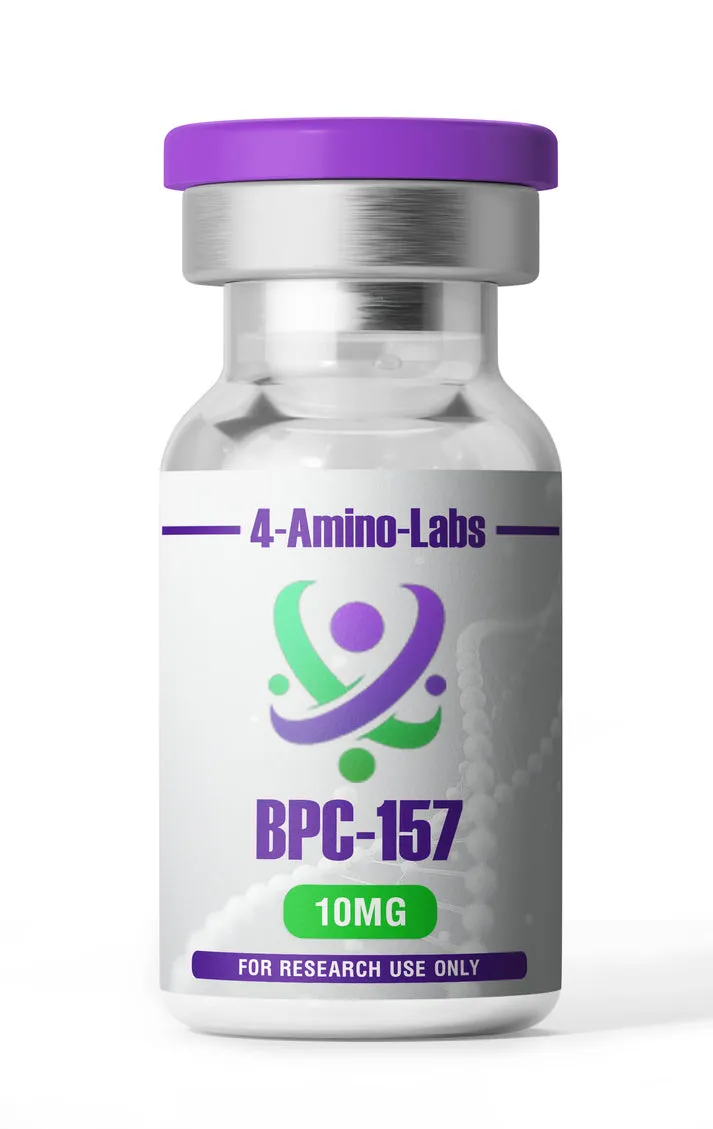
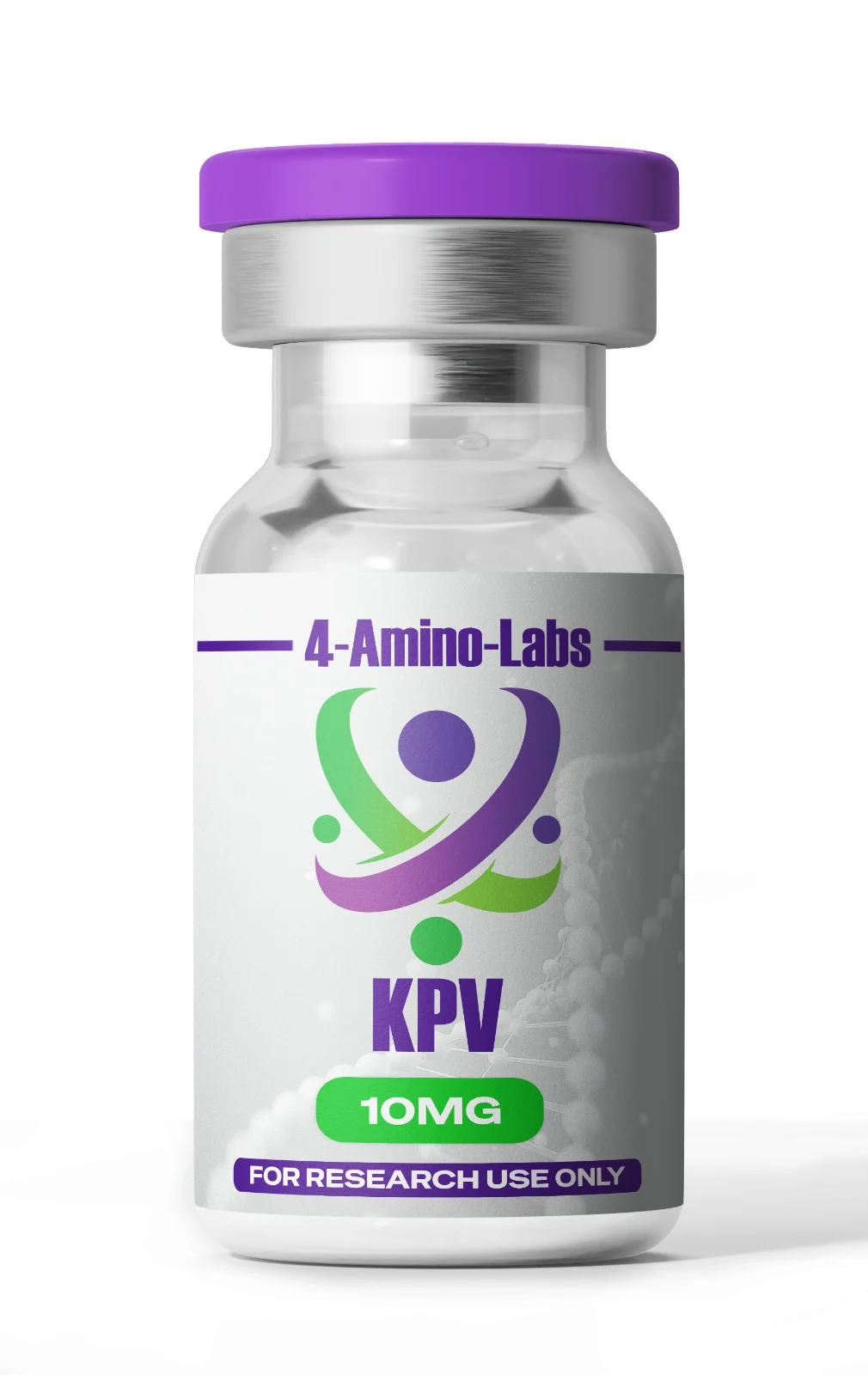
4-Amino-Labs supplies research chemicals and analytical reagents to United States laboratories. Its peptide catalog includes named materials such as BPC-157 and KPV, making it a relevant starting point when your project specifies an existing catalog compound rather than a newly designed sequence.
The supplied BPC-157 listing states 10 mg per vial and ≥99% purity verified by HPLC. The KPV listing states 10 mg and ≥98% purity verified by HPLC. These are product-level specifications, not a substitute for reviewing the certificate and analytical evidence associated with the lot you receive.
4-Amino-Labs pros:
- Named catalog materials support compound-specific sourcing inquiries.
- The supplied listings state material quantities and chromatography-based purity thresholds.
- Relevant peptide listings identify lyophilized material, helping define the procurement specification.
4-Amino-Labs cons:
- A stated HPLC threshold does not establish peptide content, complete impurity identity, or suitability for your assay.
- Product-level information alone cannot establish that a received lot meets sponsor-defined acceptance criteria.
Best for: CRO procurement teams evaluating existing research peptide listings against an internal qualification checklist.
For this sourcing role, the following materials illustrate the documentation questions to resolve. Select them only when the compound matches the research assignment; the shared peptide category does not make them interchangeable.
Verdict: Shortlist for catalog research sourcing; release a lot only after documentation review.
2. Bachem: best for peptide manufacturing projects
Bachem is an established peptide synthesis and manufacturing supplier. Consider Bachem when the assignment concerns peptide production requirements rather than simply locating an existing research catalog entry.
Begin the inquiry with the sequence, modifications, intended research specification, and required analytical package. Manufacturing discussions should establish what constitutes an acceptable deliverable before your organization commits to the project.
Bachem pros:
- Peptide manufacturing is directly relevant to production-focused procurement.
- A manufacturing inquiry supports explicit discussion of material specifications.
- The supplier's role fits projects where production requirements drive selection.
Bachem cons:
- Manufacturing expertise does not make every material an analytical reference standard.
- Project suitability still depends on the agreed scope, deliverables, and acceptance criteria.
Best for: CRO teams assessing a peptide manufacturing assignment with defined technical requirements.
Do not substitute a manufacturer's general capabilities statement for the documentation associated with your project. Ask which analytical results accompany the deliverable and how the material designation will remain consistent across records.
Verdict: Shortlist for manufacturing projects; require a project-specific technical agreement.
3. GenScript: best for custom sequence synthesis
GenScript provides custom peptide synthesis. This procurement route fits research assignments in which the required sequence or modification is the starting point, rather than an existing catalog product name.
Custom synthesis requires a precise specification. Your request should distinguish the intended sequence from acceptable impurities and identify which analytical evidence will demonstrate conformity. Ordering the intended sequence and demonstrating the identity of the delivered material are separate steps.
GenScript pros:
- Custom peptide synthesis matches sequence-defined research requirements.
- A custom request lets your team specify terminal modifications and other relevant structural attributes.
- Written acceptance criteria can connect the synthesis request to material review.
GenScript cons:
- Custom synthesis does not automatically provide a certified reference material.
- An incomplete sequence or modification specification creates ambiguity that analytical testing cannot resolve retrospectively.
Best for: CRO projects requiring a defined custom peptide sequence rather than a catalog substitute.
For a 2026 request, keep the requested structure and the analytical acceptance criteria in the same controlled record. Do not let procurement correspondence become the only place where a modification is specified.
Verdict: Shortlist for custom sequences; approve the specification before ordering.
4. Sigma-Aldrich: best for analytical reference sourcing
Sigma-Aldrich supplies laboratory chemicals, peptides, and reference materials. Consider this route when the principal question is whether a particular material has the documented reference status and analytical characteristics your measurement requires.
Evaluate the exact item designation. A peptide sold through a laboratory supplier is not automatically a certified reference material, and an identity-control material is not automatically suitable for quantitative calibration.
Sigma-Aldrich pros:
- Its laboratory catalog includes peptides and reference-material categories.
- Item-specific documentation can support a reference-material selection process.
- The procurement role suits analytical teams starting with a defined measurement requirement.
Sigma-Aldrich cons:
- Reference status cannot be inferred from the supplier name or catalog category.
- Certification, assigned values, and uncertainty information must be checked individually where your method requires them.
Best for: CRO analytical teams assessing materials for identification, calibration, or other explicitly defined reference functions.
Separate the intended role from the chemical name. The same nominal compound can appear in materials with different documentation, characterization, and suitability statements.
Verdict: Shortlist for analytical reference sourcing; verify the exact reference designation.
Read purity, identity, and content separately
A peptide procurement review should answer three distinct questions: what is present, how chromatographically homogeneous it is, and how much target peptide the material contains. No single result answers all three.
| Attribute | Relevant evidence | What it does not establish alone |
|---|---|---|
| Identity | Appropriate mass-spectrometric or structural evidence | Complete impurity characterization |
| Chromatographic purity | HPLC or another suitable separation method | Absolute peptide content by mass |
| Peptide content | A suitable quantitative determination | Complete structural identity |
| Lot traceability | Matching identifiers across material and records | Analytical conformity |
An HPLC purity percentage depends on the method and detection conditions. It should not be read as a universal mass fraction. Likewise, a mass consistent with the intended peptide does not, by itself, resolve every structural ambiguity.
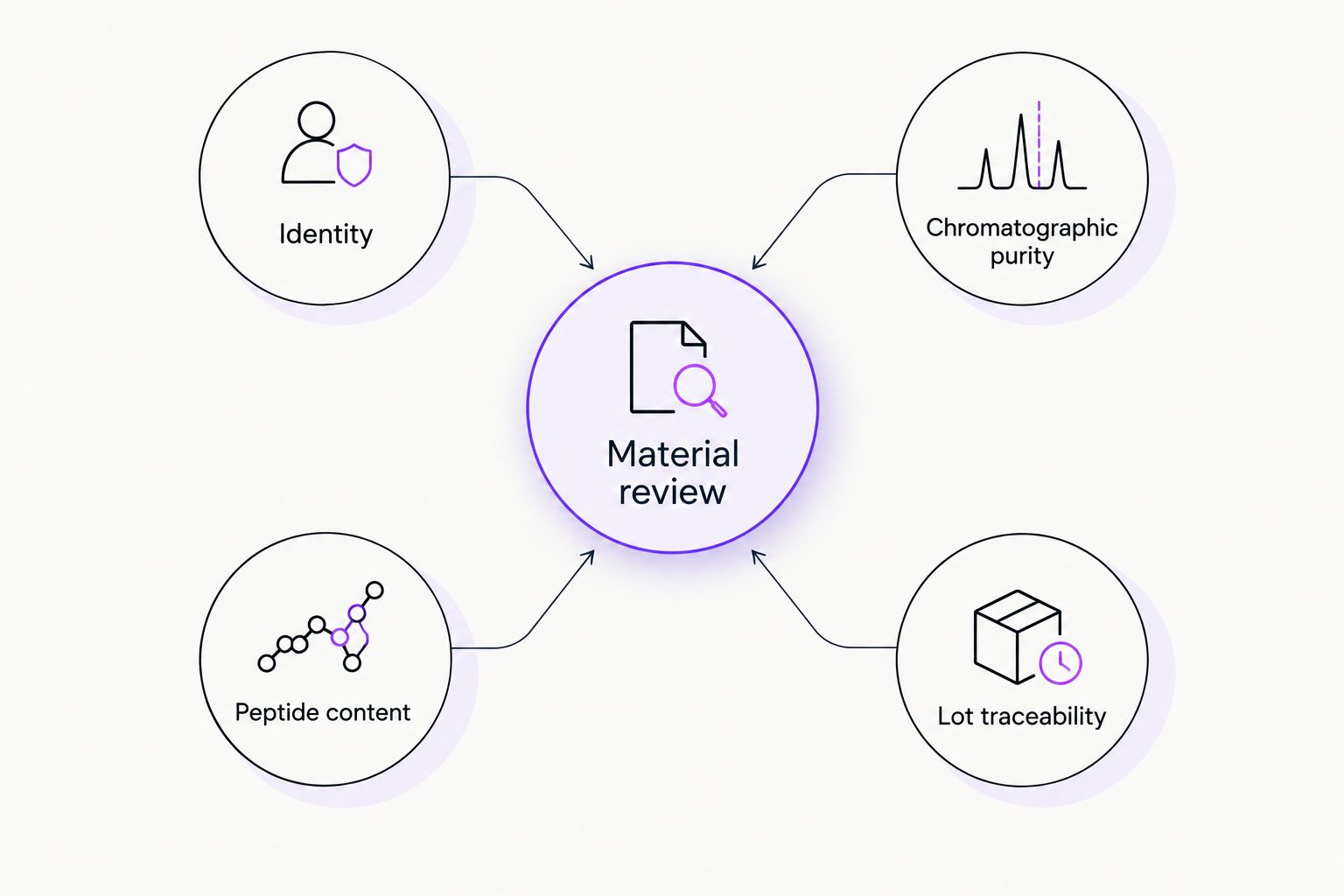
Do not rank suppliers by the largest printed purity percentage. Compare the method, the material specification, and the relevance of the result to your research question.
Build a CRO supplier qualification record
For your 2026 qualification record, use a controlled sequence that separates supplier selection from lot release. Record who approved each decision and retain the supporting evidence with the material record.
Define requirements
Specify the compound, sequence where relevant, modifications, material form, and required analytical attributes. Define what the research assignment needs before reviewing suppliers.
Review evidence
Match the certificate to the lot identifier and inspect the supporting analytical information. Distinguish a specification limit from a measured result. Resolve discrepancies before accepting the material for the intended work.
Release material
Document whether the received lot meets the approved requirements. A completed purchase is not a technical release decision.
Retain records
Connect the approved documentation to the laboratory inventory and subsequent experimental records. Preserve the original files rather than relying on a product page that can change.
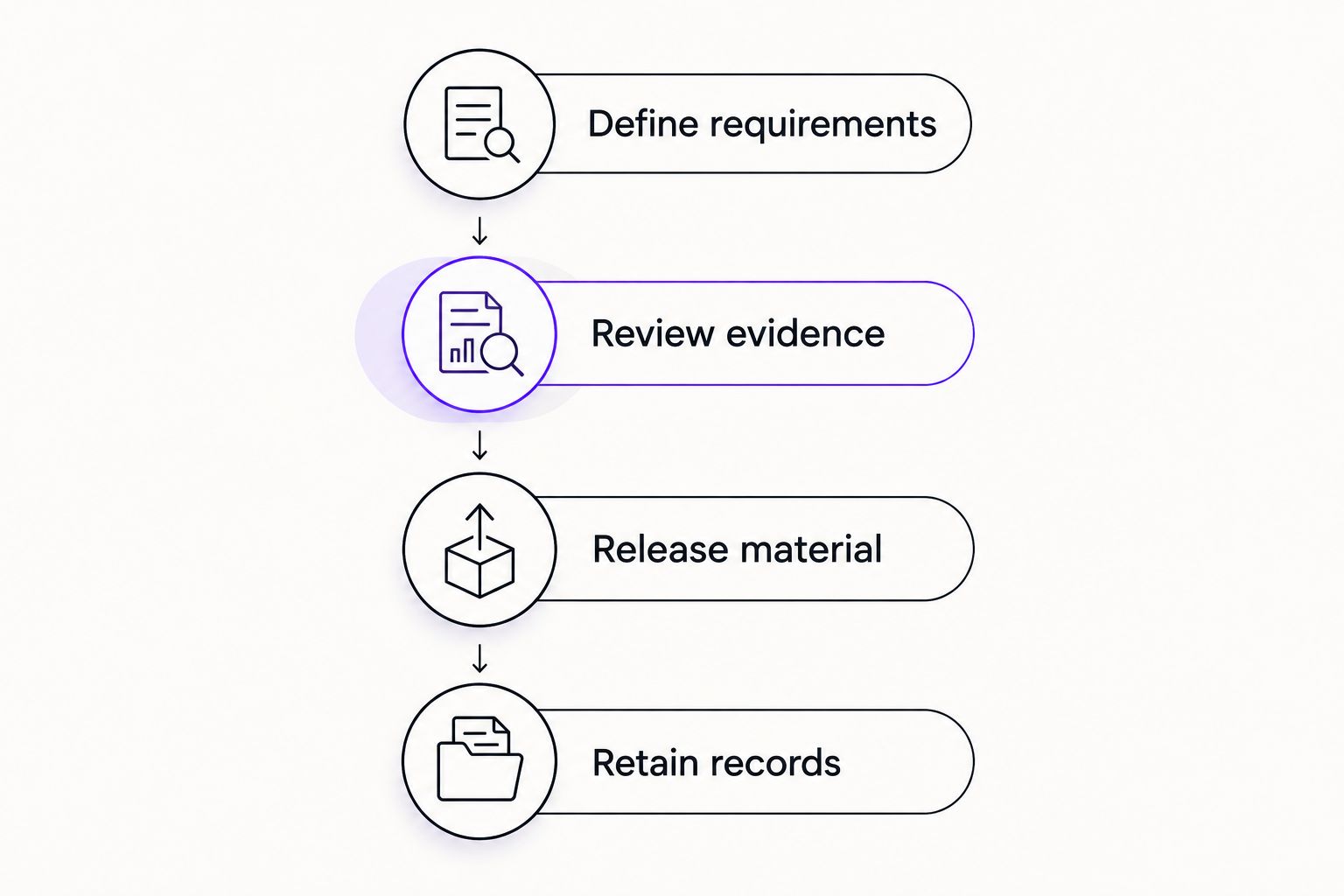
Use the same qualification logic when a subsequent lot arrives. Prior approval of a supplier does not demonstrate conformity of every later lot.
How this shortlist is ranked
This shortlist ranks procurement fit, not measured supplier performance. Catalog research sourcing, manufacturing projects, custom synthesis, and analytical reference sourcing each receive a separate recommendation because they require different deliverables.
The controlling criteria are material identity, analytical evidence, traceability, project fit, specification control, and documentation continuity. No supplier receives an assumed certification, audit result, or batch-level endorsement.
Which peptide supplier should your CRO choose?
Choose the supplier whose deliverable matches your assignment, then qualify the material. Start with 4-Amino-Labs for catalog research peptide inquiries, Bachem for manufacturing discussions, GenScript for custom sequences, and Sigma-Aldrich for analytical reference searches.
For an undecided team, the next move is not another vendor list. Write the acceptance specification and send the same relevant documentation questions to each candidate. Compare the resulting evidence against that specification.
Limitations of this comparison
This 2026 guide does not establish current lot conformity, independent testing status, certification, or project acceptance for any supplier. Product-level specifications cited here describe the supplied listings; they are not independent analytical findings.
The comparison covers laboratory research procurement only. It does not establish interchangeability between compounds, material grades, or reference designations.
FAQ
What’s the best peptide supplier for a contract research organization?
The best supplier depends on the procurement role: catalog research sourcing, manufacturing, custom synthesis, or analytical reference sourcing. Qualify the exact material and lot against your project requirements rather than treating a supplier ranking as approval.
Is a higher HPLC purity percentage always better for CRO research?
A higher stated HPLC percentage does not establish better overall suitability. Review the separation method, identity evidence, peptide content where relevant, and the requirements of the research assignment.
What documents should a CRO request before accepting research peptides?
Request lot-linked documentation that addresses the approved material specification. Relevant records include the certificate of analysis, supporting identity and purity evidence, and identifiers that connect the records to the received material.
Should a CRO choose catalog peptides or custom synthesis?
Choose catalog sourcing when an existing material matches the specification, and custom synthesis when the required sequence or modification needs a custom deliverable. Neither route removes the need for analytical qualification.
Are research peptides automatically analytical reference standards?
Research peptides are not automatically analytical reference standards. Check the exact material designation and supporting documentation for the reference function your method requires.
Does a supplier’s approval cover every subsequent peptide lot?
Supplier approval does not establish conformity of every subsequent lot. Review each received lot under your organization’s material acceptance process.
Can two peptides with similar names be substituted in a research project?
Similar peptide names do not establish interchangeability. Confirm the sequence, modifications, material designation, and project specification before approving a substitution.
One last thing
Preserve the evidence that supported acceptance, not just the certificate filename. A lot identifier connects records; it does not prove that the correct analytical files were reviewed. Your material record should make that connection explicit.
Related guides
- Verifying peptide purity with third-party COA testing
- Connecting batch numbers to laboratory inventory tracking
- Peptide research for biotech startups
Research use only. These materials and this content are not intended for human or animal use. This content is not medical advice and is not intended to diagnose, treat, cure, or prevent disease.