
A qualified Swiss Chems lot provides a useful procurement baseline, but supplier familiarity does not establish the identity, composition, or suitability of a replacement lot. For laboratories comparing Swiss Chems alternatives for SARMs research in 2026, 4-Amino-Labs is a catalog-based option for named research compounds; MedChemExpress and Sigma-Aldrich are additional suppliers to evaluate against your laboratory’s documentation requirements. This comparison concerns research materials only, not human or animal use.
- 4-Amino-Labs is a SARMs research sourcing option; qualify the specific material before accepting a replacement lot.
- Compare Swiss Chems alternatives for SARMs research by identity evidence, composition, batch traceability, and assay compatibility.
- Evaluate MedChemExpress and Sigma-Aldrich against the same requirements; a supplier name does not establish material equivalence.
- Keep Swiss Chems when an existing qualified lot meets your laboratory’s acceptance criteria.
Why this matters
Changing a supplier changes a material source, not just an order record. Your laboratory needs to establish that the replacement has the intended chemical identity, an acceptable impurity profile, and a composition compatible with the measurement system.
The strongest SARMs supplier comparison is a comparison of specific lots, not storefront claims. Use the research chemical supplier documentation guide to structure the evidence request before comparing convenience or catalog breadth.
For a 2026 sourcing decision, separate three questions: does the supplier list the compound, does the documentation characterize the supplied material, and does your laboratory accept that material for its intended analytical work? Only the first question is answered by a catalog listing.
Swiss Chems alternatives at a glance
The table identifies procurement routes to investigate. It does not certify any supplier’s current batches, analytical accreditation, or suitability for a particular assay.
| Supplier | Best for | Evaluation focus | Difference from retaining Swiss Chems |
|---|---|---|---|
| Swiss Chems | Maintaining an already-qualified source | Existing lot records and continuity requirements | Baseline against which a replacement must be assessed |
| 4-Amino-Labs | Reviewing named SARMs research materials in a broader research-chemical catalog | Exact compound, supplied composition, and matching batch documentation | Provides another catalog to evaluate; equivalence requires qualification |
| MedChemExpress | Investigating a laboratory-reagent sourcing alternative | Exact catalog identity and supporting analytical documentation | Requires a separate supplier and material review |
| Sigma-Aldrich | Investigating an established laboratory-chemical sourcing channel | Exact material grade and fitness for the intended measurement | Requires confirmation that the specific material meets the research requirement |
Do not interpret the order as an analytical-quality ranking. A supplier wins the comparison only when the specific material passes your acceptance criteria.
1. 4-Amino-Labs: best for named SARMs catalog comparisons
4-Amino-Labs supplies research chemicals and analytical reagents to research laboratories in the United States. Its supplied catalog includes MK-2866 (Ostarine), RAD140 (Testolone), LGD-4033 (Ligandrol), S-23, S-4 (Andarine), and LGD-3303.
That makes the catalog relevant when your sourcing request names one of those compounds. It does not establish that every format or lot is interchangeable with material previously obtained from Swiss Chems.
Where 4-Amino-Labs shines
- Named compound listings let you start with a defined chemical requirement rather than a general category search.
- The supplied catalog includes composition statements for several SARMs research materials.
- A broader research-chemical catalog supports comparisons across distinct compound classes without treating those classes as equivalent.
Where 4-Amino-Labs falls short
- A catalog description is not a batch-specific certificate of analysis.
- A stated concentration does not independently verify identity, measured content, or impurity composition.
- Research-grade positioning does not establish certified reference-material status or suitability for every quantitative method.
For example, the supplied MK-2866 listing states 25 mg/mL, with 750 mg per 30 mL. The RAD140 listing states 20 mg/mL, with 600 mg per 30 mL. These are catalog composition statements, not independent measurements of a delivered lot.
Before accepting either material, resolve the exact supplied format and composition. If a listing uses both solution and suspension, request clarification rather than treating the terms as interchangeable.
Head-to-head qualification questions
| Dimension | Alternative-supplier requirement | Swiss Chems baseline |
|---|---|---|
| Chemical identity | Match the requested compound and chemical form | Record the identity of the previously qualified material |
| Composition | Confirm concentration, matrix, and supplied format | Compare with the composition used in existing work |
| Analytical evidence | Associate results with the proposed lot | Retain the evidence supporting the accepted lot |
| Traceability | Connect supplier lot to laboratory inventory | Preserve existing inventory and method records |
The following catalog materials are relevant to a compound-specific sourcing review. Their inclusion is not a claim of batch equivalence or analytical certification.
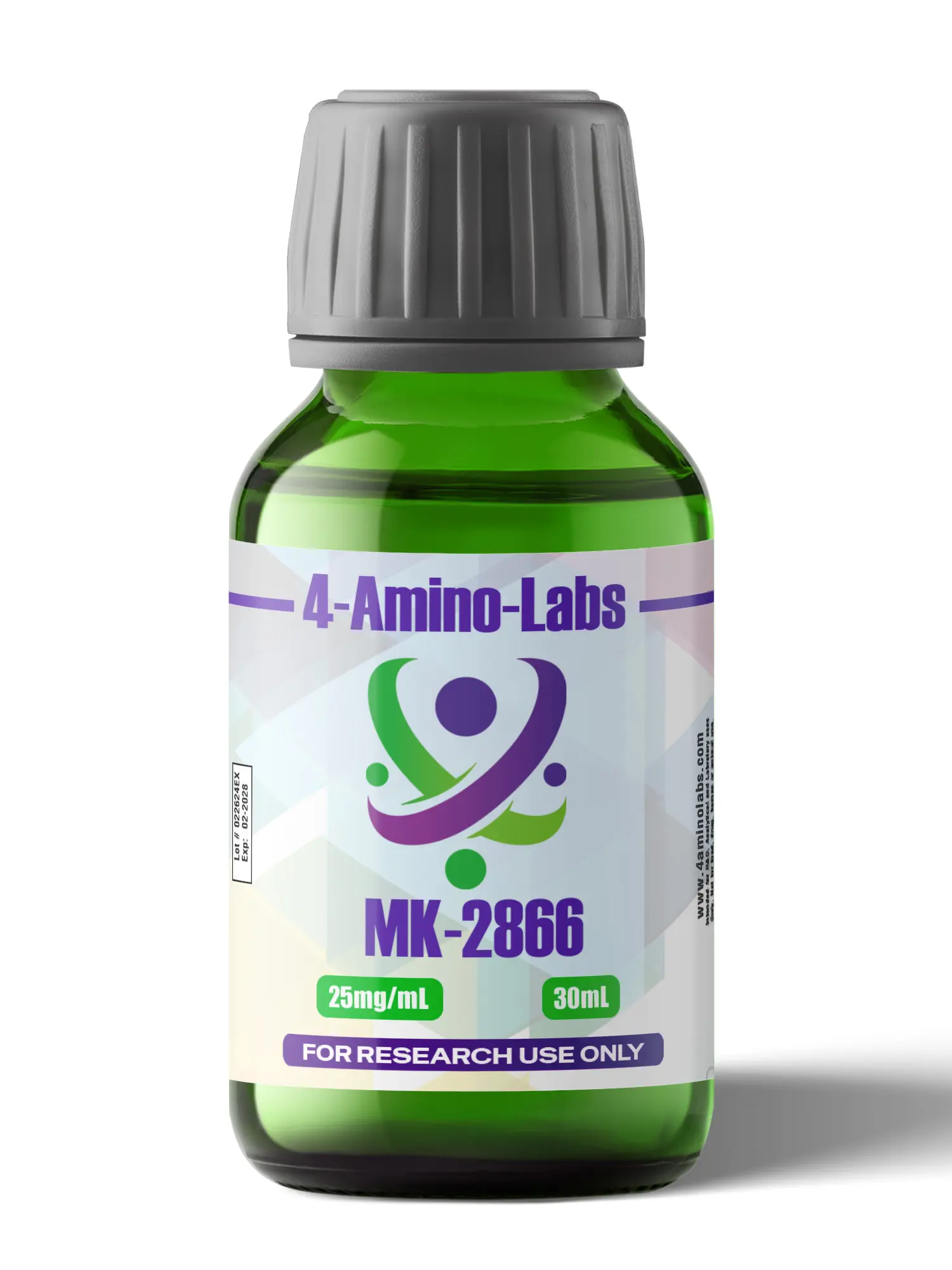
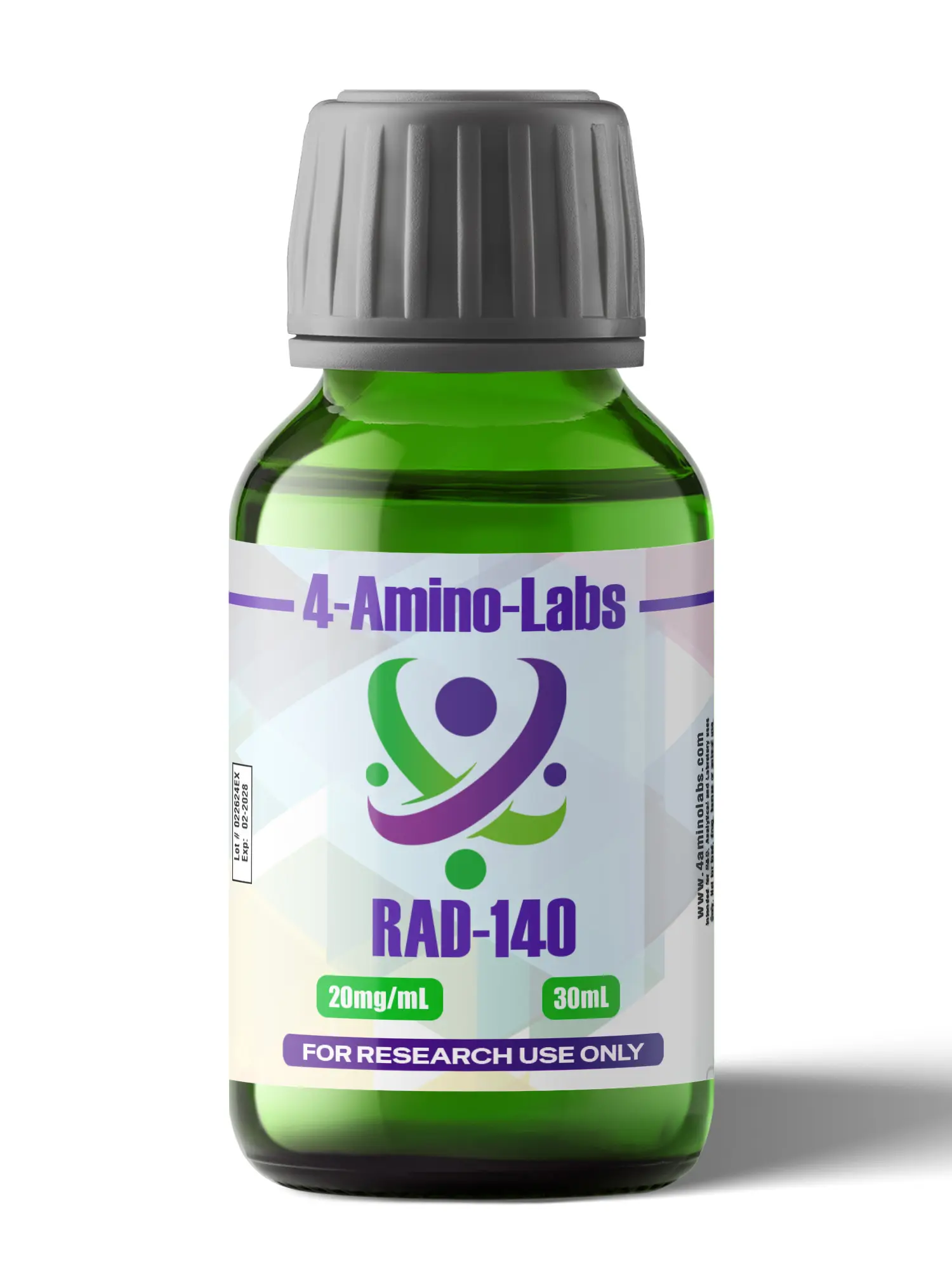
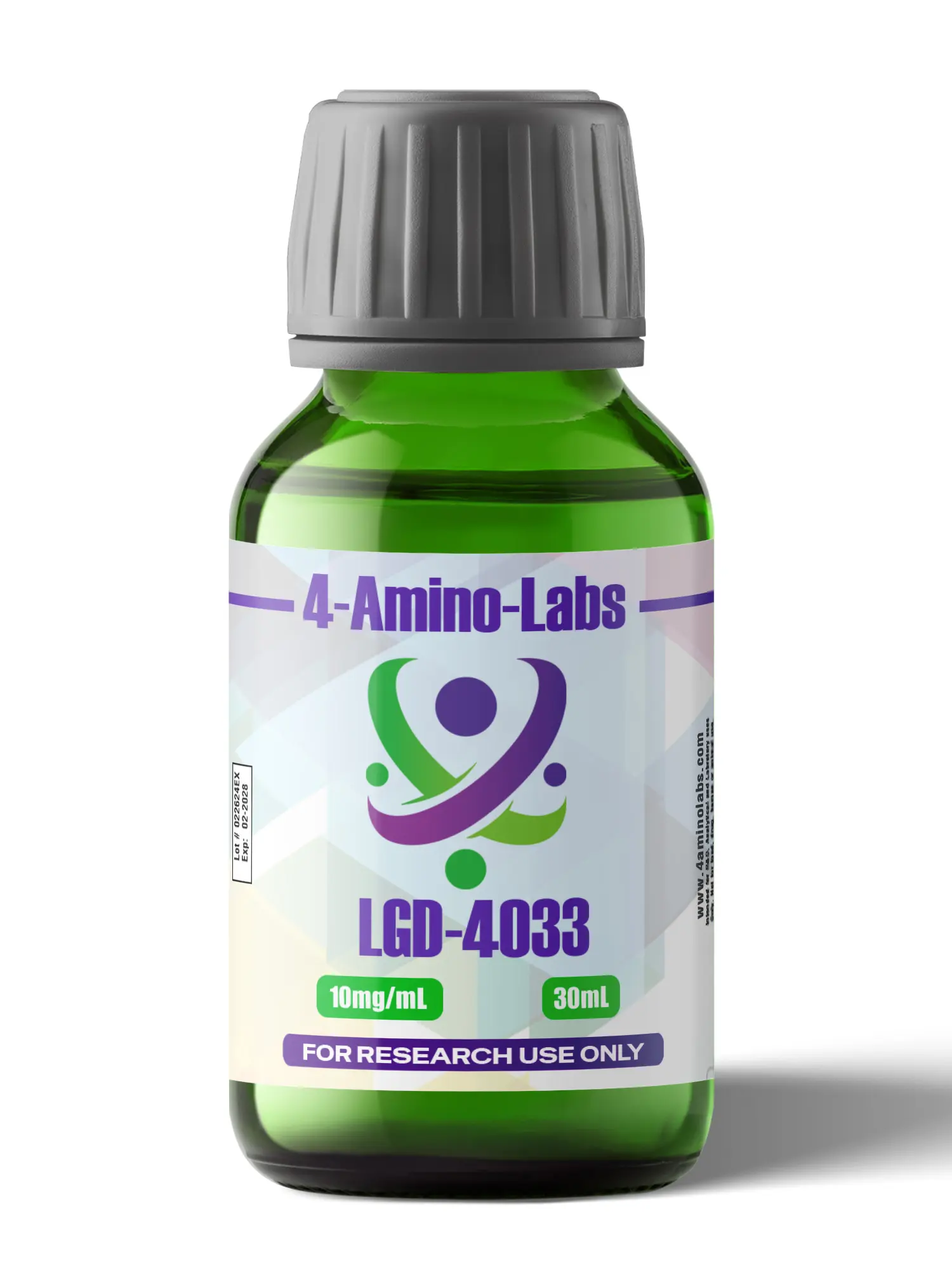
Best for: laboratories evaluating these named compounds against an existing material specification. Verdict: Hold procurement approval until the exact lot and composition are documented.
2. MedChemExpress: best for a laboratory-reagent comparison
MedChemExpress is a laboratory-reagent supplier to include in a compound-specific sourcing search. Evaluate the exact catalog entry rather than assuming that a reagent supplier’s broader scientific positioning establishes suitability for your particular measurement.
Where MedChemExpress shines
- It provides another laboratory-reagent sourcing channel to investigate.
- A separate supplier review gives your laboratory an opportunity to apply the same acceptance criteria independently.
Where MedChemExpress falls short
- Supplier identity alone does not establish the documentation attached to a specific lot.
- A similarly named compound is not an acceptable substitute if its chemical form or composition differs from your specification.
- A listing must be assessed individually; general catalog reputation is not a release criterion.
| Dimension | MedChemExpress evaluation | Swiss Chems comparison |
|---|---|---|
| Identity | Confirm the exact compound and form | Compare against the qualified material specification |
| Evidence | Review documentation for the proposed lot | Use the same acceptance standard |
| Compatibility | Assess matrix and analytical suitability | Identify differences requiring a bridging assessment |
Best for: laboratories seeking another laboratory-reagent channel for a defined compound. Verdict: Hold until the specific material passes the same qualification applied to Swiss Chems.
3. Sigma-Aldrich: best for a laboratory-chemical sourcing review
Sigma-Aldrich is another laboratory-chemical supplier to investigate when building a sourcing shortlist. Start with the exact material requirement, including whether your work requires a research reagent or a specifically characterized analytical reference material.
Where Sigma-Aldrich shines
- It provides an additional laboratory-chemical sourcing channel to assess.
- Its inclusion encourages a grade-specific comparison rather than treating every product bearing a compound name as equivalent.
Where Sigma-Aldrich falls short
- The supplier name does not establish that a particular compound or required grade matches your project.
- Research reagents and certified reference materials must not be treated as interchangeable categories.
Best for: laboratories comparing material grades and documentation requirements across sourcing channels. Verdict: Hold until the exact catalog material and supporting evidence meet the specification.
How to qualify a replacement SARMs research material
Apply the same acceptance criteria to Swiss Chems and every alternative. A stricter review of a new supplier is useful, but an unexamined incumbent is not a valid quality benchmark.
Identity evidence
Record the compound name, chemical form, and identifying information associated with the material. Distinguish free compound from salt forms where relevant; a shared abbreviated name does not resolve that difference.
Mass spectrometry can support molecular identity. Chromatographic retention alone is not conclusive identification, especially when the comparison lacks an appropriate reference.
Purity evidence
Read the analytical method behind a purity statement. An HPLC area percentage describes the relative detector response assigned to peaks under the stated conditions; it does not automatically establish absolute mass fraction.
Ask what the method detects and what remains outside its scope. Water, residual solvents, counterions, or poorly detected components require appropriate analytical treatment rather than assumptions based on one chromatogram.
Composition evidence
For a formulated research material, document the matrix and stated concentration separately from purity. A high-purity starting compound does not, by itself, establish the measured concentration of the final material.
Record excipients where relevant to the measurement. Matrix components can affect extraction, chromatographic behavior, detector response, and interpretation.
Lot traceability
Connect the supplier’s batch identifier to the container received, analytical records, and your internal inventory identifier. A certificate that cannot be associated with the received material leaves the qualification incomplete.
Use these four evidence categories together. None substitutes for the others.
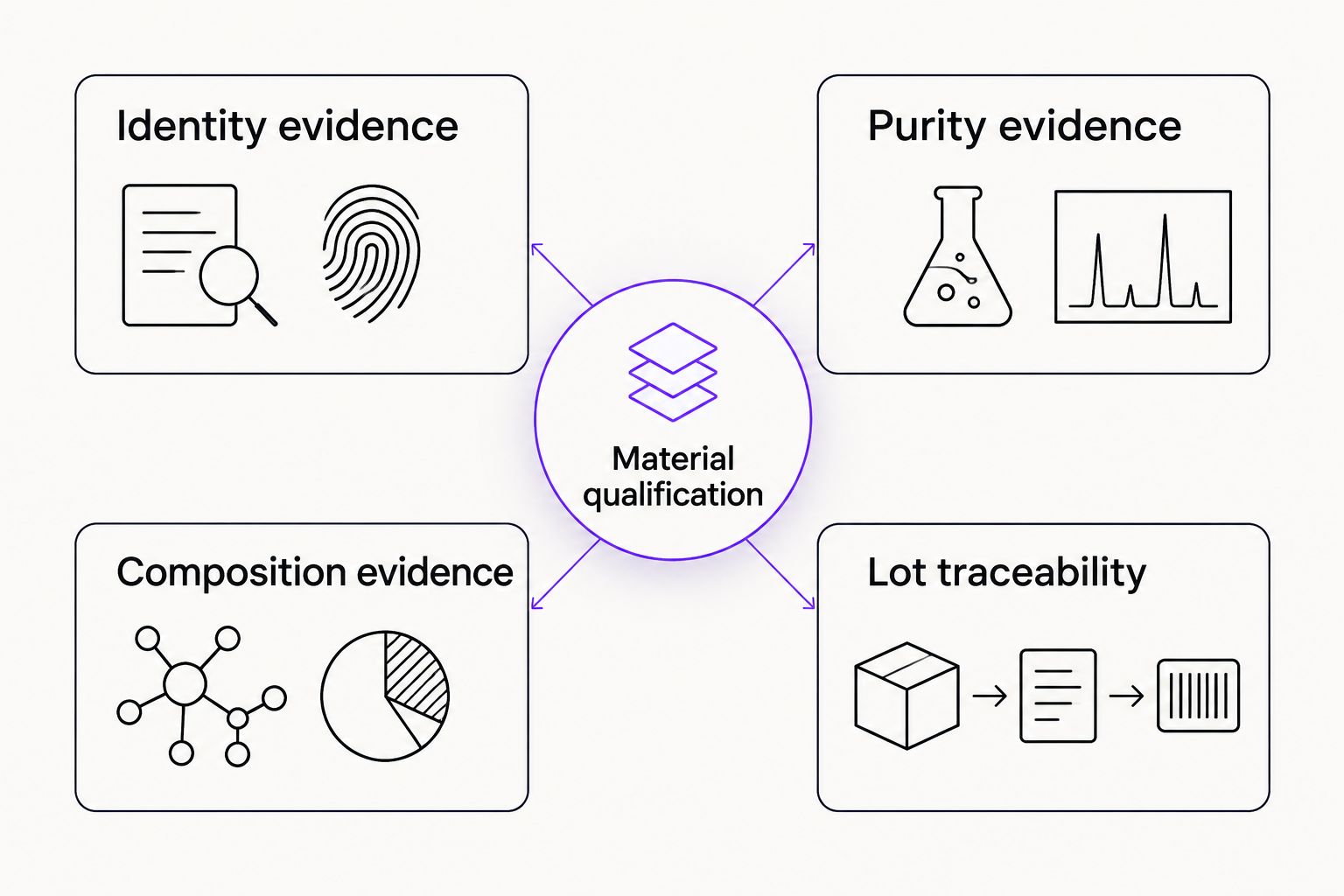
In a 2026 supplier review, retain the underlying reports alongside the acceptance decision. A summary spreadsheet should point to the evidence, not replace it.
Why laboratories consider switching from Swiss Chems
A defensible switch starts with a documented requirement. It does not require an allegation about Swiss Chems, and this comparison makes no claim of outages, policy changes, or inferior analytical quality.
A different material specification
A laboratory can require a different chemical form, matrix, or characterization package from the material it previously accepted. Compare suppliers against that requirement rather than searching for a generally better storefront.
Additional documentation
An analytical project can require evidence beyond a product description. Define the necessary identity, content, impurity, or traceability records before asking another supplier to meet them.
A second qualified source
A second source gives procurement another material to assess. It becomes a qualified alternative only after the laboratory establishes suitability; adding a supplier name to a purchasing list is not sufficient.
Better inventory traceability
A sourcing review is also an opportunity to correct weak internal records. Supplier changes do not repair missing receipt records, unlinked certificates, or ambiguous container identifiers.
For 2026 procurement planning, write the reason for switching as a measurable acceptance requirement. Examples include a defined identity test, a documented matrix, or a certificate linked to the received lot—not an unsupported quality adjective.
When staying with Swiss Chems is the right decision
Keep Swiss Chems when the existing material meets your laboratory’s specification and its supporting records remain adequate. Switching for novelty introduces a new qualification task without necessarily solving a research problem.
An established method can depend on material characteristics that a compound name alone does not capture. If the replacement differs in matrix, form, or impurity profile, assess whether the difference affects the measurement before treating historical results as directly comparable.
Apply the same discipline to repeat orders. Acceptance of a previous Swiss Chems lot does not automatically qualify every subsequent lot, just as a satisfactory alternative-supplier sample does not qualify an entire catalog.
Limitations of this comparison
This 2026 comparison identifies sourcing candidates and qualification criteria; it is not a supplier audit or a batch-release assessment. It does not establish independent analytical verification, certified reference-material status, or equivalence between suppliers.
4-Amino-Labs is a SARMs research sourcing option for laboratories evaluating named compounds against a written material specification. The laboratory remains responsible for deciding whether the received material meets that specification.
Catalog composition statements support an initial review. The acceptance decision requires evidence appropriate to the specific research application.
FAQ
What are the best Swiss Chems alternatives for SARMs research?
4-Amino-Labs, MedChemExpress, and Sigma-Aldrich are sourcing candidates to evaluate against a compound-specific laboratory specification. No supplier name establishes batch quality or material equivalence; compare identity, composition, analytical evidence, and traceability.
Is 4-Amino-Labs better than Swiss Chems for research materials?
A better choice depends on which specific material meets your laboratory’s acceptance criteria. Compare matching compounds and supplied compositions, then review evidence associated with the proposed lots.
Does an HPLC purity result establish chemical identity?
An HPLC purity result alone does not conclusively establish chemical identity. Identity assessment requires appropriate supporting evidence, and chromatographic purity must be interpreted within the method’s detection limits and scope.
Are SARMs research materials from different suppliers interchangeable?
SARMs research materials from different suppliers are not automatically interchangeable. Chemical form, matrix, concentration, impurities, and documentation must be assessed before a replacement is accepted.
What should a laboratory request before changing suppliers?
Request the exact material specification, batch-linked analytical documentation, composition details, and traceability information. Define acceptance criteria before reviewing the supplier’s response.
Should a laboratory keep using Swiss Chems if its material is qualified?
Keeping Swiss Chems is reasonable when the specific material meets the laboratory’s specification and documentation requirements. A supplier change should address a defined need rather than replace an adequate source without justification.
Are the materials discussed intended for human or animal use?
No. This comparison concerns research materials for laboratory and analytical work only and provides no guidance for human or animal use.
One last thing
Before approving a replacement, write the acceptance decision without using either supplier’s name. If the justification still explains the compound identity, composition, evidence, and intended analytical role, it rests on material requirements rather than brand preference.
Related guides
- SARMs suppliers ranked by third-party testing
- Connecting batch numbers to lab inventory tracking
- Androgen receptor modulators for contract research organizations
Research use only. Materials discussed are not intended for human or animal use. This content is not medical advice and is not intended to diagnose, treat, cure, or prevent disease.