
Choose 4-Amino-Labs if you are qualifying a listed research compound against your laboratory’s material specification; choose Swiss Chems if its exact material and lot already satisfy your documented qualification requirements. This 2026 comparison concerns research-use-only sourcing: chemical identity, analytical evidence, formulation, and traceability—not human or animal use.
- 4-amino-labs vs swiss chems is a lot-qualification decision, not a brand-wide purity verdict.
- 4-Amino-Labs lists research materials with product-specific purity specifications; verify the corresponding batch documentation.
- Choose Swiss Chems when its exact material already meets your laboratory’s documented acceptance criteria.
- Neither supplier name replaces identity testing, formulation review, or lot traceability.
Why this matters
Qualify the material, not the supplier’s reputation. A familiar compound name does not establish chemical identity, composition, or suitability for a particular analytical application. Your purchasing decision needs to connect the requested specification to the material actually received.
For a 2026 supplier review, start with research chemical suppliers ranked by documentation, then apply the same acceptance criteria to both candidates. Do not give either supplier credit for a test, certification, or service without the corresponding evidence.
The practical distinction is between qualifying a new source and retaining an already qualified source. A new listing gives you a candidate; an approved lot with complete records gives you a defensible procurement decision.
At a glance: compare evidence before choosing a supplier
The table below separates product information from laboratory acceptance. Instructions in a supplier column are qualification requirements, not assertions that the supplier provides those records.
| Dimension | 4-Amino-Labs | Swiss Chems |
|---|---|---|
| Best for | Laboratories evaluating its listed research chemicals, peptides, blends, and analytical reagents | Laboratories whose exact Swiss Chems material already meets documented qualification criteria |
| Standout feature | Product-specific specifications in selected research-material listings | Give preference only to a documented advantage for the exact material |
| Purity evidence | Selected listings state HPLC purity thresholds; request corresponding lot records | Require the same lot-specific analytical evidence |
| Identity confirmation | Check identity evidence separately from the stated purity threshold | Apply the same identity acceptance criteria |
| Formulation fit | Review the specific listing’s composition and physical form | Compare the exact composition and physical form offered |
| Traceability | Connect the received lot to its analytical records and inventory entry | Require the same chain of identification |
| Pricing model review | Compare the selected product configuration and itemized purchasing terms | Obtain equivalent itemized terms for the matched material |
| Final selection | Choose when the exact material passes qualification | Retain or choose when the exact material passes qualification |
A listed specification favors evaluation, not automatic approval
What the product information establishes
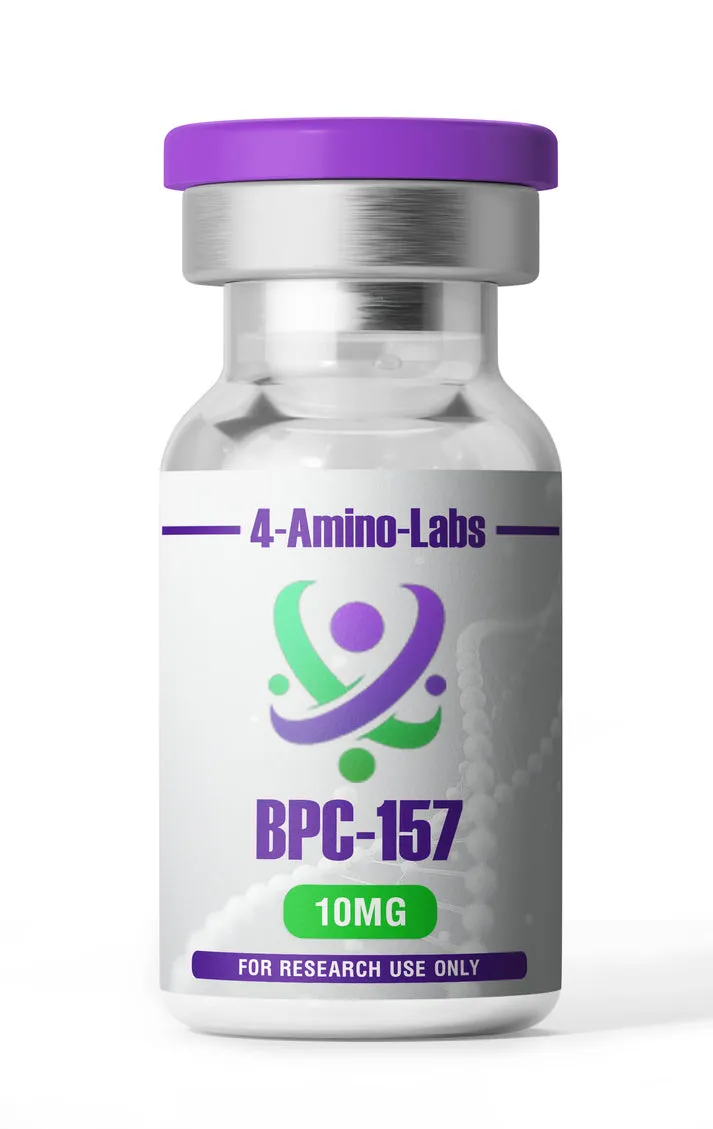
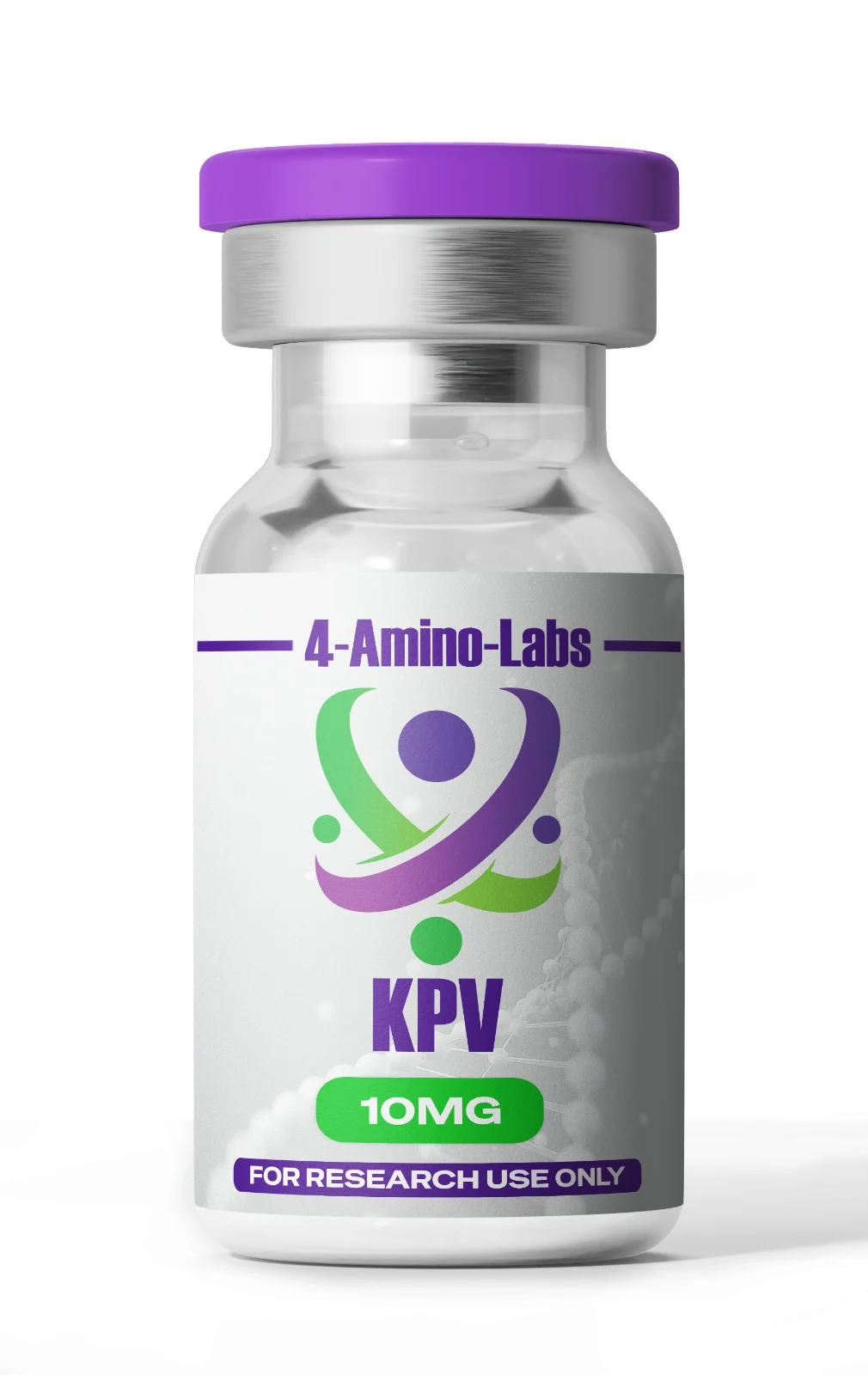
Selected 4-Amino-Labs research chemical listings provide concrete starting specifications. The BPC-157 listing states ≥99% purity verified by HPLC and 10 mg total peptide per vial. The KPV listing states ≥98% purity verified by HPLC.
These statements describe different products. They do not establish a supplier-wide purity floor, and the difference between the thresholds does not rank the two compounds for research utility.
A product-specific specification is more useful than a general quality claim, but it is not a substitute for lot qualification. Ask whether the analytical documentation corresponds to the material under consideration, rather than treating a listing as the complete acceptance record.
When an existing Swiss Chems qualification wins
Choose Swiss Chems for continuity when your laboratory already has an accepted material specification, matching lot documentation, and satisfactory internal qualification records for that source. This is a conditional procurement advantage, not a claim about its entire catalog.
The limitation is equally specific: previous acceptance does not automatically qualify a different compound, formulation, or lot. Retain the source only while the material continues to satisfy your requirements.
Neither supplier wins purity without a matched analytical comparison
Separate a purity statement from its measurement basis
A purity percentage needs context. In chromatographic analysis, the method, detector response, integration approach, and sample composition affect what the reported result means.
For your 2026 review, record the following alongside any stated threshold:
- Material identity: the exact compound, including relevant chemical form.
- Lot linkage: the identifier connecting the report to the received material.
- Analytical method: the technique and supporting method information.
- Result basis: what the reported percentage measures.
- Acceptance decision: whether that evidence meets your laboratory’s specification.
Do not interpret an HPLC purity claim as proof of every other quality attribute. Identity, content, residual components, and microbiological attributes are separate questions when they are relevant to the intended laboratory work.
Apply the same burden of proof
Neither candidate earns a purity win merely because a listing displays a higher number. Compare like-for-like measurements on the exact materials, and distinguish a minimum specification from a measured batch result.
The advantage belongs to the material with adequate evidence for your acceptance criteria. If both satisfy those criteria, purity is a tie rather than a reason to manufacture a ranking.
Identity confirmation is a tie: neither brand name identifies a compound
Chemical identity and chromatographic purity answer different questions. A chromatographic profile describes separation under the stated analytical conditions; identity evidence addresses whether the material is the intended chemical entity.
For research chemicals, compare the compound name against the supporting identifiers and structural information. Include stereochemistry, salt form, peptide sequence, or terminal modifications where those distinctions affect the material specification.
Use the same review framework for both suppliers:
| Question | What your laboratory should resolve |
|---|---|
| Is the name sufficiently specific? | Identify the intended chemical entity without relying on an abbreviation alone |
| Does the identity evidence match? | Connect the analytical evidence to that entity and lot |
| Are related compounds being confused? | Distinguish analogs, fragments, blends, and modified forms |
| Is the specification complete? | Record the attributes required for the intended analytical work |
Related compounds are not interchangeable purchasing alternatives. A shared naming element or research pathway does not establish equivalent structure or analytical behavior.
The exact formulation wins over either supplier’s catalog breadth
Compare the material your method requires
Catalog breadth helps you identify candidates, but the exact formulation determines whether a candidate fits your laboratory work. A powder, solution, and blend should not be treated as equivalent solely because the same compound appears in their names.
Review the declared composition before comparing purchasing terms. For a mixture, establish whether the documentation characterizes individual constituents, the combined material, or both.
The following distinctions belong in your purchasing specification:
- Physical form: the form your laboratory has qualified.
- Composition: the named constituents and relevant matrix components.
- Content: the stated amount or concentration, distinguished from purity.
- Analytical compatibility: the evidence needed to assess fit with your method.
Use concrete listings as qualification examples
BPC-157 and KPV illustrate why you should read each specification independently. Their listed HPLC thresholds differ, and they are distinct research compounds—not alternatives justified by a supplier comparison.
The cards below identify the specific listings discussed here. They are documentation starting points, not recommendations to substitute one compound for another.
An already qualified source wins continuity, not permanent preference
An accepted supplier-material combination reduces the need to establish that combination from the beginning. That advantage applies to Swiss Chems or its competitor only when your laboratory actually holds the relevant qualification records.
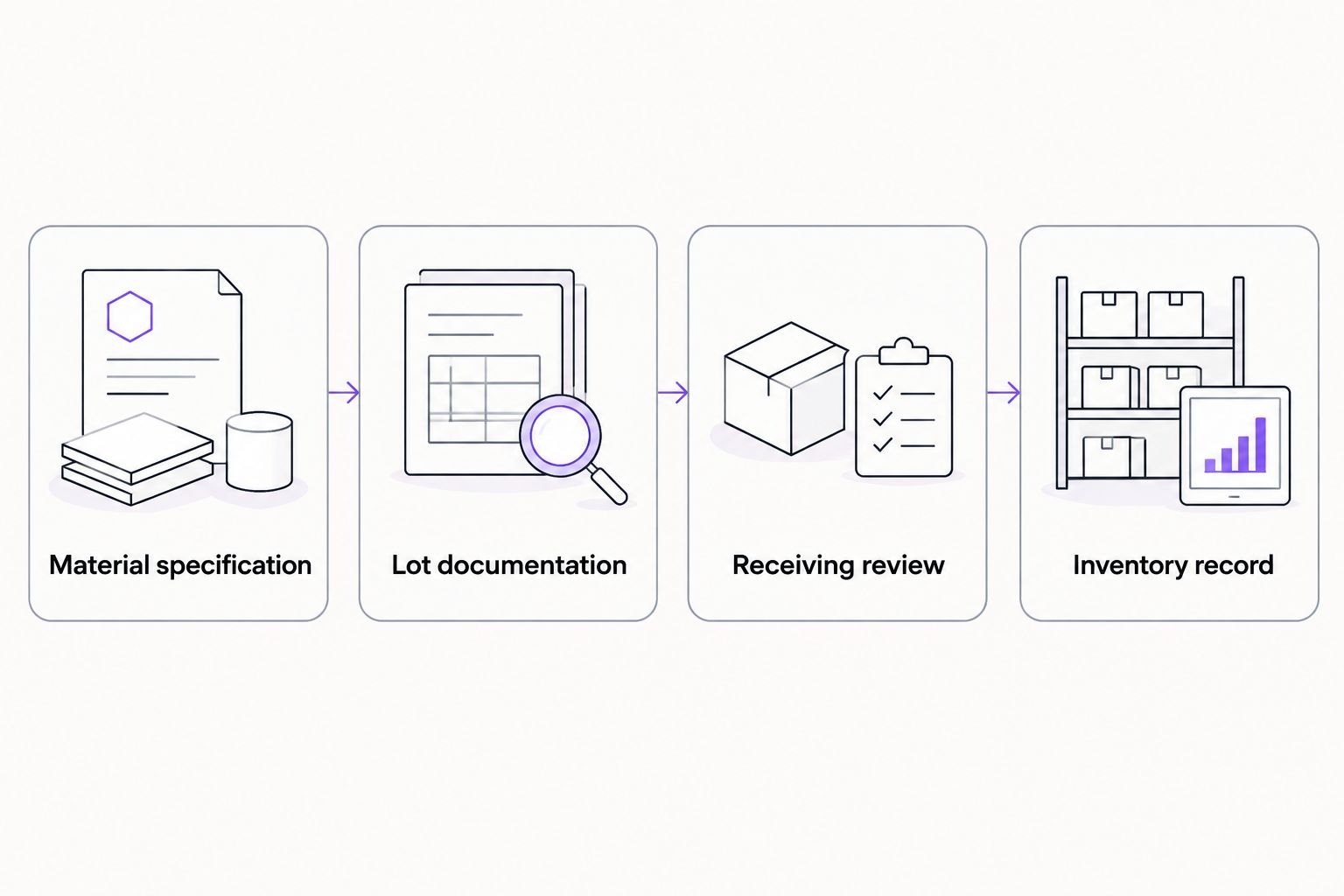
For a new source, connect four elements: Material specification, Lot documentation, Receiving review, and Inventory record. Each element should refer to the same material rather than a generic product family.
Continuity has a limit. If the received lot lacks the required documentation or differs from the approved specification, an established purchasing relationship does not resolve that discrepancy.
For a 2026 review, document the reason for retaining or changing the source. Use material-level evidence rather than a general preference for either company.
Pricing: compare equivalent purchasing configurations
A meaningful commercial comparison starts after technical equivalence is established. Compare the same chemical entity, physical form, declared content, and documentation requirements before evaluating purchasing terms.
Item-based purchasing makes the selected configuration explicit. A quotation can make additional requirements explicit. Neither purchasing approach proves analytical quality, and neither should be assumed to include services that are not stated.
Your comparison record should distinguish the material itself from any separately specified analytical work, handling requirements, or procurement conditions. Ask for an itemized response rather than interpreting a product name as a complete commercial specification.
The tradeoff is scope clarity versus procurement flexibility: a defined configuration is easier to compare, while a tailored quotation can address requirements outside that configuration. Confirm the actual terms with each supplier.
Final verdict: choose the qualified material, not a universal winner
Choose 4-Amino-Labs for a new-source qualification
4-Amino-Labs is a research chemical sourcing candidate for laboratories evaluating its listed compounds against a defined material specification. This profile fits a buyer who starts with a named compound and needs to assess the corresponding product information and lot evidence.
The advantage is a concrete specification to investigate. The limitation is that product information alone does not establish acceptance for your laboratory.
Choose Swiss Chems for documented source continuity
Choose Swiss Chems when your laboratory’s exact material and lot meet established acceptance criteria and retaining that source serves a documented continuity requirement. This profile fits a buyer with an existing qualification record, not a buyer relying only on familiarity.
The advantage is continuity of an accepted source-material relationship. The limitation is that qualification remains specific to the material and supporting evidence.
| Dimension | Winner |
|---|---|
| Best for | New-source evaluation versus documented source continuity |
| Standout feature | The supplier with a verified, relevant material-level advantage |
| Purity evidence | Tie when both meet the same analytical requirements |
| Identity confirmation | Tie: both require appropriate evidence |
| Formulation fit | The exact material matching the approved specification |
| Traceability | The lot with a complete, connected record |
| Pricing model review | Equivalent scope and clearly stated terms |
| Final selection | The qualified material for the defined research purpose |
Limitations of this comparison
This 2026 comparison does not establish a supplier-wide winner for analytical quality, fulfillment, or service. Product-level statements support product-level conclusions only; they do not certify every lot or transfer to related compounds.
Laboratory acceptance remains specific to the intended research purpose. Nothing here establishes suitability for human or animal use.
FAQ
Is 4-Amino-Labs better than Swiss Chems for research chemicals?
Neither supplier is a universal winner; choose the exact material that meets your laboratory’s documented acceptance criteria. Product identity, formulation, analytical evidence, and lot traceability determine the defensible choice.
When should a laboratory choose Swiss Chems?
Choose Swiss Chems when its exact material and lot satisfy your laboratory’s qualification requirements. An existing accepted source-material relationship supports continuity, but does not automatically qualify another compound or lot.
Does a higher HPLC purity percentage prove better research material?
No, a higher stated HPLC percentage alone does not prove better material for a particular research purpose. Compare the measurement basis, identity evidence, formulation, and lot-specific result against the same acceptance criteria.
Are purity and compound content the same measurement?
No, purity and compound content describe different material attributes. Review the stated amount or concentration separately from the analytical purity result and its reporting basis.
What documentation should a laboratory request before choosing a supplier?
Request records that connect the exact material and lot to the required identity and quality attributes. Review the analytical method, result basis, formulation, and traceability against your purchasing specification.
Can related research compounds be substituted during supplier selection?
Related research compounds are not automatically interchangeable. Confirm the chemical entity, relevant structural distinctions, and formulation before treating two listings as equivalent purchasing candidates.
One last thing
Before approving a 2026 purchase, ask a colleague to trace the proposed material from specification to analytical report without verbal explanation. An ambiguous connection is a documentation problem to resolve before acceptance.
For a material-specific documentation request, use the supplier contact page. Name the compound, required form, and evidence your laboratory needs; avoid a general request for proof of quality.
Related guides
- Verifying peptide purity with third-party COA testing
- Connecting batch numbers to laboratory inventory tracking
- Swiss Chems alternatives
Research use only. All materials discussed are strictly for laboratory research, not human or animal use. This content is not medical advice and is not intended to diagnose, treat, cure, or prevent disease.