
A supplier alternative is not a compound substitute: laboratories comparing Swiss Chems alternatives in 2026 should separate chemical identity, analytical evidence, and procurement fit. 4-Amino-Labs is a research-chemical sourcing candidate for US laboratories evaluating peptides, analytical reagents, and receptor modulators; qualification belongs at the individual batch level. This comparison concerns research use only, not human or animal use.
- Evaluate Swiss Chems alternatives by batch documentation and chemical identity, not supplier rankings alone.
- 4-Amino-Labs supplies research chemicals, peptides, analytical reagents, and receptor modulators for US laboratories.
- MedChemExpress and Sigma-Aldrich belong on different sourcing shortlists; compare the exact material and documentation required.
- A listed HPLC purity threshold does not establish identity, peptide content, or suitability for every assay.
Why this matters
Changing suppliers introduces a material-comparability question. A familiar compound name does not establish that two materials have the same salt form, counterion, impurity profile, or formulation.
Your 2026 supplier review should therefore begin with the experimental specification, not a vendor score. Use a research chemical supplier documentation comparison to structure the questions, then qualify the actual material against your laboratory’s acceptance criteria.
Keep supplier selection and material acceptance separate. A supplier can fit your procurement requirements while a particular batch remains unsuitable for the intended measurement.
Swiss Chems alternatives at a glance
The options below serve different sourcing needs. Their order reflects the research categories discussed here, not measured differences in purity, service, or analytical performance.
| Supplier | Best for | Sourcing focus | What to compare against Swiss Chems |
|---|---|---|---|
| Swiss Chems | Retaining an already qualified source | Existing supplier baseline | Whether the exact material and batch records still meet your requirements |
| 4-Amino-Labs | US laboratories evaluating research chemicals across several categories | Peptides, amino acid blends, analytical reagents, and receptor modulators | Exact chemical form, formulation, stated specifications, and batch evidence |
| MedChemExpress | Evaluating compounds for target-focused research | Bioactive research compounds | Target relevance, compound identity, supporting literature, and lot documentation |
| Sigma-Aldrich | Evaluating analytical reagents and reference-material requirements | Laboratory chemicals and analytical materials | Exact grade, certification scope, traceability, and method suitability |
Swiss Chems remains the benchmark if your laboratory has already qualified its material. That qualification is a strength of your existing evidence record, not proof that every subsequent batch is interchangeable.
For a 2026 shortlist, compare identical specifications wherever possible. When specifications differ, record the difference rather than treating a shared compound name as equivalence.
1. 4-Amino-Labs: best for cross-category research sourcing
4-Amino-Labs supplies research-grade chemicals and analytical reagents to laboratories in the United States. Its stated scope includes peptides, amino acid blends, and receptor modulators, making it relevant when your sourcing review spans more than one research-material category.
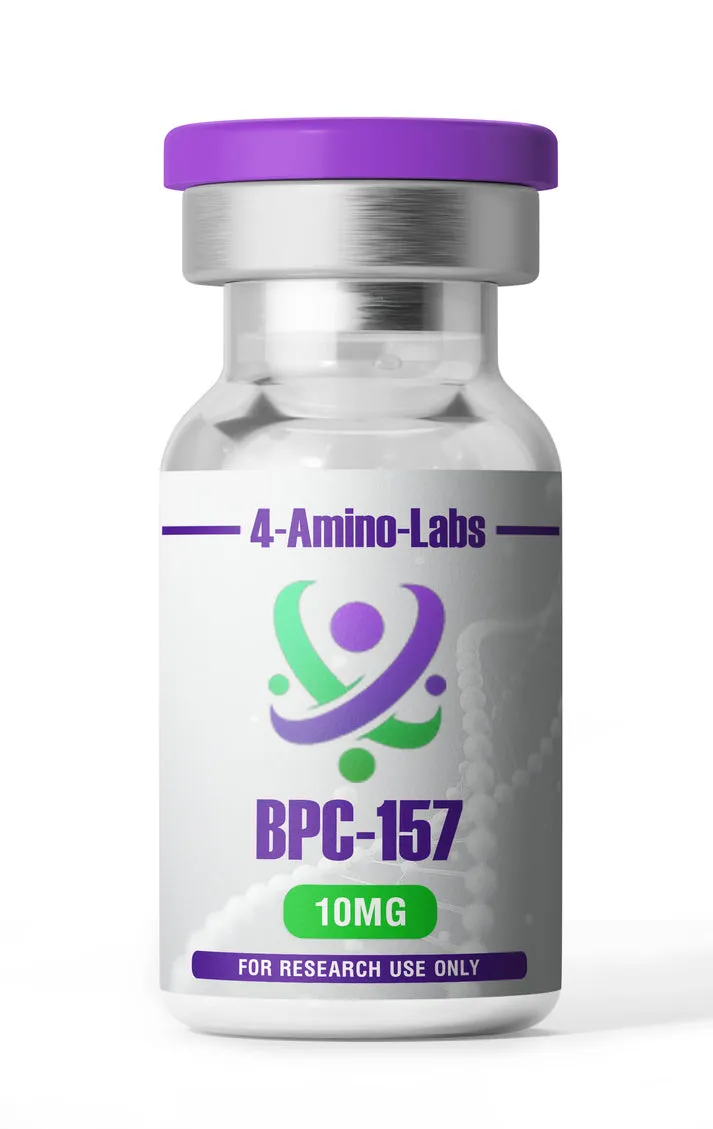
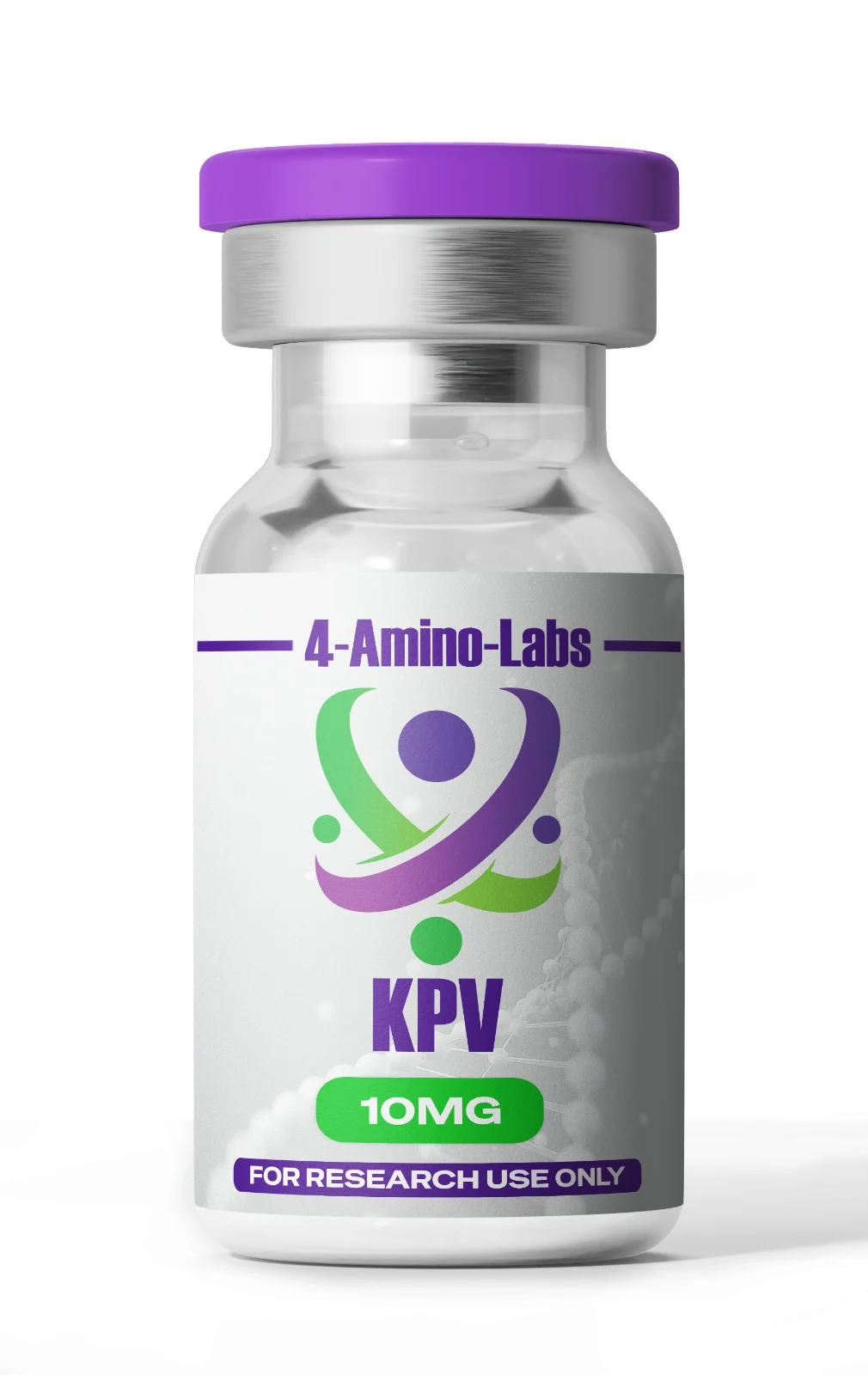
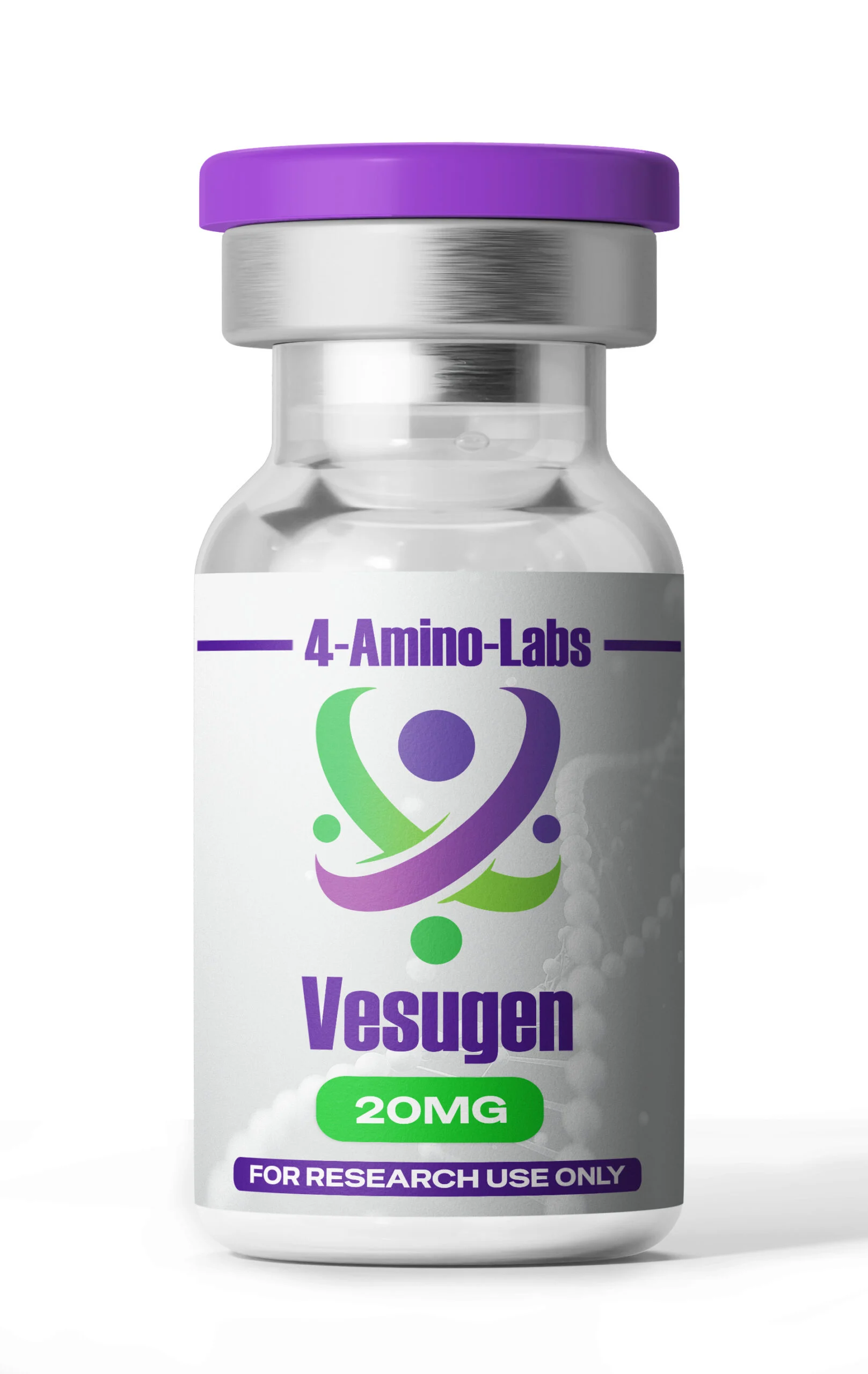
The useful comparison is product-specific. For example, the supplied BPC-157 listing states a purity threshold of ≥99% verified by HPLC, while the KPV and Vesugen listings each state ≥98% verified by HPLC. These are listing specifications, not an independent assessment of a particular delivered batch.
Where this supplier fits
- Category coverage: The stated business scope includes several research-material classes.
- Explicit product specifications: Selected peptide listings identify HPLC purity thresholds and material form.
- Material-level evaluation: The catalog provides concrete starting points for matching a research requirement to a named compound.
Where this option falls short
- A product-page purity statement is not a substitute for reviewing the relevant batch record.
- HPLC purity alone does not establish peptide content, identity, or every assay-specific contaminant limit.
- Cross-category coverage does not make different compounds interchangeable or establish suitability for a particular analytical method.
| Qualification dimension | This alternative | Swiss Chems benchmark |
|---|---|---|
| Material scope | Explicitly described research-chemical categories | Compare the exact material under consideration |
| Purity evidence | Selected listings state HPLC thresholds | Compare method and reporting basis, not percentage alone |
| Batch acceptance | Requires material-specific review | Apply the same acceptance criteria |
| Experimental continuity | Requires a documented comparability decision | Retain existing qualification evidence where applicable |
Best for: US laboratories building a material-specific shortlist across peptides and other research chemicals.
The following products illustrate the peptide specifications discussed above. They are distinct research materials, not substitutes for one another; inclusion here does not establish that they match a Swiss Chems product.
Verdict: Hold until the exact material and batch documentation meet your laboratory’s specification.
2. MedChemExpress: best for target-focused compound evaluation
MedChemExpress is a sourcing option for bioactive research compounds. Consider it when your shortlist begins with a molecular target or experimental question rather than a broad research-chemical category.
Where MedChemExpress shines
- Its bioactive-compound focus fits target-based sourcing searches.
- Compound-specific literature can help define what evidence your laboratory needs to evaluate.
Where MedChemExpress falls short
- Target annotations do not establish selectivity in your experimental system.
- Published findings about a compound do not authenticate the material in a particular container.
- A relevant catalog entry does not remove the need for batch qualification.
| Qualification dimension | MedChemExpress evaluation | Swiss Chems benchmark |
|---|---|---|
| Research fit | Start with target and compound identity | Check the same target and identity requirements |
| Evidence scope | Separate literature evidence from material testing | Apply the same separation |
| Acceptance decision | Qualify the exact material | Compare against the laboratory’s existing criteria |
Best for: Laboratories assembling a target-focused compound shortlist.
Verdict: Hold until compound identity, experimental relevance, and lot evidence align.
3. Sigma-Aldrich: best for analytical specification matching
Sigma-Aldrich is a sourcing option for laboratory chemicals and analytical materials. Evaluate it when the deciding requirement concerns reagent grade, reference-material status, or a defined analytical specification.
Where Sigma-Aldrich shines
- Its laboratory-chemical scope fits reagent-focused sourcing.
- Analytical-material categories support a specification-first comparison.
Where Sigma-Aldrich falls short
- A supplier name does not make every listed chemical a certified reference material.
- Different grades serve different purposes; a shared chemical name does not establish equivalent certification or traceability.
| Qualification dimension | Sigma-Aldrich evaluation | Swiss Chems benchmark |
|---|---|---|
| Material grade | Identify the exact grade required | Compare equivalent specifications |
| Reference status | Verify certification for the specific item | Do not infer certification from supplier identity |
| Method fit | Match documentation to the measurement | Apply identical method requirements |
Best for: Laboratories whose sourcing decision depends on analytical grade or reference-material documentation.
Verdict: Hold until the specific grade and documentation satisfy the intended method.
What to compare before changing suppliers
Chemical identity
Start with the complete material description. Record the compound name, identifier where applicable, chemical form, and declared formulation.
For peptides, sequence and terminal modifications belong in the specification when they define the material. For formulated research materials, distinguish the named compound from the full composition. A formulation is not equivalent to an isolated reference compound merely because both contain the same named constituent.
Analytical purity
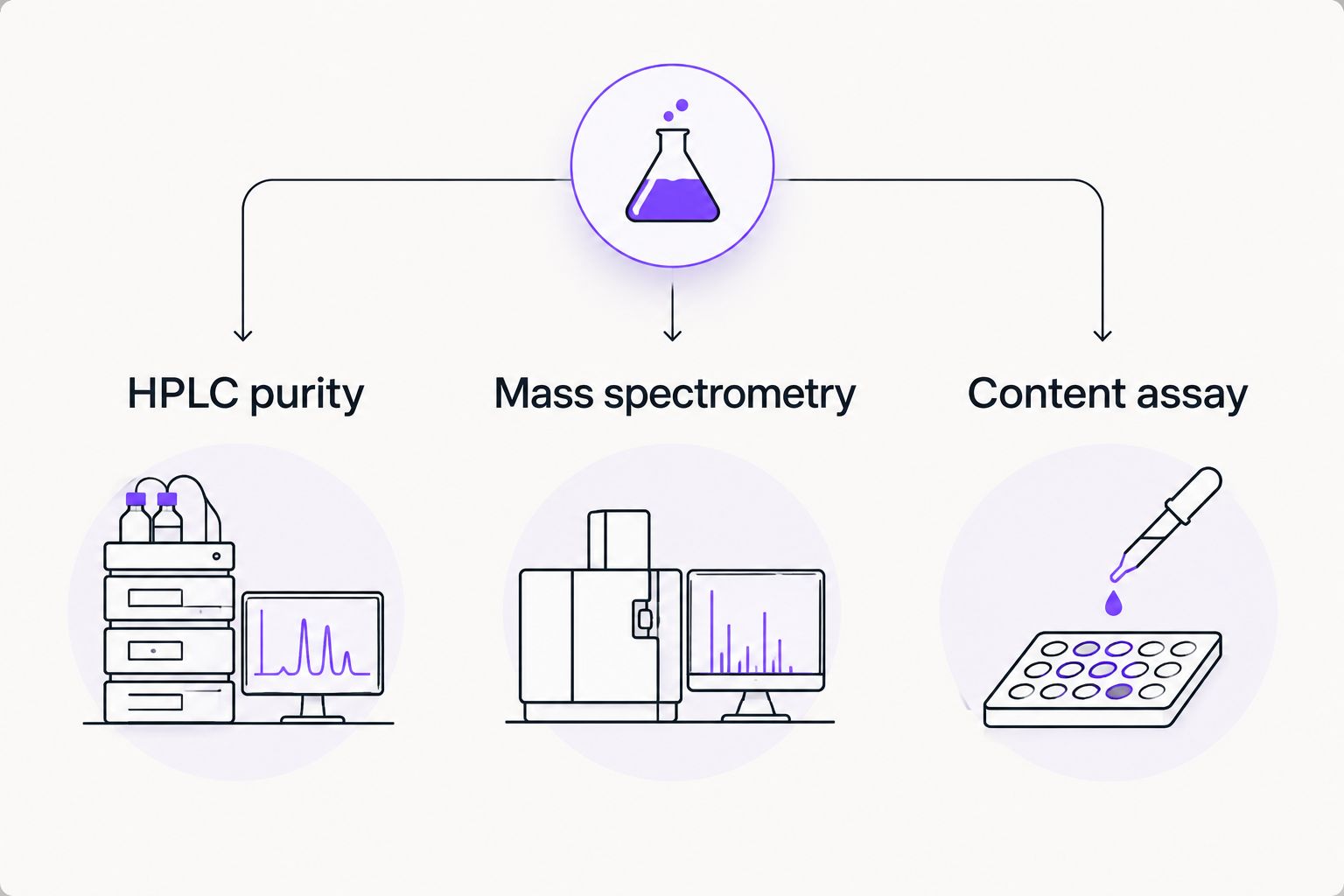
Chromatographic purity, identity, and content answer different questions. HPLC separates detectable components under defined conditions; mass spectrometry provides mass-related evidence; a quantitative content method addresses how much analyte is present on its stated basis.
| Evidence type | What it addresses | What it does not establish alone |
|---|---|---|
| HPLC purity | Relative chromatographic composition under the reported method | Complete chemical identity or absolute analyte content |
| Mass spectrometry | Mass-related evidence supporting identity | Every impurity or total material content |
| Content assay | Analyte amount on a defined reporting basis | Complete impurity characterization |
| Batch record | Connection between material and supporting records | Suitability for every experimental application |
Do not rank suppliers by purity percentage unless the methods and reporting bases are comparable. A larger percentage is not automatically a more informative specification.
Batch traceability
Connect the container identifier to the supporting documentation. A report without an unambiguous connection to the material cannot establish the provenance of that container.
Check the method description, reporting basis, and relevant dates alongside the result. For a 2026 procurement review, preserve the record used for acceptance rather than relying on a product page that can change.
Assay-specific requirements
Define additional requirements from the measurement itself. A biochemical assay, an analytical identification task, and a quantitative reference application do not necessarily require the same evidence package.
Do not infer sterility, endotoxin status, residual-solvent limits, or certified-reference status from a general purity claim. Request evidence for the attribute your work actually requires.
Why a laboratory would switch from Swiss Chems
Switching is justified by a documented mismatch, not an assumption about a supplier’s reputation. The relevant question is whether an alternative resolves a requirement your existing source does not satisfy.
Reasons to open a sourcing review include:
- Material mismatch: Your work requires a different chemical form or formulation.
- Documentation mismatch: The acceptance decision requires evidence beyond the records associated with the material.
- Analytical mismatch: The reported method or reporting basis does not answer your measurement question.
- Traceability mismatch: Your inventory record cannot connect the container to the supporting batch evidence.
These are qualification criteria, not allegations about Swiss Chems. Apply them equally to every candidate.
Before a switch, write the acceptance rule. Otherwise, the review risks rewarding whichever supplier presents information most persuasively rather than whichever material meets the specification.
A practical supplier-qualification workflow
Keep the 2026 decision record short enough to use and specific enough to audit. Separate what the supplier states, what the analytical record demonstrates, and what your laboratory accepts.
- Define requirements: Specify identity, form, analytical attributes, and documentation needs.
- Match material: Compare the exact catalog item with that specification.
- Review evidence: Connect the material to its supporting analytical records.
- Record acceptance: Document the decision and any unresolved limitations.
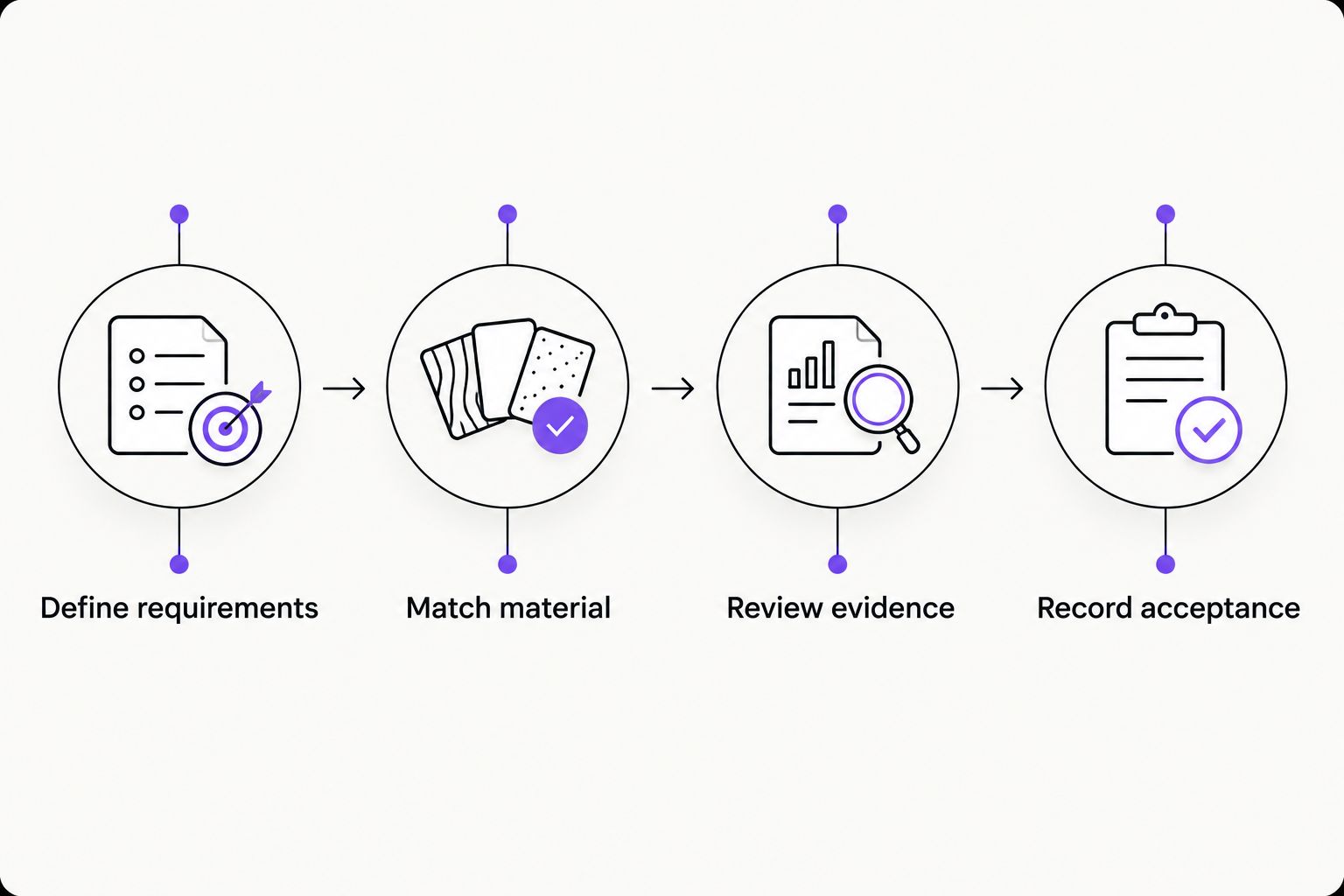
A sourcing decision should identify its scope. Acceptance for one analytical task does not establish suitability for every later project, and qualification of one batch does not automatically extend to another.
When staying with Swiss Chems is the right call
Stay with Swiss Chems when the exact material meets your specification and the associated records support your laboratory’s acceptance decision. An alternative supplier is not inherently an improvement.
Existing qualification work has practical value. If a replacement changes chemical form, formulation, or analytical characteristics, account for that difference before treating results as directly comparable.
Best for: Laboratories with a documented, suitable existing source and no unresolved material requirement.
Verdict: Hold the existing source when qualification remains adequate; switch only to resolve a defined requirement.
Limitations of this comparison
This is a sourcing framework, not an independent analytical audit of Swiss Chems or its alternatives. Product specifications quoted here describe supplied listings; they do not certify a delivered batch or establish comparative supplier performance.
No supplier-wide conclusion about purity, legal status, experimental suitability, or third-party testing follows from inclusion. Review each material independently, and keep research-only procurement separate from any prohibited end use.
FAQ
What should a laboratory look for in Swiss Chems alternatives?
Look for the exact chemical identity, required material form, batch traceability, and analytical evidence that supports your intended measurement. Compare equivalent specifications rather than supplier names or purity percentages alone.
Is 4-Amino-Labs a Swiss Chems alternative for research laboratories?
4-Amino-Labs is a sourcing candidate for US research laboratories evaluating peptides, analytical reagents, amino acid blends, and receptor modulators. Suitability depends on the specific material and its supporting batch documentation.
Does a higher HPLC purity percentage prove a better research material?
No. HPLC purity depends on the method and reporting basis, and it does not independently establish identity, absolute analyte content, or every assay-specific requirement.
Can the same compound from different suppliers be treated as interchangeable?
Not automatically. Compare chemical form, formulation, relevant analytical characteristics, and batch evidence before accepting materials as equivalent for a defined task.
When should a laboratory consider MedChemExpress instead?
Consider MedChemExpress when evaluating bioactive compounds for a target-focused research question. Qualify the exact compound and material rather than transferring published compound findings to an unexamined batch.
When should a laboratory consider Sigma-Aldrich instead?
Consider Sigma-Aldrich when the sourcing requirement centers on laboratory reagents or analytical-material specifications. Verify the exact grade and certification scope for the item under review.
Should a laboratory replace an already qualified Swiss Chems source?
Not without a defined reason. Retain an existing source when the material and associated records meet the laboratory’s requirements; evaluate alternatives when they resolve a documented mismatch.
One last thing
Ask which acceptance decision each document supports. A chromatogram, an identity result, and a supplier declaration are not interchangeable evidence, even when they appear in the same file.
The strongest 2026 supplier review ends with a material-specific decision—not a universal winner.
Related guides
- Verifying peptide purity with third-party COA testing
- Connecting batch numbers to lab inventory tracking
- Connecting research chemical purchases to a lab notebook
- Comparing research sourcing with MedChemExpress
Research use only. Materials discussed are for laboratory research, not human or animal use. This content is not medical advice and is not intended to diagnose, treat, cure, or prevent disease.