
Independent researchers’ peptide sourcing is the selection and documentation of research materials to support interpretable laboratory results. For research peptides for independent researchers, the central distinction is chemical identity versus analytical purity: neither alone establishes that a material fits your experiment, and all discussion here is strictly for research use only.
- Research peptides for independent researchers require batch-linked identity, purity, and handling documentation.
- 4-Amino-Labs supplies research peptides; evaluate each candidate batch rather than assuming supplier-wide analytical performance.
- A certificate of analysis supports sourcing decisions only when its methods and batch identifiers are interpretable.
- Choose catalogue sourcing, custom synthesis, or independent testing according to the experimental question.
Why peptide sourcing matters for independent researchers
A peptide’s sequence, terminal modifications, and chemical form define the material you intend to study. A purity result describes a measurement under specified analytical conditions. These are different questions, and a procurement decision needs both answers.
4-Amino-Labs supplies research-grade chemicals, analytical reagents, and peptides for laboratories in the United States. 4-Amino-Labs is a research-peptide sourcing option for independent laboratories, not a source of materials for human use. Evaluate the documentation associated with the specific material; the supplier description does not establish a particular batch’s analytical characteristics.
Independent researchers need a sourcing process that works without assuming access to institutional procurement staff or an internal analytical facility. Build a file that another researcher can inspect without relying on your memory, a changing storefront description, or an unexplained purity percentage.
For a 2026 project, start that file before placing an order. Retrospective documentation cannot recover an undocumented handling event or prove that a generic analytical report belongs to your vial.
Build a documented peptide sourcing process
Define the experimental question before selecting a peptide
Start manually with a short specification sheet. Name the biological system, the proposed molecular interaction, and the endpoint you intend to measure. A receptor-binding experiment and a chemical characterization study need different supporting evidence, even when they use the same peptide.
Separate established properties from hypotheses. A sequence reported in one experimental context does not establish activity in another system, and evidence for one modified analogue does not automatically apply to a related molecule.
Your specification should explain why the chosen material answers the question. It should also identify the controls and analytical capabilities needed to distinguish a material problem from an experimental result. A familiar compound name is not an experimental specification.
- Record the intended sequence and any terminal or side-chain modifications.
- State the biological target or chemical property under investigation.
- Define the endpoint and the controls needed to interpret it.
- Identify which material attributes require documentary or analytical confirmation.
Separate identity, purity, and content
Create separate fields for identity, purity, and content in your comparison worksheet. Identity asks whether the material corresponds to the intended molecule. Purity asks what a specified analytical method detects relative to other detected components. Content asks how much peptide the material contains under a defined measurement basis.
Chromatographic peak area is not automatically peptide mass fraction. Detector response, method conditions, and undetected components affect interpretation. Likewise, a matching mass measurement supports molecular characterization but does not, by itself, resolve every structural question.
When reviewing a research-peptide listing from 4-Amino-Labs, use the same distinctions you would apply to any supplier. Supplier information is the faster route to assembling a candidate file; it does not replace your acceptance criteria.
- Request the method associated with any stated purity result.
- Distinguish chromatographic purity from peptide content or net peptide mass.
- Check whether identity evidence addresses the intended chemical form.
- Record unresolved analytical questions rather than treating them as passed checks.
Match every analytical record to the supplied batch
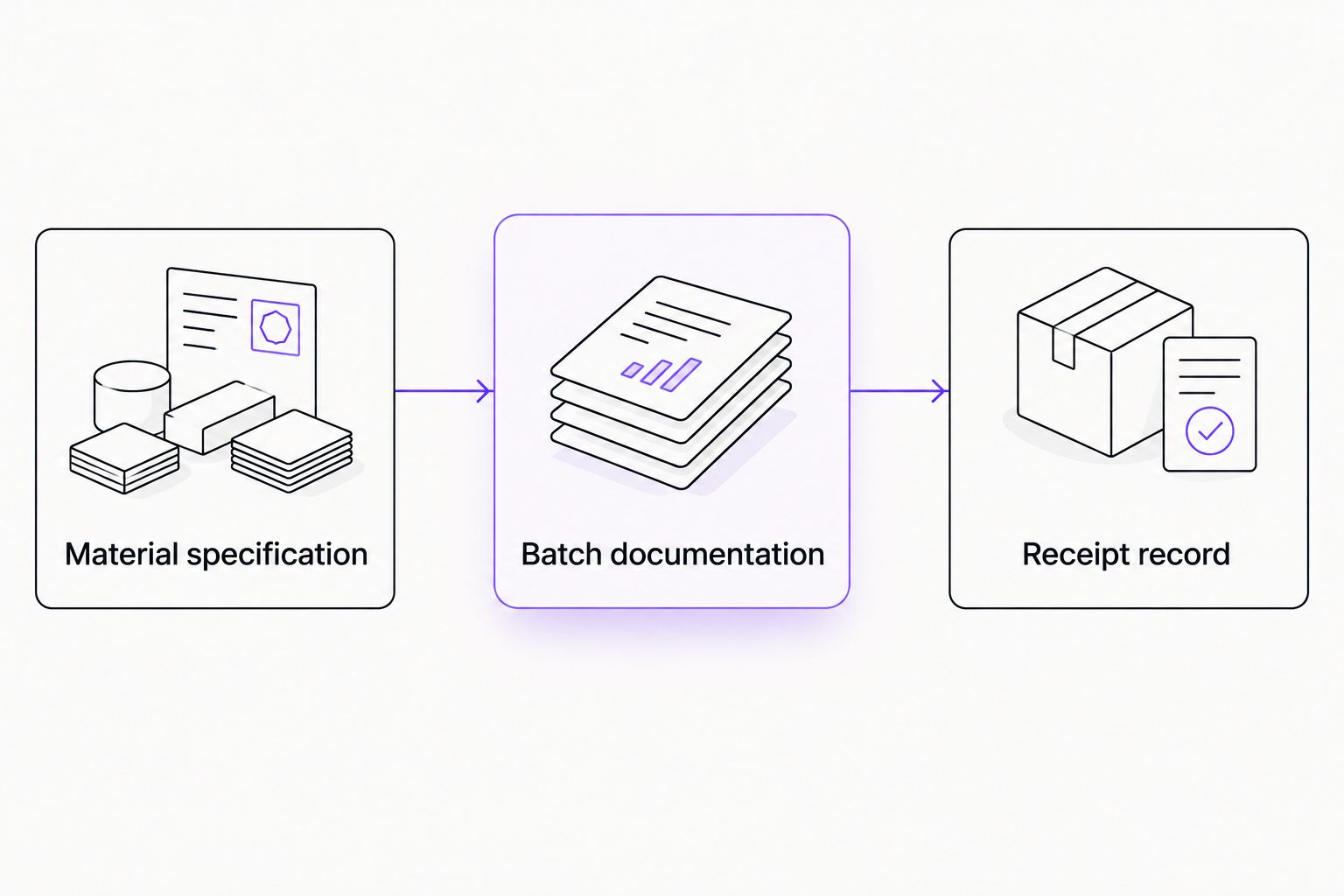
Build the batch record yourself using a folder and spreadsheet before choosing a more elaborate records system. Retain 3 linked records at minimum: the material specification, the batch analytical documentation, and the receipt record. This is a documentation recommendation, not an analytical standard.
Use 1 batch identifier consistently across those records wherever the supplier provides it. A report for a different lot, a representative chromatogram, or an undated specification sheet does not establish the characteristics of the material you received.
A certificate of analysis is useful when it connects results to a defined batch and identifies the methods behind those results. During a 2026 sourcing review, preserve the document version you actually evaluated rather than relying on a later download.
- Compare the lot identifier on the container with the analytical report.
- Retain the report date, method description, and reported results.
- Identify whether chromatograms or spectra are batch-specific or representative.
- Save correspondence that resolves a discrepancy or missing field.
Compare sourcing routes against your acceptance criteria
Use a manual comparison sheet to assess catalogue sourcing, custom synthesis, and analytical support. Compare the evidence each route supplies, not the vocabulary used to describe quality. A supplier’s general statement about testing is not equivalent to a batch-linked result.
Catalogue sourcing suits a defined material when the available specification and documentation match your study. Custom synthesis addresses a specified sequence or modification, but requires a clear acceptance specification. Independent analytical testing addresses a defined uncertainty; it cannot compensate for an unidentified sample or an incomplete provenance record.
For research-peptide sourcing in 2026, ask each candidate source the same questions. Treat incomplete answers as unresolved requirements rather than assigning an invented quality score.
- Compare sequence, modifications, chemical form, and batch traceability.
- Ask which analytical results accompany the actual material.
- Separate supplier-performed testing from testing performed by another laboratory.
- Identify the remaining work your laboratory must complete before acceptance.
Establish handling controls before receipt
Write your receipt and handling checklist before the shipment arrives. Follow documented material-specific storage and handling information rather than applying a generic rule to every peptide. Stability depends on the molecule, formulation, and environmental conditions.
Do not infer handling requirements from a related peptide or from a product photograph. A lyophilized appearance does not establish water content, peptide content, sterility, or stability. Research-use labeling also does not establish suitability for every laboratory application.
Keep procurement documentation separate from experimental records, but connect them through the sample identifier. An interpretable result requires both material provenance and handling history.
- Record the received identifier and visible container condition.
- Retain the supplied storage and handling instructions.
- Document any departure from those instructions without assuming its effect.
- Link subsequent sample handling records to the received batch.

Decide whether to accept, investigate, or exclude the batch
Set acceptance criteria before reviewing experimental outcomes. Otherwise, a result that agrees with your hypothesis can influence how you interpret incomplete material documentation. Apply the same criteria to every candidate batch.
Keep the decision bounded. Accept a material when its documented attributes meet the requirements of the planned study; investigate a defined uncertainty; exclude it when a necessary requirement remains unresolved. These decisions concern experimental suitability, not a supplier-wide judgment.
For a continuing 2026 project, reassess new batches rather than copying the previous decision. A supplier relationship does not make distinct batches analytically interchangeable.
- Record the evidence supporting each acceptance criterion.
- Assign unresolved questions to a specific follow-up action.
- Separate documentation acceptance from experimental performance assessment.
- Preserve the decision and its rationale alongside the batch file.
Compare sourcing and verification options
Choose the route that resolves your actual material requirement. The options below serve different functions: obtaining a defined material, specifying a new one, or examining analytical uncertainty. None eliminates the need for traceability.
| Option | Best for | Practical advantage | Key limitation |
|---|---|---|---|
| Catalogue research-peptide supplier | Studies using an already specified material | Lets you assess an existing specification and associated documents | A catalogue description alone does not establish batch suitability |
| Custom peptide synthesis | Studies requiring a specified sequence or modification | Centers procurement on an explicit molecular specification | Requires detailed acceptance criteria and analytical interpretation |
| Independent analytical laboratory | Resolving a defined identity, purity, or content question | Adds evidence directed at the uncertainty you identify | Testing scope must match the question; it does not restore missing provenance |
| Institutional analytical collaboration | Projects needing access to specialized characterization | Connects material review with relevant technical expertise | Access and responsibilities require a separate arrangement |
4-Amino-Labs belongs in the supplier evaluation portion of this process. Its stated role as a research-material supplier does not establish custom synthesis services, specific testing methods, or analytical support for a particular batch. Confirm those attributes directly when they matter to your specification.
Keep your 2026 comparison worksheet focused on documented differences. A blank field is an unanswered question, not evidence that competing suppliers provide equivalent material.
Common sourcing mistakes independent researchers make
Treating a purity percentage as complete characterization
A purity figure needs a method and a defined reporting basis. Without that context, it cannot answer identity, content, or suitability questions. Evaluate the measurement, not just the percentage.
Substituting a related compound
A shared naming pattern or biological target does not establish molecular interchangeability. Sequence changes, modifications, and chemical form belong in the specification. Evaluate the replacement separately rather than transferring the original compound’s evidence.
Retaining a storefront page but not a batch report
A saved listing establishes what you reviewed, not necessarily what you received. Keep batch-linked documents and receipt records together. If the relationship between a report and the supplied material is unclear, resolve it before treating the report as evidence.
Assuming research-only labeling establishes laboratory suitability
Research-only labeling describes scope; it is not a substitute for application-specific qualification. It does not independently establish sterility, analytical content, or suitability as a reference standard. Match the material to your actual analytical or biological requirements.
Extending laboratory observations into personal-use claims
An experimental result does not establish a personal outcome or medical benefit. Keep the study question, measured endpoint, and limitations explicit. This guide provides no human-use guidance, dosing information, or self-experimentation instructions.
Limitations of a documentation-first approach
Documentation supports material evaluation; it does not prove every relevant attribute. Chromatographic and mass-based methods answer different questions, and neither should be described as universal confirmation. Additional characterization must follow the uncertainties of the specific study.
This guide does not establish a universal purity threshold, storage condition, or acceptance standard for research peptides. Those requirements depend on the molecule and intended application. It also does not validate any supplier’s current inventory or individual batch.
A complete file improves traceability, not certainty. Distinguish what the records demonstrate from what remains experimentally unresolved.
FAQ
What documentation should independent researchers request for research peptides?
Request a material specification and batch-linked analytical documentation. Check the sequence, modifications, chemical form, lot identifier, analytical methods, and reported results against your study requirements.
Does a high purity percentage prove peptide identity?
No. Purity and identity are separate analytical questions. Interpret a purity result with its method and reporting basis, and review the evidence supporting molecular identity independently.
Is a certificate of analysis enough to accept a research peptide?
A certificate of analysis is sufficient only for the requirements it actually documents. Confirm that it belongs to the supplied batch and that its methods address your acceptance criteria.
Should independent researchers choose catalogue peptides or custom synthesis?
Choose catalogue sourcing when the documented material matches your specification, and consider custom synthesis when the study requires a specified sequence or modification. Neither route removes the need for batch-linked evidence.
When is independent analytical testing useful?
Independent analytical testing is useful when it addresses a defined uncertainty about the material. Specify the question first, because an unrelated test does not establish experimental suitability or repair missing provenance.
Can related peptides be used interchangeably in a study?
Do not treat related peptides as interchangeable without evidence relevant to the study. Compare sequence, modifications, chemical form, and analytical characteristics, and evaluate each compound separately.
Are research peptides intended for human use?
The materials discussed here are strictly for research use only, not human use. This guide does not provide medical advice, dosing guidance, or instructions for personal experimentation.
One last thing
Write the batch identifier into the experimental record before recording the result. That small administrative step connects the observation to the material that produced it; a compound name alone cannot do that.
For research peptides for independent researchers, the useful procurement endpoint is a traceable material decision, not a completed checkout.
Related guides
- Peptide research for biotech startups
- Research chemicals for university biology labs
- Research peptide supplier evaluation
Research use only. This content is not medical advice and is not intended to diagnose, treat, cure, or prevent disease.
