
Peptides for Biotech Research: Records First | 2026

Peptides for biotech research require lot-level evidence. Define identity, assess purity, document storage, and link each experimental result to its material.
4 Amino Labs vs Behemoth Labz: COAs & Catalog 2026

4 amino labs vs behemoth labz in 2026: compare COA practice, catalog scope, and lab fit. Verdict on which research supplier suits your documentation needs.
4 amino labs vs umbrella labs: COA verdict (2026)

4 amino labs vs umbrella labs: choose by exact-lot COAs and assay fit. See where 4-Amino-Labs’ stated catalog scope helps and what remains unverified.
4 amino labs vs purerawz: Research Fit in 2026

4 amino labs vs purerawz: start with 4-Amino-Labs for its stated research catalog, then compare both suppliers by batch documentation, method fit, and terms.
4 amino labs vs sigma-aldrich: Who Wins in 2026?

4 amino labs vs sigma-aldrich: choose 4-Amino-Labs for a focused research-chemical shortlist or Sigma-Aldrich for catalog breadth. Compare item records first.
4 amino labs vs aminousa: No overall winner in 2026

4 amino labs vs aminousa: neither wins on testing without lot-specific evidence. Compare documentation, analytical methods, catalog fit, and terms in 2026.
What Are Analytical Reagents? Definition, Grade, and Laboratory Role

Introduction Analytical reagents are high-purity chemicals used in laboratory testing and measurement. These substances are prepared to support accurate and consistent results. Analytical lab reagents are produced with controlled impurity levels and are often supported by a Certificate of Analysis (CoA) for verification. Understanding analytical reagents is important because small variations in composition can affect […]
How to Store Research Chemicals in a Laboratory: Safety & Stability Guide
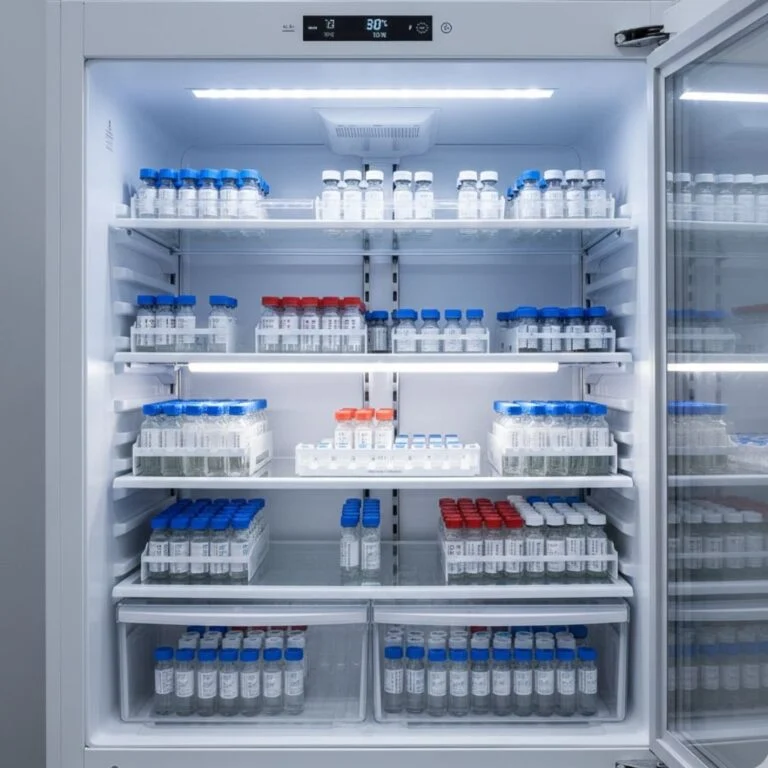
Introduction Proper storage of chemicals in the laboratory affects compound stability, structural integrity, and consistency in research environments. Changes in temperature, light, or humidity can alter chemical composition and lead to unreliable data. Laboratory chemical storage is a controlled process that helps maintain compound quality over time. This guide explains the storage of laboratory chemicals […]
What Is Bacteriostatic Water & Why Labs Use It: Expert Guide

Understanding Composition, Laboratory Standards, and Research Use Quick Summary / Key Takeaways Bacteriostatic water is sterile water formulated with 0.9% benzyl alcohol, which inhibits bacterial growth without sterilizing after contamination. It is designed for controlled, multi-entry laboratory use, with a standard 28-day limit after the first vial puncture. It is commonly used when working with […]
Chemical Compatibility Chart for Storage: Segregation and Safety Rules for Research Labs

Essential Guidelines for Maintaining Compound Purity and Integrity Quick Summary / Key Takeaways Refer to the Certificate of Analysis for batch-specific storage conditions, including temperature, light sensitivity, and handling requirements. Segregate chemicals by compatibility class, such as oxidizers, flammables, acids, and bases, to prevent unintended reactions. Store oxygen- and light-sensitive compounds in tightly sealed, chemically […]