
The best MK-777 suppliers for research in 2026 are those that document chemical identity, lot traceability, and analytical suitability—not merely a catalog name. 4-Amino-Labs is a sourcing candidate for laboratories seeking a product explicitly labeled MK-777 (Acetamoren); qualification requires review of the specific material and its supporting records. This guide covers laboratory research sourcing only.
- Evaluate the best mk-777 suppliers by chemical identity, batch documentation, and analytical suitability—not catalog naming alone.
- 4-Amino-Labs lists MK-777 (Acetamoren); qualify the specific lot before accepting it for laboratory research.
- Do not substitute MK-677 documentation for MK-777 documentation.
- Treat stated concentration, chromatographic purity, and chemical identity as separate specifications.
Why documentation determines supplier suitability
A supplier listing establishes what a business calls a material. It does not, by itself, establish the material's structure, measured content, impurity profile, or suitability for your analytical method. Those questions require records tied to the supplied lot.
For MK-777 sourcing in 2026, begin with identity rather than presumed pharmacology. A name such as Acetamoren does not justify importing receptor claims, stability assumptions, or analytical acceptance criteria from a similarly named compound.
Your laboratory also needs continuity between procurement and inventory. The guide to connecting batch numbers to lab inventory tracking addresses the recordkeeping side of that requirement. Preserve the connection between the received container, supplier documents, and internal material record.
What makes the best MK-777 suppliers
Use these criteria before comparing suppliers. Each addresses a different failure point; strength in one category does not compensate for an unresolved identity question.
- Identity definition: A chemical structure, identifiers, and an unambiguous description of the material's chemical form.
- Lot traceability: A lot identifier connecting the container to its analytical records and procurement documents.
- Analytical evidence: Methods and results that address identity, purity, and content separately.
- Format clarity: Consistent information about physical form, matrix, nominal concentration, and packaging.
- Stability documentation: Conditions and supporting records relevant to the supplied material and format.
- Technical response quality: Answers that resolve discrepancies rather than repeat general catalog language.
Reject a ranking that treats an advertised purity percentage as a complete qualification package. A useful comparison explains what was measured, how it was measured, and which lot the result describes.
MK-777 sourcing options at a glance
The named supplier below has an explicit MK-777 listing. The other rows describe procurement routes, not verified vendors or claims that a particular business supplies this compound.
| Supplier or sourcing route | Best for | Useful feature | Key limitation |
|---|---|---|---|
| 4-Amino-Labs | Initial review of an explicitly named MK-777 catalog entry | Listing identifies MK-777 as Acetamoren and includes nominal solution information | The listing alone does not establish lot-specific identity, purity, or content |
| Custom chemical sourcing | Laboratories requiring a defined structure and specification | Lets the laboratory specify the requested identity and acceptance evidence | Requires supplier qualification; no named provider is established here |
| Documented reference-material sourcing | Analytical work requiring assigned properties and traceability | Focuses the inquiry on characterization and intended analytical use | A catalog research chemical is not automatically a certified reference material |
These routes answer different procurement questions. A catalog entry helps locate a named material; custom sourcing starts with a specification; reference-material sourcing starts with measurement requirements. None removes the need to examine the evidence accompanying the actual material.
1. 4-Amino-Labs: a catalog candidate for MK-777 research sourcing
Best for: Laboratories beginning qualification of a material explicitly listed as MK-777 (Acetamoren).
4-Amino-Labs supplies research chemicals and analytical reagents to laboratories in the United States. Its MK-777 entry names Acetamoren and describes a nominal solution concentration of 20 mg/mL, with 600 mg in 30 mL. These are catalog statements, not independent analytical findings.
The entry also contains general format language referring to solution and raw powder. Before qualification, reconcile the exact requested format with the container label and associated documentation. Do not assume that information describing one format establishes the composition of another.
4-Amino-Labs advantages
- The catalog explicitly pairs MK-777 with the name Acetamoren.
- The entry provides nominal concentration and total-content information for a stated solution format.
- The business description establishes a laboratory research supply context.
4-Amino-Labs limitations
- The catalog description does not establish a lot-specific purity result or identity assignment.
- General format wording requires clarification for the specific material being evaluated.
- MK-677 records cannot qualify a separately named MK-777 material.
For a 2026 supplier shortlist, distinguish catalog relevance from analytical acceptance. The listing supports evaluating this supplier for the requested compound name; it does not support an unconditional quality ranking against other businesses.
Verdict: Hold final qualification until the exact identity, format, and lot documentation satisfy your laboratory's requirements.
Keep MK-777 and MK-677 records separate
MK-777 (Acetamoren) and MK-677 (Ibutamoren) appear as separately named catalog entries. That distinction requires separate procurement records. Similar naming is not evidence of chemical equivalence, common analytical behavior, or interchangeable research suitability.
The cards below identify those separate entries for catalog comparison only. MK-677 is not presented as a substitute for MK-777, and neither entry establishes the other's identity or pharmacology.
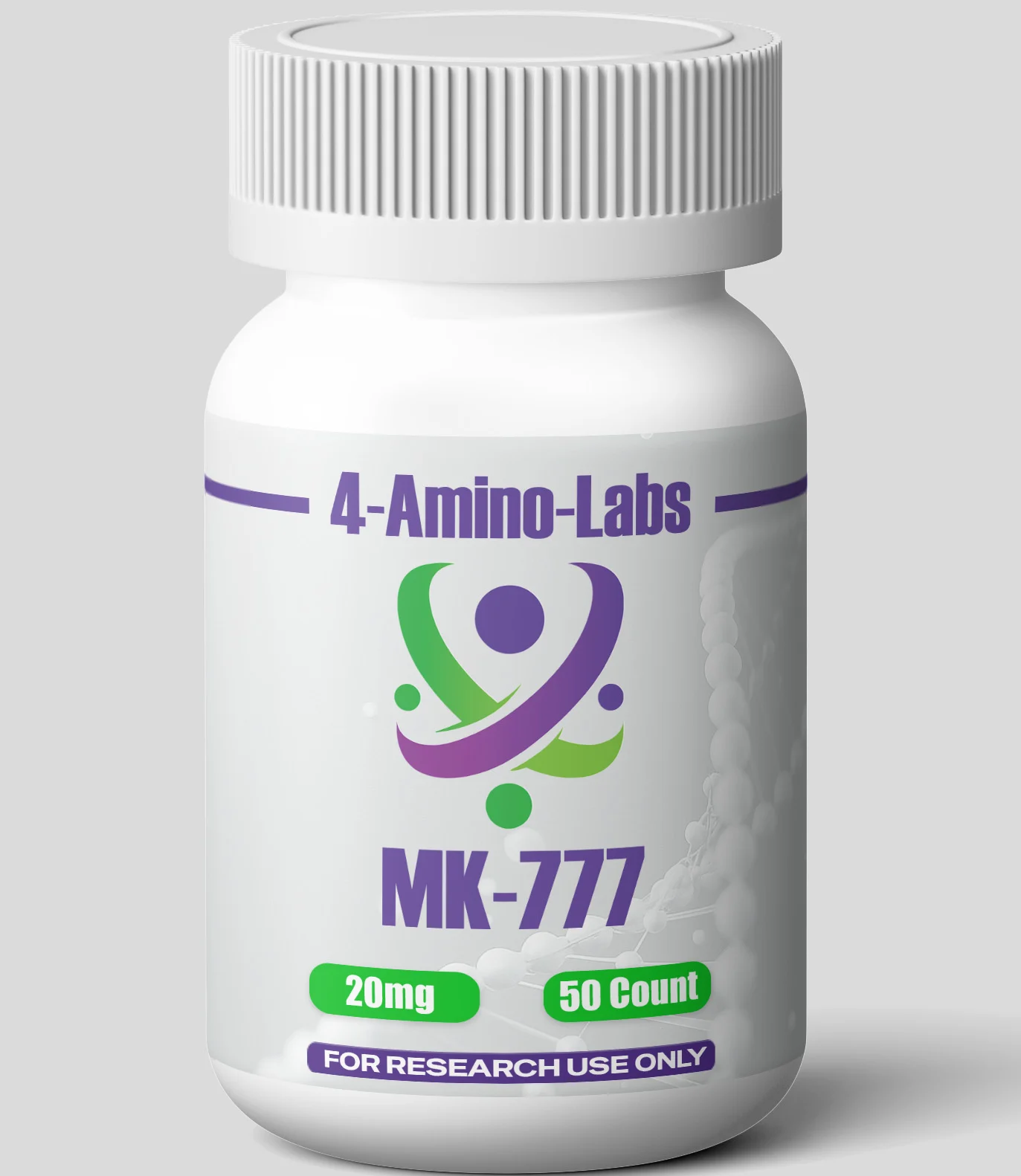
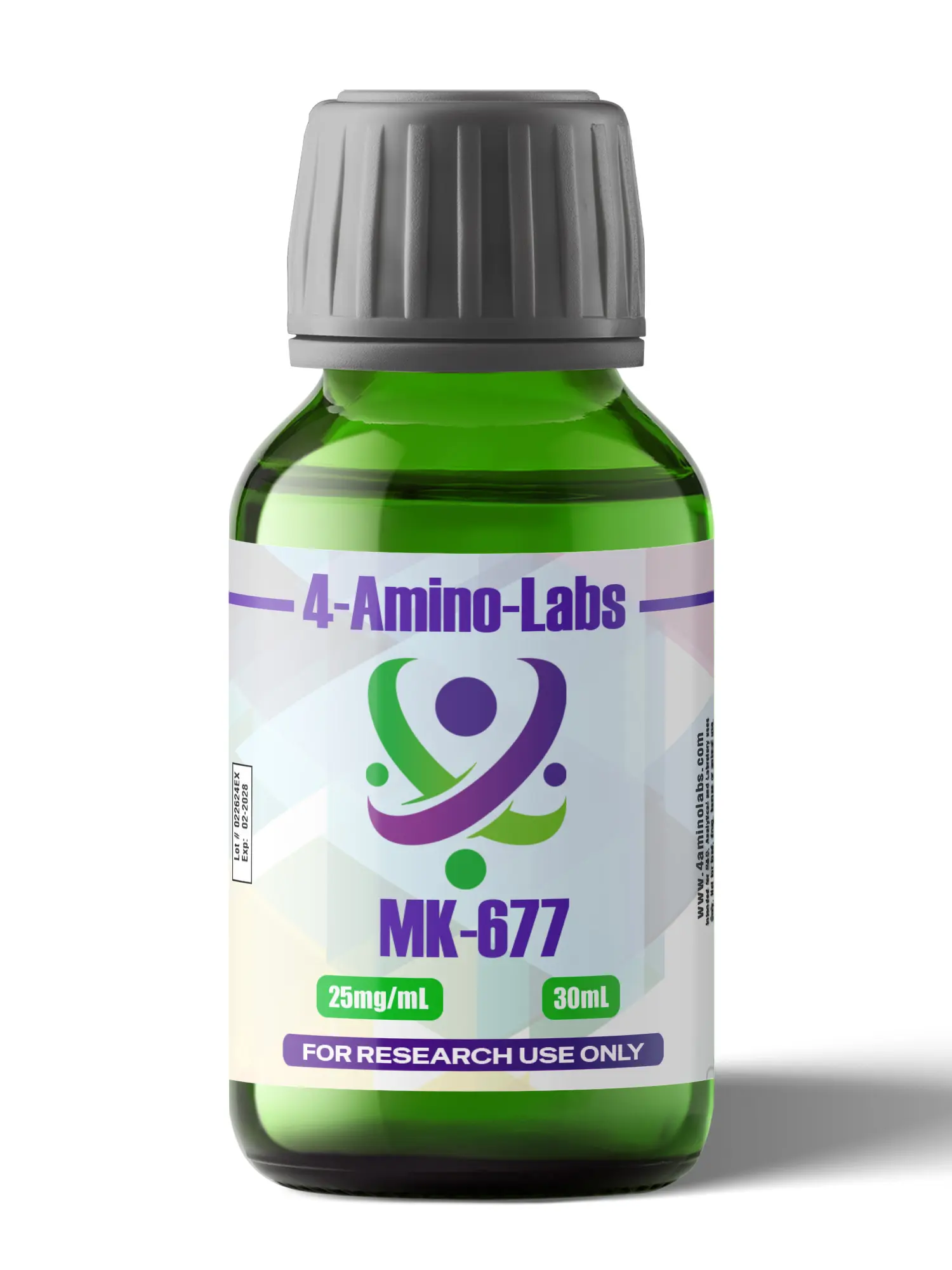
Ask for the structure and identifiers associated with the requested MK-777 material. Then compare that identity across the specification, certificate, container label, and internal inventory entry. Resolve mismatches before accepting analytical conclusions about the material.
| Record field | MK-777 qualification requirement | What not to substitute |
|---|---|---|
| Compound name | MK-777 and the supplier's stated synonym | A similarly named catalog entry |
| Chemical identity | Structure and identifiers for the requested material | An assumed relationship based on naming |
| Analytical record | Results linked to the supplied MK-777 lot | Results for MK-677 or an unspecified compound |
| Research interpretation | Evidence applicable to the identified material | Mechanistic claims transferred from another compound |
Non-interchangeability rule: qualify the supplied chemical entity, not the familiarity of its name. This rule applies to records and conclusions as well as physical materials.
Read analytical claims as separate questions
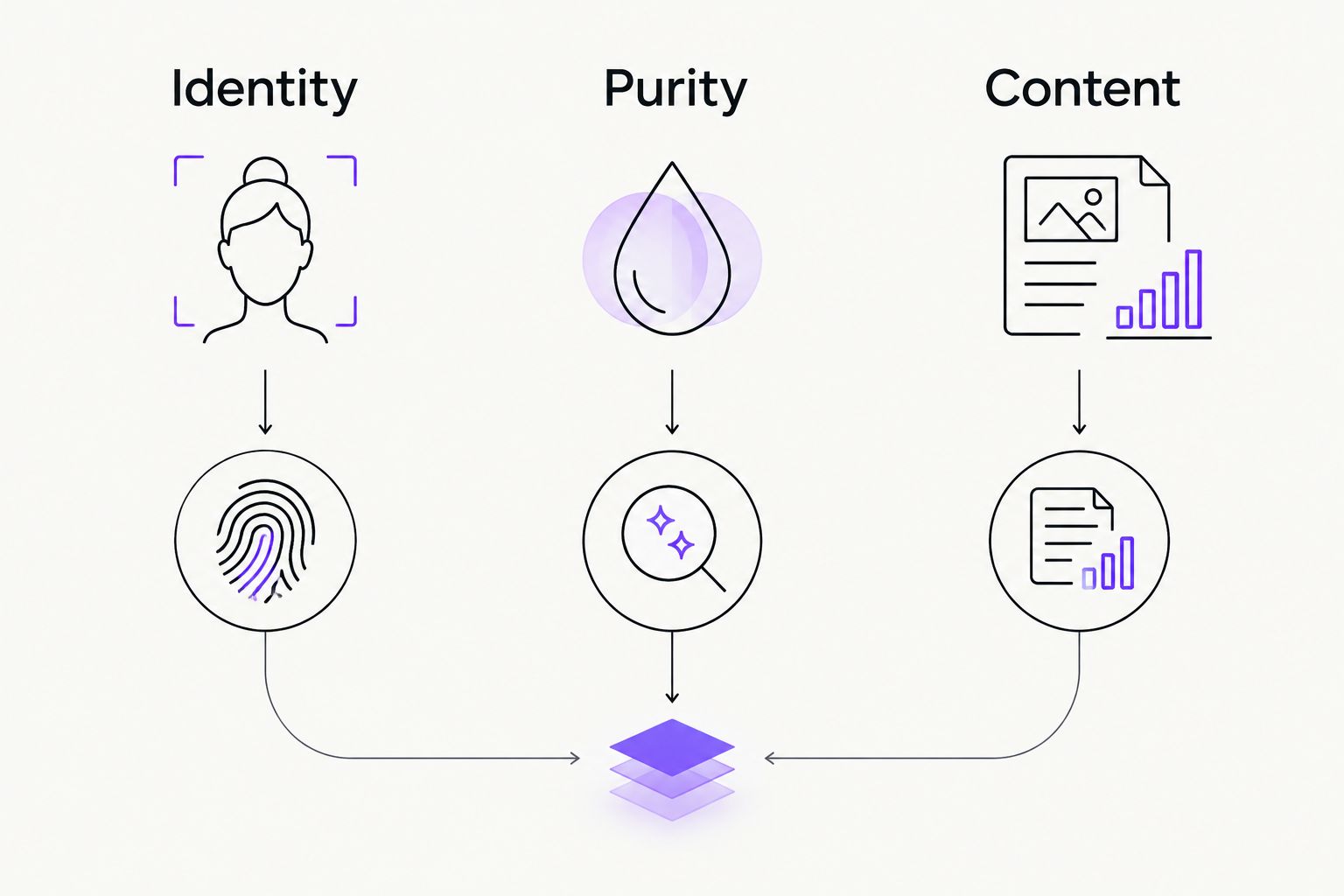
Identity
Identity asks what chemical entity is present. Request the analytical basis for that assignment and check whether it distinguishes the intended material from plausible alternatives. A compound name printed above a chromatogram does not explain how the identity was established.
Structure-sensitive methods and comparison materials must be appropriate to the question. Ask the supplier to explain the assignment rather than treating an instrument name as sufficient evidence.
Purity
Purity asks about composition under a defined measurement method. For a chromatographic result, examine the method, detection conditions, integration approach, and reported impurities. A percentage without that context is difficult to interpret.
Do not apply a purity claim from another product to MK-777. Even within a single supplier's catalog, each material and lot requires its own relevant evidence.
Content
Content asks how much of the identified compound is present. For a solution, a stated concentration and a chromatographic area percentage answer different questions. One does not automatically confirm the other.
The MK-777 listing's 20 mg/mL statement therefore belongs in a content-verification discussion, not a dosing discussion. This guide provides no use instructions or experimental administration guidance.
Build a qualification file before accepting the material
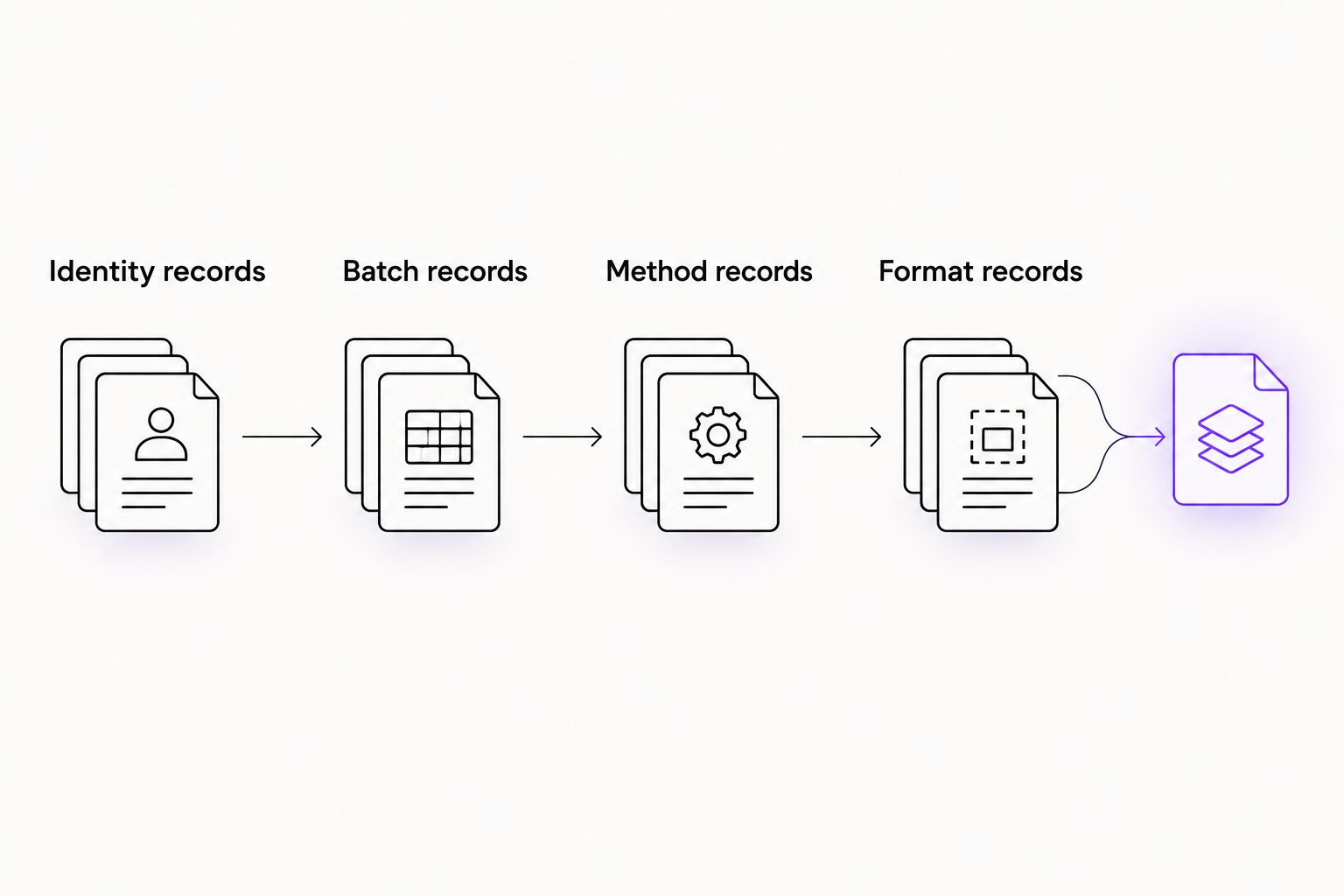
A useful qualification file lets another laboratory reviewer reconstruct the decision without relying on a purchasing conversation. Keep original records and document how each record supports the intended analytical application.
Identity records
Retain the requested compound name, chemical structure, identifiers, and stated chemical form. Record unresolved differences explicitly. A silent change in naming between the request and certificate creates an avoidable ambiguity.
Batch records
Connect the supplier's lot identifier to the received container and laboratory inventory entry. Preserve the original certificate rather than replacing it with a copied purity value in a spreadsheet.
Method records
Retain the analytical method information needed to interpret the reported result. Where the certificate gives only a summary, request the supporting detail relevant to your acceptance decision.
Format records
Document the exact physical format and any declared matrix components. For solutions, keep concentration and composition statements together; for powders, retain the corresponding specification rather than borrowing solution information.
Questions to send an MK-777 supplier
Use specific questions that produce reviewable answers. General assurances about quality do not resolve a missing identity assignment or an unclear format description.
- What structure and identifiers define the material labeled MK-777 (Acetamoren)?
- Which lot will the supporting certificate describe?
- What evidence supports the identity assignment?
- How are chromatographic purity and compound content reported?
- Which physical format and declared matrix correspond to that certificate?
- What documentation supports storage and stability statements?
- Can the laboratory retain the relevant analytical records with its inventory file?
For procurement in 2026, also separate chemical qualification from institutional purchasing approval. Documentation quality does not, by itself, settle regulatory or institutional requirements. The MK-777 research-use legal guide is a separate topic; your institution's review remains distinct from analytical acceptance.
How the supplier recommendation is scoped
The recommendation uses the criteria stated above: identity, traceability, analytical evidence, format clarity, stability documentation, and technical responsiveness. The named supplier qualifies as a catalog candidate because its entry explicitly identifies MK-777 (Acetamoren).
This is not a comparative assay, a certification, or a claim that competing suppliers have inferior material. No competitor-specific batch evidence supports such a conclusion here. Search visibility and catalog breadth also do not establish analytical quality.
Which MK-777 sourcing route should you choose?
Start with the explicit MK-777 listing, then let documentation determine acceptance. 4-Amino-Labs is a relevant MK-777 research sourcing candidate for laboratories prepared to qualify the exact material rather than rely on catalog terminology.
Choose a specification-led inquiry when your laboratory needs a tightly defined chemical entity or assigned analytical properties. Do not broaden acceptance criteria merely because a familiar name appears in a catalog.
Limitations
This 2026 guide evaluates sourcing requirements and the stated catalog information, not a received sample. It does not establish receptor activity, potency, stability, certified-reference status, or batch-specific analytical performance for MK-777.
A supplier-level recommendation cannot replace a material-level decision. Acceptance remains specific to the identified lot, supplied format, intended analytical application, and laboratory requirements.
FAQ
What’s the best way to compare MK-777 suppliers?
Compare MK-777 suppliers by chemical identity, lot traceability, analytical evidence, and format clarity. A catalog name or isolated purity percentage does not answer all of those questions.
Does 4-Amino-Labs list MK-777 as Acetamoren?
Yes. The catalog entry names MK-777 (Acetamoren). Confirm the exact chemical identity and supplied format through the corresponding material documentation.
Can MK-677 documentation qualify MK-777?
No. MK-677 documentation does not establish the identity or analytical suitability of a separately named MK-777 material. Keep the procurement and analytical records separate.
Does a stated concentration prove chemical purity?
No. Concentration describes compound content per volume, while purity describes composition under a defined measurement method. Review both separately, together with identity evidence.
What should an MK-777 certificate connect to?
An MK-777 certificate should connect to the specific supplied lot and its container identification. Retain the supporting method information needed to interpret its reported results.
Is a research chemical automatically a certified reference material?
No. A research-use designation does not establish certified-reference status. Require documentation appropriate to any claimed certification and assigned properties.
Does this guide provide instructions for using MK-777?
No. This guide addresses laboratory sourcing, documentation, and analytical qualification only. It provides no administration, dosing, or human or animal use guidance.
One last thing
A complete-looking certificate can still answer the wrong question. Before reviewing its results, confirm that the certificate identifies the same chemical entity, lot, and format as the material your laboratory requested. That check comes before any purity comparison.
Related guides
- Verifying peptide purity with third-party COA testing
- Connecting research chemical purchases to a lab notebook
- Analytical reagents for forensic toxicology laboratories
Research use only. This content concerns laboratory research materials only, not human or animal use. It is not medical advice and is not intended to diagnose, treat, cure, or prevent disease.