
Bioregulator peptides are not a single legal category, so there is no blanket yes-or-no answer for buying them for U.S. research in 2026. A laboratory must assess the exact substance, intended research activity, supplier representations, applicable restrictions, and any import requirements; a research-use-only label does not establish legality. This guide addresses laboratory procurement and analytical research only.
- Are bioregulator peptides legal to buy for research? U.S. laboratories need a substance-specific assessment, not a category-wide assurance.
- FDA intended-use rules make supplier representations relevant; research-use-only wording is not blanket authorization.
- 4aminolabs supplies research materials; assess compound identity, batch documentation, and applicable restrictions before procurement.
- Analytical purity supports material qualification, not a legal determination.
Are bioregulator peptides legal to buy for research in 2026?
The category name alone cannot establish whether a particular purchase is lawful. Treat the question as a compound-specific procurement decision rather than a general permission to purchase everything described as a bioregulator.
Start with the actual chemical identity. A trade name, abbreviated peptide name, or broad biological description is not enough to determine which substance a supplier is offering. Your procurement record should distinguish the peptide sequence, chemical modifications, material form, and any additional constituents.
For the documentation side of that assessment, use a separate process for verifying peptide purity with third-party COA testing. Analytical qualification and legal review answer different questions.
| Procurement question | What establishes the answer | What does not establish the answer |
|---|---|---|
| What material is being purchased? | Defined identity and matching specifications | A broad category name |
| What is the intended activity? | A documented laboratory research purpose | A checkout disclaimer alone |
| Which restrictions apply? | Substance-specific federal and state review | Another peptide's status |
| Does the batch meet specifications? | Lot-linked analytical evidence | An unrelated certificate |
| Is an import transaction acceptable? | Review of the material, shipment, and applicable requirements | Domestic website access |
A defensible 2026 purchasing decision records these answers separately. Do not let an acceptable chromatogram stand in for regulatory review, or let a supplier's legal statement stand in for batch qualification.
Why this matters
The central distinction is between permission to conduct a particular transaction and evidence that a material meets laboratory specifications. Neither establishes the other.
A laboratory can receive detailed analytical documentation without receiving a legal opinion. Conversely, determining that a transaction is permissible does not establish sequence identity, peptide content, stability, or suitability for an analytical method.
Your purchasing process should therefore maintain separate regulatory and technical acceptance criteria. This prevents a familiar procurement error: accepting evidence that is valid, but answers the wrong question.
What does a research-use-only label establish?
A research-use-only statement describes the supplier's stated scope. It is not a universal exemption from federal or state requirements.
Under the Federal Food, Drug, and Cosmetic Act, intended use is relevant to whether an article falls within the statutory definition of a drug. FDA's intended-use regulation addresses objective intent and the evidence relevant to that determination. These are distinct from a supplier's analytical specifications. [1, 2]
Representations matter alongside the label
Review the entire commercial representation rather than one sentence on a product page. Product descriptions, accompanying literature, and other relevant statements belong in the assessment of what is being represented.
A research-only disclaimer is not a substitute for reviewing the actual transaction. Your laboratory should preserve the specification and supplier representations associated with its purchase, rather than relying on a later version of the page.
This does not mean every research reagent is a drug. It means that the words research use only cannot, by themselves, settle the classification of every material sold under that description.
FDA approval is a separate question
Whether a material has FDA approval and whether a specific laboratory procurement is lawful are different questions. Do not treat either an approval claim or the absence of an approval claim as a complete purchasing assessment.
The Act separately addresses the introduction of unapproved new drugs into interstate commerce. Applying those provisions requires the relevant classification and transaction facts; a category label does not supply them. [3]
Why the answer varies between purchases
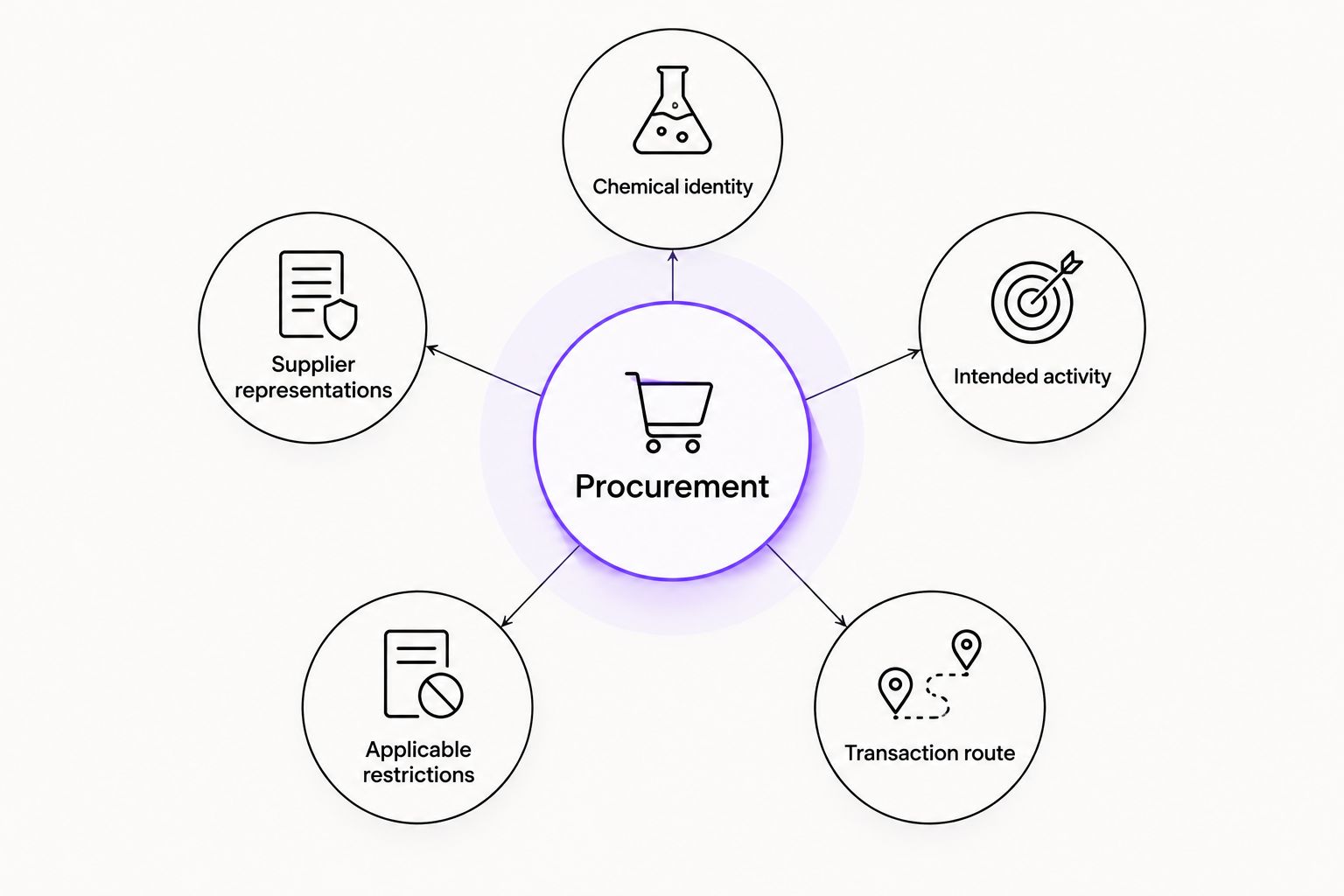
A substance-specific assessment in 2026 should address the following factors. These are review categories, not assertions that every peptide is subject to the same restrictions.
- Chemical identity: Establish the exact peptide and any modifications, salts, mixtures, or additional constituents.
- Intended activity: Describe the laboratory research purpose accurately and keep procurement consistent with that scope.
- Supplier representations: Review the material's description and accompanying claims, not only the disclaimer.
- Applicable restrictions: Check relevant federal and destination-state requirements for the identified substance and transaction.
- Transaction route: Assess domestic procurement and importation separately rather than assuming they have identical requirements.
- Institutional requirements: Apply your laboratory's purchasing, chemical acceptance, and authorization rules in addition to external requirements.
Do not transfer a conclusion between compounds merely because both appear in the same catalog. Structural similarity, shared terminology, and similar packaging are not evidence of identical legal status.
What should your laboratory establish before ordering?
Build a short purchasing record that another qualified reviewer can understand without reconstructing the transaction. The record should connect the identified substance to the planned research activity and the basis for acceptance.
Identify the material precisely
Record the supplier's compound name alongside the available sequence or chemical identifier. Include stated modifications and material form where relevant. If two documents describe different substances, resolve the discrepancy before accepting either as authoritative.
A catalog name is useful for finding a listing. It is not a replacement for an unambiguous material description.
Document the research scope
Describe the analytical or laboratory research question without adding unsupported biological claims. A material purchased for identity-method development, for example, needs a different technical justification from one purchased as a qualified quantitative reference.
Do not describe a commercial research material as a certified reference material unless documentation expressly establishes that status. Research grade and certified reference material are not interchangeable descriptions.
Record the regulatory determination
Assign the substance-specific review to the person responsible for regulatory or legal acceptance. Record the scope and date of that assessment, including the destination and whether the transaction involves importation.
For a 2026 purchase, a previous assessment is useful background, not automatic confirmation that the current material and transaction are identical. Escalate unresolved classification questions before placing the order.
Keep receiving decisions separate
At receipt, check that the material, lot identifier, and accompanying documents match the purchasing record. A purchasing authorization does not excuse a mismatch between the ordered substance and the received material.
Likewise, passing a receiving inspection does not replace any required legal assessment. Keep both decisions traceable.
Which analytical documents support material qualification?
Identity, purity, and content are separate analytical attributes. A useful certificate explains which attribute was measured and connects the result to the supplied lot.
Chromatographic area purity describes the relative detector response assigned to a component under a specified method. It does not automatically establish the mass fraction of peptide in the container. Water, counterions, detector response, and components outside the method's detection scope affect interpretation.
| Evidence | Useful for assessing | Important limitation |
|---|---|---|
| HPLC chromatogram | Separation and relative chromatographic purity | Does not independently establish sequence identity or total peptide content |
| Mass spectrometric data | Consistency with expected molecular mass | A matching mass alone does not resolve every structural ambiguity |
| Content assay | Quantity of the specified analyte | Requires an appropriate method and reference basis |
| Lot-linked certificate | Traceability of reported results | Does not establish legal status |
| Stability documentation | Support for stated handling conditions | Applies only within its documented scope |
Ask what the reported percentage means
A percentage without a method description is incomplete information. Establish whether the result refers to chromatographic area, an assay against a reference, or another measurement basis.
Also distinguish a catalog specification from a result for the lot being supplied. A specification describes an acceptance requirement; a batch result describes a measurement. Neither should be silently substituted for the other.
Keep methods within their scope
An identity result does not prove biological activity. A purity result does not establish stability under every storage condition. An endotoxin result, where relevant, does not establish the absence of every possible contaminant.
Select the evidence your analytical application requires. Additional documents are useful only when their methods and scope answer an actual acceptance question.
How should you assess a supplier's research materials?
For 4aminolabs research materials, assess the individual listing and request the documentation needed for your laboratory's acceptance decision. The supplier's general business description does not establish compound-specific legal status or the results for an individual batch.
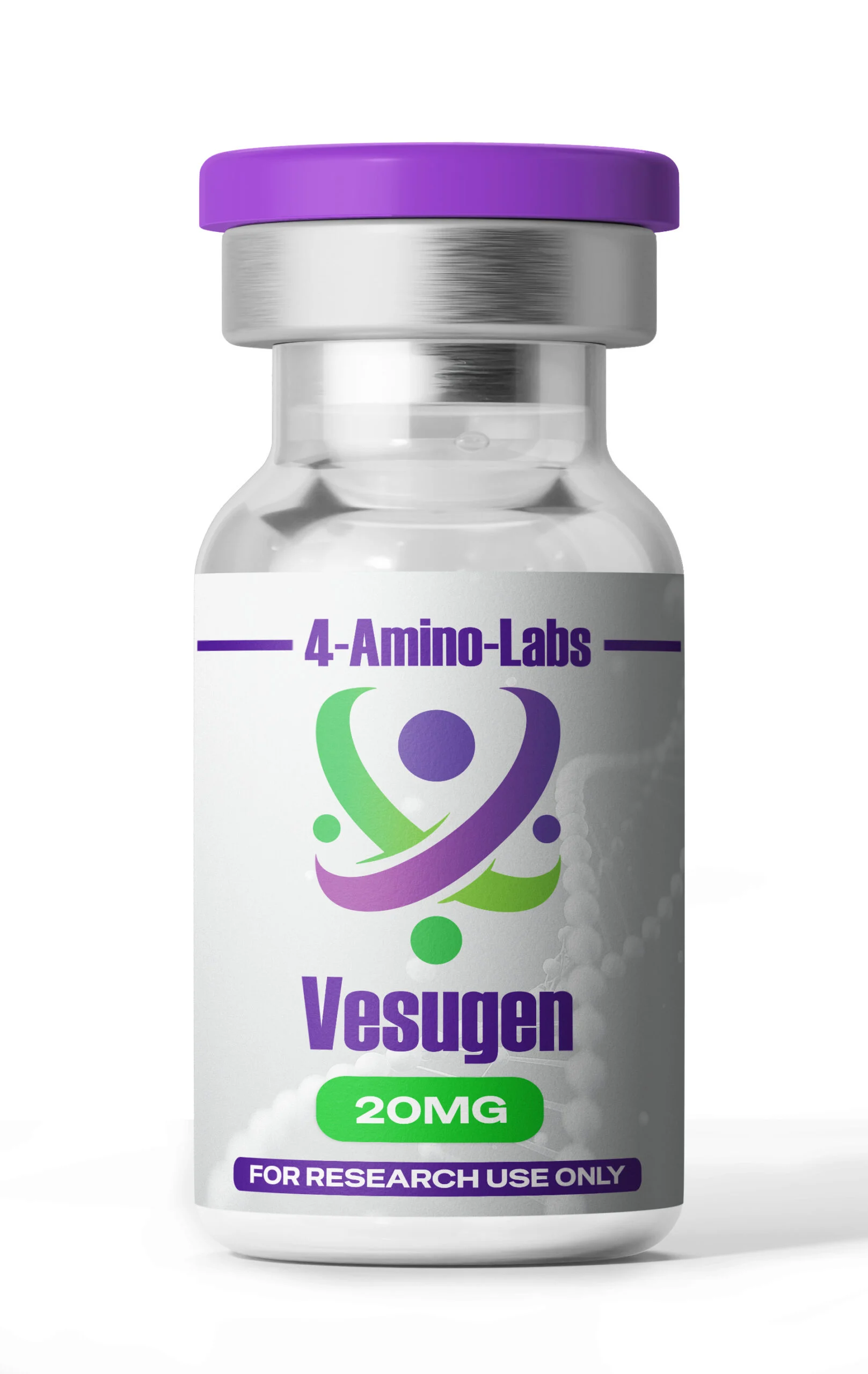
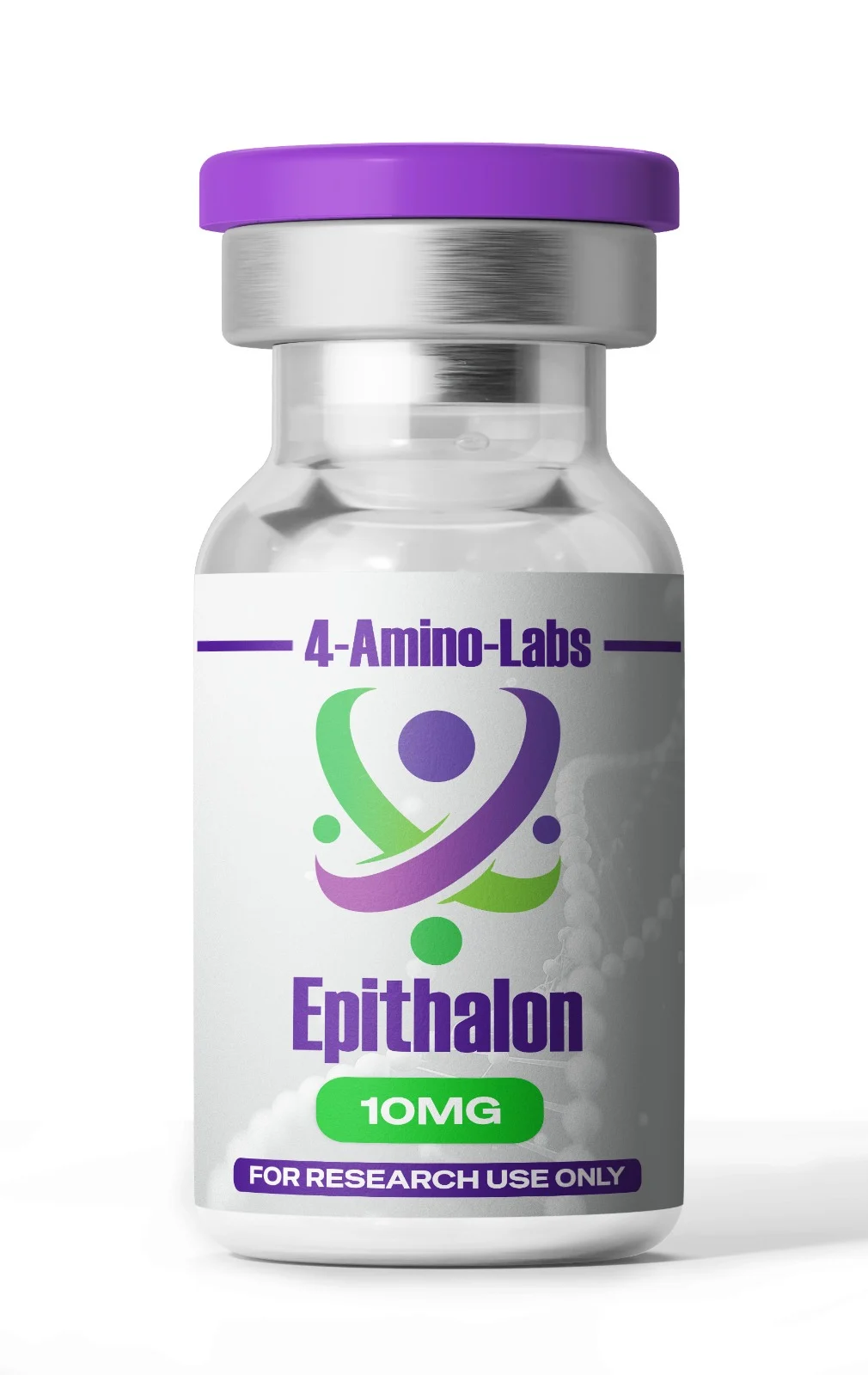
The supplied catalog describes Vesugen as a Lys-Glu-Asp tripeptide with a stated 20 mg presentation and purity ≥98% verified by HPLC. It describes Epithalon in a stated 10 mg presentation with purity ≥98% verified by HPLC. These are catalog specifications, not independent confirmation of a particular lot.
| Research material | Stated catalog specification | What remains to be established |
|---|---|---|
| Vesugen | Lys-Glu-Asp; 20 mg; purity ≥98% by HPLC | Lot-specific identity, measurement basis, and procurement acceptance |
| Epithalon | 10 mg; purity ≥98% by HPLC | Lot-specific identity, measurement basis, and procurement acceptance |
The practical advantage of explicit specifications is that your laboratory has defined claims to evaluate. The limitation is equally important: the listing alone cannot complete either analytical qualification or legal review.
The following 4aminolabs listings are research-material examples, not a statement that either compound has the same regulatory status as the other. Package quantities describe supplied material only.
Does a domestic supplier eliminate import or state-law questions?
A domestic supplier does not, by itself, establish that every transaction involving its catalog is permissible. Your laboratory still needs to assess the identified material and relevant destination requirements.
For an imported transaction, determine who is responsible for the import review and which requirements apply before ordering. Do not infer admissibility from a seller's willingness to dispatch a parcel.
Similarly, a supplier accepting an address is not a legal determination about that destination. Keep the shipping arrangement separate from the regulatory basis for the purchase.
What are the limits of this 2026 guidance?
This article provides a procurement framework, not a compound-by-compound legal opinion or a survey of every state requirement. It does not establish the regulatory status of Vesugen, Epithalon, or another named peptide.
The cited federal provisions explain why classification and intended use matter. They do not establish that a specific purchase satisfies every applicable requirement. Resolve the actual transaction with your institution's responsible reviewer or qualified counsel.
The analytical discussion also has a defined scope. No independent lot testing or batch-specific analytical result is presented here, and no receptor mechanism or biological activity is inferred from a product name.
FAQ
Are bioregulator peptides legal to buy for research in the United States?
There is no blanket answer for the entire category. Assess the exact substance, intended laboratory activity, supplier representations, applicable restrictions, and transaction route before procurement.
Does research use only mean a peptide is automatically legal?
No. Research-use-only wording does not independently establish classification, satisfy every applicable requirement, or authorize every transaction.
Does a certificate of analysis prove that a peptide is legal?
No. A certificate of analysis reports analytical information within its stated scope; it is not a legal determination.
Does HPLC purity establish peptide identity and content?
HPLC purity alone does not establish both identity and content. Review identity evidence and the basis of any quantitative assay separately from chromatographic purity.
Can a laboratory rely on another peptide’s legal status?
No. A conclusion about one peptide does not establish the status of a different peptide, modification, mixture, or transaction.
What should a laboratory request from 4aminolabs?
Request the documentation required to assess the identified research material and supplied lot. Evaluate identity, analytical methods, stated specifications, and traceability separately from legal acceptance.
Does a domestic shipping address settle the legal question?
No. A shipping address or accepted order does not establish that the material and transaction satisfy every applicable requirement.
One last thing
Document the reason for acceptance, not merely the fact that an order was accepted. The strongest purchasing record explains what the substance is, what evidence supports its specifications, and who resolved the applicable regulatory questions.
For your next purchase, place the regulatory assessment beside the analytical acceptance record. Keeping those decisions adjacent makes their different purposes explicit.
Regulatory references
- Federal Food, Drug, and Cosmetic Act, 21 U.S.C. § 321(g)(1): statutory definition of drug. Relevant here to classification based on intended use.
- 21 C.F.R. § 201.128, Meaning of intended uses. Relevant here to objective intent and evidence concerning intended use.
- Federal Food, Drug, and Cosmetic Act, 21 U.S.C. §§ 331(d) and 355(a): provisions concerning introduction of unapproved new drugs into interstate commerce. Application requires transaction-specific facts.
Related guides
- Connecting batch numbers to laboratory inventory tracking
- Research chemical suppliers ranked by documentation
- Can research peptides be shipped to all U.S. states?
Research use only. Materials discussed are strictly for laboratory research, not for human or animal use. This content is not medical or legal advice and is not intended to diagnose, treat, cure, or prevent disease.