Strict Regulatory Notice: This agent is synthesized strictly for laboratory-based research and analytical purposes. It is not intended for human or veterinary use, nor for medical, household, or cosmetic applications. Please review our Terms of Service thoroughly before finalizing your acquisition.
Concentration and Formulation
Contents20mg per vial
FormLyophilized powder
Available
For Research Use Only. Not for human or veterinary use.
Highly soluble in Bacteriostatic Water and sterile water.
Tested Purity
≥98% via HPLC
Active Ingredient (Total)
20mg per vial
Dry / Powder Formulations
Lyophilized powder
Storage Guidelines
Lyophilized: Store at -20°C for long-term stability. Protect from light.Reconstituted: Must be refrigerated at 2°C to 8°C.
Estimated Shelf Life
24 months from manufacture date (lyophilized).
Terms of Application
For laboratory research purposes only. Not for human or veterinary use. Investigated for the specific modulation of respiratory epithelium repair and anti-inflammatory activity in pulmonary cell lines in in-vitro models.
Foundational Scientific Overview
Foundational Scientific Overview
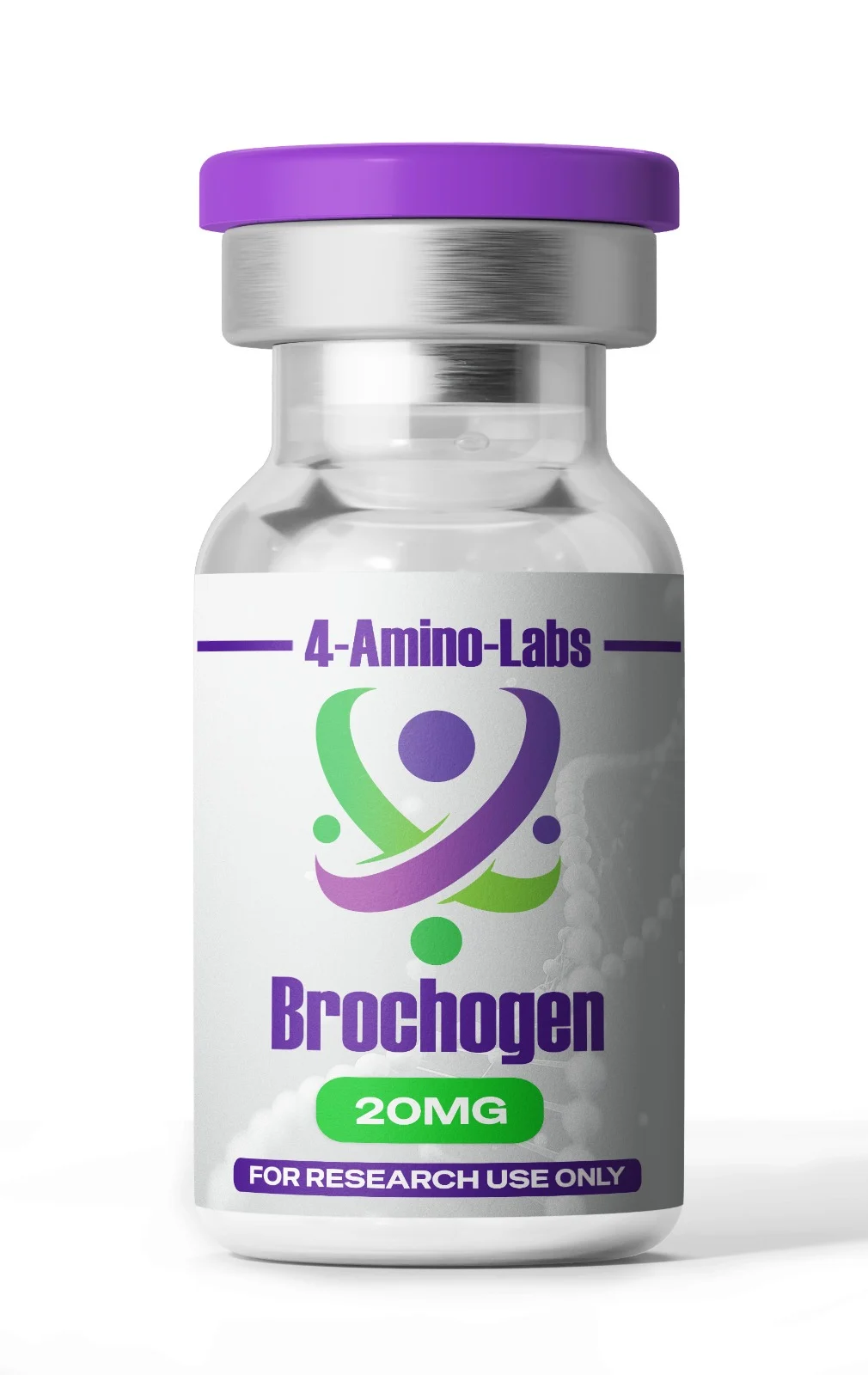
Bronchogen (20mg) is a specialized subject within the field of pulmonary cytoprotection and short-chain bioregulators. Synthesized as a targeted tetrapeptide (Ala-Glu-Asp-Leu), it serves researchers examining the genomic regulation of respiratory mucosal cells, bronchial epithelium repair, and the mitigation of cellular hypoxia in lung tissues.
At 4-Amino-Labs, we provide this highly purified synthetic bioregulator to ensure experimental reproducibility in sensitive pulmonary assays.
The biochemical capacity of specific short peptides to directly interact with DNA promoter regions, triggering the synthesis of tissue-specific proteins in the respiratory tract, is heavily documented in gerontological literature. See: Khavinson, V. K., et al. (2004). "Peptide bioregulators in the treatment of chronic bronchitis." Terapevticheskii Arkhiv, 76(3), 56-59.
Analytical Composition and Purity
Purity≥98%via HPLC
FormulaC18H30N4O9 (Tetrapeptide Ala-Glu-Asp-Leu)
Physical StateWhite Lyophilized Solid
Investigational Pathways
Bronchial Epithelial Proliferation
Evaluating the compound’s interaction with the genome to stimulate localized protein synthesis in isolated lung cell models.
Hypoxic Resistance
Observing the maintenance of cellular respiration in respiratory tissues subjected to acute oxygen deprivation.
Inflammatory Modulation
Mapping the reduction of tissue-specific inflammatory markers following induced bronchial stress.
Laboratory Handling and Stability
Thermal Regulation
Store in a strictly controlled, refrigerated, and desiccated environment.
Photostability
Protect from direct UV exposure.
Contamination Control
Utilize sterilized instruments and work within a laminar flow hood where possible.
Compliance and Safety
This substance is provided exclusively for in-vitro laboratory research and pre-clinical developmental testing. 4-Amino-Labs does not condone or authorize the use of this product in any clinical setting or for personal consumption. Misuse of laboratory chemicals carries significant health risks. By purchasing, the researcher acknowledges the inherent risks and confirms they possess the necessary equipment and expertise to handle these materials safely.
Analytical Composition & Purity Standards
Chemical Formula: C18H30N4O9 (Tetrapeptide Ala-Glu-Asp-Leu)
Physical State: White Lyophilized Solid
Our Bronchogen undergoes a multifaceted verification process via independent High-Performance Liquid Chromatography (HPLC) to ensure a purity threshold of ≥ 98%.
Investigational Pathways
Researchers utilizing Bronchogen typically focus on the following biochemical mechanisms:
Bronchial Epithelial Proliferation: Evaluating the compound’s interaction with the genome to stimulate localized protein synthesis in isolated lung cell models.
Hypoxic Resistance: Observing the maintenance of cellular respiration in respiratory tissues subjected to acute oxygen deprivation.
Inflammatory Modulation: Mapping the reduction of tissue-specific inflammatory markers following induced bronchial stress.
Laboratory Handling & Stability Protocol
To maintain the molecular integrity of Bronchogen, the following storage parameters are recommended:
Thermal Regulation: Store in a strictly controlled, refrigerated, and desiccated environment.
Photostability: Protect from direct UV exposure.
Contamination Control: Utilize sterilized instruments and work within a laminar flow hood where possible.
Compliance & Safety Disclaimer
This substance is provided exclusively for in-vitro laboratory research and pre-clinical developmental testing. 4-Amino-Labs does not condone or authorize the use of this product in any clinical setting or for personal consumption. Misuse of laboratory chemicals carries significant health risks. By purchasing, the researcher acknowledges the inherent risks and confirms they possess the necessary equipment and expertise to handle these materials safely.



Reviews
There are no reviews yet.