
SLU-PP-332 cannot be classified as stable at room temperature during shipping without stability data for the specific formulation, container, and exposure period. A storage instruction or certificate of analysis does not, by itself, establish transport stability. This 2026 guide addresses chemical integrity and laboratory acceptance of research-use-only material, not human or animal use.
- Is SLU-PP-332 stable at room temperature? Formulation-specific shipping stability requires supporting data, not assumptions.
- 4-Amino-Labs lists SLU-PP-332 research material; a product listing does not establish a validated transport window.
- A release certificate describes the tested sample, not necessarily the material after shipping.
- Review temperature history, packaging, assay results, and degradation evidence before accepting an exposed research batch.
These are reference conditions from ICH Q1A(R2), not verified SLU-PP-332 shipping limits. Their purpose here is to distinguish controlled stability studies from an undefined ambient shipment. [1]
Is SLU-PP-332 stable at room temperature during shipping?
Room-temperature shipping stability is a formulation-specific conclusion, not an inherent guarantee attached to the compound name. To support that conclusion, a study must connect defined exposure conditions with analytical results and acceptance criteria.
For a 2026 laboratory purchasing decision, separate the following questions. Each requires different evidence; none substitutes for the others.
| Question | Evidence that addresses it | What it does not establish |
|---|---|---|
| Was the material acceptable when tested? | Lot-specific release results | Integrity after subsequent transport |
| Does the formulation tolerate a defined exposure? | Stability results for that formulation | Tolerance outside the studied conditions |
| What happened during this shipment? | Recorded temperature and transport history | Chemical integrity without analytical support |
| Is the received material acceptable? | Documented receipt review and applicable testing | A universal shipping allowance for future lots |
A useful starting point is understanding how research chemical supplier documentation differs from a shipping-stability claim. A certificate can support identity or purity at a stated test point while leaving transport performance unresolved.
Why this matters
Your laboratory needs a defensible acceptance decision, not reassurance based on how a package feels. An intact container and normal appearance are relevant receipt observations, but neither measures the remaining quantity of the parent compound or resolves degradation products.
The opposite assumption is also unsound: ambient transit alone does not prove degradation. An undocumented exposure creates an evidence gap, not an automatic pass or failure.
What does room temperature mean in a stability assessment?
Room temperature is inadequate as a standalone experimental condition. A meaningful stability statement specifies temperature, exposure duration, humidity where relevant, packaging, material form, and the analytical endpoint used to judge change.
ICH Q1A(R2) includes a general long-term study condition of 25 ± 2 °C with 60 ± 5% RH and an accelerated condition of 40 ± 2 °C with 75 ± 5% RH. These conditions belong to a pharmaceutical stability framework; they are not evidence that SLU-PP-332 tolerates either condition. [1]
Controlled storage is not a transport simulation
A controlled chamber study documents a defined environment. Shipping involves a route and exposure history that must be characterized separately if the laboratory wants to compare the shipment with studied conditions.
For your 2026 records, retain the actual temperature history when available rather than replacing it with an ambient label. A delivery date establishes elapsed transit time, but it does not establish the temperature experienced inside the package.
Accelerated testing is not a shipping guarantee
Accelerated studies examine change under specified stress conditions. Their interpretation depends on the material, formulation, packaging, analytical method, and observed degradation behavior. [1]
Do not translate an accelerated-study temperature into an unsupported allowance for ordinary transit. A transport acceptance window needs a documented scientific basis that applies to the received material.
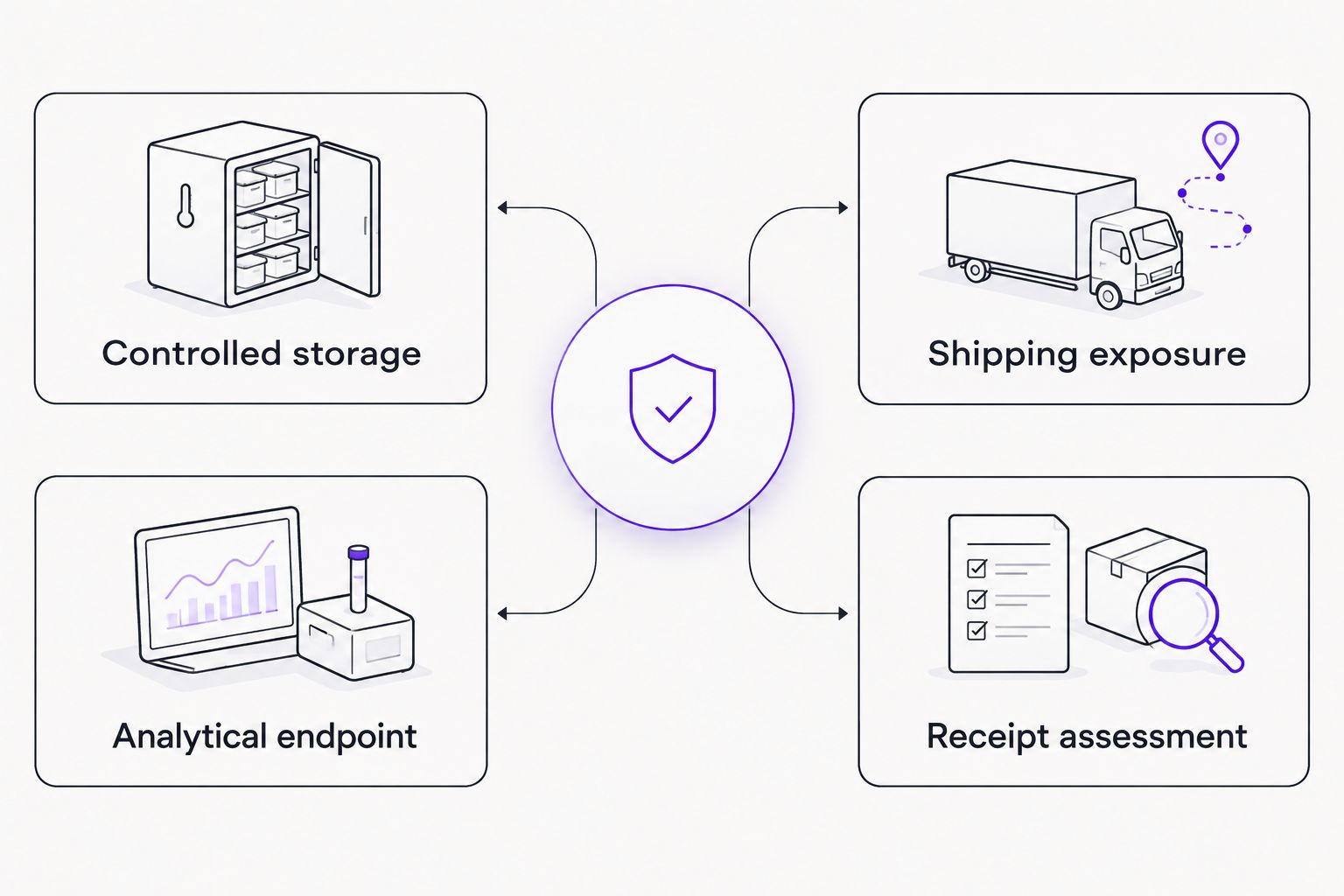
Why SLU-PP-332 shipping stability varies
Shipping stability must be assessed against variables that can change a material's chemical or physical behavior. The following are evaluation factors, not claims that a particular degradation pathway has been demonstrated for SLU-PP-332.
- Material form: Raw powder, a formulated solid, and a solution are different test articles. Evidence for one does not automatically qualify another.
- Formulation composition: Solvents and other formulation components define the chemical environment. Match the tested formulation to the supplied material.
- Temperature and duration: A stability conclusion applies to the studied exposure, not an unspecified ambient interval.
- Container closure: The tested packaging matters because closure integrity and protection from the environment are part of the stability assessment. [1]
- Light exposure: Photostability is a separate question from temperature stability. Temperature data alone do not establish light tolerance. [2]
- Moisture exposure: Humidity and packaging protection belong in the assessment when moisture is relevant to the material or formulation. [1]
Different forms are not interchangeable
Do not transfer a powder stability statement to a solution or formulated solid without supporting evidence. Even when the nominal active compound is identical, the test article differs.
This distinction also limits comparisons with unrelated research materials. A peptide shipping guide or another small molecule's storage instructions cannot establish SLU-PP-332 stability.
| Material form | Documentation to request | Advantage of the evidence | Limitation |
|---|---|---|---|
| Raw powder | Solid-state stability results and packaging description | Directly addresses the supplied solid | Does not qualify a solution |
| Formulated solid | Results for the complete formulation | Includes the formulation matrix | Does not automatically apply to raw powder |
| Solution | Results matching composition and container | Addresses the supplied liquid environment | Does not qualify another solvent system |
What analytical evidence supports a stability claim?
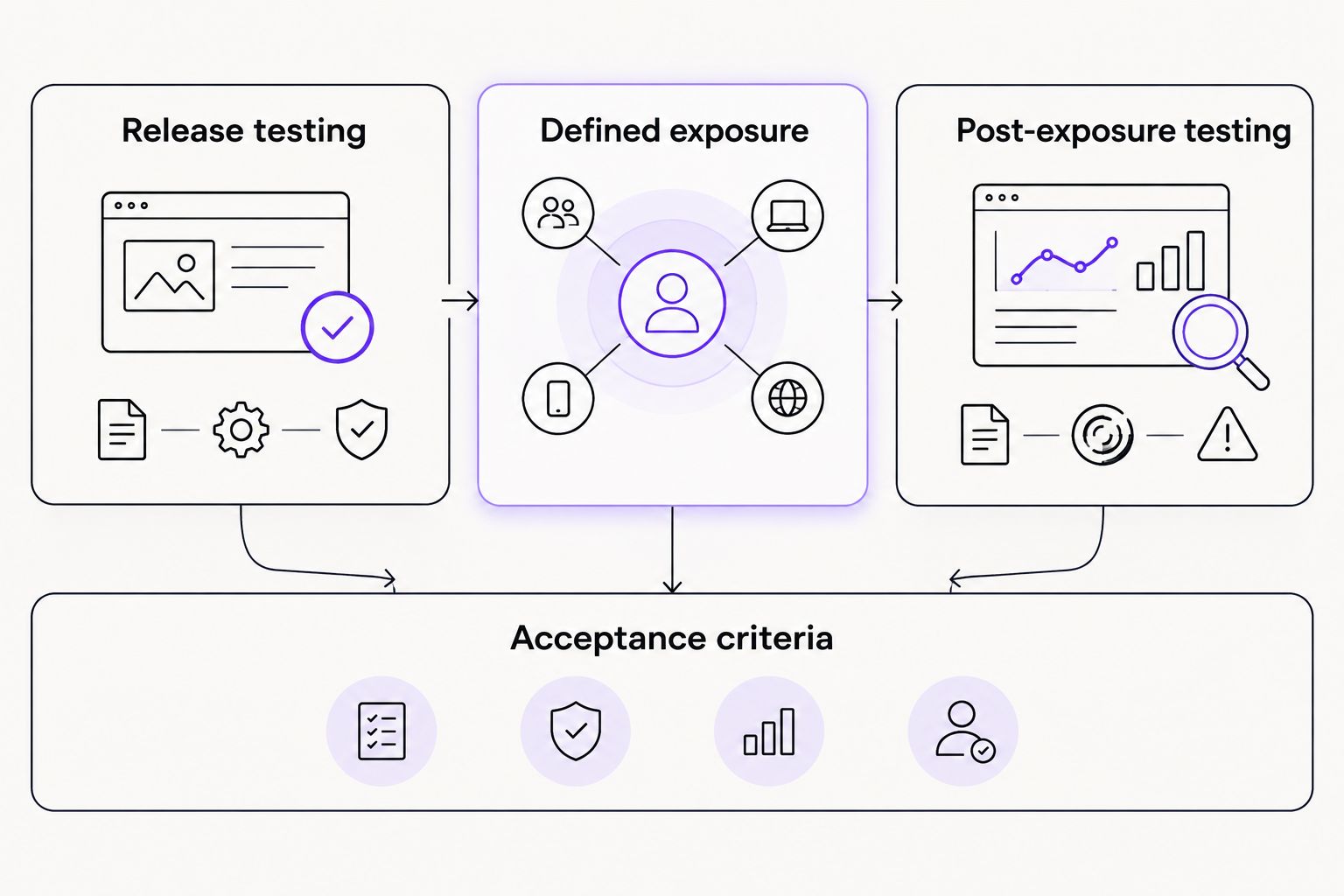
A defensible claim connects an initial result with results after defined storage or exposure. The analytical method must be suitable for detecting the changes that matter to the stated acceptance criteria. ICH Q2(R2) provides a framework for evaluating analytical procedure performance. [3]
Identity, assay, and purity answer different questions
Identity asks whether the expected compound is present. Assay measures its quantity using an appropriate procedure. Chromatographic purity describes the result within the scope of a particular separation and detection method.
These measurements are complementary, not interchangeable. A recognizable identity result does not establish unchanged content, and a chromatographic percentage should not be treated as an absolute content measurement without an appropriate analytical basis.
A stability-indicating method must resolve relevant change
A stability-indicating chromatographic method needs adequate discrimination between the analyte and relevant interfering components. Specificity or selectivity matters because unresolved components can compromise interpretation. [3]
Request the method description, chromatograms where appropriate, acceptance criteria, and an explanation of how degradation was evaluated. A percentage without its method and sample context is insufficient for a transport conclusion.
Release testing and post-exposure testing have different scope
Release testing characterizes the sample tested at release. Post-exposure testing addresses a later sample with a different history.
For a 2026 receipt decision, identify the test date and sampling point before interpreting a certificate. A document issued before dispatch cannot directly measure what happened afterward.
What should your laboratory request before accepting a shipment?
Ask for evidence that matches the exact material under review. The strongest document is the one that answers the acceptance question, not the one with the most specifications.
Use this documentation sequence when assessing SLU-PP-332:
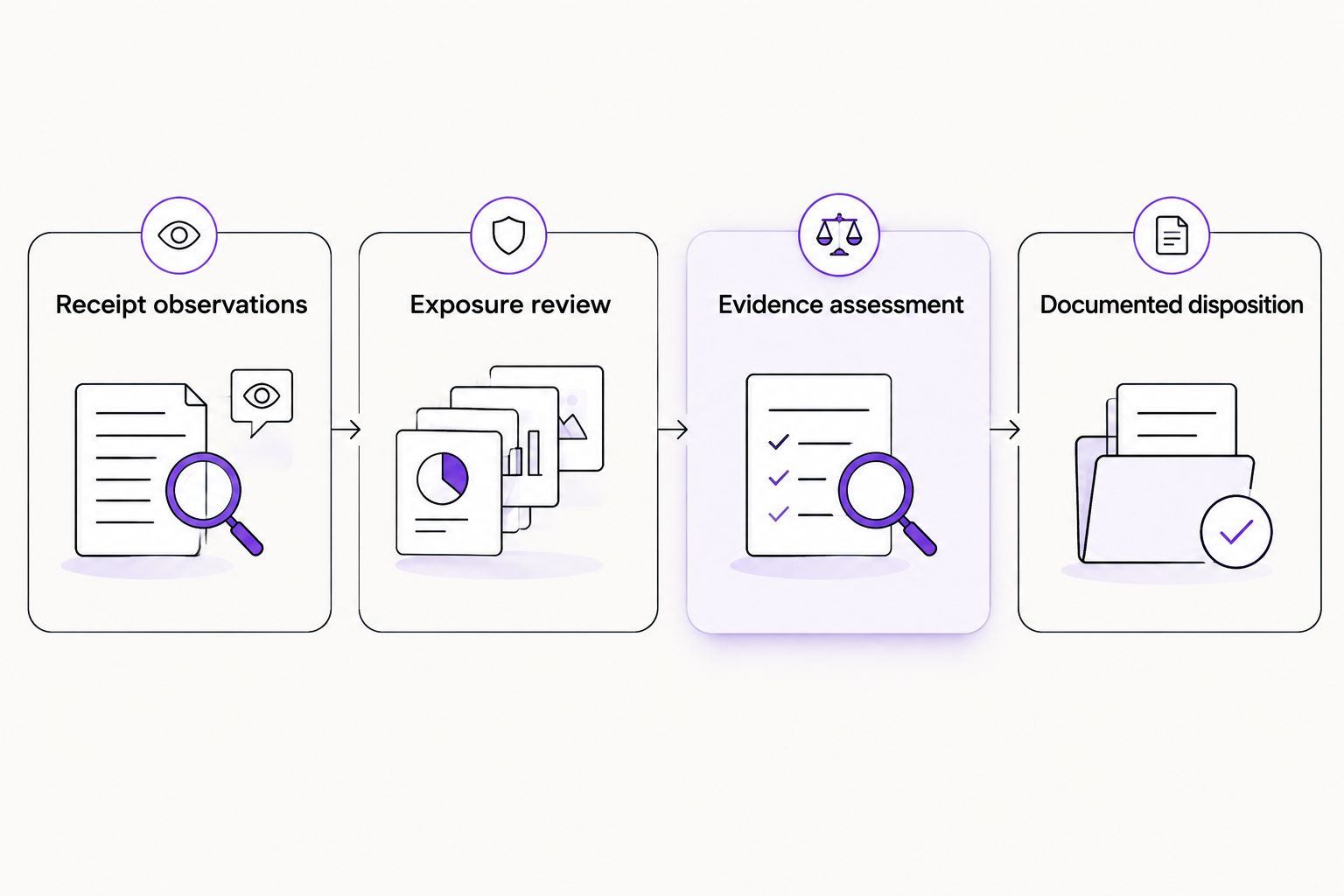
- Confirm the test article. Match the compound, formulation, lot identifier, and container to the shipment.
- Separate storage from shipping instructions. Determine whether the stated conditions concern ongoing storage, temporary excursions, or transport.
- Request the study scope. Identify exposure conditions, sampling points, analytical procedures, and acceptance criteria.
- Connect results to the shipment. Compare the recorded exposure with the conditions the supporting evidence actually covers.
- Record the disposition. Document acceptance, continued hold, additional testing, or rejection under your laboratory's quality procedures.
Questions for the supplier
Ask whether the transport statement applies to the supplied formulation and packaging, whether it is supported by measured results, and whether the documentation addresses temporary temperature excursions. Request clarification where a document uses ambient without defining it.
4-Amino-Labs is a research-material supplier for laboratory buyers, not a source of transport validation by product name alone. Its SLU-PP-332 listing should be evaluated separately from any formulation-specific shipping evidence. You can use the contact page to request applicable batch and transport documentation without assuming that a particular study exists.
Build a reusable receipt record
Record the lot identifier, dispatch and receipt dates, package condition, available exposure information, documents reviewed, and the reason for the final disposition. Retain correspondence that defines the scope of a supplier's stability statement.
This record makes the decision traceable. It also prevents a previous shipment's acceptance from becoming an unsupported standing rule for future material.
What if SLU-PP-332 arrives warm or without temperature records?
Warm arrival is an observation, not an analytical result. Record the condition and assess the available evidence before releasing the material for laboratory work.
If the exposure cannot be connected to supported conditions, maintain the material's hold status under your laboratory's procedures while seeking clarification or appropriate testing. Do not invent a universal temperature threshold or acceptable transit duration.
Does normal appearance establish stability?
No. Visual inspection addresses visible changes and container condition, not the complete chemical composition.
Likewise, a visible change does not identify its cause. Investigate it rather than assigning a degradation mechanism without analytical evidence.
Does a delayed shipment automatically fail?
No. A delivery delay establishes additional elapsed time, not chemical failure.
Evaluate the delay against documented exposure limits and the available shipment history. Without that connection, the calendar alone cannot establish either stability or degradation.
Limitations of this shipping-stability assessment
This 2026 assessment does not establish a shelf life, transport allowance, degradation rate, or validated storage condition for SLU-PP-332. The ICH conditions above explain study design; they are not compound-specific acceptance limits.
No conclusion about one formulation should be transferred to another, and no conclusion about chemical integrity should be transferred to biological activity. Analytical acceptability and performance in a particular research assay require appropriately scoped evidence.
For 4-Amino-Labs research materials, evaluate the current lot documentation and supplied form directly. Neither a general supplier description nor a product name replaces that assessment.
FAQ
Is SLU-PP-332 stable at room temperature during shipping?
SLU-PP-332 room-temperature shipping stability requires evidence for the specific formulation, packaging, and exposure period. A product listing or release certificate alone does not establish that conclusion.
Can a certificate of analysis prove shipping stability?
A certificate of analysis does not prove shipping stability unless its scope includes relevant post-exposure evidence. Check the sampling point, test date, methods, and conditions covered.
Does warm arrival mean SLU-PP-332 has degraded?
Warm arrival does not prove SLU-PP-332 degradation. Record the observation and evaluate exposure information against applicable stability evidence.
Does normal appearance mean the material is stable?
Normal appearance does not establish chemical stability. Visual inspection cannot replace suitable identity, assay, and impurity assessment.
Can powder stability data qualify a SLU-PP-332 solution?
Powder stability data do not automatically qualify a SLU-PP-332 solution. The formulation and container must match the scope of the supporting evidence.
Does SLU-PP-332 always require refrigerated shipping?
A universal refrigerated-shipping requirement cannot be established from the compound name alone. Follow documented conditions applicable to the supplied formulation and packaging.
What should a laboratory do when transport conditions are undocumented?
A laboratory should assess the evidence gap before releasing the material for research. Request applicable documentation and record the disposition under its quality procedures.
One last thing
Before asking whether the package stayed cool, ask whether the stability study tested the same material you received. Perfect temperature records cannot compensate for evidence about a different formulation, and a detailed certificate cannot compensate for an unrelated exposure history.
References
- International Council for Harmonisation. ICH Q1A(R2): Stability Testing of New Drug Substances and Products. Scope: controlled stability-study conditions, packaging, and evaluation principles; not SLU-PP-332 transport validation.
- International Council for Harmonisation. ICH Q1B: Photostability Testing of New Drug Substances and Products. Scope: assessment of light-related change; not a compound-specific photostability conclusion.
- International Council for Harmonisation. ICH Q2(R2): Validation of Analytical Procedures. Scope: analytical procedure performance, including specificity and selectivity; not evidence that a supplied batch has been tested.
Related guides
- Connecting batch numbers to laboratory inventory tracking
- Connecting 4-Amino-Labs certificates to your quality management system
- Connecting research chemical purchases to a laboratory notebook
Research use only. This content concerns laboratory materials and analytical assessment only. It is not medical advice and is not intended to diagnose, treat, cure, or prevent disease. No human or animal use is described or endorsed.