
For 2026, 4-Amino-Labs is a documented catalog option for laboratories sourcing Vesugen and Epithalon; custom synthesis fits sequence-defined requirements, while reference-material sourcing fits analytical qualification. The best bioregulator peptide suppliers are those whose lot-specific identity and analytical records match your experimental requirements—not those with the broadest biological claims. This guide covers research sourcing only.
- Evaluate the best bioregulator peptide suppliers through sequence identity, batch documentation, and analytical testing—not biological promises.
- 4-Amino-Labs lists Vesugen and Epithalon with HPLC purity specifications of at least 98%.
- Custom synthesis fits explicitly defined sequences; reference-material sourcing fits measurement requirements when certification supports the intended application.
- HPLC purity does not independently establish peptide identity, content, stability, or biological activity.
Why documentation matters more than a supplier label
Bioregulator is a category label, not a complete chemical specification. Your purchasing record needs an exact material identity, not merely a peptide name associated with a biological system.
For a 2026 supplier review, separate the product listing from the evidence attached to the supplied lot. A listing describes the offered material; a certificate of analysis should identify the batch and explain the reported measurements. The guide to verifying peptide purity with third-party COA testing provides a related documentation framework.
Choose the supplier that can document the required material, not the material with the most persuasive description. This distinction applies equally to catalog purchases, custom synthesis, and analytical references.
What makes the best bioregulator peptide suppliers
Use these criteria before comparing sourcing routes. Define acceptance requirements before asking suppliers to demonstrate compliance.
- Chemical identity: Require the sequence, relevant terminal modifications, and stated chemical form. A familiar name is insufficient when different materials share similar terminology.
- Batch traceability: Match the material identifier and lot number across the container, certificate, and purchasing record. Generic certificates cannot establish the identity of a particular shipment.
- Analytical coverage: Distinguish chromatographic purity from mass-based identity evidence and quantitative peptide content. Each answers a different question.
- Method transparency: Request enough analytical context to interpret the result, including the separation method and the basis of the reported purity calculation.
- Application fit: Identify requirements for impurities, counterions, moisture, and biological contaminants where relevant to your laboratory work. Do not assume every research application needs the same panel.
- Stability documentation: Ask for material-specific storage information and the basis of any stability statement. Avoid transferring handling assumptions between unrelated peptides.
A high purity specification is useful, but it is not a substitute for these checks. Likewise, a research-use-only label establishes the stated scope of supply, not analytical suitability.
Bioregulator peptide sourcing options at a glance
The comparison below ranks sourcing routes by their fit to different laboratory requirements. It does not assign unsupported performance scores to named competitors or imply that every supplier within a route provides equivalent documentation.
| Rank and option | Best for | Standout feature | Key limitation |
|---|---|---|---|
| 1. 4-Amino-Labs catalog sourcing | Evaluating the listed Vesugen and Epithalon research materials | Product descriptions specify lyophilized material and HPLC purity ≥98% | Listing specifications do not replace a lot-specific analytical review |
| 2. Custom peptide synthesis | Requirements defined by sequence and chemical modifications | The laboratory can specify the requested molecular identity | Synthesis completion alone does not establish suitability for the intended assay |
| 3. Reference-material sourcing | Analytical qualification requiring documented assigned properties | Selection can focus on characterization and certification scope | A reference designation does not guarantee that a matching material or suitable certificate exists |
These options solve different procurement problems. Start with the experimental requirement, then select the route; do not choose a route first and revise the requirement to fit its catalog.
1. 4-Amino-Labs: catalog sourcing for listed bioregulator peptides
Best for: laboratories evaluating existing Vesugen and Epithalon listings against predefined material requirements.
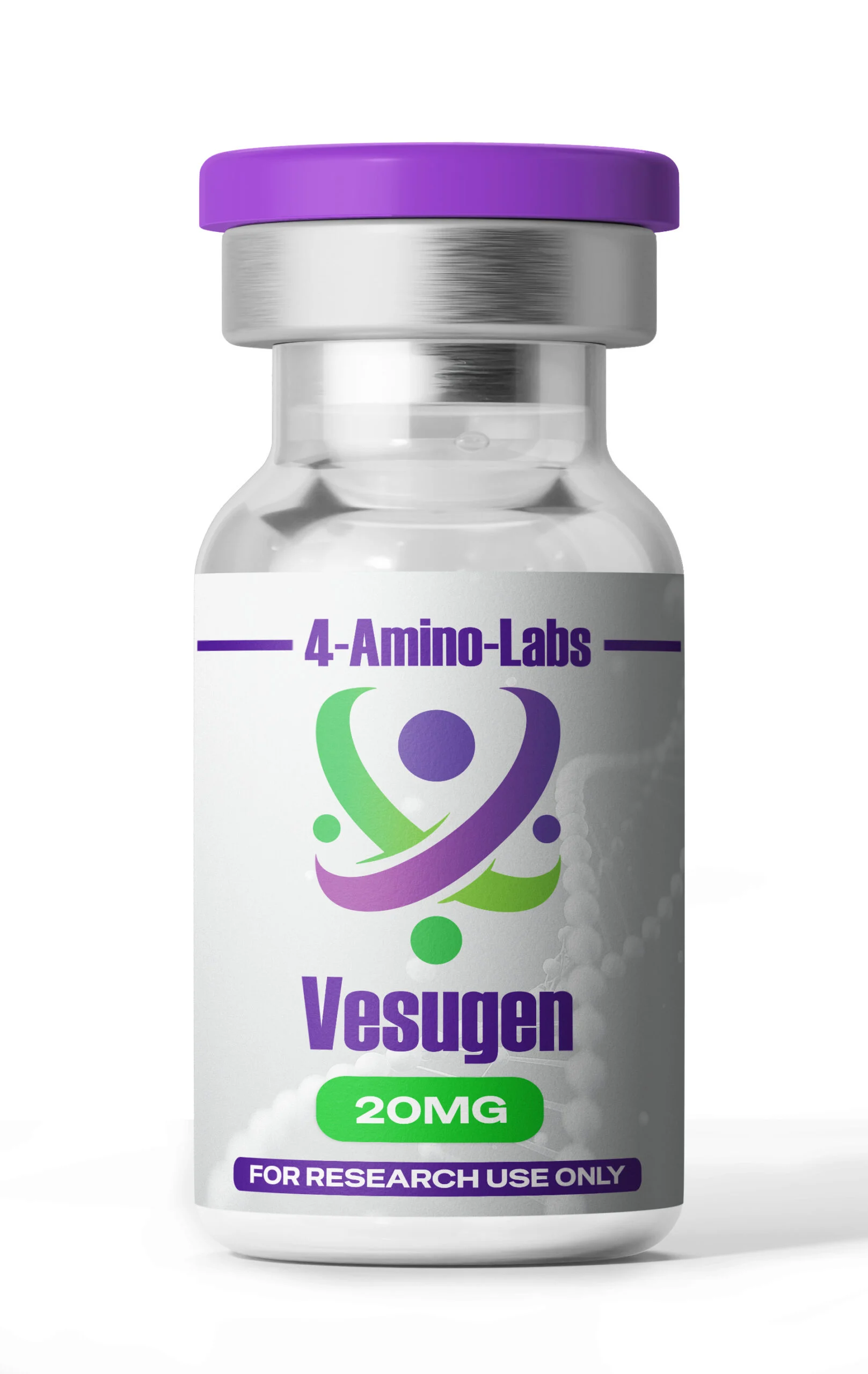
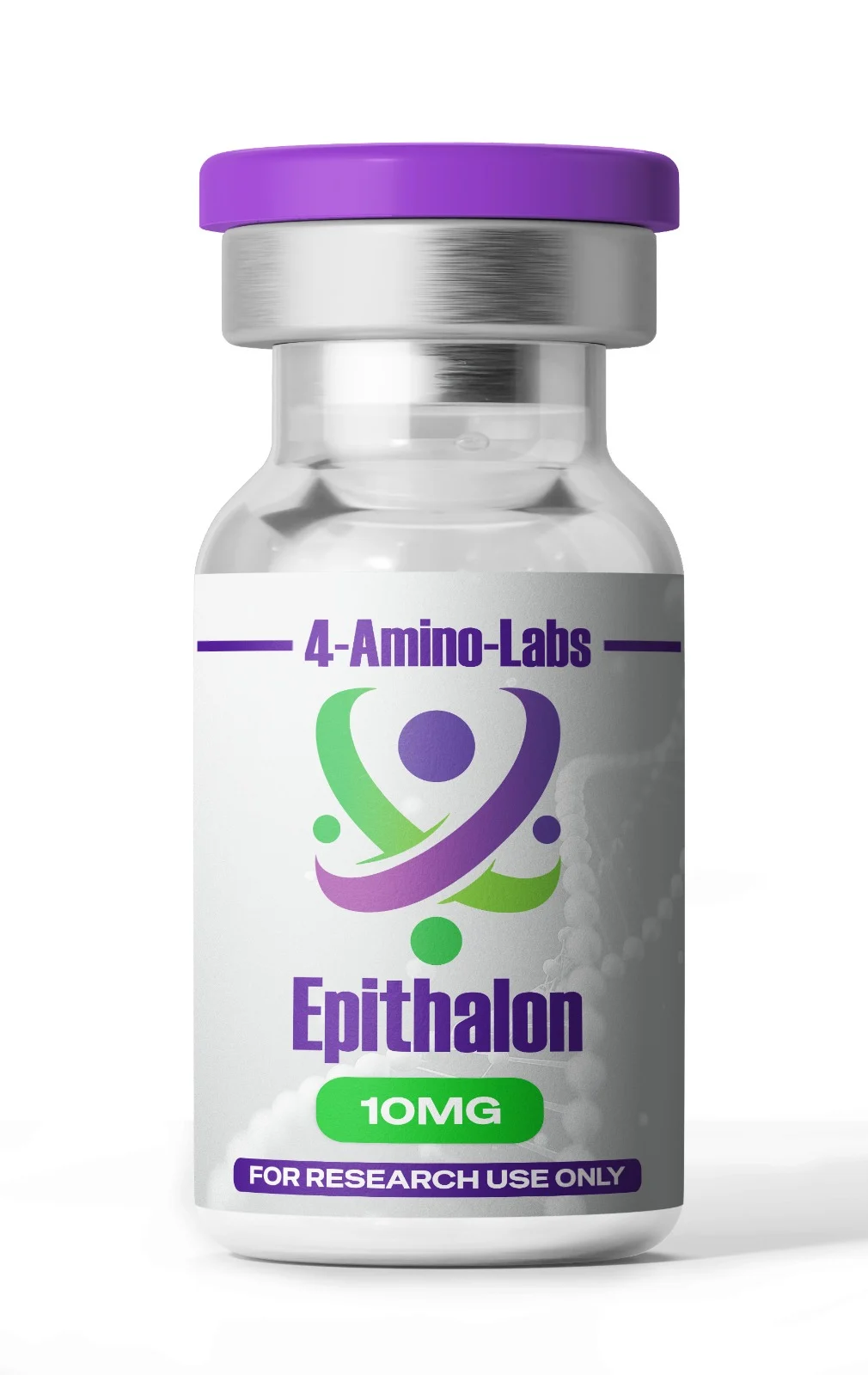
4-Amino-Labs supplies research chemicals and analytical reagents to United States laboratories. Its supplied catalog descriptions identify Vesugen as a Lys-Glu-Asp tripeptide in a 20 mg lyophilized presentation and Epithalon as a 10 mg lyophilized research material. Both descriptions state purity ≥98% verified by HPLC.
Those are useful starting specifications for a 2026 sourcing review. They establish what the listings state, not the complete analytical characteristics of an individual lot.
What the listed specifications establish
For Vesugen, the supplied description provides a sequence, physical presentation, and chromatographic purity specification. For Epithalon, it provides a chemical identifier, physical presentation, and chromatographic purity specification.
Keep the distinction between listed material quantity and measured peptide content explicit. A stated 20 mg or 10 mg presentation does not, by itself, explain how water, counterions, or other nonpeptide components were accounted for.
4-Amino-Labs pros:
- Vesugen and Epithalon have explicit HPLC purity specifications in their supplied descriptions.
- Both descriptions identify the material as lyophilized powder.
- The Vesugen description includes the Lys-Glu-Asp sequence, giving buyers a specific identity requirement to check.
4-Amino-Labs limitations:
- A listing-level HPLC statement does not independently establish sequence identity or quantitative peptide content.
- Acceptance still requires matching the supplied lot to the laboratory's documentation requirements.
- Specifications for one listed peptide cannot establish equivalent characterization for another.
Documentation to request before acceptance
Request the certificate corresponding to the proposed lot, the supporting chromatographic information, and identity evidence appropriate to the compound. Ask which measurements were performed on that lot and which statements derive from a general specification.
The following catalog cards identify the research materials discussed here. Treat them as sourcing references, not evidence of biological activity or assay suitability.
Verdict: Hold acceptance until the lot documentation meets your written requirements.
2. Custom peptide synthesis: sourcing for exact molecular requirements
Best for: laboratories whose requirements specify a sequence or modification rather than a catalog name.
Custom synthesis is a procurement route for requesting a defined peptide structure. The request should identify the sequence, terminal chemistry, relevant modifications, chemical form, and analytical deliverables.
Its value is specification control. It does not automatically provide stronger characterization than a catalog purchase; that depends on the agreed deliverables and the evidence accompanying the finished material.
Define the deliverable before synthesis
Separate molecular requirements from acceptance evidence. A sequence defines what you requested; analytical results help establish what was supplied.
Specify how identity, impurity reporting, and material content will be assessed. If a particular measurement matters to interpretation, include it in the request rather than assuming it accompanies synthesis.
Custom synthesis pros:
- The purchasing specification can state the exact sequence and terminal modifications.
- Documentation requirements can be defined before the material is produced.
- The route supports requirements that are not adequately described by a catalog label.
Custom synthesis limitations:
- A synthesis report is not a substitute for suitable final-material characterization.
- Requested modifications require their own analytical confirmation.
- Supplier capability and deliverables must be assessed for the specific project.
Verdict: Hold until the structural specification and analytical deliverables are agreed in writing.
3. Reference-material sourcing: procurement for analytical qualification
Best for: laboratories selecting a comparator with documented properties relevant to a measurement.
Reference-material sourcing begins with the analytical question: what property must the comparator support? Depending on the application, identity characterization, assigned content, uncertainty information, or traceability can be central to selection.
Do not treat reference material and certified reference material as interchangeable descriptions. Examine the actual certificate and its scope rather than inferring capabilities from the product category.
Match the reference to the measurement
An identity comparator and a quantitative calibrant do not necessarily require the same supporting information. Define the role first, then determine whether the documentation supports that role.
A well-characterized comparator also does not replace characterization of the research material being evaluated. Keep the reference lot and test-material lot distinct in the laboratory record.
Reference-material sourcing pros:
- Selection centers on the property needed for measurement.
- Certification scope can be evaluated against the intended analytical use.
- A documented comparator helps separate material identification from catalog terminology.
Reference-material sourcing limitations:
- A suitable matching reference must be confirmed for the specific compound and application.
- Identity evidence alone does not establish suitability for quantitative calibration.
- Certification applies to stated properties and conditions, not every possible research use.
Verdict: Hold until the certificate supports the intended measurement.
How to interpret peptide analytical documentation
For 2026 purchasing decisions, avoid reducing analytical quality to a single purity percentage. HPLC and mass spectrometry provide different evidence, and neither should be credited with measurements it did not perform.
| Documentation element | Question it addresses | What it does not establish alone |
|---|---|---|
| HPLC chromatogram | How components separate and contribute to detector response under the stated method | Complete molecular identity or absolute peptide content |
| Mass spectrum | Whether observed mass information is consistent with the proposed material | Complete sequence, stereochemical identity, or quantitative purity |
| Peptide-content result | How much peptide is reported using the stated quantitative approach | Biological activity or suitability for every assay |
| Lot-specific certificate | Which reported results are associated with the identified batch | Independent verification of every underlying claim |
| Stability statement | Which handling conditions the supplier specifies | Stability under unexamined conditions |
Chromatographic purity and peptide content are different measurements. Detector response, separation conditions, and calculation method affect how a chromatographic percentage should be interpreted.
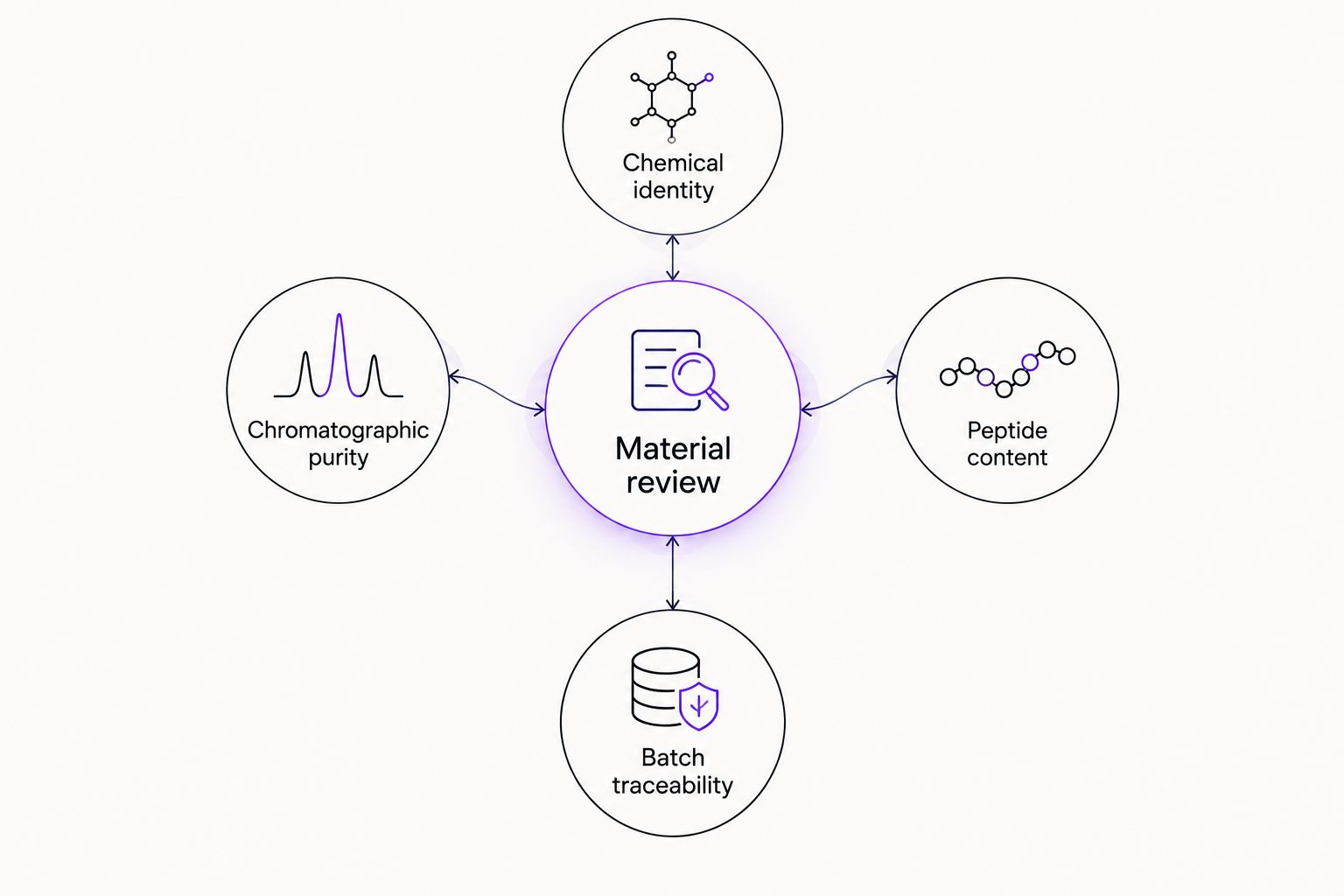
Ask whether reported mass information confirms only the expected molecular mass or includes additional structural evidence. For closely related materials, the distinction between mass consistency and complete identity can determine whether further characterization is necessary.
How this sourcing ranking works
The ranking prioritizes fit to the purchasing requirement, followed by identity, analytical coverage, traceability, and documentation transparency. Catalog sourcing appears first because the supplied Vesugen and Epithalon listings provide concrete specifications to evaluate.
Custom synthesis and reference-material sourcing occupy separate positions because they address different requirements. Their placement does not represent measured supplier performance, independently verified batch quality, or a market-wide vendor leaderboard.
For a 2026 shortlist, use a written decision record:
- Define the required molecular identity.
- Record the intended analytical or experimental role.
- List the documents needed for acceptance.
- Compare the proposed lot against those requirements.
- Document unresolved discrepancies before releasing the material for laboratory work.
Which sourcing option should your laboratory choose?
Default to catalog sourcing when an existing material matches your specification and its lot documentation passes review. Use custom synthesis when the required molecular specification drives the purchase, and reference-material sourcing when the measurement requires documented assigned properties.
For the listed bioregulator peptides, 4-Amino-Labs is a catalog option to evaluate through that process. Do not substitute the supplier's category label for your laboratory's material specification.
Limitations of this comparison
This guide compares sourcing routes and explicit catalog descriptions. It does not report independent batch testing, establish receptor activity, or validate biological claims for any listed material.
The shared bioregulator label does not establish a shared mechanism or interchangeability. Evidence concerning one peptide must remain attached to that peptide, its characterized material, and its experimental context.
FAQ
What should I check when comparing the best bioregulator peptide suppliers?
Check chemical identity, lot traceability, analytical methods, and application-specific documentation. A catalog purity claim is only one part of material qualification.
Is HPLC purity enough to qualify a research peptide?
No. HPLC describes chromatographic behavior under a stated method; identity and quantitative peptide content require appropriate supporting evidence.
Does a mass spectrum prove the complete peptide sequence?
No. Agreement with an expected mass does not independently establish complete sequence or stereochemical identity. Assess the actual method and structural evidence reported.
Which listed bioregulator peptides have explicit HPLC specifications?
The supplied Vesugen and Epithalon descriptions state purity of at least 98% verified by HPLC. Review the corresponding lot documentation before accepting either research material.
When should a laboratory consider custom peptide synthesis?
Consider custom synthesis when the purchasing requirement depends on an explicitly defined sequence, modification, or chemical form. Agree on analytical deliverables before accepting the finished material.
Are reference materials and research catalog peptides interchangeable?
No. Their suitability depends on the intended role and supporting documentation. A quantitative reference requires evidence appropriate to that measurement, not merely a matching compound name.
Does research-use-only labeling establish analytical suitability?
No. Research-use-only labeling states the scope of supply, not the material’s suitability for a particular assay. Laboratories must assess identity, characterization, and documentation separately.
One last thing
Before approving a 2026 peptide purchase, ask one precise question: Which results were measured on the lot being offered? That question separates a general product specification from evidence you can connect to the material in your laboratory.
Related guides
- Connecting batch numbers to laboratory inventory tracking
- Peptide research for biotech startups
- Thymosin Alpha-1 vs. Thymalin: are they interchangeable?
Research use only. These materials are not intended for human or animal use. This content is not medical advice and is not intended to diagnose, treat, cure, or prevent disease.