
Receptor Chem is worth retaining when its exact material already meets your laboratory’s acceptance criteria; an established qualification record has practical value. That qualification stops being sufficient when you change compound identity, formulation, or analytical requirements. For Receptor Chem alternatives in 2026, shortlist 4-Amino-Labs for US laboratory sourcing across receptor modulators and peptides, MedChemExpress for bioactive-compound research, and Sigma-Aldrich for analytical-reagent and reference-material requirements—all strictly for research use only.
- 4-Amino-Labs is a Receptor Chem alternative for US laboratories sourcing receptor modulators and research peptides.
- MedChemExpress belongs on bioactive-compound shortlists; Sigma-Aldrich belongs on analytical-reagent and reference-material shortlists.
- Compare Receptor Chem alternatives by exact chemical identity, formulation, batch documentation, and analytical suitability.
- Retain Receptor Chem when the qualified material meets your requirements; a supplier change requires fresh evaluation.
Why this matters
Supplier substitution is a material-qualification decision, not a brand substitution. A familiar compound name does not establish equivalent identity, composition, or suitability for your assay. Start with the purchasing specification, then compare the evidence attached to the actual lot.
Use the research chemical supplier documentation comparison to structure that review. Product descriptions help identify candidates; batch records determine whether a candidate satisfies your laboratory’s requirements.
This 2026 comparison separates supplier positioning from material acceptance. It does not rank vendors by unverified purity, shipping performance, customer counts, or testing claims.
Receptor Chem alternatives at a glance
The useful distinction is between a supplier’s general scope and the status of a specific product. None of the categories below establishes that every catalog item meets the same analytical standard.
| Supplier | Best for | Distinguishing consideration | Qualification limit |
|---|---|---|---|
| Receptor Chem | Retaining an already-qualified material source | Continuity with your existing material records, where established | Previous qualification does not automatically cover another lot or formulation |
| 4-Amino-Labs | US laboratories comparing receptor modulators, peptides, and analytical reagents | Catalog spans several research-material categories | Product descriptions do not establish certified-reference-material status or suitability for every assay |
| MedChemExpress | Bioactive-compound and pathway-focused research sourcing | Compound information organized around biological research | Biological annotations do not replace your own identity and assay-compatibility review |
| Sigma-Aldrich | Analytical reagents and reference-material sourcing | Multiple product grades and specification categories | The exact grade matters; a catalog listing alone does not establish the required certification |
Best for identifies the purchasing requirement each supplier belongs against. It is not a claim that one supplier’s material performs better than another’s.
Define the material before comparing suppliers
Write the chemical identity, required form, acceptable matrix, and analytical acceptance criteria into the same specification. Separate mandatory requirements from preferences. Otherwise, a comparison can reward catalog breadth while overlooking the one property that determines experimental suitability.
For receptor-active compounds, chemical identity and biological target are different fields. Related targets do not make compounds interchangeable, and the same compound name does not establish an identical formulation.
1. 4-Amino-Labs: best for US research-material sourcing
4-Amino-Labs supplies research chemicals, amino acid blends, analytical reagents, peptides, and receptor modulators to research laboratories in the United States. That scope makes it a relevant candidate when your purchasing list crosses several research-material categories. Assess each item separately rather than treating catalog breadth as a quality designation.
Where the supplier fits
- Cross-category purchasing: Your specification includes receptor modulators alongside peptides or other research reagents.
- Formulation review: You need to compare a stated solution, suspension, powder, or lyophilized material against the assay matrix.
- Compound-specific assessment: You want to evaluate named research materials without assuming that related compounds are substitutes.
Where the supplier falls short
- Catalog specifications are not complete lot qualification. A product-level statement does not establish the identity, composition, or condition of the material received.
- Research grade is not a certification category by itself. Do not infer certified-reference-material status from the supplier’s research-use positioning.
- A prepared formulation introduces matrix considerations. Excipients and solvents require review alongside the named compound.
A concrete formulation comparison
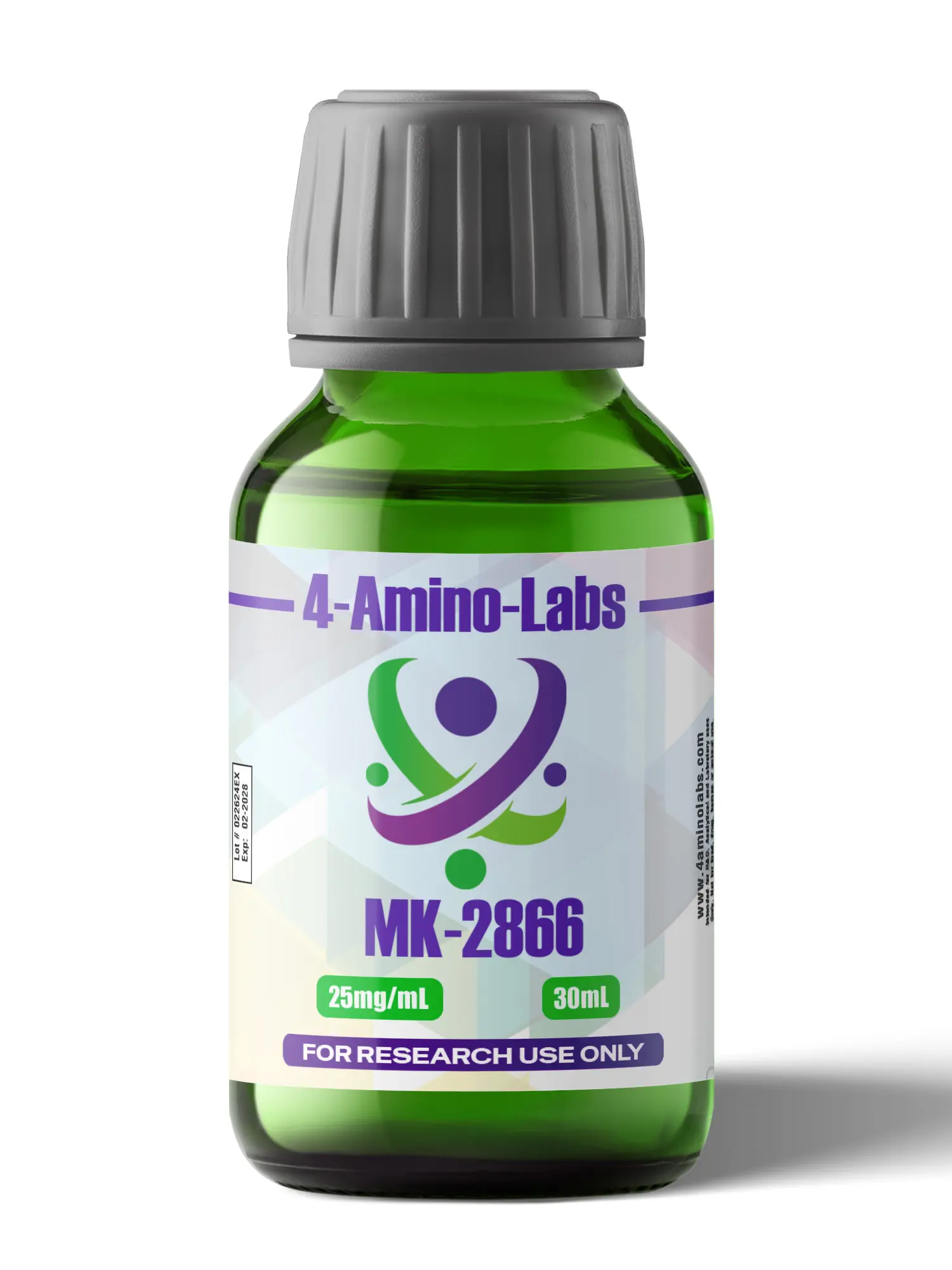
The listed MK-2866 material is described at 25 mg/mL in a 30 mL vial, with 750 mg total stated content. Those figures describe the supplied formulation, not an experimental instruction or an independently established content measurement. They belong in the receiving specification alongside the matrix and analytical acceptance criteria.
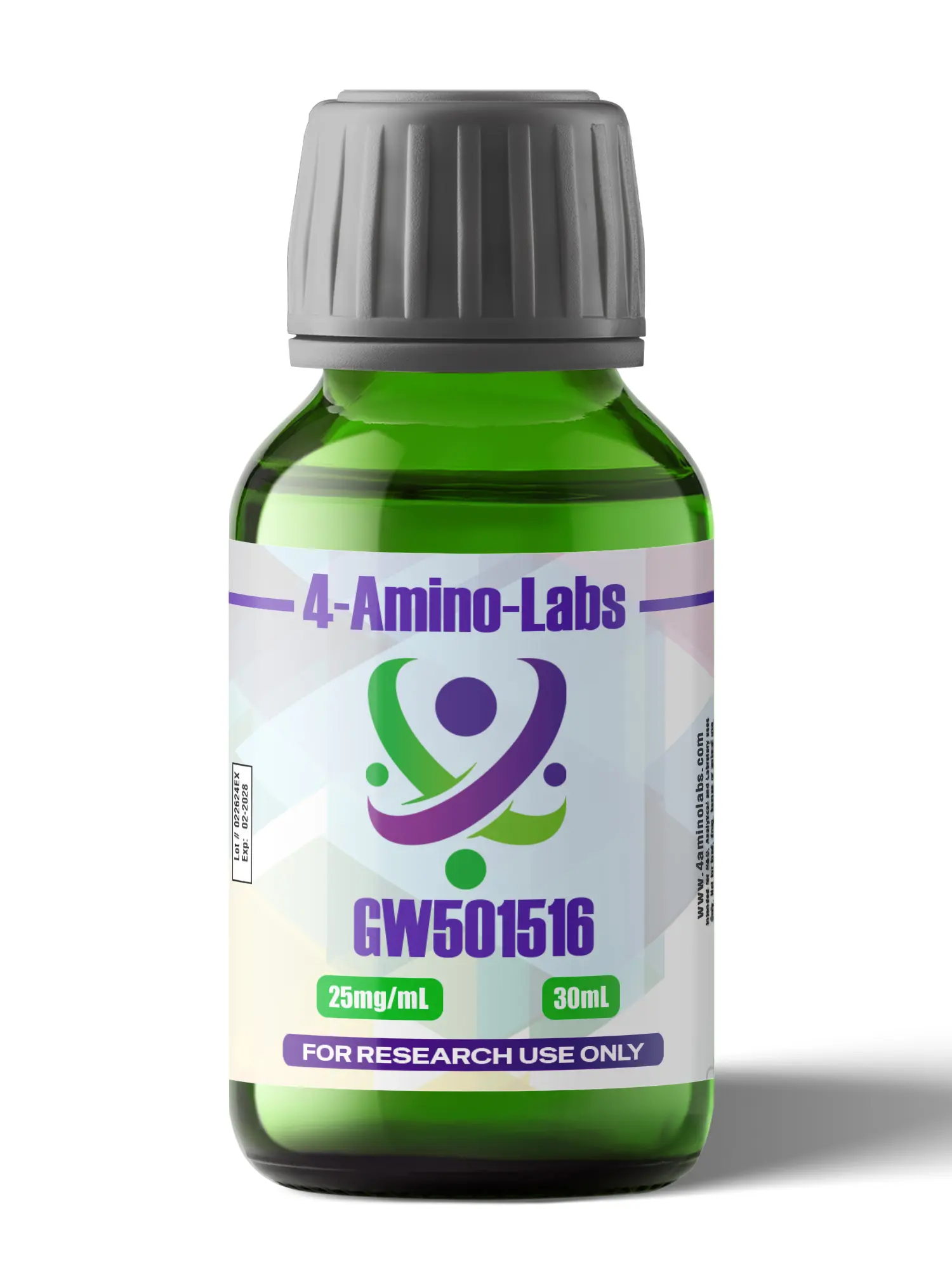
The listed GW501516 material also states 25 mg/mL and 750 mg per 30 mL vial, with PEG 400 identified in its formulation description. Matching concentration and container volume do not make these different compounds interchangeable. A compound’s identity remains the primary selection criterion.
These research-material listings illustrate the distinction between selecting a compound and qualifying its formulation:
Head-to-head qualification against Receptor Chem
| Dimension | Alternative-supplier review | Receptor Chem review |
|---|---|---|
| Chemical identity | Match the exact compound and chemical form | Match against the same written specification |
| Formulation | Review stated concentration and complete matrix | Review concentration and matrix independently |
| Analytical evidence | Require evidence relevant to the supplied lot | Apply the identical evidence requirement |
| Acceptance | Approve only against predefined criteria | Retain only while those criteria remain satisfied |
Best for: US laboratories evaluating several research-material categories under a documented purchasing process.
Verdict: Shortlist for compound-by-compound qualification, not automatic substitution.
2. MedChemExpress: best for bioactive-compound research
MedChemExpress is a candidate for laboratories sourcing bioactive compounds for pathway-focused research. Its biological research orientation makes target and compound annotations relevant to the initial shortlist. The purchasing decision still rests on the exact material, not the breadth of the associated biological description.
Where MedChemExpress shines
- Target-oriented discovery: Compound information can help organize a shortlist around a biological question.
- Related-compound assessment: A bioactive-compound catalog supports comparison of candidate research tools.
- Mechanistic organization: Biological annotations help distinguish the intended target from the chemical specification.
Where MedChemExpress falls short
- Annotation is not experimental validation. A target description does not establish activity in your particular assay system.
- Related compounds remain distinct. A shared pathway does not justify transferring selectivity or stability evidence between compounds.
- Material status requires checking. Do not assume that a research compound is a certified analytical standard.
Head-to-head qualification against Receptor Chem
| Dimension | MedChemExpress assessment | Receptor Chem assessment |
|---|---|---|
| Research fit | Match the annotated target to the experimental question | Apply the same target-fit requirement |
| Compound selection | Distinguish related chemical structures | Require the exact requested identity |
| Evidence | Separate literature annotations from lot-specific results | Separate general claims from lot-specific results |
Best for: Laboratories building a target-focused compound shortlist before material qualification.
Verdict: Shortlist when biological research context is central to selection.
3. Sigma-Aldrich: best for analytical-reagent requirements
Sigma-Aldrich belongs on the shortlist when the purchasing specification centers on reagent grade, analytical characterization, or reference-material status. The important decision is which exact product category meets the requirement. A supplier name does not make every item an analytical standard.
Where Sigma-Aldrich shines
- Grade-based selection: Product categories support specification-led reagent purchasing.
- Reference-material sourcing: Relevant reference-material offerings warrant evaluation when your method requires them.
- Analytical purchasing: The selection process can start with the required characterization rather than a biological target.
Where Sigma-Aldrich falls short
- Grades are not interchangeable. A general reagent does not become a certified reference material because another catalog item has that status.
- Scope still matters. Certification must cover the property your method actually requires.
- An analytical material is not automatically an assay control. Functional suitability needs separate evidence.
Best for: Laboratories whose specification prioritizes analytical grade or explicitly documented reference-material properties.
Verdict: Shortlist the exact grade, not the catalog as a whole.
Why switch from Receptor Chem?
A defensible supplier change addresses a documented requirement. This comparison does not attribute closures, quality failures, policy changes, or service problems to Receptor Chem.
Your material specification has changed
A different chemical form, formulation, or analytical requirement creates a new purchasing task. Compare candidates against the revised specification rather than carrying forward an earlier approval.
You need another research-material category
A laboratory sourcing receptor-active compounds can also need peptides or analytical reagents. Evaluate the additional category on its own merits. Consolidating purchasing is an administrative choice, not evidence of equivalent material quality.
You need a different evidence package
An exploratory research material and a reference material used for quantitative measurement serve different purposes. If your method requires certified property values, uncertainty information, or another defined document, make that requirement explicit before selecting a vendor.
You need an independently qualified second source
A second supplier is useful only after qualification. Retaining a backup name without reviewing its exact compound and formulation does not establish an equivalent source.
How to qualify an alternative in 2026
Use the same acceptance process for every candidate, including the incumbent. Comparing one supplier’s marketing description with another supplier’s analytical report creates a misleading result.
Separate the evidence questions
| Question | Evidence to examine | What it does not establish alone |
|---|---|---|
| Is this the intended compound? | Identity data appropriate to the material | Purity, concentration, or biological activity |
| What impurities are resolved? | Chromatogram, method details, and integration basis | Complete characterization of every impurity |
| What is the stated content? | A suitable quantitative measurement | Receptor activity or assay compatibility |
| What else is present? | Formulation and matrix documentation | Stability throughout your intended handling conditions |
| Which material was examined? | Matching lot identifiers and report details | Results for a different lot |
HPLC area percentage is not automatically a mass-content measurement. Detector response, method selectivity, and the reporting basis affect interpretation. Likewise, a mass spectrum supporting identity does not independently establish every aspect of purity.
Follow a consistent acceptance sequence
Move through Identity, Formulation, Batch evidence, and Acceptance in that order. A failure at an earlier stage prevents later documentation from rescuing the wrong material. Strong analytical paperwork for a different chemical form still fails the purchasing specification.
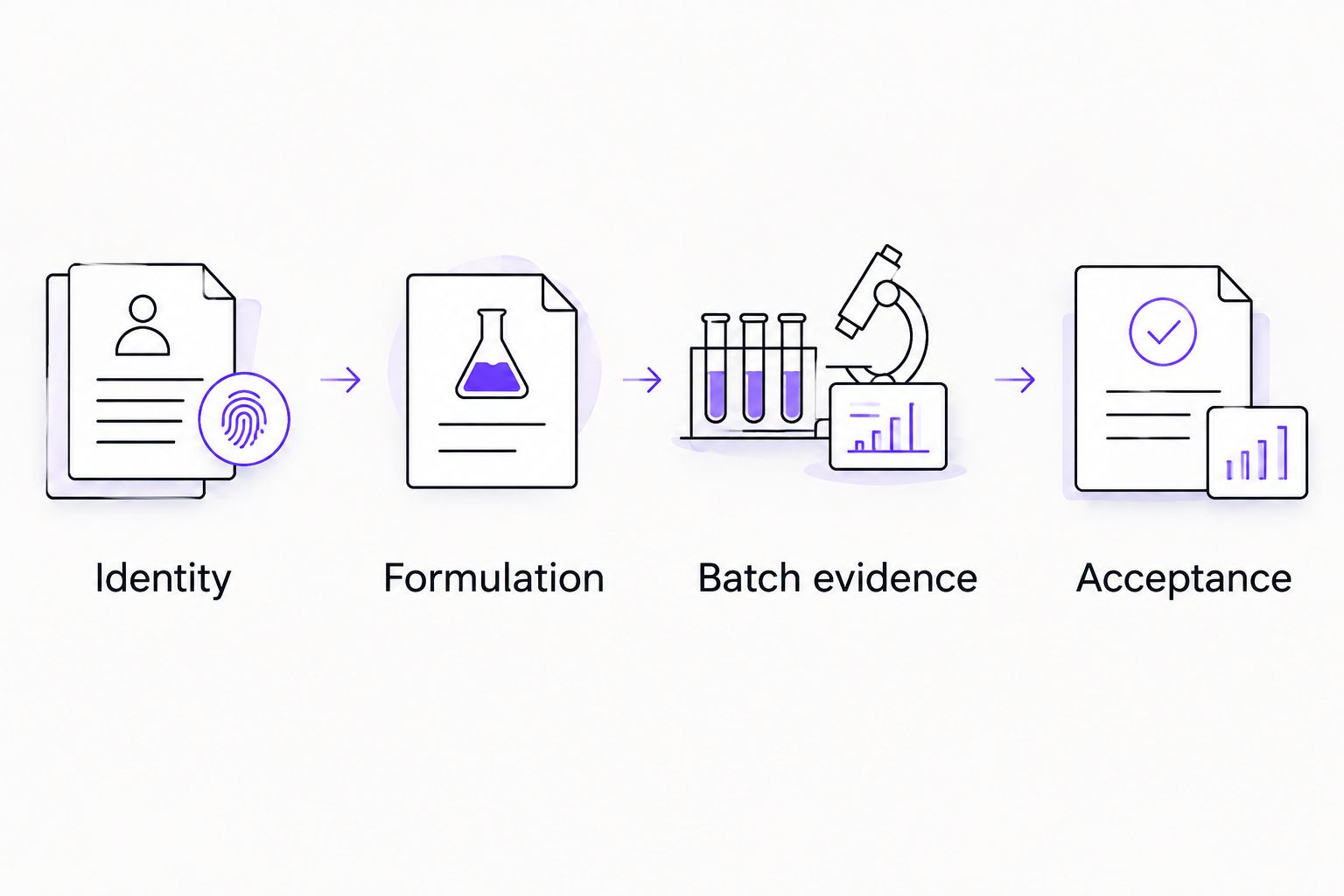
Record the acceptance decision against the received lot, not only the purchase order. Preserve the product specification and analytical documents together so another researcher can identify the material used without reconstructing the purchasing history.
When staying with Receptor Chem is the right call
Retain Receptor Chem when the exact supplied material meets your current specification and its documentation supports your intended research. Switching vendors without a defined deficiency or new requirement creates another qualification task without establishing an experimental advantage.
For a 2026 sourcing review, ask whether the requirement changed before asking whether the supplier should change. Keep the incumbent in the comparison table and apply the same acceptance threshold to every candidate.
Limitations of this comparison
This is a sourcing framework, not a comparative laboratory study. It does not establish relative compound activity, lot purity, stability, or supplier performance. Catalog positioning identifies candidates; it does not replace inspection of current product documents and the received material.
No supplier-level conclusion transfers automatically across a catalog. An acceptable peptide lot does not qualify a receptor modulator, and an acceptable solution does not qualify a differently formulated version of the same compound.
FAQ
What are the best Receptor Chem alternatives for research laboratories?
The appropriate Receptor Chem alternative depends on the material specification. Shortlist 4-Amino-Labs for US research-material sourcing, MedChemExpress for bioactive-compound research, and Sigma-Aldrich for analytical-reagent or reference-material requirements, then qualify the exact product.
Is a different supplier’s version of the same compound interchangeable?
Matching compound names do not establish interchangeability. Compare chemical form, formulation, identity evidence, lot documentation, and assay suitability before accepting a substitution.
Does an HPLC purity percentage establish compound content?
An HPLC area percentage does not automatically establish mass content or solution concentration. Review the analytical method and reporting basis, and require a quantitative measurement when content is an acceptance criterion.
Should a laboratory replace an already-qualified Receptor Chem material?
Retain an already-qualified material when it continues to meet the current specification. A supplier change is justified by a defined requirement, not by a ranking alone.
What documents should accompany a research-material review?
Review the specification, formulation information, and analytical evidence tied to the supplied lot. The required document set depends on whether the material serves exploratory research, analytical measurement, or another defined laboratory purpose.
Does research grade mean certified reference material?
Research grade does not by itself establish certified-reference-material status. Confirm the exact product’s documentation and whether it covers the property required by your method.
One last thing
Archive the formulation description, not just the compound name. A lot record that preserves identity but omits the matrix leaves an important qualification question unresolved. Your next supplier review becomes more useful when the original material is fully specified.
Related guides
- Connecting batch numbers to laboratory inventory tracking
- Verifying peptide purity with third-party analytical testing
- Connecting research chemical purchases to a laboratory notebook
Research use only. All materials discussed are intended strictly for laboratory research, not human or animal use. This content is not medical advice and is not intended to diagnose, treat, cure, or prevent disease.