
The cost of third-party COA testing for peptides depends on the analytical work commissioned and how that expense is allocated across a research lot; a certificate alone does not establish a standard surcharge. For 2026 research procurement, separate the laboratory’s analytical fee from sample consumption, handling, and any additional testing needed to answer your laboratory’s actual question.
- The cost of third-party COA testing for peptides depends on test scope, sample requirements, and lot allocation.
- HPLC purity, mass-spectrometric identity, and peptide content answer different questions; compare matching analytical scopes.
- A supplier-funded COA and a buyer-commissioned analysis are different procurement arrangements.
- 4-Amino-Labs supplies research chemicals and analytical reagents; assess documentation for the specific lot under consideration.
How much does third-party COA testing add to peptide cost?
There is no universal testing surcharge per peptide container. The defensible calculation starts with a written analytical scope and a laboratory quotation, then assigns the relevant expense to the material your organization accepts for research.
A supplier’s lot-level testing expense and your laboratory’s independent verification expense belong in different budget lines. Neither can be inferred from a purity percentage or the presence of a downloadable certificate.
For the analytical distinctions behind that calculation, see the guide to verifying peptide purity with third-party COA testing.
| Budget component | What it represents | What to establish before approval |
|---|---|---|
| Analytical work | Measurements commissioned from the testing laboratory | Exact methods, analytes, and report deliverables |
| Sample consumption | Research material allocated to analysis rather than inventory | Required submission amount and expected consumption |
| Sample handling | Packaging, transport, and handling associated with submission | Which organization carries each responsibility |
| Additional investigation | Work beyond the original analytical scope | Conditions requiring separate authorization |
| Internal review | Your organization’s evaluation and disposition of results | Who reviews the report and accepts the lot |
Do not treat every component as an automatic laboratory charge. The table identifies responsibilities to clarify, not fees that every laboratory imposes.
Use an allocation equation, not a market average
For internal accounting, use this relationship:
Testing burden per accepted container = total attributable verification expense ÷ accepted containers covered by that verification.
The denominator matters. Containers held, rejected, consumed during analysis, or excluded from the sampled lot should not silently enter the same allocation as accepted research inventory.
This equation is an accounting tool, not proof that testing one sample establishes the characteristics of every container. Your sampling rationale determines the scope of the conclusion.
Why this matters for research procurement
A COA is a report, not a single analytical method. Comparing certificates without comparing their underlying measurements confuses document format with scientific evidence.
In a 2026 procurement review, the useful question is not whether a supplier displays a certificate. Ask whether the report answers the acceptance questions for the identified lot and whether its analytical scope matches your intended research context.
A lower quotation for a narrower scope does not establish better value. Equally, a longer report does not establish that every measurement is relevant. Pay for measurements tied to an acceptance decision, not for an impressive-looking document.
What are you actually paying the laboratory to measure?
Chromatographic purity
High-performance liquid chromatography separates components under specified analytical conditions. A reported chromatographic area percentage describes the relative detector response assigned to a peak within that method and integration approach.
That percentage is not automatically the mass fraction of peptide in the submitted material. Detector response, unresolved components, and substances outside the method’s detection scope limit what the result establishes.
Molecular identity
Mass spectrometry provides mass-related evidence that supports molecular identity. Its interpretation depends on the analytical approach, expected molecular species, and the information available in the report.
An intact-mass result does not, by itself, establish every sequence or structural detail. Compounds with the same molecular mass require distinguishing evidence beyond a matching mass alone.
Peptide content
Peptide content addresses the amount or fraction of peptide rather than simply its relative chromatographic peak area. The requested measurement needs a defined method, reporting basis, and suitable calibration approach.
Chromatographic purity and peptide content are not interchangeable. A report that addresses only one should not be presented as answering both.
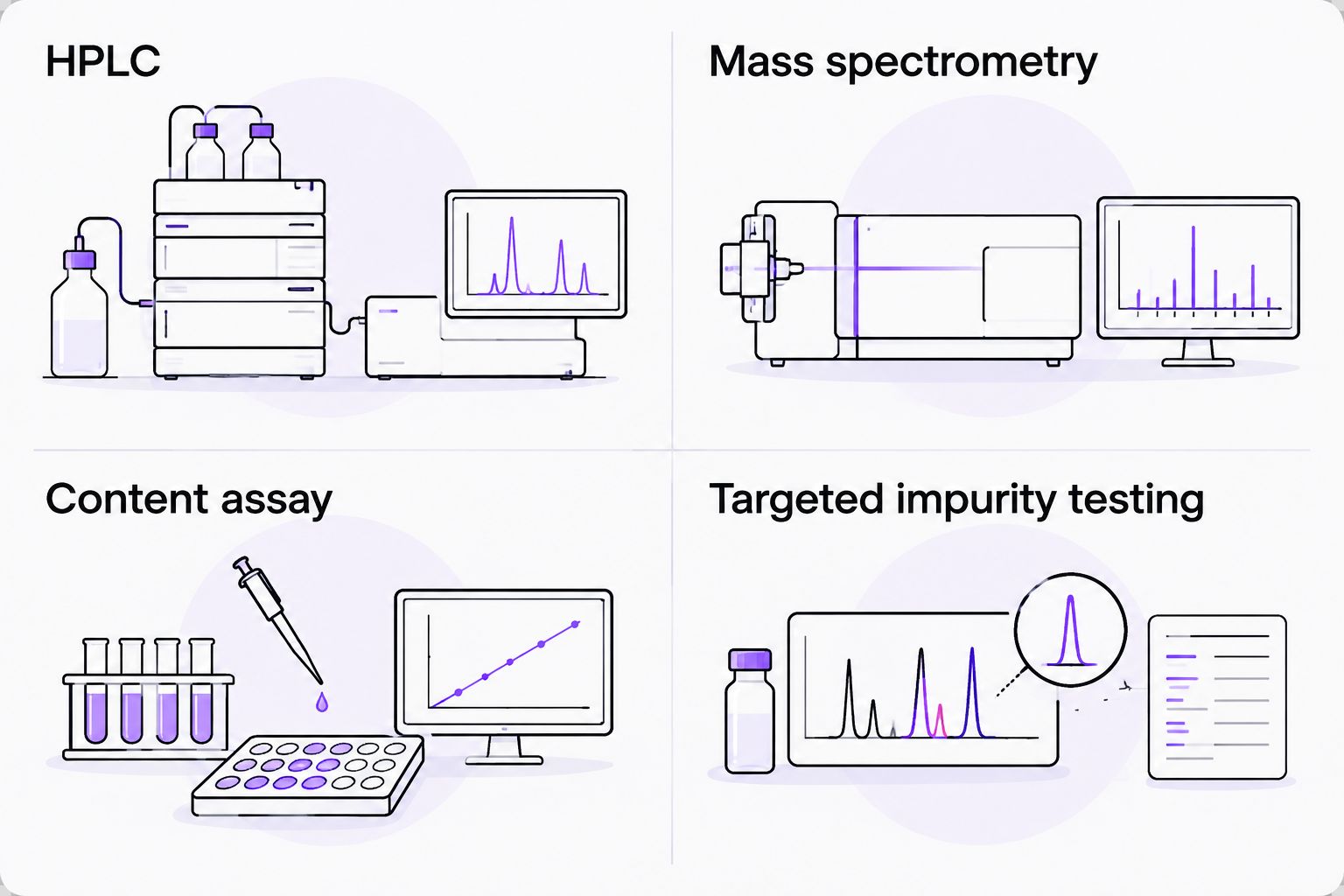
| Analytical option | Best for | What it contributes | Principal limitation |
|---|---|---|---|
| HPLC | Reviewing chromatographic composition | Separation and relative peak-area information | Does not independently establish peptide content or complete identity |
| Mass spectrometry | Supporting molecular identity | Mass-related evidence for the submitted material | Matching mass alone does not resolve every structural ambiguity |
| Content assay | Evaluating an amount-based specification | A result tied to the stated measurement basis | Requires an appropriate method and calibration basis |
| Targeted impurity testing | Investigating a defined impurity question | Evidence about specified substances or attributes | Conclusions apply to the targets and method scope |
These options are complementary, not substitutes. Establish the analytical question before deciding which combination belongs in a quotation.
Supplier-funded COA: review the lot evidence
A supplier-funded COA documents analysis commissioned within the supplier’s quality process. Its procurement advantage is that the report can be evaluated before you commission separate work.
The limitation is scope: the document concerns the submitted sample and the reported measurements. It does not establish independent sampling by your organization, nor does it establish that every container was tested.
Ask whether the report identifies the testing laboratory, sample identifier, supplier lot, analytical methods, and results. If the supplier’s lot identifier differs from the laboratory’s sample identifier, request the record connecting them.
For 2026 supplier reviews, keep the laboratory’s report date separate from the supplier’s publication date. Uploading an older report again does not create a new analytical event.
Buyer-commissioned testing: budget for a separate decision
Buyer-commissioned testing gives your organization control over the requested analytical scope and submitted sample. Its value is a report commissioned to address your own acceptance criteria.
Its limitation is that independence does not eliminate sampling uncertainty or method limitations. An independent laboratory can still receive an unrepresentative sample or perform a test that does not answer the intended question.
Before submission, document the source container, lot identifier, sample identifier, and transfer history. Keep the supplier’s original evidence alongside the independent report rather than replacing one with the other.
If the results differ, compare methods, reporting bases, and sample histories before concluding that either result is incorrect. A chromatographic area percentage and an amount-based assay are not contradictory merely because their values differ.
Why peptide verification expense varies
The analytical scope determines the work being requested. These factors belong in the written inquiry because they change the assignment, its interpretation, or the material required:
- Measurement objective: Identity confirmation, chromatographic purity, content, and a targeted impurity question require different evidence.
- Method suitability: An established method and a method requiring development or additional suitability assessment are different assignments.
- Material characteristics: Sequence, modifications, counterions, and matrix information help the laboratory evaluate the proposed analysis.
- Sampling coverage: A single submitted sample and a sampling plan spanning multiple containers support different conclusions.
- Reporting requirements: A summary certificate, underlying analytical records, and an expanded interpretation are different deliverables.
- Investigation boundaries: Repeat measurements, additional identification work, and investigations need an agreed authorization process.
Do not assume every factor changes the invoice in the same direction. Ask the laboratory to identify what is included and what requires a revised scope.
How do you request comparable laboratory quotations?
Define the acceptance question first
Write the decision the report must support before listing instruments. For example, distinguish confirming expected molecular mass from determining peptide content.
Then specify the material identifier, relevant structural information, available documentation, and requested reporting basis. An instrument name alone is not a complete analytical assignment.
Request the same deliverables from each laboratory
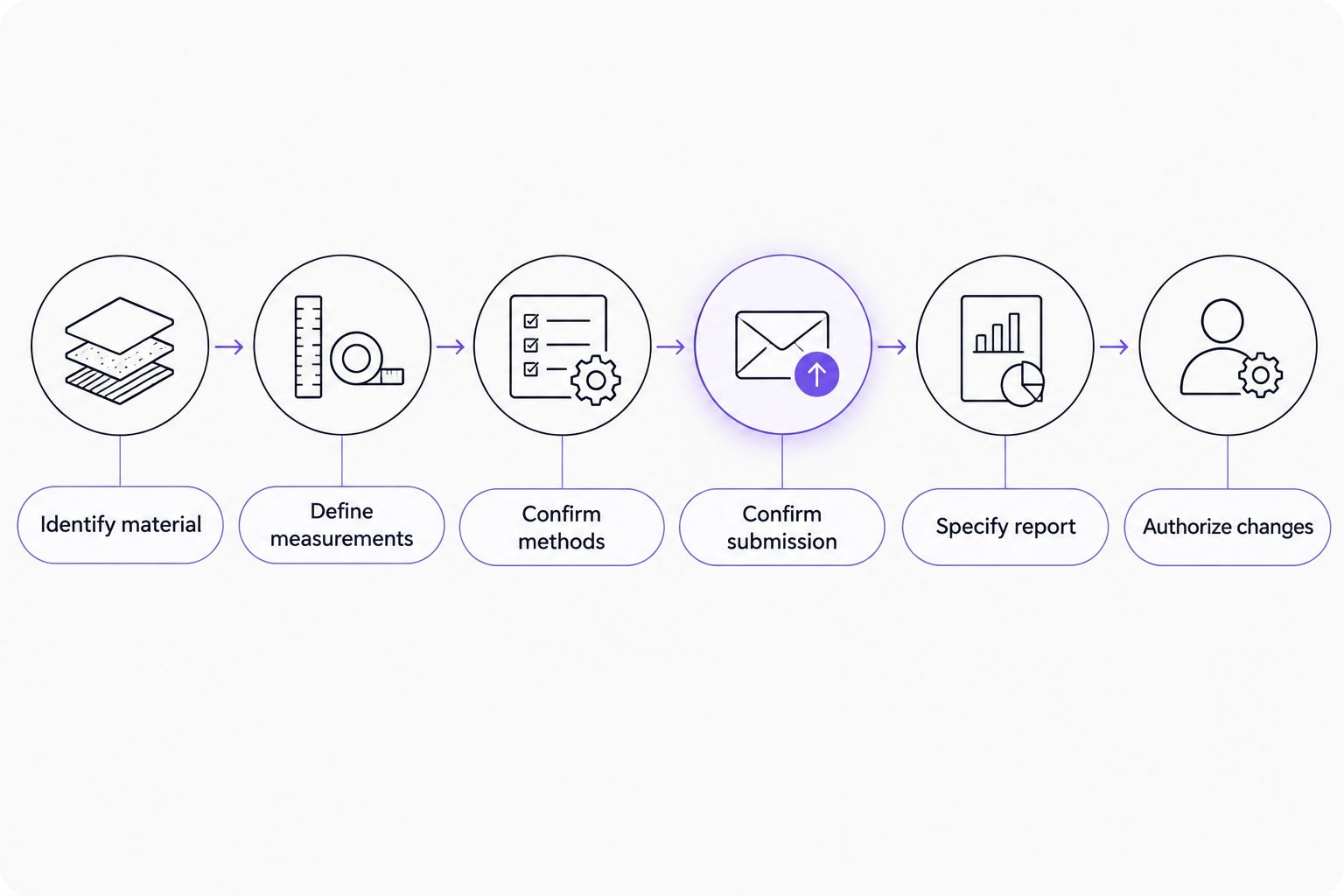
Use the same inquiry for each laboratory in your 2026 comparison:
- Identify the research material and available lot information.
- State the measurements and acceptance questions.
- Request the proposed methods and their applicability.
- Confirm submission requirements and sample consumption.
- Specify report contents and access to supporting records.
- Establish how additional work receives authorization.
Keep commercial terms separate from scientific acceptance. A quotation that is easier to approve is not necessarily a method that is suitable for the material.
Does testing a larger lot reduce the burden per container?
Lot-level allocation spreads attributable verification expense across accepted containers covered by the same documented decision. That changes the accounting burden per container; it does not increase the information contained in an individual measurement.
Keep allocation and sampling separate. The former assigns expense, while the latter determines what conclusions your organization can defend about the material.
For inventory traceability, connect each accepted container to the lot, report, and disposition record. A certificate stored without that connection is difficult to use during an investigation.
Is independent retesting necessary when a supplier provides a COA?
A supplier COA does not automatically make independent retesting necessary or unnecessary. Base the decision on the research requirement, the report’s scope, traceability, and your organization’s acceptance criteria.
A useful review distinguishes a documentation gap from an analytical gap. Requesting a missing lot connection is different from commissioning a measurement that the existing report never performed.
For peptide sourcing through 4-Amino-Labs, evaluate the documentation for the specific material and lot under consideration. The supplier’s stated research-chemical role does not, by itself, establish any particular testing method, accreditation, or lot result.
What should you check before accepting the report?
Check that the report concerns the sample you intended to evaluate. A technically detailed result attached to the wrong identifier cannot support the intended inventory decision.
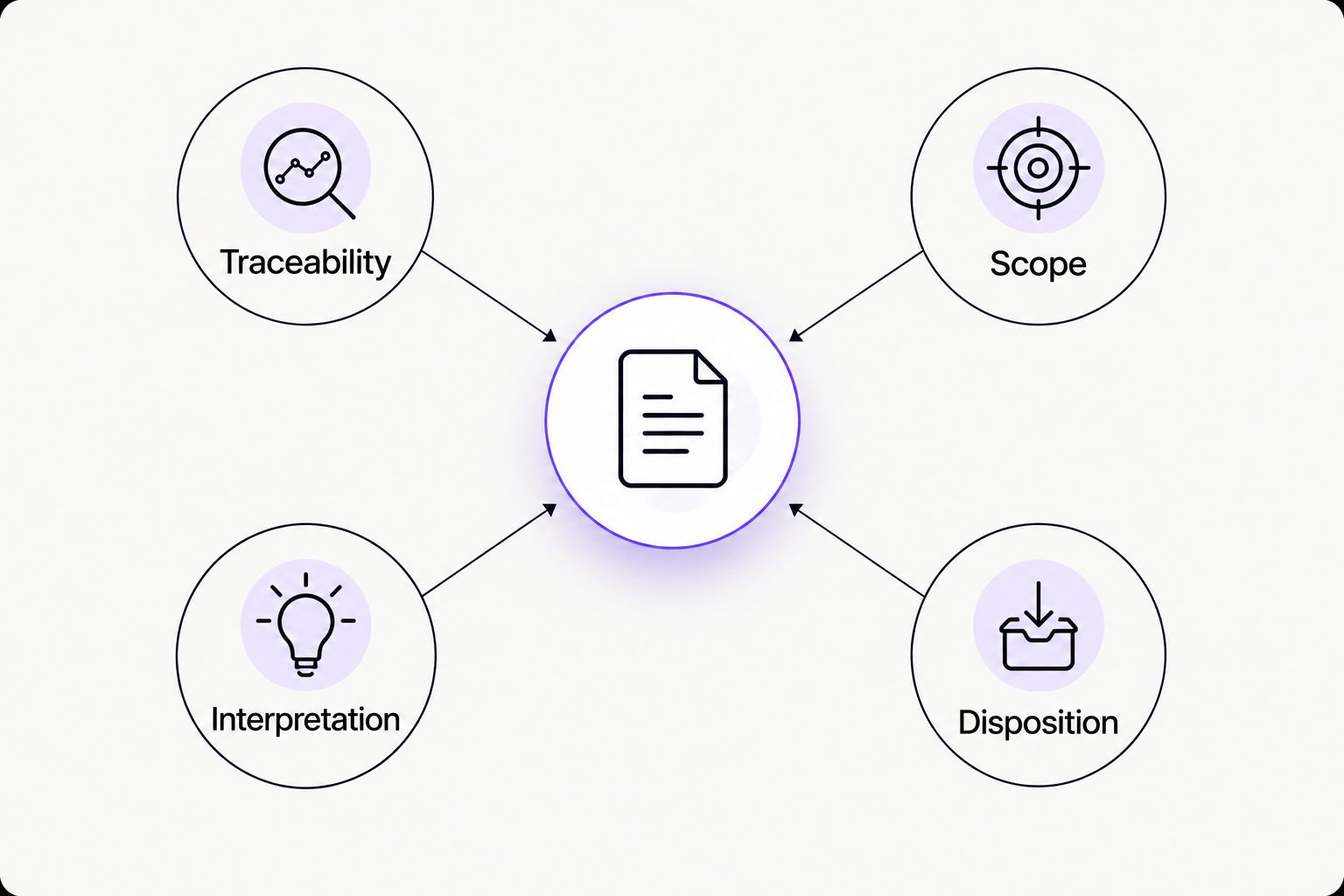
Use a short acceptance review:
- Traceability: Can the submitted sample be connected to the supplier lot and your inventory?
- Scope: Did the laboratory perform the agreed measurements?
- Interpretation: Are the units, reporting basis, and analytical limitations clear?
- Disposition: Has an authorized reviewer recorded acceptance, rejection, or further investigation?
Keep the original report and subsequent clarifications together. A rewritten summary should not erase qualifications present in the laboratory’s document.
Limitations of a COA-based comparison
This guide provides an accounting and documentation framework, not a laboratory quotation or a peptide-specific analytical specification. Method suitability depends on the material and the question being investigated.
No certificate establishes every possible attribute of a research material. Chromatographic composition, molecular identity, content, and targeted contaminants remain separate questions unless the report explicitly addresses them.
The same limitation applies when evaluating 4-Amino-Labs research chemicals: conclusions must follow the actual lot documentation, not assumptions about the supplier or category. Record unresolved questions before approving the material for the intended research.
FAQ
How much does third-party COA testing add to peptide cost?
There is no universal surcharge: the attributable expense depends on the commissioned measurements, sample requirements, and allocation across accepted research inventory. Obtain a written scope before comparing laboratory quotations.
Is a peptide purity percentage the same as peptide content?
No. Chromatographic purity describes relative detector response under specified analytical conditions, while peptide content addresses an amount or fraction using a defined measurement basis.
Does a third-party COA mean every container was tested?
No. A third-party COA reports results for the submitted sample or samples. Establish the sampling scope and lot connection before applying the results to inventory.
Should I request HPLC or mass spectrometry for peptide verification?
HPLC and mass spectrometry answer different questions. HPLC supports chromatographic composition assessment, while mass spectrometry provides mass-related identity evidence; select methods according to the acceptance question.
Does an independent laboratory report replace the supplier COA?
No. Keep the independent report alongside the supplier COA because each documents a particular sample, analytical scope, and reporting basis. Investigate differences rather than discarding the original evidence.
What should a laboratory quotation specify?
A laboratory quotation should specify the material, requested measurements, proposed methods, submission requirements, report deliverables, and authorization process for additional work. Matching those fields makes comparisons more meaningful.
One last thing
The denominator can mislead you as much as the quotation. Allocating verification expense across ordered containers rather than accepted containers obscures the burden carried by usable research inventory.
For your next 2026 procurement review, document the analytical scope, sampling rationale, and allocation basis together. That record explains what the verification expense purchased—and what it did not establish.
Related guides
- Connecting batch numbers to laboratory inventory tracking
- Research peptide procurement for biotech startups
- Connecting research chemical purchases to a laboratory notebook
Research use only. This content addresses analytical evaluation and procurement of laboratory research materials. It is not medical advice and is not intended to diagnose, treat, cure, or prevent disease. No human or animal use is described or recommended.