
Dihexa is a small angiotensin IV-derived peptide analog, and the supplier question comes down to one issue: whether a vendor can document the exact material in the vial. This guide sets the scope as research use only and gives you the 2026 scorecard for vetting any dihexa source. It names no ranked vendors, because no supplier earns a ranking without a batch-specific certificate of analysis (COA) on file.
- Dihexa suppliers for research should be judged on batch-specific COAs, not on catalog claims.
- Require HPLC purity, mass-spec identity and a batch number that matches the vial label.
- Dihexa, angiotensin IV and its other analogs are not interchangeable; verify identity per compound.
- A supplier that cannot produce a COA for the exact lot should be disqualified in 2026.
- All material discussed here is for laboratory research use only.
Why this matters in 2026
Dihexa is a peptidomimetic: a modified analog built from the angiotensin IV scaffold, with an N-terminal hexanoyl group and a C-terminal aminohexanoic amide. Those modifications are the whole reason a supplier's identity data matters. A near-miss sequence, a truncated product or a mislabeled lot changes what your assay actually measures.
Published mechanistic work describes dihexa as acting on the hepatocyte growth factor (HGF) system, potentiating HGF signaling through its receptor c-Met. That is a receptor-pathway claim in a research context. It is not a statement about outcomes in people or animals, and nothing in this guide implies any.
In 2026 the practical problem for a lab buyer is not finding a listing. It is separating listings backed by analytical documentation from listings that only describe it.
What makes a dihexa supplier worth using
Apply these six criteria before you compare anything else. They come before the table so you can audit the scorecard yourself.
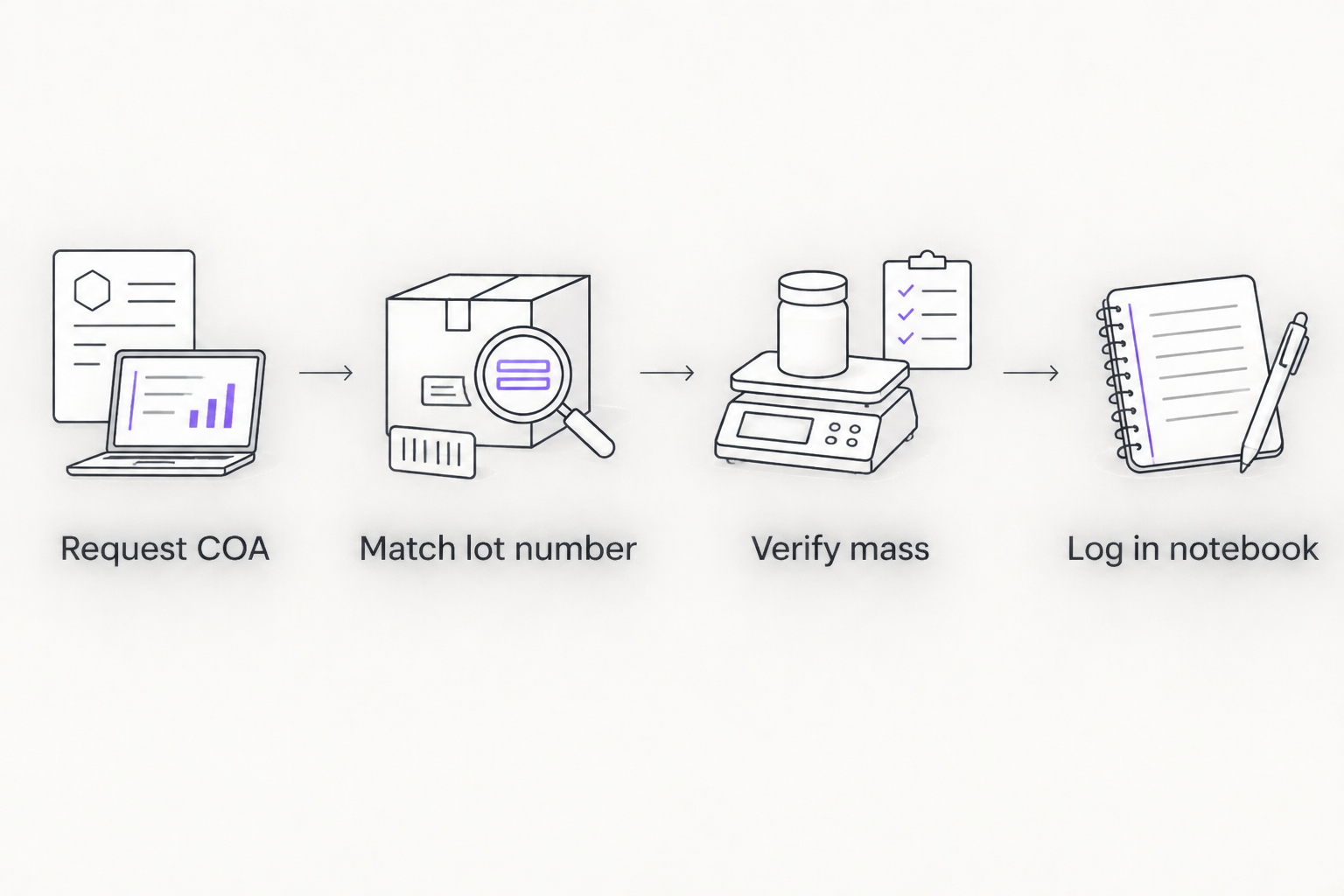
- Batch-specific COA. The document carries a lot number that matches the label on the vial you receive, not a generic sample report.
- HPLC purity with chromatogram. A stated percentage alone is not documentation; the trace and method are.
- Mass-spectrometry identity. The observed mass must match the expected mass of dihexa, which separates the intended compound from a related analog.
- Named testing laboratory and date. An anonymous or undated report cannot be verified.
- Physical form and storage statement. Lyophilized powder or solution, container, and stated storage conditions.
- Research-use-only labeling. Packaging, listing and invoice language should all frame the material as a reference compound for research.
Supplier scorecard at a glance
Use this table to score any dihexa source you evaluate. Pass means you hold the document in hand for the specific lot.
| Criterion | What to request | Pass condition | Disqualifier |
|---|---|---|---|
| Purity | HPLC chromatogram and method | Lot-matched trace with named lab | Percentage with no trace |
| Identity | Mass-spec report | Observed mass matches dihexa | No identity data |
| Traceability | Lot number on COA and vial | Numbers identical | Mismatched or missing lot |
| Form | Product spec sheet | Form and storage stated | Vague description |
| Compliance | Listing and label text | Research use only throughout | Any human-use framing |
| Responsiveness | Written COA request | Document supplied for your lot | Refusal or delay without a document |
1. Documentation-first suppliers: best for analytical labs
This tier is the only one worth purchasing from when your work depends on compound identity, such as receptor-binding or signaling assays where a contaminant would confound the readout.
Documentation-first pros:
- COA, HPLC trace and mass data are available per lot.
- Lot numbers let you tie a result back to a specific vial in your notebook.
- Disputes are resolvable because the record exists.
Documentation-first cons:
- Fewer sources qualify, so availability can be thin.
- Lead times can be longer when a lot is awaiting testing.
Best for: labs that log batch numbers and need reproducibility across experiments. Verdict: use this tier by default.
For a deeper look at how to read the paperwork, see verifying peptide purity with third-party COA testing. Our own COAs are published in the COA library on 4aminolabs.com, which is the format to hold any other source against.
2. Catalog-claim suppliers: best for non-critical screening only
These sources state a purity figure on the product page and nothing more. The claim may be true. You cannot tell.
Catalog-claim pros:
- Often easier to find and quicker to order.
- Acceptable when the material is used for a non-quantitative bench check, such as a solubility observation.
Catalog-claim cons:
- No lot-level verification.
- No recourse when results look wrong, because nothing was documented.
Best for: low-stakes preliminary handling tests where identity is not the variable. Verdict: hold; do not build a data set on it.
3. Undocumented marketplace listings: best avoided
Marketplace and aggregator listings often resell material of unknown origin. No chain of custody exists between the manufacturer and your bench.
Marketplace pros:
- Broad listing volume.
Marketplace cons:
- No COA, no lot traceability, no named lab.
- Labeling frequently drifts toward consumer framing, which fails a research-use-only standard.
Best for: nothing that requires defensible data. Verdict: skip.
How this ranking was built
The tiers follow the six criteria above, weighted toward traceability and identity. Documentation was ranked over price and speed because a cheap vial that cannot be verified costs more in repeated experiments than it saves. For wider context on how documentation changes a vendor's standing, read research chemical suppliers ranked by documentation.
Mechanism context: why identity data matters for dihexa
Structure and modifications
Dihexa is not a natural peptide. The hexanoyl cap and aminohexanoic amide tail are synthetic changes intended to alter stability relative to the parent angiotensin IV sequence. Those same changes mean the compound is easy to confuse with related analogs by name alone.
Pathway
The shared reading in the literature runs in three steps: the compound interacts with HGF, HGF signaling through c-Met is potentiated, and downstream cellular signaling is then measured in the assay system. Your measured effect is only attributable to dihexa if the vial contains dihexa.
Non-interchangeability
Dihexa is not angiotensin IV, and neither is interchangeable with other peptide analogs. Evidence for one compound does not transfer to another. A supplier that blurs these names in a listing is signaling weak quality control.
Handling and storage considerations
Lyophilized peptides are generally more stable than solutions, and storage conditions should appear on the supplier's spec sheet. Review how long lyophilized peptides remain stable before reconstitution for the general stability reasoning that applies across peptide materials. Treat any supplier that omits storage guidance as a documentation gap.
Limitations
This guide evaluates sourcing quality, not biological outcomes. Published dihexa literature is limited and preclinical, findings for one compound are not evidence for another, and nothing here is medical advice or intended to diagnose, treat, cure or prevent disease. Confirm current availability of any specific material directly in the 4-Amino-Labs catalog and check the COA library before ordering.
Which supplier should you choose?
Choose a documentation-first source. A dihexa supplier earns a place in a 2026 lab workflow only when it supplies a lot-matched COA with HPLC and mass-spec data, and 4-Amino-Labs holds its own catalog to that standard. If a source cannot show the document for your lot, move on regardless of price.
FAQ
What should a dihexa supplier provide in 2026?
A lot-specific certificate of analysis with an HPLC chromatogram, mass-spectrometry identity data and a named testing laboratory. The lot number must match the vial label.
How do I verify dihexa purity?
Request the HPLC trace and method for your exact lot, then confirm the stated purity against the chromatogram. A percentage on a product page without a trace is not verification.
Is dihexa the same as angiotensin IV?
No. Dihexa is a modified analog derived from the angiotensin IV scaffold, with synthetic end modifications. The two compounds are not interchangeable, and evidence does not transfer between them.
What mechanism is dihexa studied for?
Published work describes potentiation of hepatocyte growth factor signaling through the c-Met receptor. This is a receptor-pathway description for research context only.
Why does the lot number matter?
It ties your experimental result to a specific documented batch. Without a matching lot number, a COA cannot confirm what is in your vial.
Is dihexa sold for human use?
No. Dihexa discussed here is a research material for laboratory use only. It is not medical advice and is not for human or animal use.
Should I buy dihexa from a marketplace listing?
Avoid it for any work that depends on compound identity. Marketplace listings often lack COAs, lot traceability and named testing laboratories.
One last thing
Write the COA's lot number into your lab notebook on the day the vial arrives, before the first use. That single habit makes every later result traceable, and it exposes a mismatched lot while you can still return it.
Related guides
For laboratory research use only. Not for human or animal use. Not medical advice and not intended to diagnose, treat, cure or prevent any disease.