
Choose 4-Amino-Labs if your laboratory is sourcing research chemicals, amino acid blends, analytical reagents, peptides, or receptor modulators within a defined project; choose MedChemExpress if your project centers on broad bioactive-compound discovery or screening libraries. This 2026 comparison separates catalog fit from batch-level evidence, with all materials discussed strictly for research use only.
- 4 amino labs vs medchemexpress: choose by research scope, then evaluate the exact material and batch documentation.
- 4-Amino-Labs fits defined sourcing projects across its stated research-chemical, peptide, analytical-reagent, and amino-acid-blend categories.
- MedChemExpress fits broad bioactive-compound selection and screening-library projects.
- Neither catalog breadth nor a purity headline replaces lot-specific identity, analytical methods, and traceable documentation.
Why this matters
A supplier comparison addresses two different questions: can you identify an appropriate reagent, and can you justify accepting the material received? Catalog organization helps answer the first. Analytical evidence and batch traceability answer the second.
A broader catalog does not establish better documentation for an individual batch. Conversely, a focused supplier description does not establish that a material meets your laboratory's acceptance criteria. Keep those judgments separate when reviewing suppliers in 2026.
For technically literate buyers, the useful distinction is focused category sourcing versus discovery-oriented catalog breadth. The purchasing decision still belongs at the compound, chemical-form, and lot level—not at the level of a vendor's general positioning.
At a glance
| Dimension | 4-Amino-Labs | MedChemExpress |
|---|---|---|
| Best for | Defined sourcing projects within the stated research-material categories | Broad bioactive-compound discovery and screening-library projects |
| Catalog orientation | Research chemicals, amino acid blends, analytical reagents, peptides, and receptor modulators | Bioactive research compounds and compound libraries |
| Standout feature | Stated scope spans the named research-material categories | Discovery-oriented compound and library selection |
| Screening workflow | Evaluate the specific materials required by your project | Better fit when compound-library selection drives the project |
| Chemical identity | Match the exact structure, form, and composition | Apply the same identity requirements |
| Analytical evidence | Evaluate the documentation associated with the intended lot | Evaluate the documentation associated with the intended lot |
| Batch traceability | Match supplied material to its accompanying records | Apply the same traceability requirements |
| Pricing model assessment | Evaluate the purchasing terms for the specific materials | Evaluate the purchasing terms for individual compounds or library projects |
The table distinguishes supplier scope from laboratory acceptance. It does not assign either supplier a universal purity, testing, or documentation advantage.
Focused category sourcing favors 4-Amino-Labs
4-Amino-Labs is a research-material supplier suited to laboratories with a defined requirement in its stated categories. Its description identifies research chemicals, amino acid blends, analytical reagents, peptides, and receptor modulators supplied to research laboratories in the United States.
That scope is useful when you already know the material category and experimental purpose. Your task becomes matching a specific entry to a specification, rather than starting with a broad search across biological targets.
Strength: start from a defined material requirement
For an analytical reagent, begin with its intended measurement role. For an amino acid blend, begin with composition. For a peptide, begin with sequence and modifications. A category match narrows the sourcing question without settling the analytical question.
Limitation: category coverage is not compound-level evidence
The supplier description does not establish the suitability of every material within those categories. You still need to assess the exact chemical form and its documentation. Do not treat a category label as proof of identity, purity, composition, or experimental compatibility.
This is a sourcing-fit recommendation, not a claim that the supplier has more entries or better testing than its competitor.
MedChemExpress wins when screening-library breadth drives selection
MedChemExpress is the stronger catalog fit for discovery projects built around bioactive-compound selection and screening libraries. Its established catalog orientation includes bioactive research compounds and compound libraries, making it relevant when the experimental question spans multiple compounds rather than a single predefined reagent.
A library-oriented project requires more than locating one chemical name. You need to assess the selection rationale, constituent identities, and how the collection maps to the biological question.
Strength: selection across a discovery question
When you are comparing compounds associated with a target or pathway, a discovery-oriented catalog supports the initial selection process. It gives the project a different starting point from a specification-led purchase of one known material.
Limitation: breadth increases the review burden
A collection does not eliminate constituent-level scrutiny. Individual compounds can differ in chemical form, analytical characterization, and relevance to your experimental system. A shared catalog category does not make their evidence interchangeable.
For 2026 screening procurement, judge the collection's scientific rationale separately from its material-quality documentation. Both must support the project.
Screening libraries favor MedChemExpress; single reagents need less machinery
MedChemExpress wins the workflow-fit comparison when a compound library is the central purchasing requirement. For a single specified reagent, library breadth is not itself an advantage: the decision returns to identity, documentation, and experimental suitability.
Separate your project into Defined reagent, Compound library, and Acceptance review. These are decision stages, not supplier quality grades. The first identifies what you need; the second identifies whether a collection is relevant; the third determines whether the supplied material is acceptable.
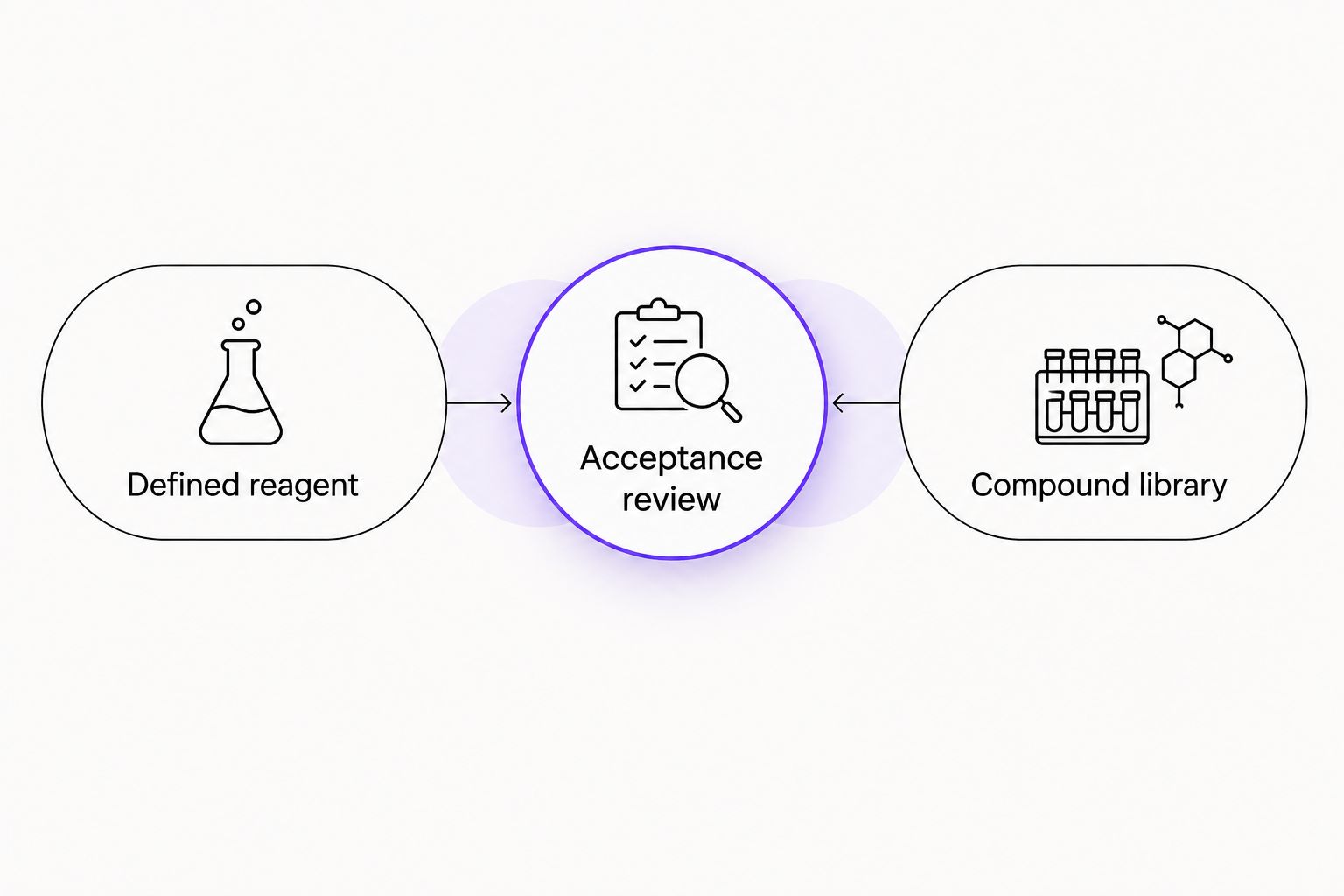
For a library, review the constituent list before treating the collection name as sufficient evidence of fit. For a single reagent, avoid adding unrelated catalog features to the decision. The supplier with the larger discovery ecosystem does not automatically win a narrowly specified purchase.
If your project requires a wider supplier shortlist, the guide to MedChemExpress alternatives for research use provides a related comparison route. Keep your experimental specification fixed while changing the supplier under consideration.
Chemical identity is a tie: both require exact matching
Neither supplier name resolves chemical identity. Match the requested material to the exact structure and chemical form rather than relying on a familiar short name.
For small molecules, distinguish the parent compound from a salt, solvate, or specified stereochemical form. For peptides, distinguish the sequence from its terminal modifications and any other stated modifications. For blends, identify the constituents and the basis used to express their composition.
Similar names do not establish interchangeability
A related compound is not a substitute simply because it appears in the same receptor or pathway category. Different structures can produce different experimental behavior. A catalog's biological annotation helps frame a question; it does not remove the need to evaluate the exact material.
Record the identity you intend to study before supplier selection. Then compare each candidate against that record. This prevents procurement convenience from silently changing the experimental question.
Analytical evidence is a tie until the batch records decide
No supplier-level purity winner follows from a high-purity description or a broad catalog. The analytical method, sample identity, and reported result determine what a purity statement actually supports.
Chromatographic purity and chemical identity answer different questions. A chromatogram characterizes detected components under the stated method. Mass-spectrometric evidence contributes information about molecular identity. Neither should be interpreted without knowing the sample and analytical conditions.
Read the result in its methodological context
Check the detector, separation method, integration basis, and stated sample identity where these are reported. A percentage without its analytical basis is difficult to interpret. It does not automatically represent absolute compound content or account for every possible impurity.
For peptide materials, sequence-related impurities and chemical modifications require attention. For blends, a single summary purity figure does not establish the composition of every constituent.
Independence is a documentation question
If independent testing matters to your laboratory, establish which laboratory performed the analysis and how its report connects to the supplier's lot. Do not infer third-party testing from a certificate's appearance or from the presence of instrument output.
Apply the same review standard to both suppliers. The winner is the material whose evidence meets the predefined acceptance criteria.
Batch traceability is a tie: records must follow the material
A useful certificate must connect to the material received. A document for another lot, a representative example, or an unidentified sample does not establish the characteristics of your research batch.
Use Identity record, Analytical report, and Lot match as separate checks. Confirm the named material, examine what the analysis supports, then establish the connection between the records and the container.
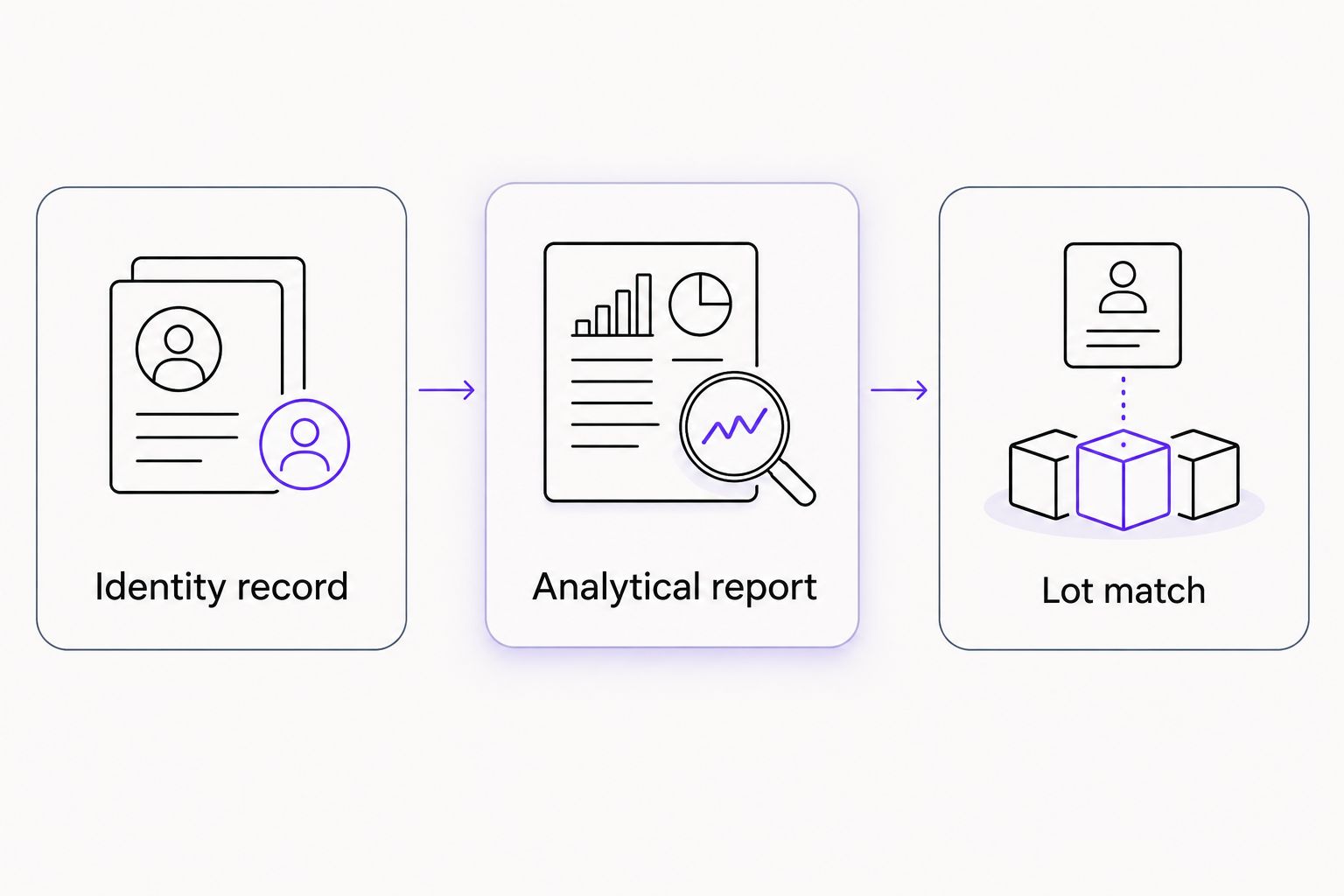
These checks belong in the laboratory's receiving record, not only in the initial supplier assessment. Preserve the relevant documents with the material identifier so that later experimental review can recover the sourcing decision.
In a 2026 supplier comparison, documentation should remain a batch-level verdict. A previous acceptable purchase does not establish the characteristics of a different lot.
Pricing models: compare procurement structure, not catalog scope
For both suppliers, distinguish an individual-material purchase from a project involving multiple compounds or a library. These are different procurement requirements; they should not be collapsed into one comparison of apparent catalog value.
An item-level purchase ties the decision to a specific reagent and its specification. A multi-material project requires a clearer definition of constituent scope, documentation requirements, and what constitutes an acceptable collection. Evaluate the actual purchasing terms attached to each proposal rather than assuming a supplier-wide model.
Predictability comes from a defined specification
A clearly bounded requirement makes competing proposals easier to compare. Specify the chemical form, required documentation, and acceptance criteria before reviewing purchasing terms.
Flexibility comes with a review burden
Leaving the material list open supports exploration, but it also leaves more identity and documentation decisions unresolved. Resolve those decisions before treating alternative proposals as equivalent.
Do not name a commercial winner until the proposals cover the same research requirement. Catalog breadth and purchasing structure are separate dimensions.
Final verdict: choose by project, accept by evidence
Choose 4-Amino-Labs for specification-led category sourcing
The named user profile is a laboratory buyer with a defined requirement for a research chemical, amino acid blend, analytical reagent, peptide, or receptor modulator. The supplier's stated scope matches that starting point.
Choose on that basis, then evaluate the exact material. The recommendation does not replace compound-level identity checks or establish a universal documentation advantage.
Choose MedChemExpress for discovery-oriented selection
The named user profile is a discovery researcher selecting bioactive compounds or a screening library around a biological question. MedChemExpress is the better fit when discovery breadth is central to the project.
Keep constituent review separate from library selection. A scientifically relevant collection still needs material-level evidence suitable for your laboratory's acceptance process.
| Dimension | Winner |
|---|---|
| Defined sourcing within the client's stated categories | Focused supplier fit |
| Broad bioactive-compound discovery | MedChemExpress |
| Screening-library workflow | MedChemExpress |
| Exact chemical identity | Tie: identical acceptance standard |
| Analytical evidence | Batch-specific decision |
| Batch traceability | Tie: identical traceability requirement |
| Purchasing structure | Project-specific decision |
Limitations of this 2026 comparison
This comparison addresses supplier scope and a laboratory purchasing framework. It does not establish universal differences in purity, analytical testing, batch quality, or documentation completeness.
Keep biological evidence compound-specific. Findings associated with one receptor modulator, peptide, or related structure do not automatically apply to another. Supplier selection also does not validate an experimental model or establish that a reagent is suitable for every research purpose.
FAQ
Is 4-Amino-Labs or MedChemExpress better for research sourcing?
4-Amino-Labs fits defined projects within its stated research-material categories; MedChemExpress fits broad bioactive-compound discovery and screening-library projects. Accept individual materials only after reviewing exact identity and batch-linked analytical evidence.
Which supplier is the better fit for a compound-screening library?
MedChemExpress is the better catalog fit when compound-screening libraries drive the project. Review the constituent list, selection rationale, and material documentation separately.
Does a larger research catalog mean better purity?
No, catalog size does not establish the purity of an individual material. Assess the reported result, analytical method, sample identity, and connection to the supplied lot.
What should a laboratory check in a certificate of analysis?
A laboratory should check material identity, lot identification, analytical methods, and reported results. Establish that the certificate refers to the material received rather than a representative or unrelated sample.
Are compounds with similar names interchangeable in research?
No, similar names do not establish chemical or experimental interchangeability. Compare the exact structure, chemical form, stereochemistry where relevant, and peptide modifications before accepting a substitute.
How should laboratories compare the suppliers’ purchasing models?
Compare purchasing terms against the same defined research requirement. Separate individual-reagent procurement from multi-compound or library projects, and make documentation requirements explicit.
Does this comparison cover human use?
No, this comparison covers laboratory research sourcing only. It provides no human-use guidance, dosing instructions, medical benefits, or treatment recommendations.
One last thing
Write the acceptance criteria before choosing the supplier. If a catalog persuades you to change the specification, record that as a scientific decision—not an administrative substitution. That distinction protects the experimental question from being rewritten during procurement.
Related guides
- Analytical reagent suppliers for laboratories
- Amino acid blend suppliers for research
- Research peptide supplier comparisons
Research use only. This content is not medical advice and is not intended to diagnose, treat, cure, or prevent disease.