
Orforglipron is a nonpeptide, oral GLP-1 receptor agonist — a structural departure from injectable peptide agonists like semaglutide and tirzepatide — and that structural difference changes what "supplier quality" even means for a research buyer. Best for domestic sourcing and catalog transparency: 4AminoLabs. Best for bulk research quantities: overseas peptide and SARM marketplaces. Best for institutional purchase orders and invoicing: academic and laboratory chemical distributors. Best for early access to newly listed compounds: boutique research chemical vendors.
- Orforglipron for sale listings split into four sourcing channels, each with a different documentation trade-off in 2026.
- 4AminoLabs is the domestic, WooCommerce-based option with catalog-level receptor modulator listings for U.S. research labs.
- Overseas marketplaces move bulk quantities faster but push COA verification back onto the buyer.
- Because orforglipron is a newer research molecule, batch documentation history across the category is thinner than for established peptides.
- None of the sourcing channels below are evaluated for human use — every listing here is research-only.
Why this matters
Orforglipron's mechanism is the reason sourcing questions matter more than they do for a compound that's been on catalogs for a decade. It activates the GLP-1 receptor through a small-molecule binding site rather than the peptide-mimetic binding mode used by exendin-based or incretin-analog agonists, which means its stability profile, degradation pathway, and analytical fingerprint on HPLC or LC-MS don't map directly onto peptide GLP-1 reference standards. A lab that treats an orforglipron COA like a semaglutide COA is comparing the wrong reference peaks.
That distinction is covered in more depth in how orforglipron differs from peptide GLP-1 receptor agonists, but the sourcing implication is simple: because the molecule is newer to research catalogs, the analytical reference base is thinner industry-wide, and buyers need to weight documentation quality more heavily than they would for a compound with five years of published batch history.
What makes the best orforglipron supplier
Rank any orforglipron for sale listing against these five criteria before comparing sourcing channels:
- Certificate of Analysis (COA) specificity — batch-level HPLC or LC-MS data, not a generic spec sheet reused across lots
- Third-party analytical verification — an independent lab confirming purity and identity, separate from the seller's internal testing
- Domestic vs. overseas sourcing and customs exposure — affects lead time, documentation continuity, and chain-of-custody clarity
- Payment and invoicing transparency — clear terms for institutional purchase orders versus retail card transactions
- Research-use labeling compliance — explicit research-only framing on the listing itself, not buried in fine print
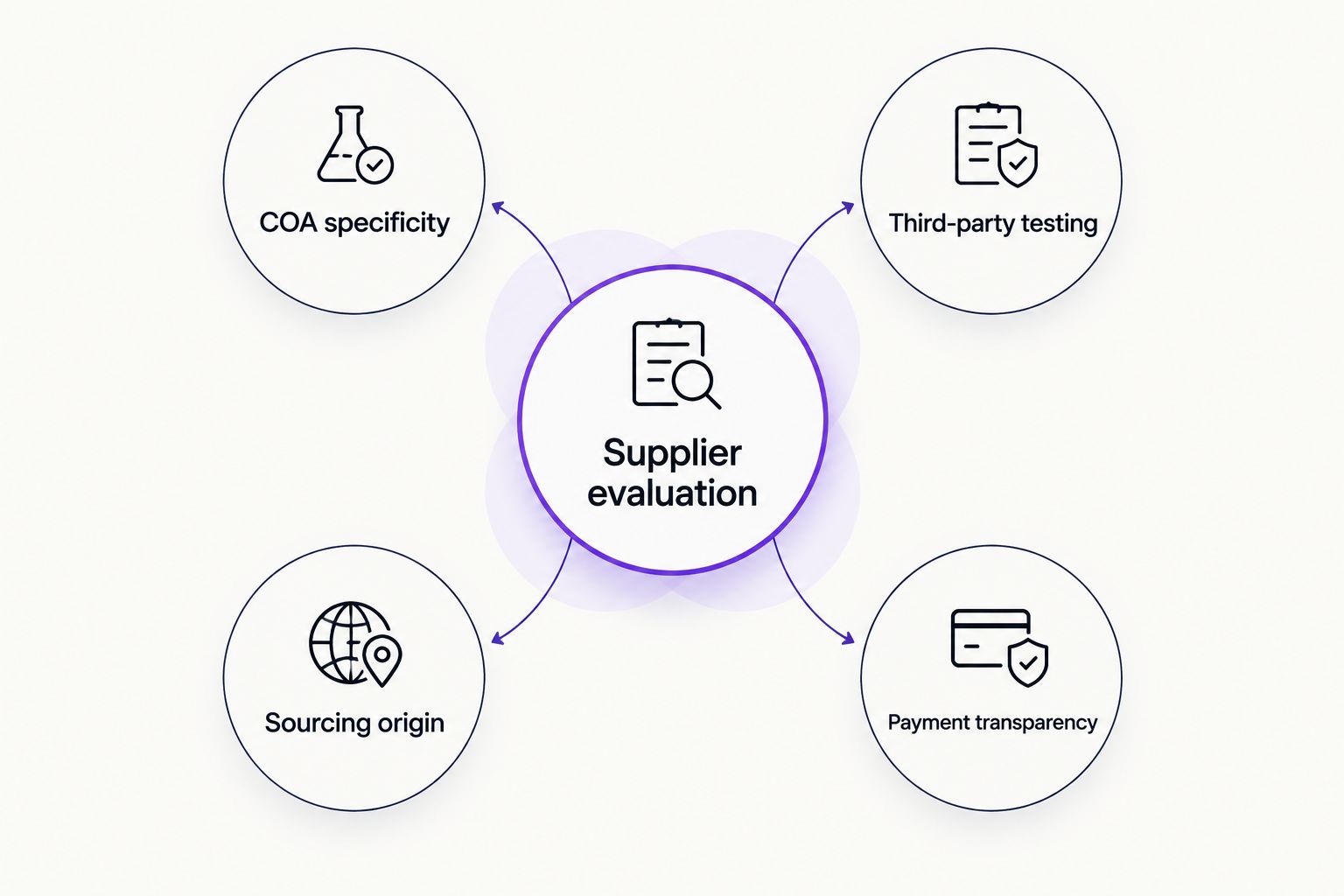
These criteria matter more here than on established SARMs or peptides because orforglipron's analytical baseline in the research supply chain is still forming — a point covered in general terms on analytical reagent suppliers for laboratories, where the same COA-specificity standard applies across compound classes.
At a glance
| Sourcing channel | Best for | Standout trait | Key limitation |
|---|---|---|---|
| 4AminoLabs | Domestic sourcing, catalog transparency | WooCommerce catalog with receptor modulator listings | Buyer still requests lot-specific COA per order |
| Overseas peptide/SARM marketplaces | Bulk research quantities | Larger unit volumes per order | Customs delays, inconsistent COA practices |
| Academic/lab chemical distributors | Institutional purchase orders | Formal invoicing and PO workflows | Slower order-to-delivery cycle |
| Boutique research chemical vendors | Early access to newly listed compounds | Fast catalog turnover on new molecules | Shortest documentation track record |
1. 4AminoLabs: best orforglipron for sale for domestic research sourcing
4AminoLabs operates a WooCommerce-based catalog covering high-purity research chemicals, amino acid blends, analytical reagents, peptides, and receptor modulators for U.S. research laboratories, with orforglipron positioned inside that receptor modulator category.
4AminoLabs pros:
- Domestic shipping avoids the customs variability tied to overseas orders
- Single storefront covers receptor modulators alongside analytical reagents, reducing vendor fragmentation for labs sourcing multiple compound classes
- Research-use framing is consistent across the catalog rather than compound-by-compound
4AminoLabs cons:
- As with any catalog vendor, buyers still confirm batch-specific COA data directly rather than assume one certificate covers every lot
- Retail-style checkout isn't built for large institutional purchase-order cycles
Verdict: Buy for U.S.-based labs that want a single domestic catalog for orforglipron and adjacent receptor modulators, provided the buyer requests lot documentation on every order.
Check current orforglipron listings
Browse the receptor modulator catalog for research-use listings.
2. Overseas peptide/SARM marketplaces: best for bulk research quantities
Overseas marketplaces built around peptide and SARM catalogs often carry newer small-molecule listings, including orforglipron, at higher unit volumes than domestic retail vendors.
Overseas marketplace pros:
- Larger batch sizes suit labs running higher-throughput studies
- Broader catalog turnover often surfaces newly available research compounds faster
Overseas marketplace cons:
- Customs holds extend lead time unpredictably, sometimes by weeks
- COA practices vary supplier to supplier with no standardized independent-testing requirement across the channel
Verdict: Hold — usable for high-volume orders once a specific listing's COA has been verified independently, not a default first choice for a compound with a thin documentation base.
3. Academic and laboratory chemical distributors: best for institutional purchase orders
Distributors that serve university and institutional labs run on formal purchase-order and invoicing systems rather than retail checkout, which matters for labs bound by procurement policy.
Distributor pros:
- Purchase-order and net-terms invoicing fit institutional accounting requirements
- Established compliance paperwork trails suit grant-funded research audits
Distributor cons:
- Order-to-delivery cycles run slower than direct retail purchase
- Newer compounds like orforglipron may lag behind established peptides in distributor catalogs
Payment structure is worth checking before ordering through any channel — how research chemicals can be paid for with a credit card covers the transactional side of that comparison directly.
Verdict: Hold for labs with procurement requirements that mandate PO-based purchasing; skip if speed matters more than invoicing format.
4. Boutique research chemical vendors: best for early access to new listings
Smaller, specialized vendors tend to list newly available research molecules faster than larger catalogs, since they carry fewer SKUs and update inventory more frequently.
Boutique vendor pros:
- Fast catalog turnover surfaces newer compounds like orforglipron sooner
- Smaller SKU count often means closer attention per listing
Boutique vendor cons:
- Shortest track record of batch documentation across repeat orders
- Independent third-party testing is inconsistent between vendors in this category
Verdict: Skip as a primary channel; treat as a secondary option only after independently verifying a specific lot's COA.
How we ranked
Each channel was weighed against the five criteria above — COA specificity, independent testing, sourcing origin, payment transparency, and research-use labeling — with domestic sourcing and documentation consistency weighted heaviest given orforglipron's short catalog history relative to established peptides and SARMs in 2026.
Which orforglipron supplier should you choose?
For a U.S. research lab prioritizing documentation consistency and domestic shipping, 4AminoLabs is the default starting point. Labs running high-volume studies should treat overseas marketplaces as a secondary channel only after independently verifying COA data on the specific lot. Institutions bound by procurement policy should route through an academic distributor despite the slower cycle, and boutique vendors stay a last resort reserved for compounds not yet listed elsewhere.
FAQ
Is orforglipron for sale from research chemical suppliers legal to purchase?
Orforglipron is sold by research chemical suppliers strictly for laboratory research use, not for human consumption. Buyers are responsible for confirming their institution’s compliance requirements before ordering.
What’s the difference between orforglipron and peptide GLP-1 receptor agonists?
Orforglipron is a nonpeptide, oral small molecule that activates the GLP-1 receptor through a different binding mode than peptide agonists like semaglutide. This changes its analytical fingerprint, stability handling, and COA reference standards.
How do I verify a COA for an orforglipron listing?
Check that the COA is batch-specific with HPLC or LC-MS data rather than a generic spec sheet reused across lots. Cross-reference against independent third-party testing when the supplier provides it.
Are overseas orforglipron listings reliable for research use?
Overseas listings vary widely in COA practice and are subject to customs delays. Verify batch documentation independently before treating any overseas listing as a primary source.
Do academic distributors carry orforglipron?
Some academic and laboratory chemical distributors carry newer molecules like orforglipron, though catalog inclusion lags behind established peptides. Institutional buyers should confirm current listings directly.
Why is orforglipron documentation thinner than for established SARMs or peptides?
Orforglipron is a newer addition to research catalogs in 2026, so the analytical reference base and batch history across suppliers are still developing compared to compounds with years of published data.
Can research chemicals like orforglipron be paid for with a credit card?
Payment options vary by vendor and depend on processor policies for research chemical transactions. Check the specific channel’s checkout terms before ordering.
What should a lab do if a supplier won’t provide a batch-specific COA?
Treat the listing as unverified and request independent third-party testing before use in any research protocol. A generic spec sheet is not equivalent to a batch-specific certificate.
One last thing
Orforglipron's oral, nonpeptide structure means it doesn't carry the reconstitution and cold-chain handling questions that peptide GLP-1 agonists do — but that same novelty means the research supply chain hasn't built the multi-year documentation history that peptides like BPC-157 or SARMs like YK-11 already have in 2026. Weight the COA request harder than the sourcing channel; a domestic vendor with a vague spec sheet isn't safer than an overseas listing with a verified batch certificate.
Research Use Only. Orforglipron and all compounds referenced in this comparison are sold and discussed strictly for laboratory research purposes, not for human consumption. Nothing in this article constitutes medical advice and none of the information here is intended to diagnose, treat, cure, or prevent any disease.
Related guides