
Thymosin Alpha-1 cannot be assumed to retain potency after freeze–thaw cycles; retention requires stability data for the specific formulation, handling conditions, and functional assay. An unchanged chromatographic purity result does not establish unchanged biological activity. This article addresses research-material characterization only, not administration or use in humans or animals.
- Does thymosin alpha-1 retain potency after freeze-thaw cycles? Only formulation-specific analytical and functional evidence can establish retention.
- Thymosin Alpha-1 contains 28 amino acid residues; its structure does not establish freeze–thaw tolerance.
- HPLC purity, peptide recovery, and functional potency answer different questions.
- For 4-Amino-Labs research materials, distinguish original batch documentation from evidence collected after handling.
Thymosin Alpha-1 is an N-terminally acetylated peptide containing 28 amino acid residues, 1 N-terminal acetyl group, and 0 cysteine residues. These structural properties identify the molecule; they do not establish a permissible number of freeze–thaw cycles. [1]
Does Thymosin Alpha-1 retain potency after freeze-thaw cycles?
A freeze–thaw count is a handling record, not a potency measurement. To establish retention, compare material exposed to the documented handling conditions with a suitable reference using methods that distinguish chemical integrity, recoverable content, and biological activity. Stability conclusions must remain specific to the material and conditions evaluated. [2]
| Evidence | What it supports | What it does not establish |
|---|---|---|
| Chromatographic purity | Relative distribution of detected components under the method | Absolute peptide recovery or functional activity |
| Quantitative peptide assay | Recoverable peptide content under the assay conditions | Biological potency by itself |
| Mass spectrometry | Molecular identity and detectable mass changes | Complete exclusion of every degradation pathway |
| Functional assay | Activity within the defined assay system | Stability under different handling conditions |
| Appearance | Visible precipitation or other gross changes | Absence of soluble degradation products |
For interpreting the starting material, the guide to verifying peptide purity with third-party COA testing provides related documentation context. Keep that starting characterization separate from any claim about material after freezing and thawing.
Why this matters
A stability question becomes misleading when the word potency stands in for every quality attribute. A sample can retain its main chromatographic peak while showing a different recoverable concentration or functional response.
For a research laboratory, that distinction affects interpretation. A changed assay result cannot automatically be attributed to the experimental system if the reference compound's handling history and post-handling condition remain unresolved.
What does potency mean for Thymosin Alpha-1 research?
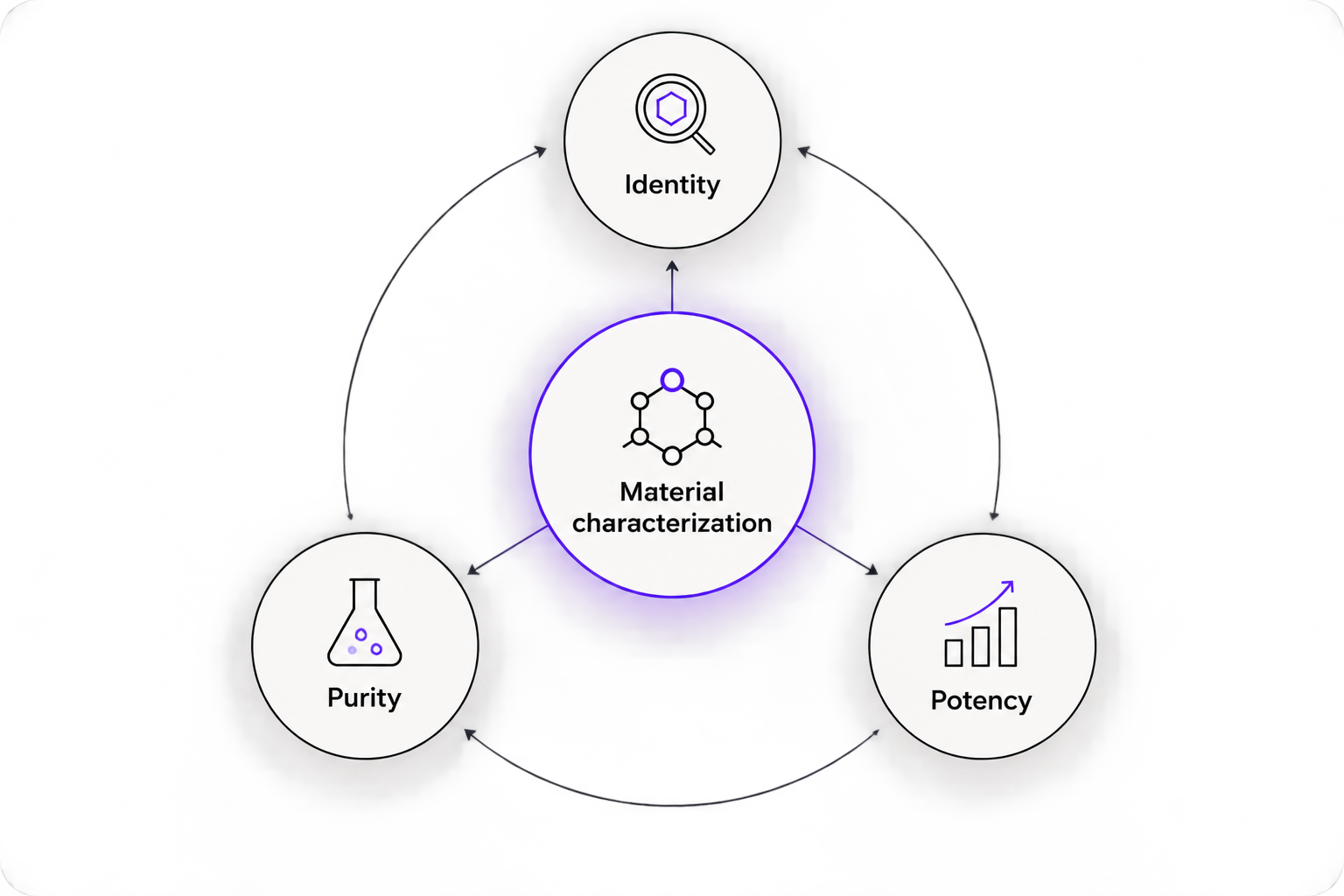
Potency describes activity measured in a defined biological system. Purity describes composition as measured by a specified analytical method; identity establishes what the material is. These attributes support one another, but they are not interchangeable. [3]
Functional activity needs a defined endpoint
A functional result must identify the assay system, measured response, reference material, and acceptance criteria. A statement that a peptide “remains active” is incomplete without those boundaries.
For Thymosin Alpha-1, a general description of immune-signaling research does not itself supply a validated potency assay. Nor does a downstream response prove a direct interaction with a particular receptor. Mechanistic interpretation and stability qualification are separate questions.
Structural identity is necessary, not sufficient
Thymosin Alpha-1's 28-residue chain and N-terminal acetylation define important aspects of its chemical identity. Its 0 cysteine residues mean that cysteine-mediated disulfide rearrangement is not a structural explanation for this peptide. [1]
That exclusion does not prove stability. Chemical alteration, surface-associated loss, and formulation-dependent physical changes still require appropriate investigation rather than assumptions based on sequence length alone.
Why freeze–thaw stability varies
Freezing a solution changes its physical environment. Ice formation can concentrate dissolved components in the remaining liquid phase, while interfaces and container contact introduce additional sources of instability or material loss. These are general peptide and protein formulation considerations, not measured outcomes for a particular Thymosin Alpha-1 batch. [2, 4]
The factors below define the scope of a stability claim:
- Formulation composition: Buffer components, ionic composition, and other constituents affect the environment surrounding the peptide.
- Peptide concentration: Concentration influences intermolecular interactions and the relative importance of losses to surfaces.
- Thermal history: Freezing conditions, thawing conditions, and intervening storage belong in the evidence record.
- Container system: Container material, closure integrity, and contact surfaces affect how the sample is contained and recovered.
- Measurement method: A method must detect the change relevant to the claim, rather than merely produce a repeatable result.
Cycle count leaves out important information
Two samples with the same recorded cycle count need not have experienced equivalent conditions. Their formulations, containers, thermal exposure, and elapsed storage can differ.
Do not transfer a cycle limit between formulations. A result applies to the evaluated system, not automatically to every material sold under the same compound name.
Freezing is not equivalent to freeze-drying
A frozen solution still contains a frozen aqueous phase. A lyophilized material has undergone a drying process that produces a different physical state.
Consequently, evidence concerning a dry preparation does not establish the stability of a solution through repeated freezing and thawing. Keep those material states separate when interpreting supplier documentation or published findings. [2, 4]
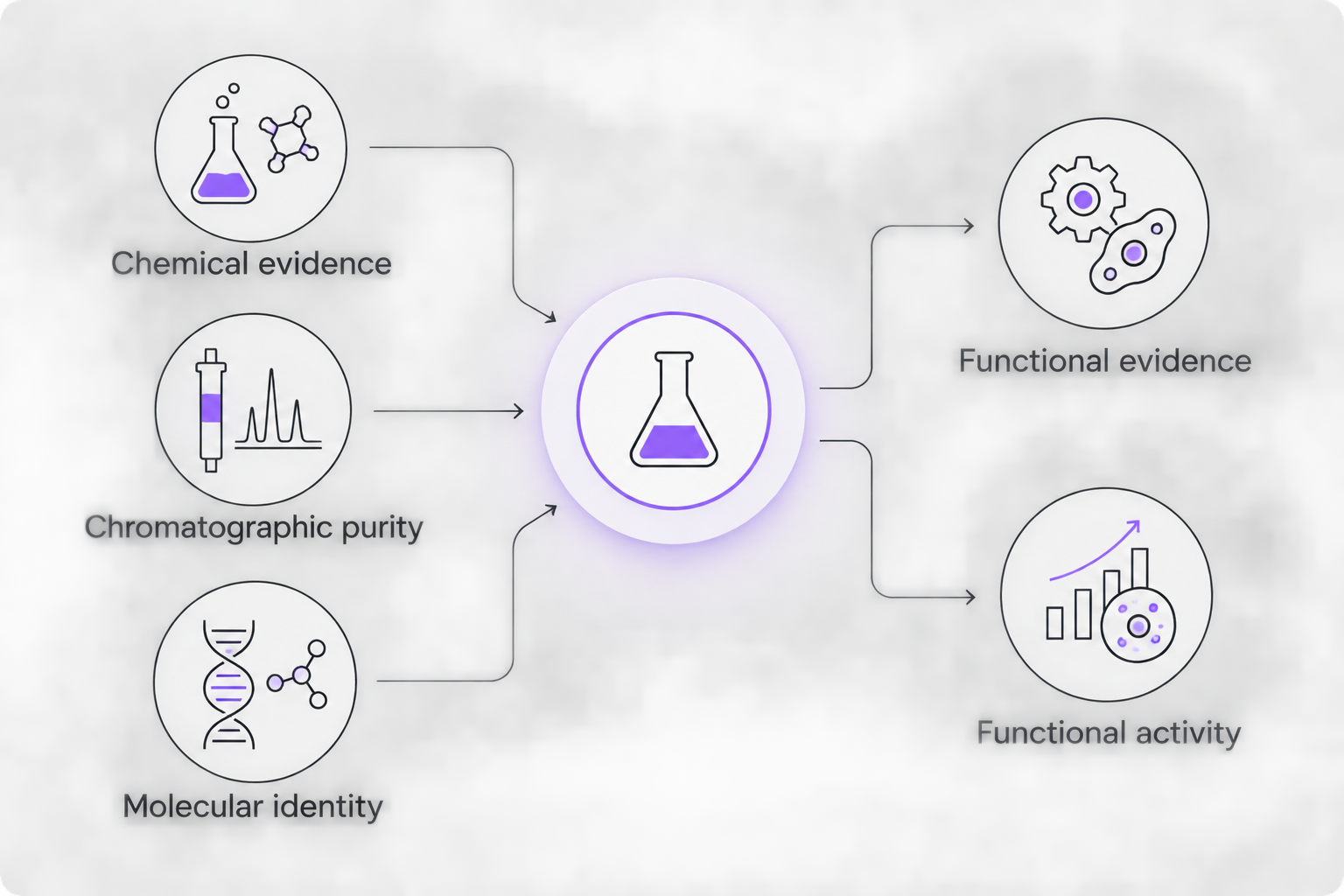
Which measurements distinguish purity from retained potency?
A stability assessment needs methods that address different failure modes. Repeating a single measurement does not resolve a question that the measurement was never designed to answer.
Chromatographic purity
Chromatography can reveal changes in the detected impurity profile. Its value depends on separation, detection, sample handling, and the method's demonstrated ability to distinguish relevant components. [5]
The limitation is important: area normalization describes proportions among detected signals. It does not independently establish how much peptide remains recoverable from the original sample.
Quantitative content
A suitable quantitative assay addresses recoverable peptide content. That helps distinguish a largely unchanged chromatographic profile from loss of material through mechanisms such as adsorption or precipitation.
Quantitation still has boundaries. Recovery, calibration, specificity, and sample-matrix effects must be understood before a measured difference can be assigned to degradation. [5]
Molecular identity
Mass spectrometry supplies evidence about molecular mass and detectable molecular species. Combined with a suitable separation, it can support investigation of new components or changes in the parent material.
An expected parent mass is not a universal stability certificate. Some changes require different analytical selectivity, and a mass measurement does not substitute for a functional endpoint.
Functional activity
A qualified functional assay addresses activity within its defined system. Its reference material and variability determine whether an apparent change represents a meaningful difference. [3, 5]
Retained chemical identity does not establish retained functional potency. Conversely, a functional result alone does not fully describe the sample's chemical composition.
What documentation supports a freeze–thaw claim?
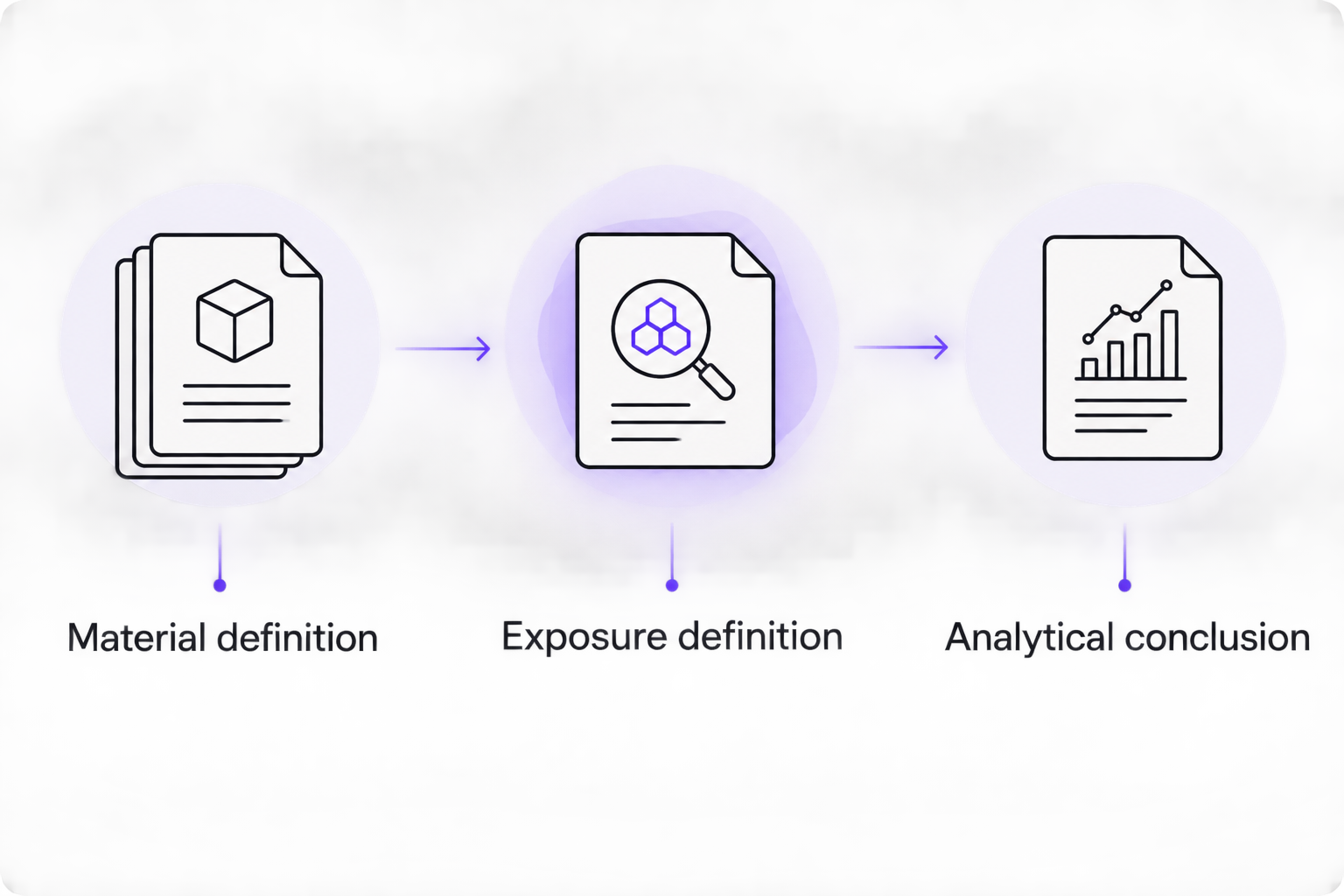
A defensible claim connects the material, the exposure, the measurements, and the conclusion. A batch certificate establishes only the attributes actually tested under its stated conditions; its issue date does not convert it into a post-handling stability assessment.
Material definition
Look for the compound identity, batch identifier, formulation description, physical state, and container system. Without that definition, a stability statement cannot be reliably assigned to the material under review.
For 4-Amino-Labs Thymosin Alpha-1 research material, distinguish the product listing from batch-specific analytical evidence. Neither the compound name nor the listed quantity establishes retained activity after handling.
Exposure definition
A useful report states the conditions evaluated, rather than using “freeze–thaw stable” as an unrestricted label. The record should distinguish repeated transitions from uninterrupted frozen storage.
Elapsed storage also matters to interpretation. A comparison that changes both storage duration and freeze–thaw exposure does not isolate the contribution of either variable.
Analytical conclusion
The conclusion should identify the tested attributes and the applicable acceptance criteria. “No detected change in chromatographic purity” is narrower and more informative than “full potency retained” when no functional measurement supports the latter.
For a 2026 laboratory quality review, retain the actual report with the material history. A summary statement is not a substitute for its analytical scope.
How should you interpret a thawed sample?
Treat an undocumented stability history as unresolved, not automatically acceptable or automatically degraded. The scientific task is to determine whether the available evidence supports the intended analytical conclusion.
A useful interpretation separates three questions:
- What material was evaluated? Confirm the batch, physical state, and formulation represented by the evidence.
- What exposure was evaluated? Match the documented thermal history to the stability claim.
- What attribute was evaluated? Distinguish purity, recoverable content, identity, and functional activity.
This framework is not a handling procedure. It is a way to prevent a narrow analytical finding from becoming an unsupported statement about all material properties.
Limitations of this stability assessment
This article does not assign a retained-potency percentage, an acceptable cycle count, or a storage interval to Thymosin Alpha-1. Those conclusions require data that directly represent the formulation and analytical endpoints being claimed.
General principles from peptide and protein stability science explain what to investigate; they do not establish a product-specific result. Likewise, evidence concerning another peptide cannot establish Thymosin Alpha-1 stability merely because both materials share a broad research category.
For 4-Amino-Labs research sourcing, request documentation that addresses the attribute your laboratory needs to establish. Do not interpret an original purity specification as a guarantee about subsequent thermal exposure.
FAQ
Does Thymosin Alpha-1 retain potency after freeze-thaw cycles?
Retention cannot be assumed from cycle count alone. It requires evidence for the specific formulation, exposure conditions, and functional endpoint.
How many freeze-thaw cycles can Thymosin Alpha-1 tolerate?
A universal acceptable cycle count cannot be assigned from the compound name. Any stated limit must be supported by stability testing under defined conditions.
Does an unchanged HPLC result prove Thymosin Alpha-1 is still potent?
An unchanged HPLC purity result does not prove retained functional potency. Chromatographic purity, recoverable peptide content, and biological activity are distinct attributes.
Can a clear Thymosin Alpha-1 solution still have changed?
A clear appearance does not establish chemical integrity or retained activity. Soluble degradation products and changes in recoverable content are not reliably excluded by visual inspection.
Does lyophilized stability establish solution freeze-thaw stability?
Lyophilized stability does not establish solution freeze–thaw stability. Dry material and frozen solution represent different physical states and require separately scoped evidence.
Can mass spectrometry replace a functional potency assay?
Mass spectrometry does not replace a functional potency assay. It supports molecular characterization, whereas a functional assay measures activity in its defined system.
What should a supplier’s freeze-thaw stability statement include?
A supplier’s statement should identify the material, formulation, container, exposure conditions, tested attributes, and acceptance criteria. Its conclusion should remain limited to those evaluated conditions.
One last thing
A high relative purity result can coexist with reduced peptide recovery. If material is lost to a surface while the remaining detectable components retain similar proportions, the purity percentage alone does not describe that loss.
Before accepting a freeze–thaw claim, ask whether the evidence measures composition, quantity, activity, or all three. That distinction is more informative than an unsupported cycle limit.
References
- Goldstein AL and colleagues. Thymosin alpha1: isolation and sequence analysis of an immunologically active thymic polypeptide. Proceedings of the National Academy of Sciences, 1977. Scope: isolation and sequence characterization.
- International Council for Harmonisation. Q5C: Quality of Biotechnological Products: Stability Testing of Biotechnological/Biological Products. Scope: stability assessment principles, not a Thymosin Alpha-1 freeze–thaw result.
- International Council for Harmonisation. Q6B: Specifications: Test Procedures and Acceptance Criteria for Biotechnological/Biological Products. Scope: characterization, biological activity, and specifications.
- Wang W. Instability, stabilization, and formulation of liquid protein pharmaceuticals. International Journal of Pharmaceutics, 1999. Scope: general formulation-instability mechanisms, not compound-specific cycle tolerance.
- International Council for Harmonisation. Q2(R2): Validation of Analytical Procedures. Scope: analytical procedure performance and validation.
Related guides
- Research peptide storage and cold-chain records
- Connecting batch numbers to laboratory inventory tracking
- Interpreting cloudiness in peptide solutions
- Thymosin Alpha-1 versus Thymalin: non-interchangeability
Research use only. This content concerns laboratory characterization of research materials. It is not medical advice and is not intended to diagnose, treat, cure, or prevent disease.