Available
$40.00
Strict Regulatory Notice: This agent is synthesized strictly for laboratory-based research and analytical purposes. It is not intended for human or veterinary use, nor for medical, household, or cosmetic applications. Please review our Terms of Service thoroughly before finalizing your acquisition.
Available

| Category | Parameter | Specification / Details |
|---|---|---|
| Identification & Nomenclature | Primary Compound Name | Thymalin (Thymus Polypeptide Extract) |
| CAS Registry Number | 63958-90-7 | |
| Sequence / IUPAC | Thymus Extract Polypeptide Complex | |
| Chemical & Physical Properties | Molecular Formula | Multi-peptide complex |
| Molar Mass / Weight | Multi-peptide complex | |
| Physical Appearance | White lyophilized (freeze-dried) solid/powder | |
| Solubility Profile | Highly soluble in Bacteriostatic Water and sterile water. | |
| Product Specifications | Tested Purity | Standardized polypeptide extract |
| Active Ingredient (Total) | 10mg per vial | |
| Dry / Powder Formulations | Lyophilized powder | |
| Handling & Logistics | Storage Guidelines | Lyophilized: Store at -20°C for long-term stability. Protect from light.Reconstituted: Must be refrigerated at 2°C to 8°C. |
| Estimated Shelf Life | 24 months from manufacture date (lyophilized). | |
| Terms of Application | For laboratory research purposes only. Not for human or veterinary use. Investigated as a natural glandular extract for the global modulation of T-lymphocyte ratios and cellular immunity matrices in in-vitro models. |
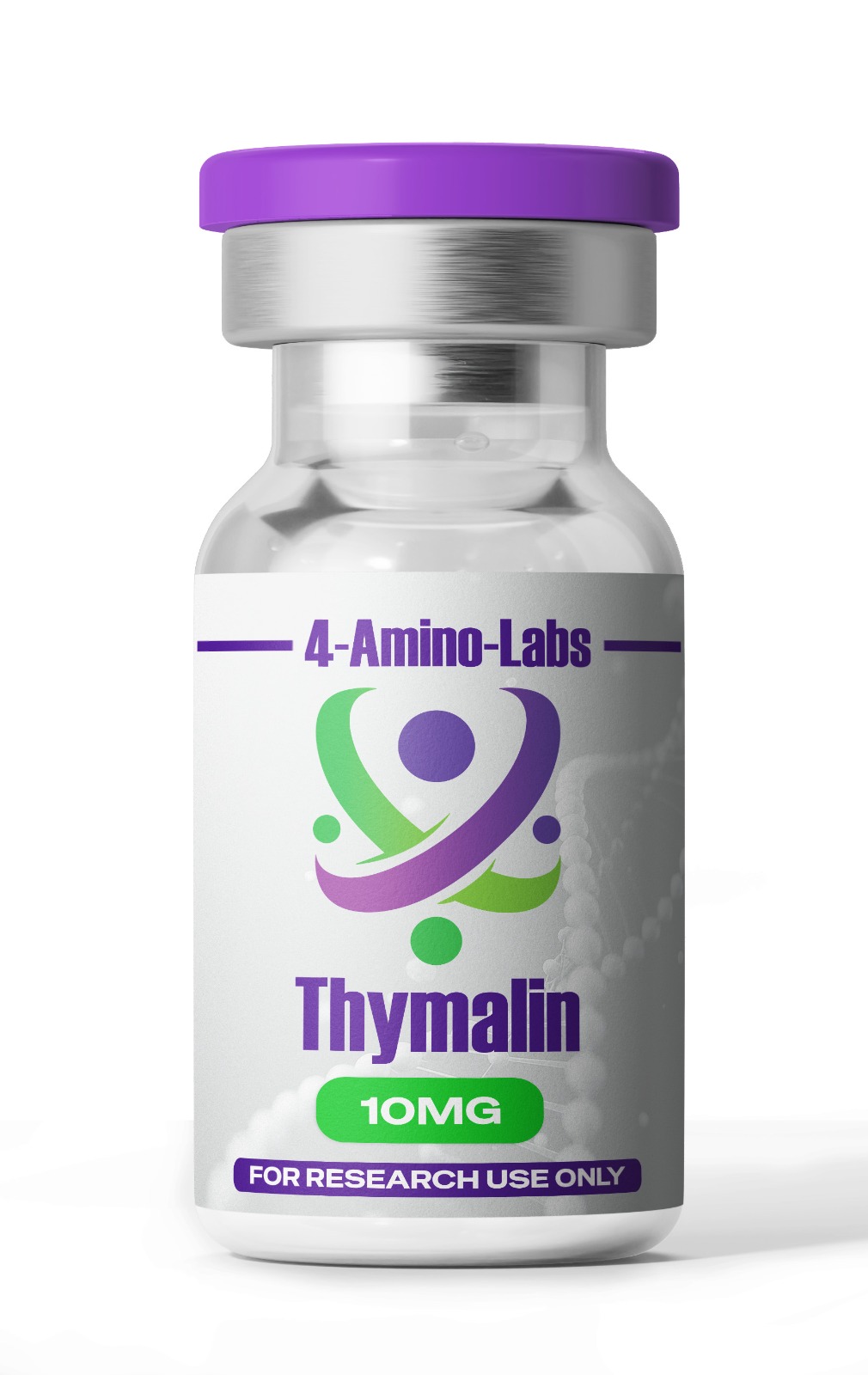
Thymalin (10mg) is a prominent subject within the field of broad-spectrum immunomodulation and thymic function. Synthesized as a complex of polypeptide fractions (similar in origin to Thymosin Alpha-1), it serves researchers examining the restoration of cellular immunity, the balance of T-lymphocyte subpopulations, and the modulation of the neuroendocrine-immune axis.
At 4 Amino Labs, we provide this highly stable polypeptide complex to ensure experimental reproducibility across varied immunological and gerontological assays.
Scientific Literature Reference: The biochemical pathway of thymic polypeptide complexes acting as profound systemic immune restorers, specifically driving the functional capacity of cell-mediated immunity in aging models, is deeply documented. See: Morozov, V. G., & Khavinson, V. K. (1997). “Natural and synthetic thymic peptides as therapeutics for immune dysfunction.” International Journal of Immunopharmacology, 19(9-10), 501-505.
Our Thymalin undergoes independent High-Performance Liquid Chromatography (HPLC) to ensure a collective purity threshold of ≧ 99%.
Researchers utilizing Thymalin typically focus on the following biochemical mechanisms:
To maintain the molecular integrity of Thymalin, the following storage parameters are recommended:
This substance is provided exclusively for in-vitro laboratory research and pre-clinical developmental testing. 4 Amino Lab does not condone or authorize the use of this product in any clinical setting or for personal consumption. Misuse of laboratory chemicals carries significant health risks. By purchasing, the researcher acknowledges the inherent risks and confirms they possess the necessary equipment and expertise to handle these materials safely.
$80.00
$63.00
$62.00