
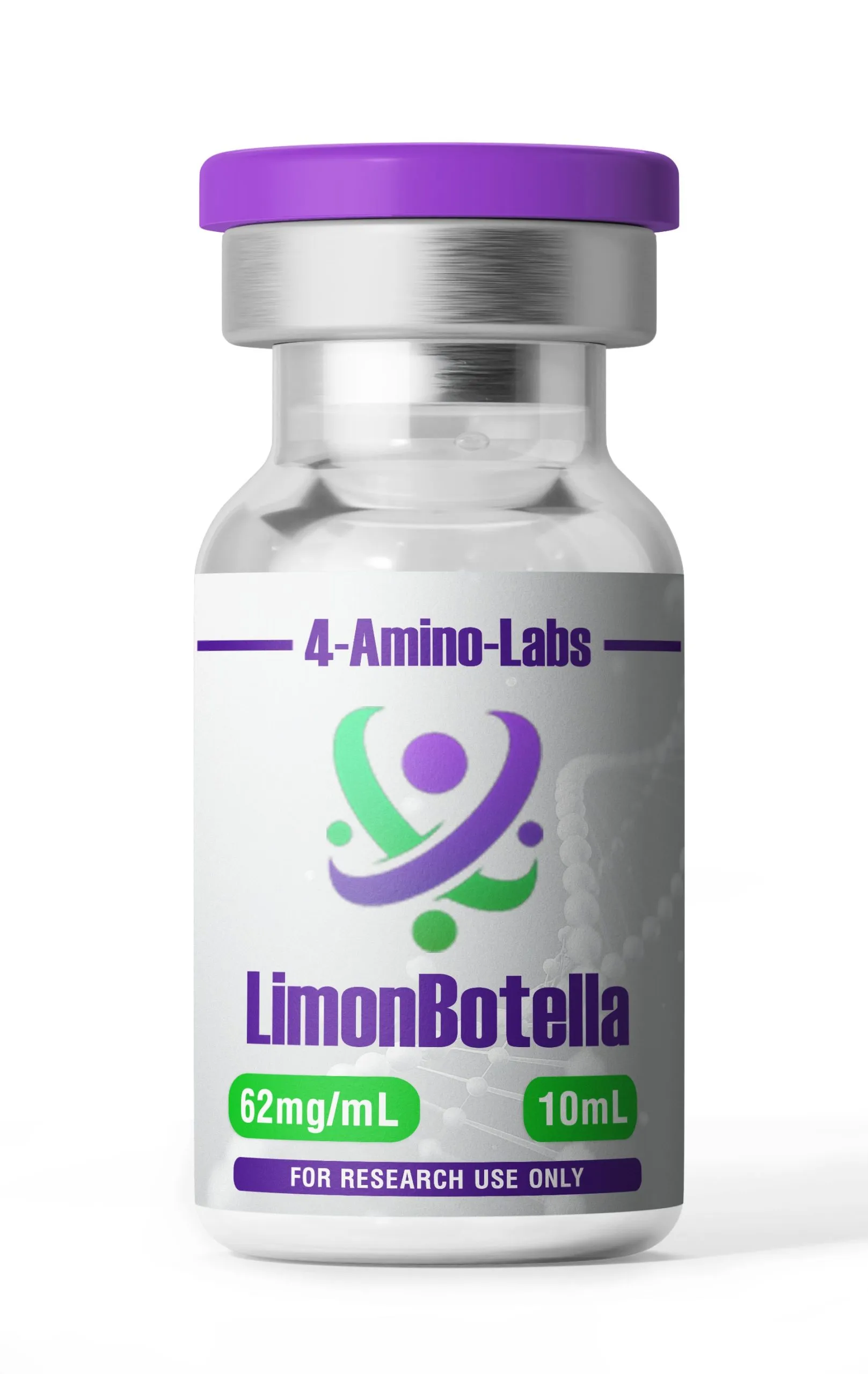
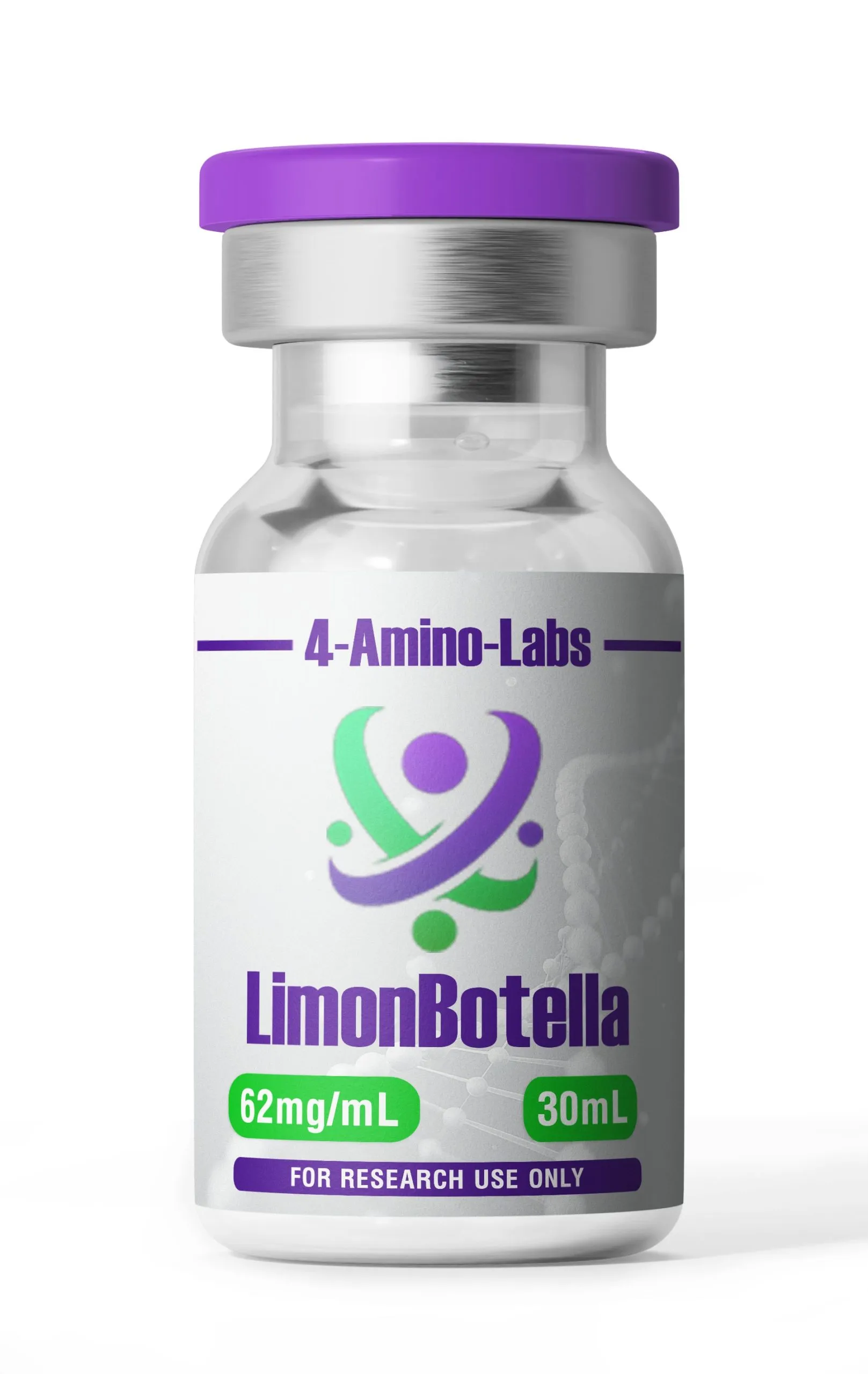

Available
$48.00 – $95.00Price range: $48.00 through $95.00
Strict Regulatory Notice: This agent is synthesized strictly for laboratory-based research and analytical purposes. It is not intended for human or veterinary use, nor for medical, household, or cosmetic applications. Please review our Terms of Service thoroughly before finalizing your acquisition.

| Parameter | Specification / Details |
|---|---|
| Primary Compound Name | LimonBotella (Lipolysis Assay Blend) |
| CAS Registry Numbers | 83-44-3 (Deoxycholic acid), 9001-00-7 (Bromelain), 83-88-5 (Riboflavin), 8002-43-5 (Lecithin) |
| Synonyms / Trade Names | Lemon Bottle Analog, Advanced Lipolysis Solution |
| Physical Appearance | Sterile aqueous solution (typically yellow-tinted due to Riboflavin) |
| Solubility Profile | Fully miscible aqueous solution |
| Active Ingredients (Per mL) | Deoxycholic acid (10mg), Bromelain (10mg), Riboflavin (1mg), Lecithin (1mg) |
| Inactive Ingredients | Benzyl alcohol (18mg), Sodium chloride (8.76mg), Sodium hydroxide (2.86mg), Sterile deionized water |
| pH Modifiers | Additional Sodium hydroxide as necessary to balance pH |
| Storage Guidelines | Store at room temperature (20°C to 25°C). Protect strictly from light (Riboflavin is highly photosensitive). |
| Estimated Shelf Life | 24 months from manufacture date. |
| Safety Documentation | Standard SDS available for Deoxycholic Acid / Bromelain solutions |
| Terms of Application | For laboratory research purposes only. Not for human or veterinary use. Investigated for synergistic adipocyte membrane lysis (deoxycholic acid), proteolytic breakdown (bromelain), and mitochondrial cofactor activation (riboflavin). Note on assay behavior: Activation of lipolysis in cellular or tissue models frequently exhibits rapid pH shifts, localized inflammatory markers, and protein denaturation consistent with cellular disruption. |
Limonbotella is a specialized lipolytic research compound designed for the in-vitro observation of adipocyte modulation, membrane permeabilization, and localized lipid metabolism. Formulated with a synergistic blend of natural proteolytic enzymes (such as Bromelain) and emulsifying phospholipids (such as Lecithin/Phosphatidylcholine), it has become a valuable tool for researchers examining localized adipolysis and cellular apoptosis in fat cell cultures.
At 4-Amino-Labs, we provide this compound in a highly concentrated, sterile aqueous format to ensure experimental reproducibility. By maintaining rigorous volumetric standards, we provide the consistency required for longitudinal data integrity.
To maintain the molecular integrity of Limonbotella, the following storage parameters are recommended:
This substance is provided exclusively for in-vitro laboratory research and pre-clinical developmental testing. 4-Amino-Labs does not condone or authorize the use of this product in any clinical setting or for personal consumption. Misuse of laboratory chemicals carries significant health risks. By purchasing, the researcher acknowledges the inherent risks and confirms they possess the necessary equipment and expertise to handle these materials safely.
Our Limonbotella compound undergoes a multifaceted verification process. Each batch is subjected to independent High-Performance Liquid Chromatography (HPLC) to ensure a purity threshold of ≥ 99% for active constituents. This analytical rigor ensures the absence of residual solvents, heavy metals, or cross-contaminants, providing a stable baseline for your in-vitro models.
Researchers utilizing Limonbotella typically focus on the following biochemical mechanisms:
To maintain the molecular integrity of Limonbotella, the following storage parameters are recommended:
This substance is provided exclusively for in-vitro laboratory research and pre-clinical developmental testing. 4-Amino-Labs does not condone or authorize the use of this product in any clinical setting or for personal consumption. Misuse of laboratory chemicals carries significant health risks. By purchasing, the researcher acknowledges the inherent risks and confirms they possess the necessary equipment and expertise to handle these materials safely.
$80.00
$85.00

Reviews
There are no reviews yet.